Foley sound design mechanics and 4 proven rules that build breathtaking cinema
Behind every visceral punch and delicate footstep in cinema lies the invisible art of acoustic replacement. Discover the physical principles and creative disciplines that make movie soundscapes feel astonishingly real.
Mastering Foley sound design mechanics allows cinematic storytellers to transform sterile studio dialogue into an intoxicating, physically grounded world that audiences believe completely. When moviegoers sit in a dark theater, they assume the crisp crunch of boots on gravel, the dry rustle of a woolen trench coat, and the rhythmic clink of porcelain tea cups were recorded live on set. In reality, production microphones are intensely focused directional instruments engineered to capture spoken dialogue while aggressively rejecting the surrounding environment. If production audio captured every ambient shuffle, an editor could never assemble multiple takes without introducing catastrophic background hiss and jarring acoustic discontinuities.
The tactile sonic world heard in a finished motion picture is almost entirely artificial. It is a carefully hand-stitched acoustic illusion designed to bypass the conscious intellect and speak straight to primitive human perception. Without tactile audio cues, actors float through environments like untethered phantoms, unanchored to floorboards or upholstery. Understanding core Foley sound design mechanics bridges the psychological gap between what eyes witness and what the brain accepts as authentic, transforming flat moving images into an unmistakable visceral reality.
The Tangible Physics of Synchronous Sound Replacement
Named after cinematic audio pioneer Jack Foley, this discipline remains one of the few film production crafts that stubbornly resists total automation. While visual effects transitioned from physical miniatures to digital compute clusters, the sonic recreation of human movement still demands physical performers moving in custom-engineered acoustic environments. At its core, the physical physics of Foley sound design mechanics demands an intimate relationship between kinetic human motion and acoustic materials.
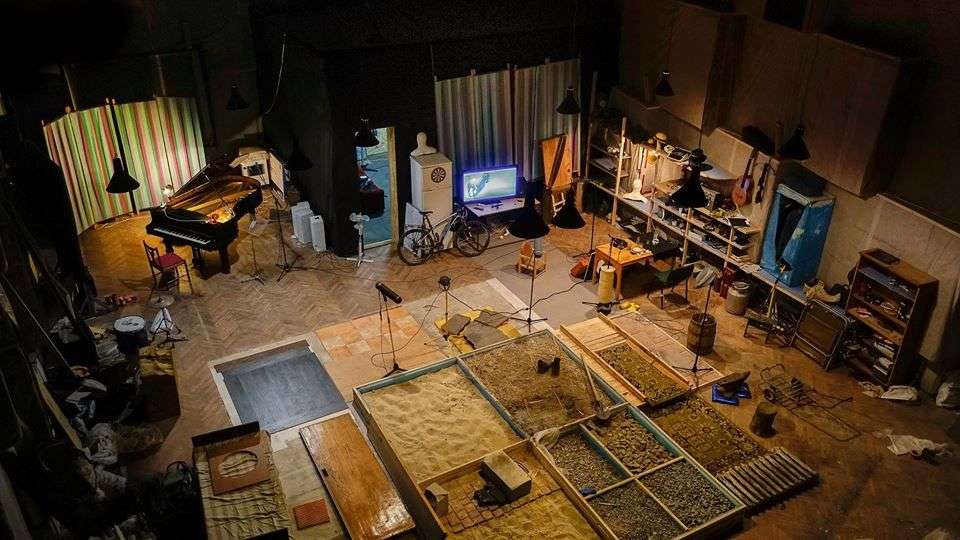
A dedicated Foley stage looks less like a high-tech studio and more like an eccentric architectural salvage yard. Sound artists, known across the industry as Foley walkers, stand before projection screens facing specialized acoustic pits filled with dirt, flagstone, weathered pine, river gravel, and cracked asphalt. Overhead and close to the action, sensitive condenser and shotgun microphones capture every microscopic transient. The walker wears specialized footwear or holds curious hand props, matching their exact physical movements to the projected performance of the actors on screen.
The secret does not lie in digital reproduction or algorithmic synthesis. Stock sound libraries provide static audio files, but human physical performance provides dynamic velocity curves, micro-hesitations, and acoustic variation that algorithms simply cannot replicate. A person walking across a room shifts their balance based on hesitation, emotional fatigue, or sudden panic. That microscopic deceleration across a floorboard cannot be mapped by dragging pre-recorded audio waveforms across a digital timeline.

Four Proven Rules That Elevate Foley Artistry
Creating an immersive auditory experience requires far more than matching a visual contact point with an isolated acoustic click. True immersion demands psychological sensitivity, material ingenuity, and spatial awareness. These foundational principles illustrate why rigorous Foley sound design mechanics demand deep artistic intuition alongside acoustic precision.
Perform the Weight Rather Than Just the Movement
Amateur sound replacement focuses entirely on rhythm, ensuring that a footstep lands at the precise frame a heel touches the ground. Master Foley artists know that rhythm without mass produces a cartoonish, floaty result. Human ears are astoundingly sophisticated instruments capable of calculating a body’s physical mass, skeletal posture, and emotional urgency purely from the acoustic signature of its footsteps.
When performing footsteps, the artist must adopt the physical weight and mental posture of the character on screen. A heavy-set detective dragging a wounded leg requires the performer to compress their own knees, lean their mass unevenly onto the heel, and let the friction of the sole drag through the pit. A stealthy intruder requires balancing weight on the outer balls of the feet to isolate the subtle compression of the floor joist. Capturing the downward pressure and release of kinetic energy makes an actor look visibly rooted in their physical universe, transforming visual light into palpable substance.
Prioritize Acoustic Texture Over Literal Source Matching
One of the greatest paradoxes of sound recording is that real objects rarely sound like what audiences expect them to sound like on screen. A real gunshot on set frequently sounds like a dull wooden plank snapping, while a real human punch often registers as a soft, leathery thud. If a sound designer uses the literal object depicted in the visual frame, the resulting audio frequently falls flat, stripping the moment of its intended dramatic impact.
True craftsmanship demands synesthetic imagination. Breaking celery sticks or crushing heads of iceberg lettuce creates the bone-crushing snap of a martial arts strike. Squeezing wet chamois cloth soaked in cornstarch produces visceral fleshy impacts. Shaking a pair of thin leather driving gloves recreates the frantic fluttering of bird wings with remarkable fidelity. This principle underscores how sophisticated Foley sound design mechanics diverge from mere sound effects recording. When modern blockbuster franchises lean too heavily on sanitized digital audio libraries—an aesthetic dilemma examined in VisionQuest Ignites 5 Crucial Battles Over Marvels Divisive New Era—audiences subconsciously register the jarring absence of genuine physical texture. The human ear craves the chaotic, complex harmonics that only unexpected physical objects can produce under pressure.
Calibrate Dynamic Distance to Match Visual Focal Length
A fatal mistake in audio post-production is recording every prop and footstep with identical proximity. If a camera cuts from an intimate macro close-up of a trembling hand gripping a teacup to a wide shot of a solitary soldier crossing an empty cathedral, the sound profile must mirror that optical shift. Sound waves interact with boundaries, losing high-frequency detail and accumulating reverberant energy as the distance between the listener and the source expands.
Foley artists and recording engineers manipulate distance using physical microphone placement rather than relying solely on digital reverb plugins. By pulling a microphone back several feet and angling it toward a reflective boundary wall, the engineer captures natural early reflections that sit effortlessly into the visual space. A close-up requires a tight microphone setting that accentuates proximity effect, chest resonance, and delicate contact friction. Matching the acoustic perspective to the optical focal length prevents the unsettling cognitive dissonance where an object looks fifty yards away but sounds as though it is whispering directly into the viewer’s ear canal.
Carve Deliberate Negative Space in the Mix
The most transformative Foley performance is often the one that retreats into silence. A cluttered audio mix overwhelmed by wall-to-wall rustling, relentless footfalls, and aggressive prop noise quickly exhausts the auditory cortex. Audio excellence relies on intentional hierarchy.
Master sound designers study the visual edit to identify where the narrative requires hyper-focused sensory intimacy and where Foley should yield to dialogue or orchestral composition. In high-tension cinematic moments, stripping away musical score and letting a single leather creak or the slow glide of a knife edge echo across a quiet room generates unbearable suspense. Foley should never function as a continuous sonic wallpaper. It is an expressive emotional highlighter that draws the listener’s focus to pivotal character interactions by selectively accentuating what matters and courageously omitting what does not.
Costly Traps That Shatter Cinematic Belief
Even seasoned productions slip into destructive habits when handling synchronous sound replacement. The most notorious error is hyper-articulation, sometimes called the crunching gravel trap. When a Foley artist attempts to make every single visual element loud, distinct, and foregrounded, the soundtrack feels artificial and manic. Every hand gesture creates a loud swish, every glance produces a leather creak, and every step sounds like a boulder crushing dry leaves. Human beings filter out thousands of minor ambient sounds every second; reproducing them with aggressive clarity forces the viewer to notice the sound instead of feeling the story.
Another devastating pitfall is the uncritical use of static digital sample playback. When an audio assistant copy-pastes a single footstep sample across a character’s long walk cycle, the brain instantly detects the repetitive machine-gun effect. Real footsteps possess infinite tiny fluctuations in pitch, heel-to-toe roll, and velocity. Acoustic research documented in scholarly publications by the Audio Engineering Society demonstrates that the human auditory system is exceptionally sensitive to repetitive acoustic phase artifacts and rhythmic micro-timing. When sound editors bypass essential Foley sound design mechanics, they frequently fall into the trap of over-layering, stacking pre-recorded sound effects until the mix turns into an impenetrable wall of sonic sludge that destroys spatial clarity.
The Enduring Humanity of the Physical Foley Stage
In an entertainment landscape increasingly dominated by generative algorithms and synthetic world-building, Foley remains an irreplaceable bastion of analog artistry. No neural network can duplicate the split-second emotional intuition of an experienced performer standing in a dark room with a pair of worn leather boots, breathing in sync with an actor who gave their performance months prior.
The timeless beauty of Foley sound design mechanics lies in its stubborn refusal to become obsolete. It operates on the boundary where physical physics meets raw human empathy. Every scuff, click, brush, and crash is a physical translation of human soul poured into recorded celluloid. When executed with precision and restraint, this invisible craft does not just enhance the visual frame; it breathes life into shadows, granting flickering light on a screen the heavy, unforgettable weight of truth.