Breaking news verification mechanics and 4 proven rules to avoid costly public deception
When catastrophic global events unfold, initial reports create a blinding fog of emotional panic and coordinated disinformation. Unpack the forensic verification mechanics professional intelligence desks rely on to uncover the truth before bad actors can distort it.
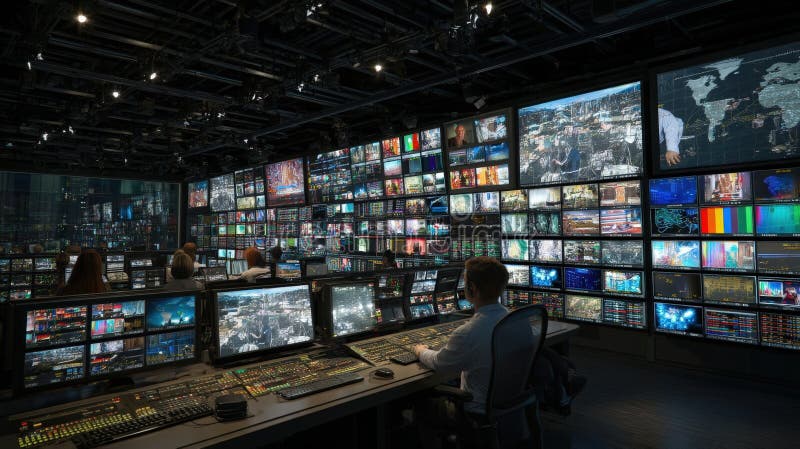
Understanding breaking news verification mechanics protects informed readers from falling victim to manufactured panic during unfolding chaotic events. Whenever an explosion rocks a capital city, a market flash-crash blindsides traders, or an international border flare-up erupts on social media, the initial information ecosystem does not produce truth. It produces fog. In that blinding vacuum, unverified claims race across digital networks at near lightspeed, propelled by emotional shockwaves and financial incentives designed to monetize raw attention.
Every seasoned war correspondent and desk editor knows the brutal reality of what journalism historians call the initial casualty of conflict. Early reports are almost always incomplete, frequently inverted, and occasionally completely fabricated. Yet the modern media ecosystem rewards velocity over precision, incentivizing rapid-fire aggregators to blast push notifications before any corroborating boots have touched the ground. Navigating this torrential storm of claims requires more than passive skepticism. It demands an active diagnostic framework.
The anatomy of early fog and information cascades
The first twenty minutes of any breaking disaster present the greatest concentration of falsehoods you will encounter in public discourse. During acute crises, eyewitness accounts suffer from severe tunnel vision, temporal distortion, and panic-induced sensory amplification. A bystander fleeing a loud sonic boom might genuinely believe they witnessed an incoming missile, while another witness yards away reports a transformer explosion. Neither individual is deliberately lying, but both are offering flawed sensory impressions distorted by adrenaline.
In high-pressure wire services, breaking news verification mechanics function as an intellectual brake line, arresting the rush to publish before raw rumor hardens into accepted consensus. The danger multiplies when digital platforms enter the fray. Algorithmic amplification mechanisms treat emotional velocity as a proxy for relevance, thrusting unvetted eyewitness clips to millions of feeds in seconds. As thousands of users re-share the same snippet, an informational echo chamber solidifies. Observers confuse repetition with validation, assuming that because four dozen accounts are sharing the identical clip, forty-eight independent sources have confirmed the event.
Precision in high-velocity journalism resembles precision in culinary science. Just as understanding meat brining mechanics and 4 proven secrets to lock in incredible juiciness relies on immutable physical chemistry rather than hopeful culinary folklore, authentic investigative reporting depends on verifiable physical evidence rather than viral enthusiasm. When speed overrides empirical testing, editorial integrity collapses. The resulting reputational fallout poisons the well of public trust, leaving audiences cynical and vulnerable to manipulative propaganda.
Why human psychology falls prey to breaking hoaxes
The human brain is an aggressive pattern-recognition machine that despises ambiguity. During high-stakes emergencies, ambiguity feels physiologically dangerous. We crave immediate explanations to restore a sense of predictability and agency. If a narrative matches our preexisting geopolitical fears or validates our cultural grievances, our critical faculties step aside. Cognitive scientists term this emotional confirmation bias, and malicious state actors, clout-chasers, and algorithmic spammers exploit it with surgical precision.
Without established breaking news verification mechanics, our cognitive filters collapse under the weight of adrenaline and narrative confirmation bias. Fabricators understand that audiences rarely fact-check stories that satisfy their moral intuitions. A dramatic video captioned to villainize a hated political adversary will spread orders of magnitude faster than a sober, nuanced report from a reputable newsroom awaiting field confirmation. According to a Reuters Institute study on digital news consumption, sensationalized emotional framing consistently suppresses user motivation to seek primary documentation or verify geographic origins.
Furthermore, the monetization mechanics of online platforms reward sensational volume rather than investigative rigor. Click-farms and automated bot networks deploy pre-rendered outrage templates, attaching trending crisis hashtags to hijack algorithmic search spikes. They weaponize recycled footage from decades-old foreign skirmishes, video game simulations, and cinematic CGI clips, knowing that the viral wave will peak and yield advertising profits long before debunking corrections surface. Breaking news literacy requires understanding that the digital town square is not designed to inform you; it is designed to keep your eyes locked on the glass.

Four proven verification rules that separate truth from weaponized fiction
Restoring epistemic discipline does not require expensive intelligence software or insider media credentials. It requires a repeatable, adversarial mindset that treats every unconfirmed digital asset as guilty until proven innocent. Implementing breaking news verification mechanics requires four disciplined operational filters that dismantle synthetic hysteria before it spreads.
Geolocation and chronological metadata forensics
The physical universe leaves indelible signatures that digital impostors struggle to fabricate simultaneously. When examining breaking video or photographic evidence, professional open-source intelligence analysts immediately strip away the headline caption and inspect the physical terrain. Sun angles, shadow lengths, tree foliage, architectural features, road signs, and overhead utility lines provide verifiable geographical coordinates.
Open satellite mapping repositories allow anyone to compare roof lines and terrain elevation against raw user footage. Chronolocation takes this investigation a step further by calculating the exact azimuth of the sun at a specific latitude, verifying whether shadows align with the claimed time of day. If an influencer claims a drone strike occurred at midday in an Eastern European city, but the building shadows stretch at long forty-five-degree eastern angles indicative of a late autumn sunset, the claim disintegrates instantly under basic physical geometry.
Reverse chain of custody and provenance tracking
Never accept media at face value without tracing the digital asset back to its foundational upload. Bad actors frequently download authentic combat footage from a forgotten conflict in decades past, apply a film-grain filter, lower the resolution to disguise telltale artifacts, and republish it as live action from this morning.
Applying strict breaking news verification mechanics to raw footage prevents malicious actors from laundering re-contextualized archival disaster clips as current realities. Reverse image search engines permit researchers to upload keyframes sliced from breaking video streams to track their historical presence online. If a frame reveals that the identical visual sequence existed on a forum six years ago, the breaking claim is definitively punctured. Provenance tracking also examines file container headers and EXIF data when original assets are obtainable, establishing a chronological paper trail from sensor to screen.
Independent corroboration through primary local witnesses
True disasters generate an asymmetrical constellation of independent digital footprints from distinct vantage points. When an authentic catastrophe occurs, hundreds of distinct mobile devices capture different angles, acoustical profiles, and subsequent emergency responses. A solitary, dramatic camera shot pushed by an anonymous aggregation account with zero local footprint should trigger immediate alarm bells.
Modern breaking news verification mechanics insist that two independent entities with direct perceptual access must validate an assertion before it hits the wire. Sourcing desks achieve this by identifying verified local businesses, regional meteorological stations, local municipal radio feeds, and municipal public safety dispatches near the target coordinates. Triangulating independent witness streams strips away subjective exaggerations, confirming whether an incident is an isolated localized mishap or a widespread coordinated emergency.
Algorithmic synthetic artifact and voice cloning detection
The explosion of generative neural networks has permanently destabilized visual and auditory evidence. Synthetic speech synthesis tools can clone a political leader’s vocal cadence from thirty seconds of clean audio, while generative video models can fabricate convincing crowd panics, explosive detonations, and fraudulent press briefings with alarming fidelity.
Detecting these hyper-realistic hoaxes requires searching for micro-inconsistencies where machine learning models notoriously struggle. In synthetic audio, look for unnatural breath rhythms, uniform cadence lacking respiratory pauses, and anomalous high-frequency metallic buzzes around sibilant consonants. In synthetic video, scrutinize background details: asymmetrical eyeglasses, garbled street typography, unnatural eye blinks, physics-defying water splashes, and flickering edges where complex textures intersect skin. Synthetic generation tools excel at central subjects while rendering peripheral background physics with glaring mathematical hallucinations.
Building an impenetrable personal information firewall
Surviving the relentless blast of modern information warfare requires an intentional slowdown. When dramatic bulletins disrupt your afternoon, the most radical and effective action is deliberate tactical patience. Resist the emotional impulse to retweet, forward, or amplify breaking assertions before institutional verification bureaus and ground correspondents establish physical presence.
Recognize that being five minutes late to an unfolding story carries zero real-world penalty, whereas amplifying an orchestrated lie damages social trust and spreads real-world panic. Develop a personal media diet consisting of primary source records, authenticated regional dispatches, and seasoned investigative newsrooms with transparent correction policies. Adopting these breaking news verification mechanics elevates everyday citizens from passive consumers of outrage into resilient evaluators of truth. In an era where deceptive fiction travels around the globe while truth is still lacing its boots, your disciplined skepticism is the last line of civic defense.