Trevon Brazile Gives Denver 3 Major Reasons For An Urgent Early Rotation Role
A standout preseason finale and sudden opening-night injuries have accelerated rookie Trevon Brazile into Denver’s rotational spotlight. Here is an investigative breakdown of how the Arkansas product reshapes the roster calculus.
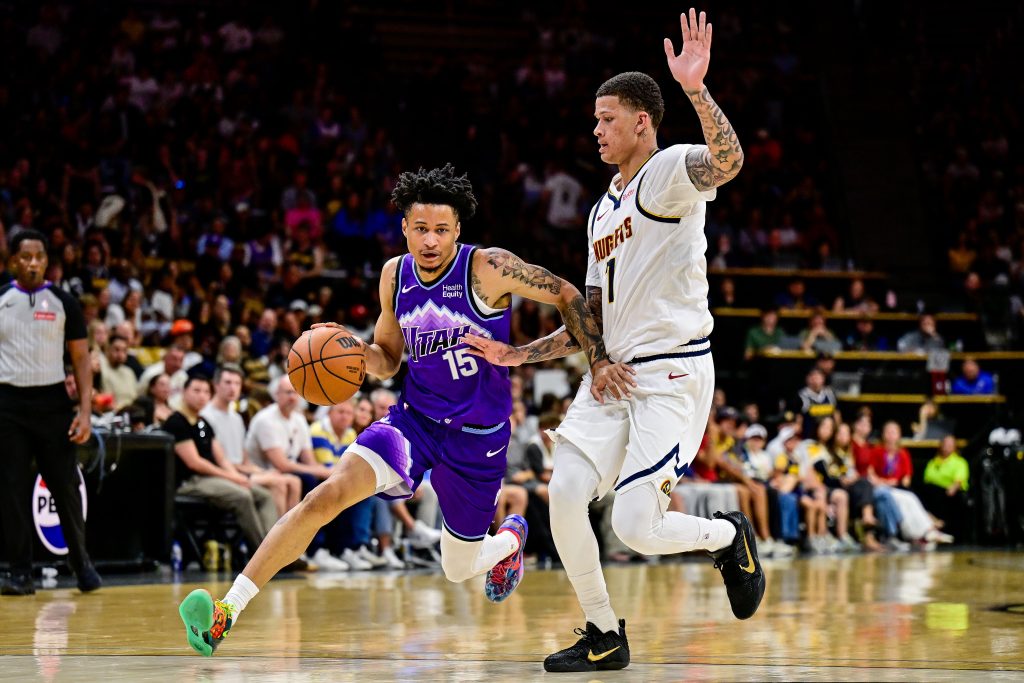
BOULDER, COLORADO - OCTOBER 4: Trey Alexander #15 of the Utah Jazz is defended by Trevon Brazile #7 of the Denver Nuggets in the second half in a preseason game at CU Event Center on October 4, 2026 in Boulder, Colorado. NOTE TO USER: User expressly acknowledges and agrees that, by downloading and or using this photograph, User is consenting to the terms and conditions of the Getty Images License Agreement. (Photo by Dustin Bradford/Getty Images)
When rookie forward Trevon Brazile ignited the Denver Nuggets bench during their exhibition finale, few anticipated how quickly theoretical roster depth would morph into immediate necessity. The modern NBA regular season rarely grants rookies an easy on-ramp, especially on franchises harboring legitimate championship aspirations. Yet as Denver prepares to embark on another grueling 82-game campaign, circumstances have conspired to push the athletic newcomer directly into the spotlight.
Denver’s coaching staff entered the final week of preseason play searching for rotational stability, frontcourt versatility, and reliable bench scoring. Instead of a cautious developmental trajectory, the coaching staff watched the dynamic forward dismantle opposing units with high-motor energy and tactical poise. What originally seemed like an assignment destined for developmental reps with the G League affiliate has suddenly turned into a live conversation about meaningful opening-week minutes.
A Thunderous Preseason Finale Changes the Roster Calculus
Preseason statistics often come with glaring caveats, yet specific box scores demand undivided attention due to the sheer diversity of impact they demonstrate. That exact scenario unfolded during Denver’s exhibition finale, where NBC Sports reported that Trevon Brazile delivered a startling 12-point, 8-rebound, 2-assist, 2-steal, and 2-block line while shooting 5-of-7 from the field. Starting the contest, the rookie drilled both of his three-point attempts, providing Denver with an explosive five-category stat line across both halves of the hardwood.
While an uncharacteristic 0-of-3 display from the free-throw line highlighted developmental areas that still require refinement, the broader efficiency spoke volumes. He crashed passing lanes, challenged drivers at the rim, secured contested defensive boards, and demonstrated genuine floor-spacing upside. As detailed by The Denver Post, Brazile stood out as a remarkably strong performer throughout the final week of Denver’s exhibition slate, forcing head coach Michael Malone and the front office to reconsider their initial seasonal timeline.
Exhibition basketball often inflates individual offensive metrics, but defensive timing and rotational awareness are much harder to fake. The rookie consistently arrived on time as a weak-side helper, recovered swiftly on dribble penetration, and displayed high-level coordination when tracking ball-handlers in open space. Rather than looking lost amid NBA-level screening actions, he played with the instinctual clarity that coaches routinely crave from frontcourt reserves.
The Physical Blueprint From Arkansas to the Mile High City
To understand why Denver took a calculated swing on the young forward, one must look at the prototypical measurables documented in his collegiate and draft evaluation profiles. According to official player records tracked by ESPN, Brazile checks in at an imposing 6-foot-10 and 220 pounds. Born on January 7, 2003, the 23-year-old entered the professional ranks possessing the ideal physical dimensions demanded of modern NBA forwards who must split time between traditional power forward duties and modern small-ball rim protection.
During his collegiate tenure at Arkansas, scouts regularly marveled at his effortless vertical explosion, rapid second jump, and functional perimeter mobility. His size and length allow him to disrupt passing lanes, contest jump shots on switches, and provide a legitimate pick-and-pop threat that opens operating space for primary ball-handlers. In an era where flat-footed traditional big men get played off the floor in space, athletic forwards with genuine perimeter capabilities represent invaluable organizational commodities.
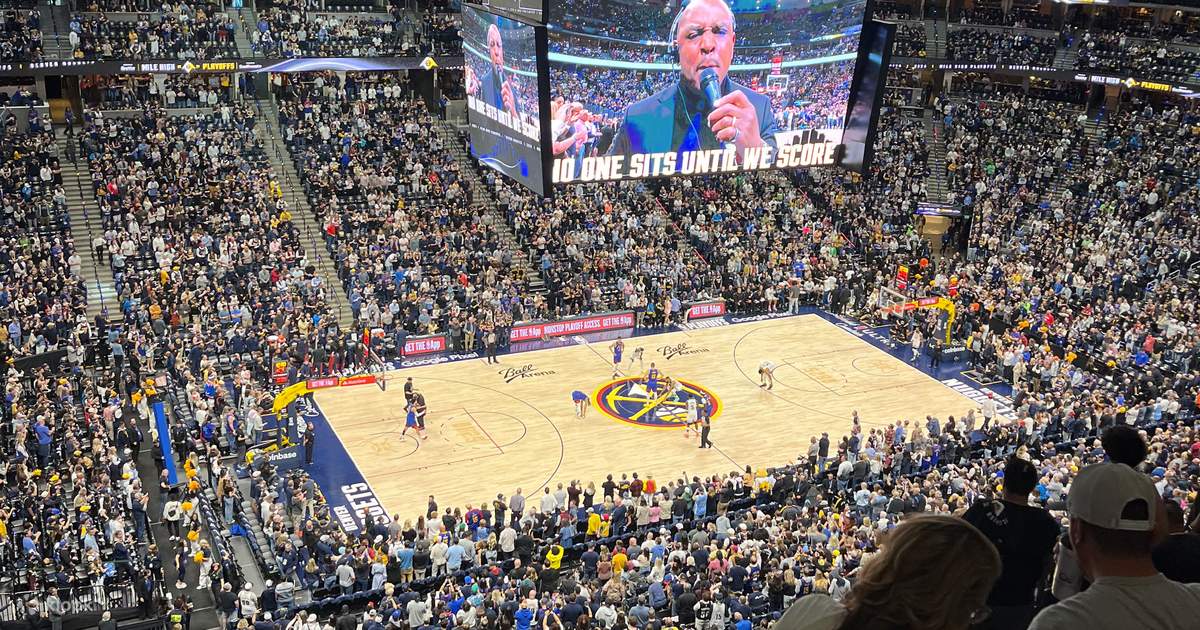
The primary concern surrounding young frontcourt players transitioning from the SEC to the Western Conference typically revolves around physical strength and defensive discipline. NBA scouting reports often question whether young forwards can withstand heavy post contacts without conceding position or fouling excessively. Yet throughout Denver’s training camp and exhibition games, his blend of lateral agility and vertical pop proved surprisingly sturdy against seasoned veteran competition.
3 Critical Factors Forcing Denver to Accelerate the Rookie
Basketball depth charts rarely change based entirely on individual merit; structural team emergencies and sudden roster gaps frequently accelerate rotational debuts. For Denver, an unexpected convergence of injury woes, defensive requirements, and perimeter deficiencies has created an immediate opening. The front office now faces a high-stakes calculation regarding how rapidly to integrate the newcomer into competitive game action.
Frontcourt Injury Pressures Opening Immediate Depth Chart Voids
The primary catalyst behind the sudden urgency stems directly from Denver’s medical report ahead of their high-profile regular-season curtain-raiser. As reported by Sports Illustrated, the Denver Nuggets will enter their season opener against the Oklahoma City Thunder significantly shorthanded after officially ruling out versatile forward Spencer Jones. Losing a capable wing and forward defender creates a glaring rotational hole on the second unit that cannot easily be patched with traditional backcourt reserves.
Simultaneously, analytical coverage from Nugg Love highlighted that wing Julian Strawther’s ongoing absence strips Denver of critical perimeter depth and rotation-ready offensive punch. When multiple rotational contributors are sidelined concurrently, coaching staffs cannot afford a rigid timeline for rookie development. The sudden absence of both Jones and Strawther strips away Denver’s margin for error, forcing the coaching staff to look directly toward their newly acquired rookie forward to fill the vacant forward minutes.
Modern Two-Way Production Mirroring Five-Category Utility
Modern NBA benches frequently fail because reserve forwards are one-dimensional specialists who cannot sustain value on both ends of the court. Pure shooters are often hunted relentlessly on defense, while defensive stalwarts without perimeter scoring punch wreck offensive spacing. The standout showing logged by NBC Sports—where the rookie produced two blocks, two steals, and two assists alongside his scoring and rebounding—showcased an uncommon multi-positional versatility.
Denver’s tactical framework under Michael Malone prioritizes players who understand rotational reads and contribute without demanding high offensive usage. Having a frontcourt piece who can dive hard to the rim, finish above the cylinder, trigger transition fast breaks with outlet passing, and protect the basket against downhill guards provides irreplaceable tactical balance for secondary lineups.
Floor Spacing Needs to Sustain Denver Second Unit Scoring
Denver’s starting five remains among the most devastating offensive units in professional basketball, but secondary units have historically experienced painful scoring lulls whenever primary creators rest on the bench. The injury to Julian Strawther exacerbated concerns regarding reserve shooting, as Strawther was widely projected to shoulder substantial three-point shooting responsibilities for the second unit.
As Nugg Love observed, Julian Strawther’s absence could fast-track Trevon Brazile into the regular rotation specifically to help mitigate that three-point void. Knocking down 2-of-2 from beyond the arc in his preseason start demonstrated that the forward possesses clean shooting mechanics and baseline pick-and-pop utility. If opposing defenses are forced to honor his outside jumper on the perimeter, driving lanes instantly widen for Denver’s reserve ball-handlers.
Surviving the Opening Night Test Against Oklahoma City
Entering the regular season against the Oklahoma City Thunder represents one of the most grueling tactical tests a rookie can possibly encounter. Oklahoma City deploys an aggressive, hyper-athletic perimeter defense that collapses passing lanes and forces opponents into chaotic split-second decisions. As Sports Illustrated noted, Denver is acutely aware of the personnel challenges they face heading into this opening contest without a fully healthy roster.
In modern sports culture, tracking how sudden breakout storylines capture widespread fascination mirrors the broader cultural spectacle seen across public media. For instance, just as popular culture audiences dissect dramatic revelations like when Karrueche Tran Reveals 3 Major Truths Behind Her Viral Deion Sanders Romance, basketball fans become completely engrossed when an unheralded young athlete is suddenly catapulted into the national limelight under intense pressure. Surviving that pressure cooker demands poise, emotional restraint, and acute situational awareness.
If called upon against Oklahoma City’s suffocating defensive traps, the rookie cannot afford careless turnovers or reckless reaching fouls against relentless perimeter slashers. The Thunder relentlessly hunt mismatches and punish hesitant decision-makers. However, his length and vertical rim-protecting instincts could provide the exact athletic counterweight Denver requires to prevent Oklahoma City from completely dominating the paint in bench minutes.
Long-Term Outlook for Denver Frontcourt Evolution
Whether this rapid surge translates into a permanent rotational role throughout the grueling 82-game calendar remains dependent on consistency and defensive discipline. The Denver Post rightly questioned what his standout preseason finale truly means for the front office’s long-term plan, particularly once the roster returns to full health. Rookie development in the NBA is rarely a straight line, and early-season opportunities can evaporate just as quickly as they emerge if defensive fundamentals slip.
Yet the physical tools and functional skills displayed during the preseason cannot be fabricated. At 6-foot-10 with legitimate floor-stretching ability, exceptional shot-blocking instincts, and the physical agility to switch onto perimeter wings, the former Arkansas Razorback possesses the exact modern profile Denver has sought to cultivate. If he proves capable of navigating early-season challenges without losing poise, Denver may have accidentally stumbled into an indispensable weapon far earlier than anyone anticipated.