Curveball pitch mechanics reveal 4 essential secrets to unlock devastating break
Harnessing aerodynamic drop demands far more than a violent flick of the wrist. Discover the hidden physics and anatomical principles behind baseball’s most deceptive pitch.

Mastering curveball pitch mechanics requires an athlete to manipulate invisible air molecules rather than merely muscling a leather sphere toward home plate. When executed with surgical precision, the pitch defies instinctive human expectation. A hitter tracks a white blur cruising comfortably through the upper third of the strike zone, only to watch it plummet abruptly past their swinging knees. That dramatic dive is neither an optical illusion nor an accidental flick of the wrist. It represents a masterclass in classical aerodynamics, rotational momentum, and kinetic sequencing.
For over a century, baseball players have argued over why some breaking balls bite sharply while others hang lazily over the heart of the plate. Folklore once suggested that throwing a breaking pitch damaged an arm by nature, or that pitchers possessed rubber tendons that allowed unnatural contortions. Modern athletic telemetry and motion capture have stripped away the superstition. Today, elite pitching instructors understand that true movement is born from clean efficiency, where every joint in the kinetic chain contributes to imparting pure, forward-tumbling spin without sacrificing structural health.
The Invisible Physics of Magnus Force and Boundary Layers
To grasp why a baseball drops faster than gravity alone would dictate, you must examine fluid dynamics around a sphere traveling sixty feet and six inches. As a baseball hurtles toward the plate, air rushes past its surface. If the ball spins with pure topspin, the top surface moves directly into the incoming airflow, creating resistance, turbulence, and high pressure. Meanwhile, the bottom surface rotates in the same direction that the air travels, dragging the boundary layer along and accelerating air underneath. This velocity differential generates a significant downward pressure imbalance known as the Magnus effect.
Standard gravity accelerates a falling object at roughly thirty-two feet per second squared. A well-thrown breaking ball doubles or triples that downward acceleration by actively sucking the baseball toward the dirt. Understanding how curveball pitch mechanics differ from traditional fastball dynamics on a molecular level allows pitchers to realize that brute strength cannot replace spin efficiency. A fastball rides on backspin, fighting gravity to appear as if it rises. A curveball does the exact opposite, turning atmospheric drag into an aggressive downward turbocharger.
Seam orientation amplifies this dynamic even further. The raised stitches of a regulation baseball stir up local air turbulence, creating asymmetric separation points along the leather surface. Just as fundamental physical laws dictate cellular absorption in culinary arts—explored in our breakdown of meat brining mechanics and 4 proven secrets to lock in incredible juiciness—aerodynamic fluid dynamics dictate how ambient air manipulates a spinning baseball. When the stitches catch the boundary layer at the proper tilt, the ball experiences late lateral and vertical deviations that leave hitters flailing at empty air.
Why Traditional Coaching Cues Threaten Elbow Health
Generations of youth pitchers were taught disastrous mechanical cues that ruined ligaments before high school graduation. Coaches routinely barked instructions to snap the wrist like cracking a whip or to twist the forearm as if turning a stubborn doorknob. These cues actively encourage catastrophic stress on the medial elbow, specifically straining the delicate ulnar collateral ligament. Forcing the forearm into extreme, violent supination right before release places massive shear forces across the joint without generating meaningful rotational velocity.
Biomechanical studies published by the American Sports Medicine Institute demonstrate that the wrist does not snap forward or violently twist during an optimal release. Instead, the wrist stays relatively firm and locked in a slightly flexed, supinated posture while the entire arm moves through a fluid, natural arc. The spin is applied not by an isolated wrist spasm, but through finger pressure and wrist orientation established well before the arm accelerates forward.
This paradigm shift has prompted researchers to reevaluate curveball pitch mechanics using high-speed optical capture. Modern data reveals that a clean breaking ball produces no more joint torque than a standard four-seam fastball when thrown with sound posture. Injury occurs when pitchers attempt to manufacture spin out of weak distal joints like the wrist and fingers, rather than driving force through the hips, trunk, and scapula. True efficiency protects the arm while maximizing the sharpness of the break.
Four Proven Principles That Produce Devastating Movement
Dissecting high-level curveball pitch mechanics highlights four core mechanical requirements that separate a batting-practice lob from an unhittable wipeout pitch. When these four elements align, energy transfers cleanly from the rubber through the fingertips, translating raw rotational force into maximum flight deviation.
Mastering the Middle Finger Pressure Vector
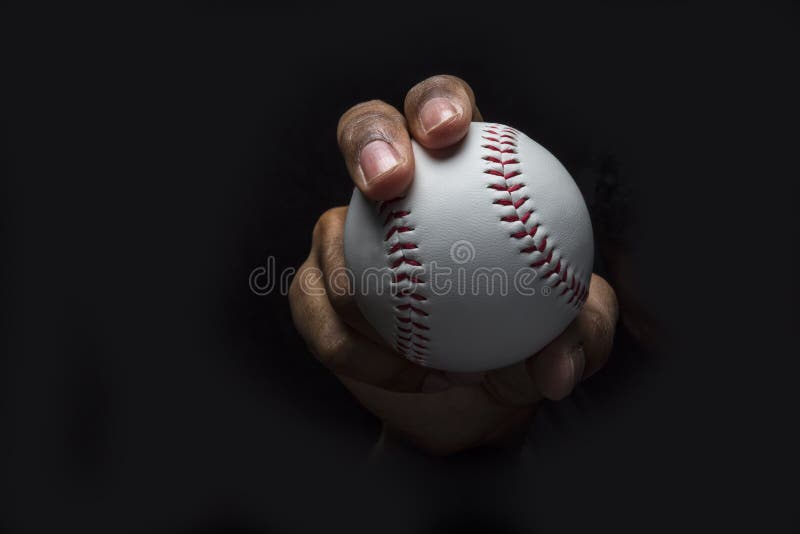
The middle finger is the primary engine of the breaking pitch. While the index finger rests gently on the leather for stability, the middle finger must rest flush against a raised seam to generate traction. During the delivery, the pitcher applies firm, sustained downward pressure along that seam. As the ball clears the hand, the middle finger pulls down through the front of the baseball, essentially peeling the leather forward. Think of it not as snapping the hand downward, but as ripping down a miniature window shade using only the pad of the middle finger. This distinct pressure vector guarantees maximum friction and clean rotational velocity.
Aligning the Seam Axis for Maximum Magnus Efficiency
Spin rate means very little without spin efficiency. A pitcher might spin a baseball at twenty-eight hundred revolutions per minute, but if that spin is gyro-dominant—spinning like a football spiral—the ball will experience virtually no Magnus force and will stay on a flat, predictable trajectory. Top performers align the seam axis so that the rotational vector points directly perpendicular to the ball flight path. Clean topspin, tilted slightly according to arm slot, converts every revolution into tangible movement. Achieving pure seam alignment requires the pitcher to keep the thumb tucked securely underneath the ball, acting as an opposing pivot point that releases cleanly without imparting counter-spin.
Maintaining Forearm Neutrality Through the Kinetic Chain
Athletes often struggle with breaking balls because they alter their foundational delivery to make the pitch curve. They drop their elbow, fly open with the front shoulder, or shorten their stride. High-level execution demands forearm neutrality throughout the acceleration phase. The arm must travel along the exact same path as a fastball until the final milliseconds before release. Preset the wrist angle early during the arm swing, maintain that stable geometry through external rotation, and allow the elbow to extend naturally. Maintaining this structural consistency provides an essential benchmark when diagnosing curveball pitch mechanics across repetitive throwing cycles.
Executing Pitch Tunneling for Absolute Visual Deception
A curveball with incredible movement remains vulnerable if the hitter recognizes it out of the hand. Elite pitchers rely on pitch tunneling, ensuring the breaking ball travels along the identical visual corridor as their fastball for the first twenty feet of ball flight. Because human vision requires time to calculate trajectory, late movement is infinitely more lethal than early movement. When a curveball pops out of the hand with an upward loop, hitters identify the spin profile immediately and adjust their posture. True mastery comes from driving the pitch downhill into the hitting tunnel so that its violent dive occurs only after the batter commits to a swing.
Diagnosing Mechanical Breakdown Before It Causes Costly Habits
When subtle flaws disrupt curveball pitch mechanics, the result is almost always a floaty, flat offering that hitters crush into the gaps. The most notorious breakdown is the hanging breaking ball. This mistake rarely stems from poor finger strength; it happens when the pitcher releases the ball too early or permits the chest to pull off-target prematurely. When the torso rotates early, the arm lags behind, forcing the hand to cast out away from the body. The fingers scrape over the side of the ball rather than driving down through its center, creating weak, diagonal spin that sits invitingly in the strike zone.
Conversely, spiking pitches repeatedly into the dirt ten feet in front of home plate indicates an overcorrection in posture. Pitchers often pull their head downward violently, attempting to force the ball down by collapsing their front hip. This cuts off natural arm deceleration and forces an abrupt release point. Correcting this fault requires restoring trunk stability. The head must remain steady, the lead leg must firmly block kinetic energy, and the throwing arm should follow through diagonally across the opposite hip in a smooth, continuous deceleration arc.
Arm slot migration represents another common pitfall. Pitchers frequently lower their arm angle when throwing breaking balls, attempting to get around the side of the sphere to create sweeping action. Doing so tips off watchful batters and alters elbow stress vectors. Consistency across all pitch types keeps opponents off balance. The curveball must fit seamlessly within an athlete natural arm slot, whether they throw from a high three-quarters angle or a low three-quarters slot, adjusting the tilt of the spin axis rather than twisting the skeleton.
The Split Second Perception Battle at Home Plate
Hitting a baseball is widely recognized as the single most demanding cognitive and physical task in professional sports. A major league fastball reaches home plate in roughly four hundred milliseconds. A batter requires roughly one hundred milliseconds to visually identify the ball, another hundred milliseconds to process its trajectory, and roughly one hundred and fifty milliseconds to execute a swing. That leaves less than fifty milliseconds for swing modification.
A well-executed breaking ball exploits these neurological limits. Because the initial trajectory mirrors a strike, the batter commits their motor program based on an anticipated linear flight path. By the time the pitch enters the final twenty feet, the compounding Magnus force causes the ball to drop beneath the bat path. The human eye relies on saccadic movement to track high-speed objects, jumping ahead to where it expects the ball to arrive. When the ball deviates sharply from that anticipated coordinate, the brain simply cannot issue a corrective motor command in time.
This mental vulnerability illustrates why understanding the true physics of ball flight is so crucial for serious athletes. Throwing harder might overpower undisciplined hitters, but precision movement dismantles even the most calculated offensive approaches. Ultimately, dedication to repeatable curveball pitch mechanics transforms an ordinary arm into an unhittable tactician, turning the simple friction of leather and air into the ultimate competitive weapon.