Joe Manganiello Reveals 5 Crucial Truths Behind His Shocking Health Battle and Art
After shedding 30 kilograms during a severe health crisis, actor Joe Manganiello has unveiled a monumental three-foot dragon tattoo and opened up about his physical rebuild.

Hollywood veteran Joe Manganiello stunned audiences worldwide when he stepped into the light to reveal the harrowing physical reality of an undisclosed illness that completely reshaped his life. Known globally for his Herculean frame in high-profile projects ranging from True Blood to Magic Mike, the actor recently pulled back the curtain on a grueling private ordeal that involved invasive surgery, profound biological trauma, and an astonishing 30-kilogram weight drop. Rather than retreating from public view, he chose to reclaim his narrative through an extraordinary visual statement and an unsparing account of physical recovery.
The sudden revelation surfaced through a combination of raw social media imagery and candid reflections covered widely across international media. Long recognized as a benchmark of physical power, the public image of Joe Manganiello has long been defined by imposing athletic stature, making the reality of his severe biological depletion both startling and deeply human. His story is not simply about aesthetic reinvention, but rather a blueprint for operational recovery, bodily reclamation, and psychological endurance in the face of sudden vulnerability.
The Hidden Health Crisis and the Physical Toll of Recovery
Behind closed doors, the actor endured a medical catastrophe that necessitated urgent surgical intervention. In accounts analyzed by Men’s Health, the sheer scale of his physiological decline became apparent. Manganiello lost roughly 30 kilograms—over 66 pounds—of body mass as his system struggled through acute illness and the aftermath of hospital treatment. For an athlete whose baseline weight and muscle tissue were meticulously maintained over decades, shedding that volume of mass represented severe catabolic depletion rather than simple weight loss.
When the human body undergoes extreme trauma accompanied by surgical stress, it triggers rapid systemic muscle atrophy. Endocrine pathways shift into survival mode, drawing upon existing muscular structures for cellular energy while systemic inflammation suppresses protein synthesis. Recovering from such an acute deficit is fundamentally distinct from typical bodybuilding routines. It requires an exhaustive baseline recalibration where fundamental motor functions, joint integrity, and basic cardiovascular capacity must be reestablished before any progressive resistance can even be considered.
The psychological shock of this physical diminishment cannot be overstated. When a performer’s professional identity is intrinsically anchored to physical dominance, sudden physical frailty poses an existential dilemma. Rather than concealing the physical aftermath of his operations under tailored clothing or digital manipulation, the actor documented the structural changes to his physique, confronting the reality of his recovery openly.
Transforming Battle Scars into a Mythological Masterpiece
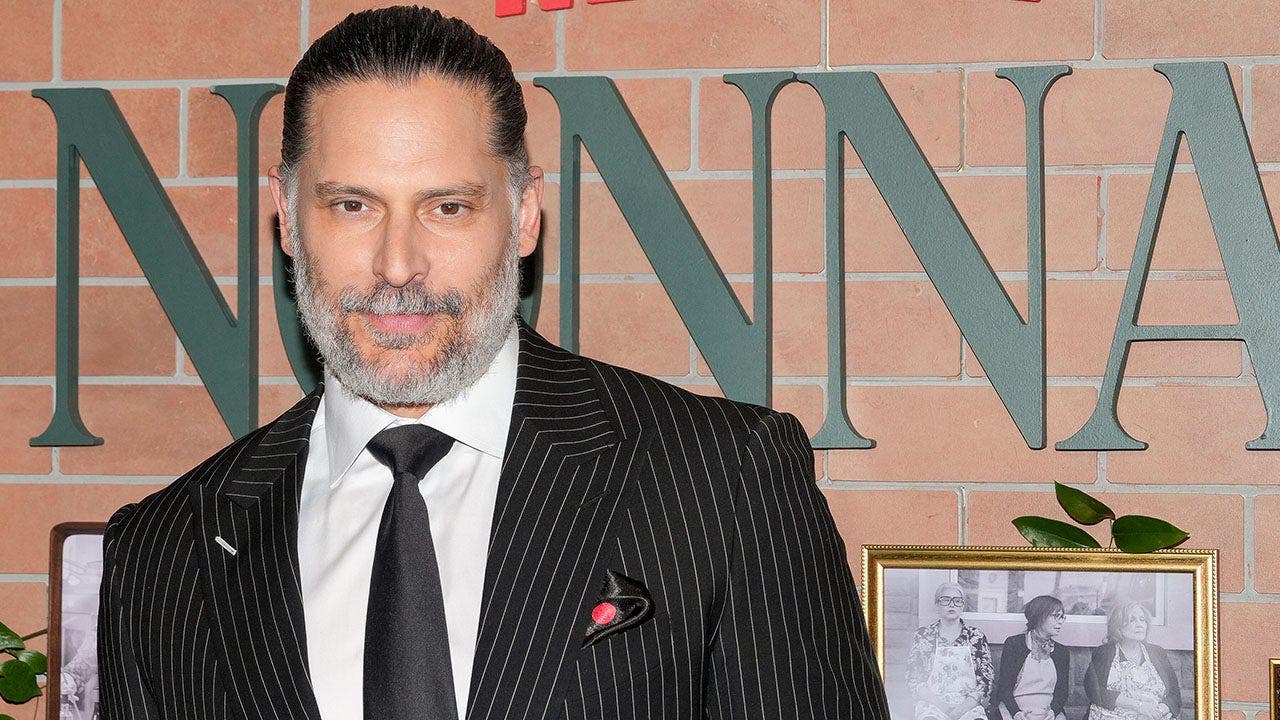
As detailed by People and E! News, Joe Manganiello chose to confront those surgical marks by commissioning an intricate, three-foot-tall dragon tattoo that stretches across his abdomen, hip, and thigh. The breathtaking ink piece, captured in provocative photos that immediately sent social media into overdrive, serves as an intentional canvas of reclamation. Instinct Magazine characterized the unveiling as an unfiltered moment of self-ownership, leaning into the bold magnetism that first established his presence in mainstream cinema.
Covering extensive surgical incisions with detailed tattoo work is an extraordinarily complex dermatological challenge. Scar tissue possesses different elasticity, tensile strength, and ink retention profiles compared to healthy skin. It requires master-level needle control and an intricate understanding of anatomical contours to weave shaded scales, dynamic claws, and flowing contours over raised tissue. The three-foot dragon does not merely disguise the surgical scars; it integrates them directly into a creature known across world mythologies as a symbol of primal strength, fierce resilience, and elemental rebirth.
By transforming clinical trauma into striking art, the actor made a profound statement regarding agency. Incisions left behind by emergency surgical procedures are often experienced as involuntary marks of helplessness. Covering them with bespoke imagery reclaims authority over the physical self, converting involuntary trauma into an intentional declaration of survival.
5 Crucial Lessons from Rebuilding Strength After Severe Trauma
For Joe Manganiello, the road back to peak physical form was not merely about aesthetic restoration, but about rebuilding functional vitality from absolute ground zero. In analyzing his physical revival at 49 years old, Men’s Health highlighted the strategic mechanics required to restore foundational athletic performance after major metabolic shock.
Prioritising Progressive Mobility Over Pure Load
When muscle mass is decimated by prolonged illness, diving directly into high-intensity resistance training is a recipe for orthopedic disaster. Tendons, ligaments, and stabilizing tissues degrade rapidly alongside skeletal muscle. The foundational phase of reconstruction demands an obsessive focus on joint mobility, multi-planar balance, and neuromuscular re-education. Heavy barbells must yield to resistance bands, bodyweight calisthenics, and isometric holds until the kinetic chain proves stable enough to safely absorb mechanical loading.
Resetting Metabolic Baselines and Nutritional Discipline
Rebuilding 30 kilograms of depleted muscle tissue requires far more than passive caloric overfeeding. Cellular regeneration after systemic trauma hinges on disciplined nutrient timing, hyper-targeted amino acid absorption, and micronutrient optimization to resolve lingering systemic inflammation. Navigating profound bodily rehabilitation requires an acute appreciation for systematic fundamentals and precise thermal regulation, reminiscent of how mastering Pan searing mechanics and 4 proven secrets to create exceptional crust relies on controlled heat management and disciplined execution rather than hurried guesswork. Every metabolic variable must be monitored to ensure cellular tissue rebuilds rather than converting into visceral adiposity.
Embracing Mental Fortitude Through Chronic Vulnerability
Physical trauma strips away superficial confidence, exposing the raw psychological core underneath. The process of starting over with fractional weights demands that an individual abandon ego entirely. Manganiello’s transparent documentation demonstrates that authentic strength lies in accepting current limitations while maintaining relentless daily commitment. The discipline to show up on days defined by fatigue, stiffness, and slow progress is the single greatest determinant of successful long-term physical rehabilitation.
Respecting the Science of Muscle Memory and Rest
One of the most remarkable physiological allies during severe post-illness rehabilitation is the phenomenon of myonuclear addition. Decades of disciplined strength training leave an enduring biological footprint within muscle nuclei that persists through catastrophic atrophy. While the road is arduous, cellular muscle memory accelerates the rate of tissue re-synthesis once proper stimulation resumes. However, this physiological rebound can only operate if systemic rest, restorative sleep, and low central nervous system stress are prioritized alongside training stimuli.
Channeling Adversity Into Creative Reinvention
Rebuilding oneself physically often acts as an accelerant for creative and professional renewal. Rather than viewing months spent in recovery as stolen time, intentional convalescence provides space for mental realignment. Reframing the battle against illness as a narrative catalyst allows an individual to approach creative work with sharpened perspective, emotional depth, and a refreshed sense of purpose.
The Cinematic Parallel of Deathstroke and Unfinished Battles
At the same time his fitness recovery dominated headlines, Joe Manganiello sparked passionate discussions across the entertainment world through revelations regarding his cinematic past. Speaking to SYFY Wire, the actor shed light on the unmade solo Batman film once helmed by Ben Affleck, detailing the chilling, methodical blueprint crafted for his supervillain alter-ego, Slade Wilson, better known as Deathstroke.
According to Manganiello, Deathstroke’s narrative arc was conceived not merely as a sequence of stylized fight scenes, but as a visceral psychological dismantling of Bruce Wayne. Wilson’s mission was designed like an unrelenting psychological horror film, methodically targeting Gotham’s protector from the shadows, unraveling his public life, destroying his support systems, and systematically eliminating his emotional foundations. The character viewed Wayne as the architect of his own personal suffering, seeking to strip him of everything before delivering a final physical reckoning.
The artistic resonance between this cinematic narrative and Manganiello’s real-world health struggle is unmistakable. Both stories center on an individual facing complete systematic deconstruction, where survival demands unimaginable mental endurance against hostile forces. While fans continue to lament the unproduced DC project, the actor’s unyielding determination in his personal life mirrors the relentless drive of the legendary warrior he portrayed on screen.
The Cultural Resonance of Physical Vulnerability and Renewal
Ultimately, the openness demonstrated by Joe Manganiello redefines what it means to rebuild after trauma in modern popular culture. In an era saturated with curated perfection and algorithmic illusions of effortless vitality, documenting the reality of surgical scars, catastrophic weight loss, and the grinding labor of rehabilitation strikes an exceptionally resonant chord with audiences worldwide.
His massive dragon tattoo stands not merely as an eye-catching visual spectacle, but as a permanent artistic monument to bodily agency and personal survival. By framing physical trauma through the lens of creative expression and clinical discipline, the actor offers a powerful blueprint for confronting adversity. Scars are not permanent indictments of weakness; they are the tangible proof of battles fought, survived, and transformed into enduring strength.