Bond duration mechanics and 4 proven rules that stop costly interest rate shocks
Fixed income stability relies on far more than nominal maturity dates and coupon yields. Uncover how duration mechanics dictate portfolio sensitivity and how disciplined investors insulate their capital against violent interest rate shifts.
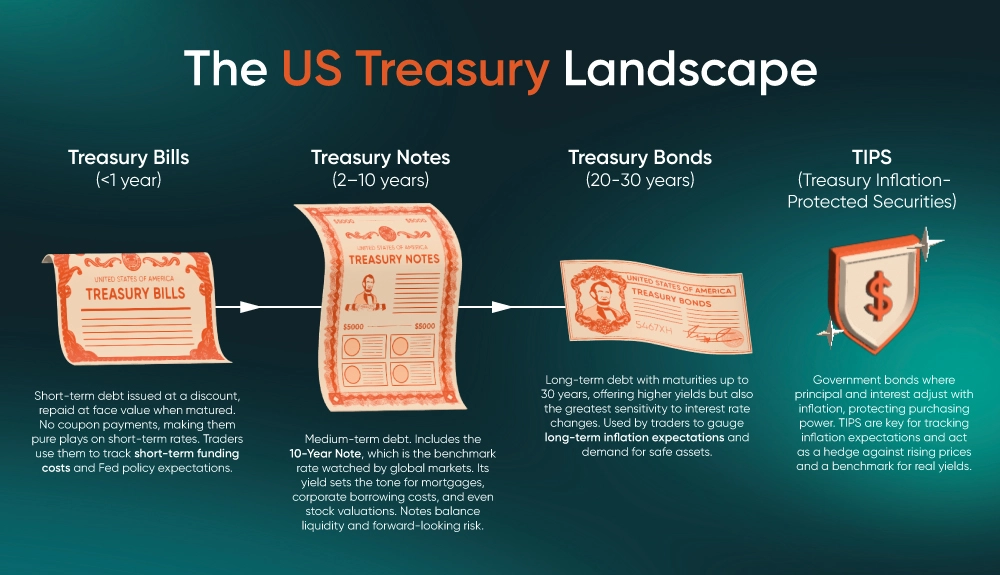
Mastering bond duration mechanics gives investors the exact mathematical compass needed to navigate turbulent interest rate cycles without watching capital evaporate. For decades, conventional wisdom treated the bond market as a placid pond where money goes to rest peacefully. Portfolios were constructed with the naive assumption that holding government or high-grade corporate debt meant guaranteed safety against volatility. Yet, when benchmark rates shift even slightly, bond values swing with astonishing ferocity. Many market participants find themselves bewildered when a conservative fund drops fifteen percent in a single cycle, unaware that the underlying maturity date tells only half the story.
Duration is not merely a synonym for the number of years until a debt instrument reaches its final expiration. It represents the temporal center of gravity for every dollar of interest and principal an issuer promises to return. While maturity counts down the days until the final par value is delivered, duration measures how fast your invested capital actually flows back into your hands. A thirty-year bond with a tiny interest payout carries an immense vulnerability to macroeconomic swings, whereas a thirty-year bond paying a hearty double-digit yield returns its initial outlay far quicker. To truly understand how fixed income behaves under pressure, one must unpack the core architecture of bond duration mechanics rather than staring solely at coupon rates.
The invisible lever controlling fixed income returns
Every debt instrument is fundamentally a series of contractual cash flows projected into the future. When an investor purchases a bond, they exchange immediate liquidity for a schedule of periodic coupon disbursements capped by a terminal repayment of face value. Because cash received in ten years carries far less present purchasing power than cash received tomorrow, each installment must be discounted back using current market discount rates. This discounting process forms the invisible lever of fixed-income pricing.
When prevailing benchmark interest rates escalate, newly issued bonds enter the market bearing larger coupons. As a direct consequence, existing bonds with smaller legacy coupons immediately look inferior to buyers. To induce anyone to purchase an older, lower-paying note, its secondary market trading price must decline until its effective return matches current offerings. The longer an investor must wait to receive the bulk of those contracted cash payments, the more punishing that downward repricing becomes. Maturity tells you when the transaction officially terminates, but it reveals almost nothing about the distribution of cash flows along that timeline.
The physics of the bond seesaw and the mathematical fulcrum
Every fixed-income security operates as a financial seesaw balanced on a shifting interest rate fulcrum. When market rates rise, prices fall, and when rates fall, prices rise. But how violently does that seesaw tilt? The length of the board represents duration. At the heart of bond duration mechanics lies the concept of weighted average cash flows, first formulated mathematically as Macaulay duration. By calculating the exact present value of each individual cash payment and multiplying it by the time received, analysts identify the single point in time where half the discounted cash value has been recouped.
For zero-coupon bonds, which make no interim payments whatsoever, Macaulay duration is exactly equal to nominal maturity. A ten-year zero-coupon bond has a duration of precisely ten years. However, the moment a bond pays periodic coupons, money begins flowing back to the investor early in the lifecycle, pulling the temporal center of gravity backward. A ten-year bond bearing an eight percent coupon might carry a Macaulay duration of just seven years, significantly dampening its overall exposure to shifting yields.
Financial analysts take this metric a step further using modified duration, which translates that temporal midpoint into a percentage price sensitivity. For every one percent move in market yields, a bond’s price will fluctuate in the opposite direction by approximately its modified duration figure. A portfolio with a modified duration of eight will drop roughly eight percent if yields climb by one hundred basis points. However, this linear calculation is only an approximation. Real-world bond prices follow a curved line known as convexity. When rates drop, positive convexity accelerates price gains, and when rates rise, it cushions price declines. Understanding both linear sensitivity and curvature prevents portfolio managers from mistaking simple approximations for absolute market reality.

Four foundational duration rules that insulate capital against violent shifts
Applying sound bond duration mechanics requires translating mathematical theory into proactive portfolio construction. Fixed income management is never about guessing where central banks will set rates next month. It is about structuring obligations and cash receipts so that market turbulence works in your favor rather than against your net worth. The following four operational principles separate seasoned fixed-income allocators from speculators caught off guard.
Aligning investment horizon with duration to neutralize rate risk
The most powerful defensive technique in fixed income is immunization, which occurs when an investor matches a portfolio’s duration directly to their specific spending horizon. If you need a designated pool of capital in exactly six years to fund an expansion or pay an obligation, holding an asset with a six-year duration creates a self-correcting financial ecosystem. If interest rates spike immediately, the market value of your holdings will fall, but the subsequent coupon cash flows can be reinvested at the newly elevated rates. Over that exact six-year timeframe, the higher reinvestment earnings compound fast enough to offset the initial capital loss perfectly. Conversely, if rates plunge, the rapid paper price appreciation compensates for the lower interest earned on reinvested coupons. By locking duration to your horizon, market volatility essentially cancels itself out.
Exploiting coupon velocity to shorten portfolio vulnerability
Cash that sits locked in an issuer’s hands across decades remains at the mercy of inflation and shifting yield curves. Accelerating the velocity of cash flow back into your portfolio dramatically lowers effective duration without forcing you to buy short-dated paper with meager returns. High-coupon bonds, amortizing loan structures, and asset-backed securities that return principal monthly rather than in a distant lump sum shorten duration naturally. As cash arrives steadily, you retain structural liquidity to seize fresh investment opportunities. Rather than remaining locked into legacy yield levels, an active allocator deploys high-velocity coupons into higher-yielding instruments during tightening cycles, turning rising rate environments into wealth accelerators.
Deploying barbell and bullet structures to capture yield curve kinks
Yield curves rarely shift in smooth, parallel lines across all maturities. Short rates might skyrocket while thirty-year yields remain subdued, creating flattening or inversions. Sophisticated allocators exploit this uneven movement through barbell and bullet strategies. A bullet strategy concentrates portfolio duration tightly around a single maturity sector, minimizing non-parallel curve risk. A barbell strategy pairs short-term ultra-liquid instruments with long-term high-duration bonds, averaging out to an intermediate duration. The barbell captures attractive yields at the long end while using the short end to maintain liquidity and reinvest quickly. When yield curves twist or steepen, a barbell strategy can produce superior risk-adjusted returns compared to a traditional ladder, provided the allocator monitors curve spread dynamics closely.
Stress testing convexity before extreme macro regime changes
Duration tells you how a bond portfolio behaves during minor, gradual interest rate fluctuations. Convexity tells you what happens when macro shocks trigger sudden, massive yield repricing. When yields are exceptionally low, modified duration stretches out while convexity becomes razor-thin, leaving fixed-income portfolios critically vulnerable to even modest tightening. Institutional managers routinely conduct multi-scenario stress tests, evaluating how portfolios respond not just to fifty-basis-point shifts, but to historical multi-hundred-basis-point surges. By seeking bonds with high positive convexity, allocators ensure that upside participation outpaces downside erosion when macroeconomic volatility peaks.
Common misconceptions that trick institutional and retail allocators alike
A widespread failure to grasp bond duration mechanics leads many otherwise conservative investors to walk blindly into double-digit drawdowns. The most dangerous assumption is believing that exchange-traded bond funds function identically to holding individual bonds to maturity. When you own an individual government bond, you have a legally binding contract ensuring the return of par value on a specific date, barring sovereign default. If interest rates surge, your paper value fluctuates, but your ultimate terminal cash flow remains guaranteed.
A collective bond fund, by contrast, operates with a perpetual target duration. Fund managers must continuously buy and sell bonds to maintain that specific duration profile, locking in realized capital losses during sharp market downturns. If panic triggers redemptions, managers are forced to liquidate holdings at rock-bottom prices, permanently impairing capital. Investors who treat perpetual bond funds as savings substitutes often suffer permanent losses when macroeconomic conditions invert.
Another persistent error is treating yield-to-maturity as an absolute promised return. Stated yield metrics assume every interim coupon payment will be reinvested at that exact identical interest rate until the bond matures. In real-world environments, reinvestment risk constantly alters terminal performance. Evaluating obscure debt covenants and complex secondary debt instruments requires the same forensic skepticism highlighted in anonymous source vetting mechanics and 4 proven rules that expose real truth, where unverified claims must be dissected to their raw fundamentals before risking credibility or capital. In fixed income, accepting surface-level credit ratings or headline yields without verifying duration sensitivity invites unexpected portfolio distress. For deeper technical standards, reviewing U.S. Securities and Exchange Commission guidance on bond duration and interest rate risk provides invaluable regulatory frameworks on how market swings erode asset values.
Engineering a resilient fixed income allocation for generational endurance
When you build an investment framework anchored in bond duration mechanics, rate hikes cease to be an existential threat and become strategic opportunities. Capital preservation is never achieved through passive inaction. It demands an intimate awareness of where your money sits along the interest rate sensitivity curve and how quickly that capital returns to your control.
A well-engineered allocation begins with clarity of purpose. If your primary goal is dampening equity volatility in a multi-asset portfolio, intermediate durations offer the historical sweet spot between coupon yield and negative correlation to equity crashes. If your priority is absolute liquidity and principal protection, keeping duration close to zero protects your baseline from the erosive forces of policy shifts. Periodically rebalancing your duration profile ensures that rising yields don’t quietly drag your asset values below recovery thresholds.
By internalizing bond duration mechanics, you transform a passive, vulnerable fixed-income portfolio into a finely calibrated engine of capital preservation. The financial markets will continue to oscillate through periods of easy credit, inflationary spikes, and aggressive monetary tightening. Those who view debt securities through the lens of maturity alone will repeatedly find themselves at the mercy of unpredictable market tides. Those who respect the mathematical discipline of duration will navigate every macroeconomic storm with clarity, control, and enduring wealth.