Foley sound design mechanics and 4 proven secrets that craft deeply immersive cinema
Behind every bone-chilling crunch and tender footstep lies an intricate tactile illusion. Explore how master sound artists recreate cinematic reality using everyday objects and precise acoustic choreography.
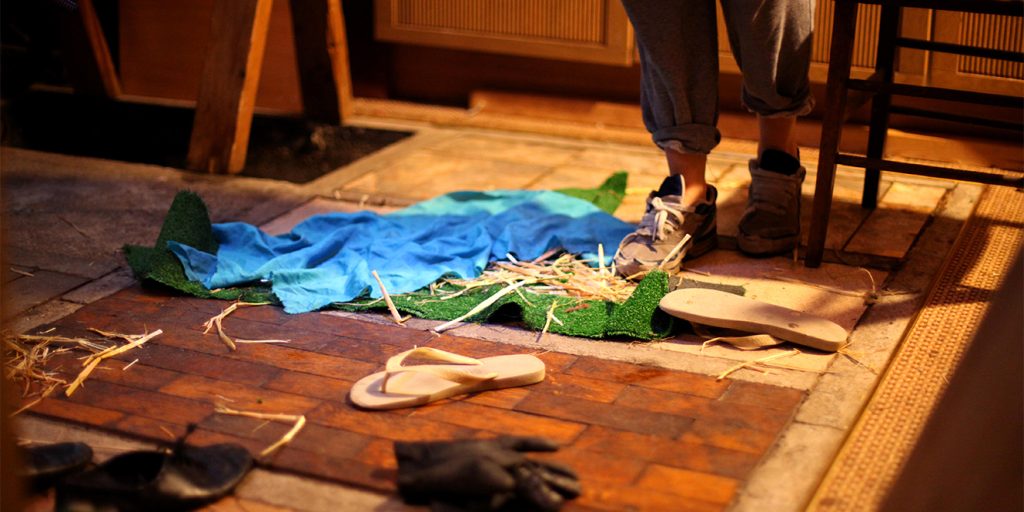
Mastering Foley sound design mechanics transforms ordinary moving images into visceral, living experiences that captivate an audience without their conscious awareness. When moviegoers watch an actor trudge through deep snow or listen to the delicate creak of leather armor during a tense medieval duel, they assume the production microphone captured those intimate textures live on set. In reality, film sets are chaotic acoustic wastelands filled with buzzing generator fans, crew chatter, and hollow camera dollies. Production audio is engineered to capture clean dialogue and nothing else. Everything from the rustle of a silk skirt to the sickening crunch of a shattered bone is physically fabricated on a specialized recording stage.
This unseen craft bridges the gap between visual illusion and somatic human empathy. Film is fundamentally flat and detached, restricted to two dimensions bounded by a glowing rectangle. Sound provides the nervous system of the story, convincing the human brain that light flickering against a screen possesses density, friction, temperature, and physical consequences. By deconstructing the physical and cognitive foundations of this sonic artistry, filmmakers and sound enthusiasts discover how manual tactile performance dictates emotional immersion.
The Psychoacoustic Reality Behind Cinematic Sound
At its core, Foley sound design mechanics operates on psychoacoustic manipulation rather than literal historical reproduction. The human brain does not process sensory data in clean, isolated channels. Instead, visual stimuli and auditory cues fuse inside the associative cortex to create a singular perception of reality. Sound theorist Michel Chion famously coined the term synchresis to describe the spontaneous, unshakeable mental bond formed between a visual event and an accompanying sound when they occur simultaneously. When a screen character drops an antique porcelain teacup, your brain accepts virtually any crisp, resonant shatter as genuine truth provided the sonic transient aligns precisely with the visual impact.
This perceptual elasticity gives sound artists incredible creative freedom. If a Foley artist recorded the literal sound of a punch landing on a human jaw, the audience would feel deeply underwhelmed. Real fistfights generate a dull, muffled thud that sounds surprisingly hollow and anticlimactic. To convey the emotional and physical brutality of a punch, the sound designer must construct a hyper-real sonic caricature that exaggerates density, wetness, and bone crunch. Cinematic truth is never about raw documentary capture; it is about psychological resonance.
Pioneered by Jack Foley during the dawn of sound cinema, this process replaces cold library samples with human performance. An artist stands on a stage watching a projected screen, breathing with the actor, matching their stride, and translating their emotional state into tactile acoustic vibrations. It is an athletic, expressive dance where physical objects become instruments of human psychology.
The Acoustic Anatomy of a Modern Foley Stage
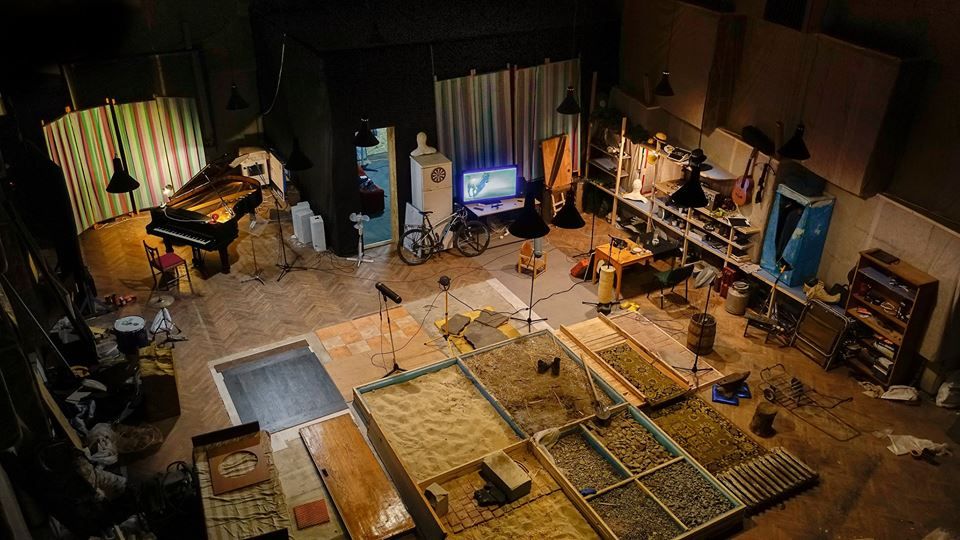
The architectural environment where Foley sound design mechanics come to life is deliberately engineered to eliminate room flutter while preserving high-frequency acoustic transients. Unlike a scoring stage designed for lush orchestral reverb, a Foley room must be extraordinarily dry and acoustically dead. Heavy sound absorption materials, angled non-parallel walls, and specialized bass traps ensure that every tap, scuff, and scrape enters the microphone diaphragm without unwanted spatial reflections. Spatial reverb is added later during the re-recording mix to match the exact visual geometry of the on-screen set.
Scattered across this controlled space are dedicated walking pits. These shallow modular recesses in the concrete subfloor are filled with diverse materials such as decomposed granite, fine beach sand, dry autumn leaves, river stones, and wet mud. Beside these pits sit isolated flooring panels constructed from vintage hardwood, loose linoleum tiles, hollow metal catwalks, and marble slabs. Every surface yields an entirely distinct sonic signature based on its structural density and mechanical compliance.
Microphone technique on the Foley stage demands surgical precision. Sound recordists frequently pair ultra-sensitive small-diaphragm condensers to capture the hyper-detailed tactile friction of fabric with focused shotgun microphones that mimic the acoustic timbre of boom mics used on location. Distance matters just as much as polar patterns. Placing a microphone too close creates an unnatural, claustrophobic proximity effect that detaches the sound from the visual depth of the lens, while placing it too far away invites background noise into delicate low-level passes.
Four Proven Rules That Transform Ordinary Props into Visceral Reality
When observing seasoned recording teams on a scoring stage, Foley sound design mechanics reveal four foundational principles that elevate raw physical noise into compelling storytelling.
Decoupling Literal Objects from Emotional Weight
The most common amateur mistake is attempting to create sounds using the exact object seen on camera. If a character wields a broadsword, recording a real medieval sword often produces a thin, dull metallic click. To create the iconic, lethal whoosh of a blade slicing through cold air, an artist might slice an old car antenna or bamboo cane near a dynamic microphone, layering that whistle with the abrasive slide of a rusty pruning shear against a cast-iron skillet. This counterintuitive substitution is one of the most brilliant demonstrations of Foley sound design mechanics, proving that the human ear demands exaggerated tactile texture over objective truth.
Similarly, the grotesque sounds of bodily trauma rarely involve anatomical materials. Twisting a head of fresh celery creates the unmistakable snapping of human cartilage. Plunging hands into an overripe honeydew melon lined with wet paper towels simulates the visceral internal trauma of a surgery scene. By decoupling the eye from the ear, the Foley performer hunts for materials that maximize physical resistance and micro-acoustic detail.
Tracking Micro Kinetic Rhythm and Body Movement
Footsteps are the bread and butter of the Foley trade, yet they are notoriously difficult to master. A novice focuses purely on synchronization, dropping a heel precisely when the actor’s shoe hits the pavement. Master artists focus on weight transfer, emotional momentum, and bodily center of gravity. A tired detective dragging his heels across cracked asphalt communicates exhaustion through the slow scuff of his leather soles, whereas a panicked teenager fleeing an unseen predator strikes the surface on their forefoot with frantic, shallow intensity.
When an artist tracks a character breaking into a desperate chase, the sonic cadence directly reflects real biomechanics. Understanding how footstrikes hit ground mirrors the physics found in Sprint acceleration mechanics and 4 proven rules that build explosive speed, where ground contact time and forward torso lean determine physical realism. If the Foley artist fails to lean forward and drive force into the stage surface with matching biomechanical cadence, the footsteps sound detached, floaty, and hollow, instantly ruining the dramatic illusion.
Calibrating Material Resonance Against Spatial Reverb
Sound behaves differently depending on mass, internal damping, and the enclosure in which it vibrates. When handling domestic props such as ceramic coffee mugs, silverware, or paper envelopes, the sound artist must account for the physical size of the room depicted in the frame. A coffee mug set onto a mahogany table in a cramped apartment living room requires a dry, direct transient with instant decay. The same action occurring inside an abandoned industrial warehouse requires prolonged acoustic resonance and low-frequency bloom.
Professional Foley performers manipulate the resonance of their props in real time by varying their grip tension. Choking a glass cup near its rim dampens its natural ringing frequency, instantly transforming bright ringing crystal into thick, everyday glass. Loosening the grip allows mechanical vibrations to travel freely through the material, creating an airy resonance that conveys delicate fragility. Controlling physical damping on stage gives the mix engineer clean, workable acoustic ingredients that nestle seamlessly into the final mix.
Layering Cloth Movement to Establish Character Identity
Fabric movement is the invisible acoustic glue of dramatic cinema. Known in the industry as the cloth pass, this technique involves performing the soft rustle of character garments from the opening frame of a scene to the finish. Far from mere background noise, fabric sound informs the audience about a character’s social standing, profession, and internal emotional tension.
A wealthy corporate lawyer glides through an executive boardroom accompanied by the muted, expensive whisper of fine tailored wool and pure silk lining. A gritty street mechanic moves under the stiff, abrasive friction of heavy canvas workwear and grease-stained denim. Sound teams maintain extensive prop wardrobes filled with vintage coats, stiff windbreakers, noisy parachute nylon, and delicate lace. During performance, the artist manipulates the fabric directly in front of the microphone, matching the character’s arm swings, torso twists, and subtle nervous fidgeting to establish a persistent physical presence.
Common Traps That Destroy Sonic Believability
The quickest way to destroy cinematic immersion is sonic over-crowding. Inexperienced sound editors often succumb to the urge to track every single microscopic movement visible on camera. If every finger wiggle, glance, and garment ripple produces a distinct audio transient, the mix becomes an abrasive, chaotic wall of noise that competes directly with the dialogue track and musical score. Elite artists practice sonic triage, intentionally leaving minor background movements silent to preserve dynamic breathing room for critical dramatic beats.
Another fatal trap is mechanical quantization. When sound teams rely on digital libraries and copy-paste identical footstep samples across an entire walking sequence, the human brain detects the synthetic repetition almost instantly. Even the most rhythmic walker never strikes the ground with identical velocity, pitch, or heel-to-toe roll twice in succession. Human movement is inherently irregular, shaped by microscopic balance adjustments and surface imperfections. Eliminating this natural variance sterilizes the performance and strips the narrative of organic warmth.
Preserving Physical Humanity in an Era of Digital Libraries
As computational audio processing and synthesized asset libraries expand, some question whether the physical Foley stage remains necessary. Modern digital workstations allow editors to manipulate gigabytes of pre-recorded audio with surgical pitch-shifting, time-stretching, and spectral editing. Yet, digital compilation fundamentally lacks the spontaneous, organic synergy born from a live performer watching an actor’s eyes on a monitor and reacting with an authentic physical gesture.
The subtle micro-delays, unexpected acoustic textures, and emotional syncopations produced by a living human holding tangible props cannot be synthesized through algorithmic automation. As documented in technical studies across the Audio Engineering Society research archives, human auditory perception possesses an extraordinary sensitivity to organic physical anomalies and phase coherence that static digital libraries routinely fail to replicate.
Ultimately, studying Foley sound design mechanics reminds filmmakers and audio purists that screen performance is an empathetic craft rooted in physical weight, material texture, and spontaneous human timing. As long as cinema aims to move the human heart, its foundation will rely on dedicated artists stepping into dark, quiet rooms, holding strange props, and breathing tactile life into the silent shadows on the screen.