Tennis serve mechanics and 4 proven secrets that build blistering ace power
Stop muscling the tennis ball with your shoulder and discover how your body operates as an elastic catapult. Here are the kinetic principles that unlock effortless serving speed and pin-point accuracy.
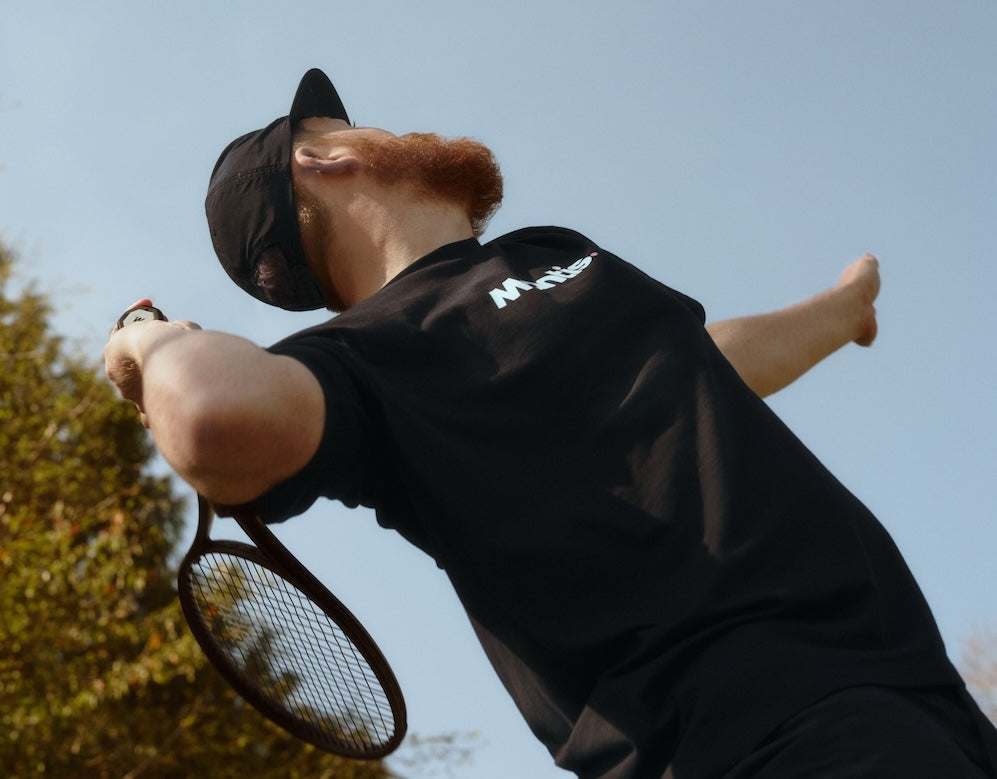
Mastering modern tennis serve mechanics requires unlearning the intuitive human instinct to hit the ball with pure arm strength. Watch an amateur step up to the baseline on any weekend morning. They toss the felt ball into the air, tense their bicep, pull their elbow backward like an archer drawing a bowstring, and heave their entire shoulder forward in an aggressive attempt to crush the ball. The resulting shot flies erratic, flat into the tape, or drifts hopelessly long, leaving behind an aching shoulder joint and a deflated competitor. Meanwhile, elite touring professionals make a 130-mile-per-hour missile look as casual as flicking water off their fingertips. Their secret is not superhuman muscle mass; it is physics, rotational timing, and anatomical elasticity working in synchronized harmony.
The serve is the single shot in tennis over which a player has absolute control. There is no incoming spin to neutralize, no opponent positioning to react to immediately, and no uneven court bounce to compensate for. Yet it remains the most mechanically misunderstood and physically abused stroke in the sport. When you treat the serve as an arm-driven strike, you place an impossible burden on the rotator cuff and sacrifice the immense kinetic energy your larger muscle groups are built to generate. Shifting your approach from forceful pushing to elastic whipping unlocks explosive speed with a fraction of the physical strain.
The Kinetic Chain and the Miracle of Segmental Energy Transfer
When coaches analyze elite tennis serve mechanics, they do not look at the hitting shoulder in isolation. Instead, they track kinetic energy from the asphalt beneath the player’s sneakers up through the kinetic chain. The human body behaves like a series of linked physical segments, much like the crack of a whip where heavy segments initiate motion to send exponential acceleration into the lightest tip.
The sequence begins with the ground reaction force. When you bend your knees and push downward into the court, the court pushes back with equal and opposite force. That upward vector does not vanish; it drives through your ankles, knees, and hips. As the legs extend, the pelvis rotates forward toward the target, followed a split second later by the torso and chest. Because the shoulders lag behind the hips, the abdominal wall and thoracic spine stretch dynamically like a wound spring, a reality documented extensively in National Library of Medicine study on kinetic chain biomechanics in tennis.
By the time the upper torso unwinds, the hitting arm has barely begun its forward ascent. The racquet drops deep behind the spine, lagging intentionally. When the shoulder finally whips forward, it inherits the accumulated momentum of every anatomical segment beneath it. The long bones of the upper arm and forearm rotate at blinding speeds, transferring hundreds of joules of kinetic energy through the racquet handle and directly into the sweet spot of the strings. Attempting to generate that speed using only the arm is like trying to crack a bullwhip by flicking the tip with your thumb. Understanding these foundational tennis serve mechanics shifts your perspective from raw athletic strength to structural sequencing.
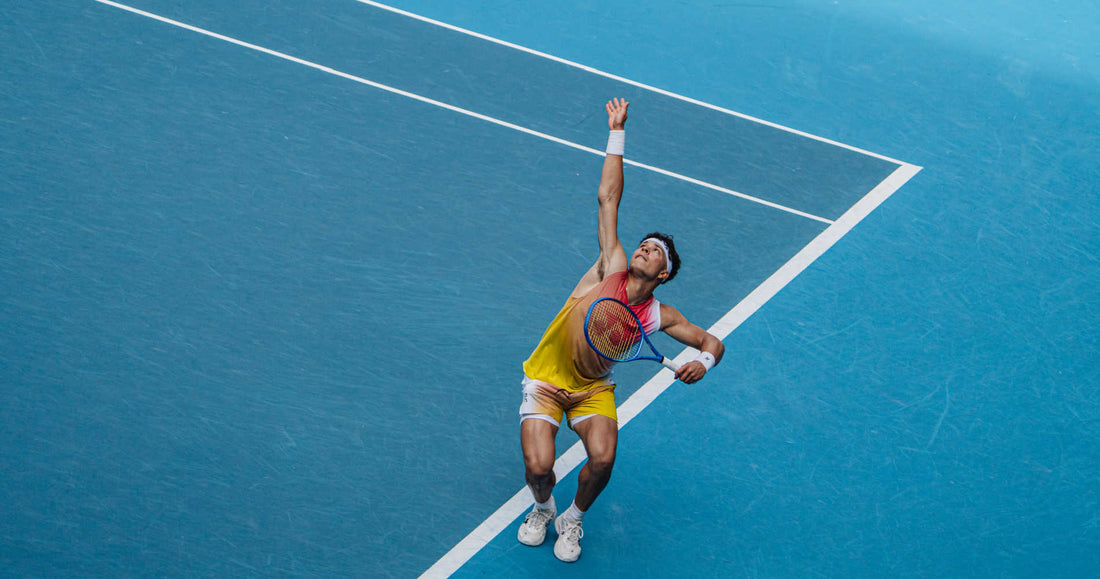
Four Proven Adjustments That Unlock Devastating Ball Speed
Refining your tennis serve mechanics comes down to orchestrating four sequential energy transfers that maximize racquet-head acceleration while safeguarding your joints from destructive shearing forces.
The Deep Knee Flexion That Preloads Ground Reaction Force
Many club players bend their knees as a polite formality, dipping an inch or two without shifting their center of mass. Real leg drive demands a deliberate, athletic coil. As the toss rises, sink your weight down into the balls of your feet, loading both legs evenly or biasing the rear foot depending on whether you employ a platform or pinpoint stance. Your quadriceps and glutes must act as hydraulic shock absorbers, storing elastic energy in the patellar and Achilles tendons.
The explosive upward drive must happen before the racquet begins its forward swing. You are not jumping simply to reach a higher contact point; you are launching your torso upward so your body acts as an ascending counterweight. When your feet leave the court, the sudden deceleration of your lower body hurls your upper body into rapid rotation, instantly elevating racquet speed before the arm muscles even fire.
The Hip and Shoulder Separation That Creates Elastic Torso Twist
Linear forward lunging kills modern serving power. The greatest servers generate rotational torque through radical hip and shoulder separation, a biomechanical phenomenon known as the stretch-shortening cycle. When you coil into the trophy position, turn your back partially to the net. Keep your hitting shoulder higher than your tossing shoulder, tilting your spine laterally away from the court.
As the forward stroke initiates, drive your lead hip toward the court while your upper torso stays turned away. This differential timing creates an agonizingly brief torsion across your core. The oblique muscles, lats, and pectorals are forcibly stretched across your ribs. When these stretched tissues reflexively snap back, they multiply rotational speed far beyond what conscious muscular contraction could ever produce on its own.
The Racquet Drop That Maximizes Upward Acceleration Distance
Amateurs often muscle their racquet directly toward the ball from the trophy pose, cutting their swing path in half. True power requires a deep, relaxed racquet drop where the racquet head plunges down the back of the spine, pointing toward the court surface.
To achieve this drop, the hitting arm, shoulder, and wrist must remain completely loose. Any premature grip tension or bicep contraction freezes the shoulder joint, choking the drop short. As your torso uncoils upward, the inertia of the heavy racquet head forces it to lag behind, naturally falling into the slot between your shoulder blades. This deep plunge creates a massive runway, allowing the racquet to accelerate continuously over a longer distance before striking the ball.
Aggressive Forearm Pronation That Safely Unloads Raw Wrist Snap
The phrase snap your wrist is one of the most hazardous misnomers in sports instruction. If an athlete tries to flex their wrist forward like casting a fishing rod at high speed, they will eventually tear ligaments or develop chronic tendinitis. The final burst of speed actually comes from internal rotation of the humerus and rapid forearm pronation.
With a continental grip, the racquet approaches the ball edge-on, slicing through the air like an axe blade to minimize aerodynamic drag. Just milliseconds before contact, the forearm rotates outward and the palm turns toward the net and slightly to the outside. This pronation snaps the string bed flat against the back of the ball at terminal velocity. After impact, the hitting side of the racquet faces away from the body, naturally bleeding off remaining kinetic energy without shocking delicate wrist tendons.
Common Technical Pitfalls That Rob Velocity and Destroy Rotational Health
A widespread breakdown in recreational tennis serve mechanics occurs during the transition between the backswing and the drop. Commonly called the waiter tray error, many recreational players turn their palm up toward the sky early in the toss, holding the racquet like a waiter balancing a heavy tray. This position completely bypasses the internal shoulder rotation runway, forcing the rotator cuff to muscle the entire stroke from an mechanically compromised position.
Another subtle killer of velocity is premature head drop. Players eager to see where their serve lands pull their chin downward before impact. Because the head weighs eight to eleven pounds, snapping it down pulls the chest forward prematurely, dragging the contact point lower and dumping the ball into the net. Elite servers keep their chin tilted upward, watching the empty space where contact occurred even after the ball has left the strings.
Tension is the ultimate enemy of speed. When pressure spikes during crucial games, muscles seize, grip pressure tightens into a death grip, and fluid biomechanics collapse. We saw the profound impact of technical discipline and unshakeable poise when Rafael Jodar Stuns Shanghai with 4 Major Breakthrough Lessons and a Historic Final Run on the competitive stage, proving that technical efficiency and mental clarity consistently outplay erratic brute force under intense tournament pressure. Maintaining loose, oily joints under pressure allows the kinetic chain to execute without interference.
Practical Training Drills That Recondition Muscle Memory and Timing
Knowing the science does not automatically translate to baseline execution. Isolating these phases through dedicated drills helps translate raw tennis serve mechanics into unconscious muscle memory.
The first essential exercise is the weighted tube or sock drill. Place two tennis balls inside a long athletic sock and practice your service motion in front of a mirror or on the court. If you muscle the swing with your arm or exhibit jerky transitions, the sock will collapse, slap you in the back, or swing erratically. When you sequence your legs, torso, and arm correctly with fluid continuity, the sock will swing smoothly through a full, uninterrupted loop, teaching your nervous system the tactile sensation of continuous momentum.
The second drill focuses entirely on pronation and upward contact. Stand behind the baseline on your knees, removing your legs and lower body from the equation. Toss the ball slightly in front of you and strike it over the net using only the upward drive of your chest and rapid forearm pronation. Because you cannot rely on leg drive, your brain is forced to coordinate shoulder internal rotation and forearm pronation cleanly to achieve clearance and net clearance.
Sustaining Ball Velocity Through Long Term Movement Efficiency
Ultimately, sustainable tennis serve mechanics rely on relaxation rather than brute muscular contraction. Every athlete wants to step up to the line and blister unreturnable deliveries past their opponent, but raw velocity is a byproduct of harmony, not aggression.
When you trust the kinetic chain, the serve ceases to be an act of physical struggle. It transforms into an effortless whip, a kinetic wave that starts in the dirt, rolls through your coiled joints, and explodes into the felt. By letting go of the urge to muscle the ball and respecting the fluid biomechanics of the body, you unlock not just speed, but consistency, longevity, and true mastery of the game.