Cast Iron Seasoning Mechanics Reveal 4 Proven Laws to Forge Indestructible Pans
Most kitchen folklore treats skillet seasoning like black magic or ancestral superstition. Understanding the physical chemistry of lipid polymerization turns raw, porous metal into an ultra-durable, naturally slick cooking surface.
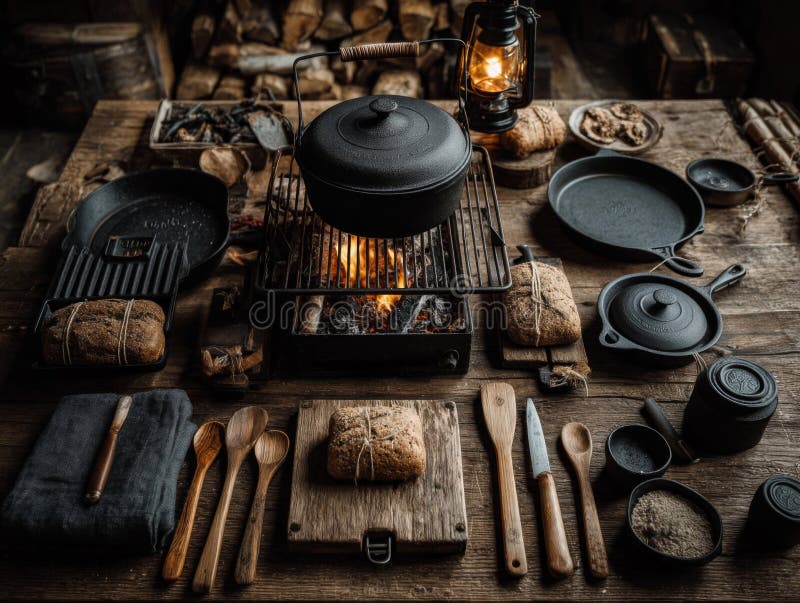
Mastering cast iron seasoning mechanics transforms an ordinary slab of rough gray metal into a slick, naturally nonstick cooking tool. Generations of home cooks have been taught that seasoning is simply grease baked into the tiny microscopic pores of iron until the pan turns black. That folksy explanation sounds intuitive, but it fundamentally misrepresents the physical transformation taking place on your stovetop. Raw cast iron is heavy, vulnerable to ambient moisture, and prone to rapid oxidation. Left naked to the atmosphere, humidity bonds with surface iron atoms to produce ferric oxide, the orange plague of rust that ruins culinary tools.
Seasoning is not grease, nor is it oil sitting dormant in metal valleys. It is an ultra-thin, highly organized synthetic polymer matrix created by thermal autoxidation and free-radical cross-linking. When applied correctly, this black veneer bonds tenaciously to the underlying metallic lattice, resisting water, heat, and structural degradation. When applied haphazardly based on kitchen folklore, you end up with sticky, amber-tinted sludge that flakes off directly into morning fried eggs.
To eliminate skillet frustration permanently, you must abandon superstition and embrace the chemical reality of fat degradation. Building a pan that lasts centuries requires neither proprietary wax blends nor ancestral luck. It demands precise temperatures, microscopically thin fat distribution, and an understanding of how unsaturated carbon chains rearrange under thermal stress.
The Molecular Illusion Behind the Black Patina
Examining cast iron seasoning mechanics reveals that oil does not soak into iron like water into a sponge. Solid metal does not possess open vascular channels or dynamic pores that widen when heated and snap shut when cooled. Cast iron is a brittle alloy composed primarily of elemental iron mixed with two to four percent carbon and small traces of silicon. Under metallurgical magnification, the surface looks like an abrasive jagged landscape filled with towering peaks and sharp ravines, formally known as asperities.
The dark finish that enthusiasts chase is an engineered barrier designed to fill those valleys while leveling the peaks. When you burnish oil across this jagged topography, capillary action draws liquid triglycerides into the microscopic troughs. Just as forced perspective cinematography mechanics reveal 4 proven secrets behind impossible cinema illusions by bending sightlines to make small sets look vast, a wet skillet can deceive the cook into seeing a nonstick finish where only sticky, unpolymerized fat exists. A wet, shimmering sheen is merely oil sitting atop iron. A true seasoning coat is entirely dry to the touch, feeling like smooth river stone or high-grade lacquer.
The bond between iron and fat is catalyzed by the metal itself. Iron is a potent transition metal catalyst that accelerates oxidative breakdown. As fatty acid molecules heat up against bare iron, the metallic substrate donates electrons, initiating homolytic cleavage of carbon-hydrogen bonds. This triggers radical cascades that weld neighboring hydrocarbon tails into an interwoven sheet. Without that catalytic interaction, curing an oil film would require significantly higher temperatures and prolonged exposure.
The Thermal Threshold Where Fats Become Glass
Every culinary lipid possesses a distinct chemical architecture that dictates its behavior on a heating element. When fats meet heat, they pass through sequential thermodynamic milestones: melting, thermal expansion, degradation, smoke point, and finally combustion. Achieving a durable finish requires operating precisely in the narrow window between chemical decomposition and total ashing.
Because failing to understand cast iron seasoning mechanics leads many to crank heat beyond control, their pans end up smoking away the very foundation they hoped to establish. When an oil surpasses its smoke point, volatile compounds like acrolein, aldehydes, and free fatty acids volatilize into harsh gray vapor. What remains behind is a concentrated bed of carbonized radicals seeking structural stability.
Thermal cracking separates the weak ester bonds that tether fatty acids to their glycerol backbone. Once liberated, these unsaturated chains lose their flexibility. Under sustained baking temperatures between 450°F and 500°F (232°C to 260°C), thermal energy forces those loose chains to intertwine, forming massive three-dimensional covalent networks. If the heat is extinguished too early, the oil remains an unctuous gel. If the heat climbs beyond 600°F (315°C) in an oxygen-rich oven, the polymer oxidizes completely into brittle soot that washes down the sink.
Four Structural Laws Governing Cookware Transformation
When we break down cast iron seasoning mechanics into functional bench chemistry, four foundational rules emerge. Following these parameters eliminates guesswork, prevents sticky build-up, and yields a bulletproof nonstick surface that handles high-heat searing effortlessly.
The Law of Microscopic Deposition and Thin Layers
The single most destructive mistake cooks make is using too much oil during the seasoning process. When a thick pool of oil is exposed to high heat, the liquid at the surface cures rapidly, forming a dense skin that seals the liquid underneath from ambient oxygen. Starved of oxygen, the trapped oil cannot complete cross-linking. The result is a mottled, gummy film that bubbles, wrinkles, and peels away under the edge of a spatula.
True seasoning requires an almost microscopic layer. The correct technique requires coating the entire pan thoroughly and then wiping it down with clean cotton towels as if you made a grave error and are desperately trying to remove every trace of fat. What remains on the metal is an invisible, mono-molecular sheen. When baked, this ultra-thin layer polymerizes cleanly without bubbling. Ten microscopic applications will create an indestructible, mirror-slick surface, whereas two thick applications will produce a sticky, unhygienic mess.
The Law of Unsaturated Fatty Acid Cross-Linking
A fundamental pillar of cast iron seasoning mechanics is the iodine value of your fat, which measures the degree of unsaturation. Saturated fats, such as lard, tallow, and coconut oil, consist of straight carbon chains packed tightly together without double bonds. Because they lack double bonds, they lack the reactive sites required to initiate free-radical polymerization. They remain soft, wax-like, and prone to turning rancid over prolonged storage.
Polyunsaturated and monounsaturated lipids, such as grapeseed, refined sunflower, and non-GMO canola oil, contain multiple carbon-carbon double bonds. As documented in the Journal of Chemical Education study on lipid polymerization and metal surfaces, these reactive sites readily open up under sustained heat to forge strong covalent bonds across adjacent chains. While pure drying oils like raw flaxseed oil provide high unsaturation, their extreme rigidity can cause the resulting film to become brittle and micro-fracture over time. Refined grapeseed or neutral cooking oils strike an ideal balance between flexibility, structural density, and thermal endurance.
The Law of Progressive Thermal Cure Cycles
Polymerization is a function of both temperature and duration. Heating a pan until it begins to smoke on a gas burner creates an uneven, patchy spot-cure that flakes easily. The metal must undergo sustained, uniform radiative heating in an enclosed environment. This ensures that the sidewalls, handle, and cooking floor expand and cure at identical thermodynamic rates.
A complete cure cycle requires sixty minutes at temperatures slightly above the selected fat’s smoke point, followed by passive cooling inside the closed oven. Allowing the pan to cool slowly is essential. Rapid temperature drops induce thermal shock and contraction stress between the iron and the newly formed polymer, leading to micro-fissures. Gradual cooling anneals the organic polymer, allowing the molecular lattice to relax into the metal’s crystalline crevices.
The Law of Dynamic Surface Regeneration
Seasoning is not a static museum piece that you complete once and preserve behind glass. Dynamic regeneration highlights how cast iron seasoning mechanics operate in daily kitchen routines rather than sterile laboratory conditions. Every time you roast a spatchcock chicken, sear fatty steaks, or sweat onions with a drizzle of oil, you deposit microscopic traces of fat that polymerize during routine cooking.
The pan is continuously shedding micro-layers of polymer while accumulating new ones. High-heat culinary applications continually replenish the protective layer, reinforcing high-wear zones in the center of the skillet. The blackest, slickest heirloom pans are not those kept in storage boxes, but working workhorses exposed to daily heat, oil, and searing proteins.
Dispelling the Modern Skillet Myths That Ruin Cookware
Understanding these cast iron seasoning mechanics strips away the generational guilt that makes home cooks terrified of a drop of dish soap. The widely repeated rule that soap destroys cast iron dates back to an era when households manufactured soap using caustic sodium hydroxide, commonly known as lye. Free lye chemically attacks organic polymers via saponification, stripping the seasoning back to bare, unprotected metal.
Modern commercial dishwashing liquids are gentle synthetic detergents composed of surfactants, not unreacted lye. Surfactants are amphiphilic molecules designed to encapsulate loose surface grease and suspend it in water. They lack the chemical aggression needed to break covalent polymer bonds. Washing your skillet with hot water, a soft sponge, and a gentle dish detergent cleans away rancid, unpolymerized food fats without damaging the cured, glass-like seasoning underneath.
Similarly, the terror surrounding acidic ingredients like tomatoes, wine, or citrus is widely overblown. While simmering a slow marinara for six hours will break down the polymer and leach metallic-tasting iron ions into your sauce, a quick deglaze with dry white wine or searing lemon-dressed chicken thighs will not compromise a mature, well-cured pan. The polymer layer protects the metal from brief acidic contact, provided the pan is washed and dried promptly after service.
Longevity and the Daily Rhythm of Metal Care
Once you strip away the superstition, maintaining seasoned cookware takes less than ninety seconds after each meal. When cooking concludes, allow the pan to cool until comfortable to handle, scrub away stuck-on starch using warm water and a chainmail scrubber or stiff brush, and rinse clean. Avoid abrasive steel wool pads, which act as cutting chisels that physically shear the polymer off the metal asperities.
Moisture is the only true existential threat to cast iron. Leaving a damp skillet to air-dry on a countertop invites instant oxidation under the microscopic boundaries of the polymer. Place the washed skillet directly onto a stovetop burner over medium-low heat for two minutes until every trace of water evaporates from the rim and base.
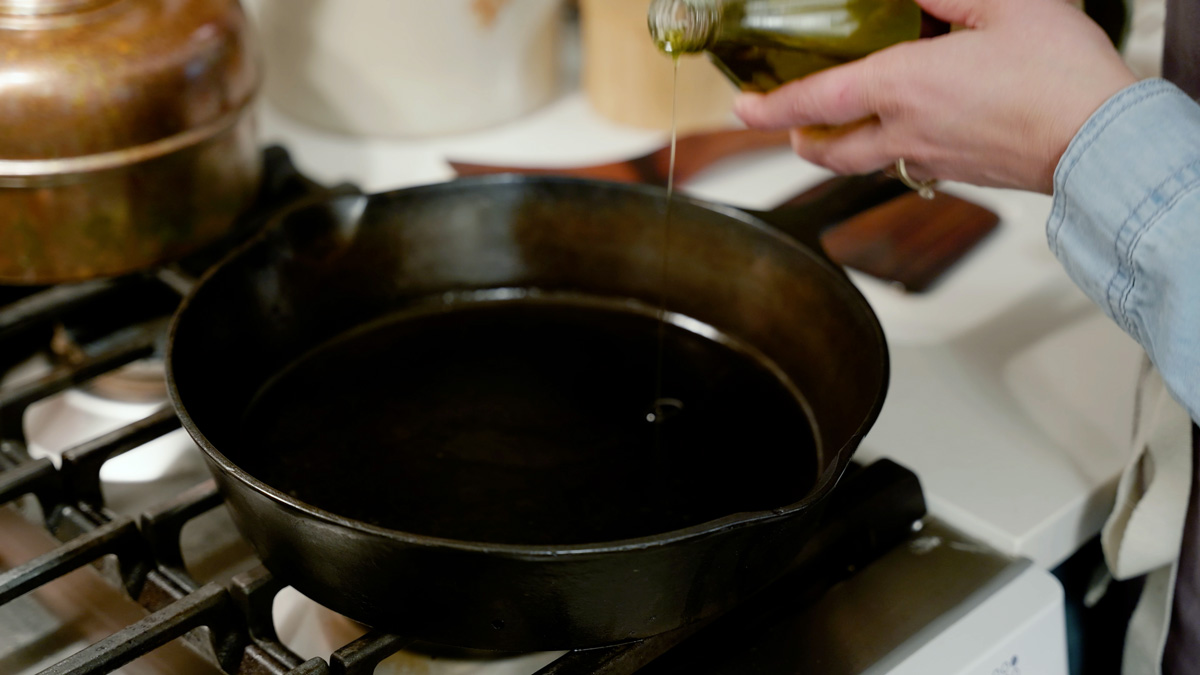
While the metal is still hot, apply a single drop of neutral high-heat oil to the cooking surface. Take a folded lint-free cotton cloth and buff the surface thoroughly until no greasy wetness remains visible. Turn off the burner and let the skillet cool completely in place. That quick heat cycle drives off lingering humidity and lays down an infinitesimal layer of fresh fat, ready to cross-link during tomorrow’s sear. Treat your iron as a living chemical composite, and it will reward your kitchen with timeless, effortless performance across generations.