Pan Searing Mechanics Reveal 4 Proven Secrets to Flawless Crusts
Surface browning is not an accident of high heat; it is an exact thermodynamic transaction. Unlock the physical principles of searing to transform ordinary proteins into culinary masterpieces.
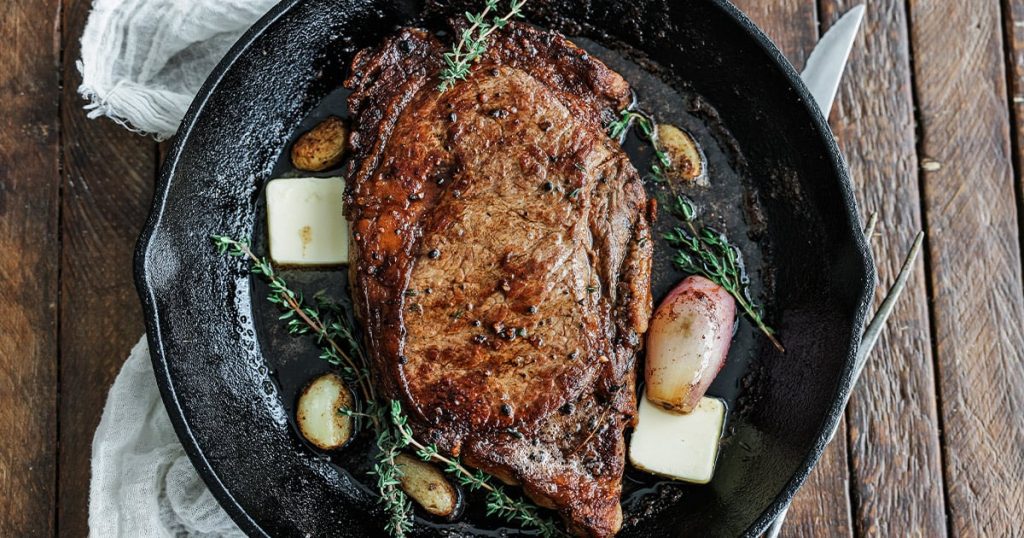
Mastering authentic pan searing mechanics separates ordinary home cooking from the transcendent, deeply caramelized crusts crafted by veteran restaurant chefs. When cold protein meets a hot cooking vessel, a complex interplay of thermodynamic exchange, cellular dehydration, and chemical rearrangement begins instantly. Most people assume that searing is simply turning a stove dial to high and tossing meat into grease, yet that erratic approach routinely yields disappointingly gray, boiled steaks surrounded by puddle-strewn skillets. Cooking with precision requires peering beneath the surface of the pan to grasp how heat energy moves through conductive metals into dense muscle tissue.
Great cooking never relies on luck. Every crisp edge and mahogany-brown surface you have ever savored at a high-end steakhouse is the direct result of controlled kinetic energy. Browning is the visible marker of hundreds of newly formed aromatic compounds created when amino acids and reducing sugars collide above specific thermal thresholds. To achieve this flavor architecture consistently, you need to understand the invisible barriers that prevent browning and how deliberate preparation strips those roadblocks away.
The Fundamental Physics Behind High Heat and Surface Thermodynamics
At the center of all surface caramelization sits the Maillard cascade, a chemical symphony named after French physician Louis-Camille Maillard. Unlike simple sugar caramelization, which occurs in sweet carbohydrates at high temperatures, the Maillard reaction demands the presence of both proteins and sugars. In raw meat, these compounds reside together within intracellular fluids. However, the thermodynamic realities of pan searing mechanics dictate that heat must travel unobstructed from the cooking grate or metal surface directly into the exterior cell wall to trigger that transformation.
Thermal conduction operates on contact resistance. When you lay a cold protein onto hot metal, the immediate interface experiences a sudden and violent drop in surface temperature. Heat transfers from the pan into the colder meat at a speed dictated by the thermal conductivity of your vessel. If the pan lacks enough accumulated thermal mass, the pan surface cools faster than your stovetop burner can replenish it. The meat then sits in a lukewarm cradle of heat, far below the critical 280 to 330 degree Fahrenheit window where complex aromatic browning thrives.
Scientists with the Harvard Science and Cooking research team have repeatedly highlighted that cooking is essentially applied soft-matter physics. When meat is heated gradually across this chemical boundary, its native proteins begin to unravel, bond with adjacent sugars, and rearrange into complex ring structures. These volatile ring compounds produce the roasted, nutty, and savory aromas that human palates instinctively register as savory richness. Skew the temperature too low, and this process stalls completely. Push it past 400 degrees Fahrenheit without control, and those delightful aromatic rings degrade swiftly into bitter, carcinogenic carbon.
Why Latent Moisture Destroys Crust Formation Before Browning Begins
Water is the natural enemy of a perfect sear. Understanding why standard pan searing mechanics fail when cooks skip thorough drying comes down to a stubborn physical metric called the latent heat of vaporization. Liquid water can never exceed 212 degrees Fahrenheit at standard atmospheric pressure. Regardless of whether your burner is firing at maximum output, any liquid moisture pooled on the surface of your meat will clamp the cooking temperature at the boiling point until every drop of water evaporates completely.
Consider the energy math playing out on your skillet. It takes one calorie of energy to raise the temperature of a single gram of water by one degree Celsius. Yet turning that same single gram of boiling water into steam demands an astonishing 540 calories. This massive energy sink steals every joule of conductive heat entering the pan. Instead of searing, the exterior of your meat boils in an envelope of vaporized moisture. The muscle fibers shrink, squeeze internal liquids out through ruptured cell walls, and flood the pan, locking the meat into an accidental steam bath that leaves the exterior limp, pale, and rubbery.
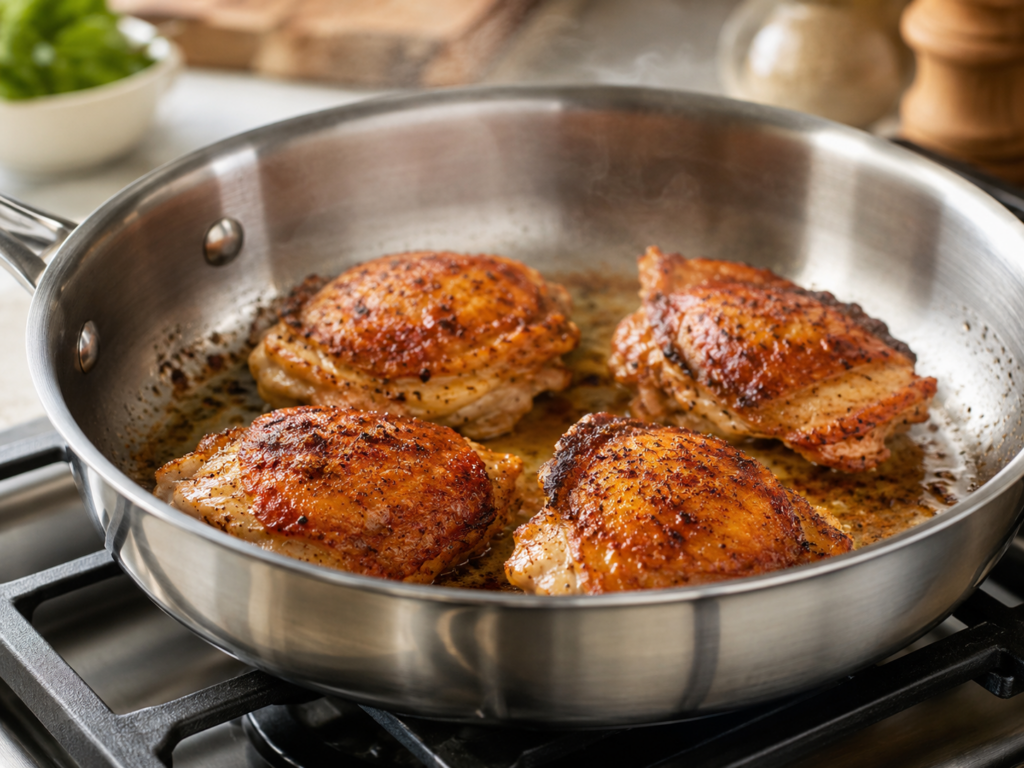
Achieving a crisp texture demands intentional pre-treatment to eliminate free water. Moisture sits in two distinct states on a piece of meat: bound moisture held deep within the cellular gel, and free moisture coating the exterior. If you transfer protein straight from its plastic packaging directly to the pan, that free surface moisture guarantees an immediate thermal stall. To ignite the rapid browning cascade before the interior overcooks, that surface boundary must be bone-dry long before it ever touches hot cooking fat.
Four Pillars That Govern High Performance Pan Searing
Building a restaurant-grade crust requires executing four specific chemical and mechanical fundamentals in exact succession. Each step builds on the last, ensuring energy transfer occurs without thermal drag.
Surface Dehydration and the Power of Overnight Osmosis
Salt is far more than a simple flavor enhancer; it is an indispensable chemical tool for managing moisture. When you salt a raw cut of meat, the sodium and chloride ions immediately begin drawing water from the outer muscle cells through natural osmotic pressure. Within five minutes, beads of liquid sweat across the meat, creating a slippery layer of brine. If you cook the meat right now, you guarantee a soggy, gray exterior.
If you exercise patience and allow the salted meat to rest, that concentrated surface brine begins dissolving tough muscle filaments like myosin. As the protein structures loosen, they reabsorb the seasoned liquid deep into the core fibers. Leaving the meat uncovered on a wire rack inside a cold refrigerator for eight to twenty-four hours accelerates this phenomenon through dry air circulation. The cold refrigerator atmosphere functions as an active dehumidifier, evaporating lingering moisture and leaving behind an ultra-thin, tacky protein skin known as a pellicle. This dehydrated pellicle provides an ideal, moisture-free foundation that browns within seconds of touching the pan.
Thermal Mass and Pan Material Energy Retention
Your pan choice directly dictates whether your food sears or stews. Lightweight nonstick pans lack the physical mass required to store thermal energy. When a heavy, cold cut of protein hits thin aluminum, the pan’s surface temperature plummets instantly, and the nonstick coating prevents the formation of the savory browned bits that give pan sauces their depth. Heavy cast iron, carbon steel, and thick tri-ply stainless steel serve as superior tools because of their high volumetric heat capacity.
As explored in our deep dive into how cast iron seasoning mechanics reveal 4 proven secrets to build indestructible cookware, a dense polymer layer reduces friction while providing the radiant thermal reservoir needed to prevent temperature collapse. Storing immense heat reserves inside dense metal creates a shock absorber against thermal drop. When the meat lands, a properly preheated heavy pan releases its stored energy directly into the meat, sustaining blistering surface temperatures that boil away trace humidity and initiate immediate caramelization.
Lipid Conductivity and Smoke Point Realities
Air is an exceptionally poor heat conductor. The microscopic landscape of even the flattest ribeye or chicken breast resembles a jagged mountain range of peaks and valleys, meaning only a fraction of the meat actually contacts the smooth metal floor of your skillet. Cooking oil acts as a liquid thermal bridge, filling those microscopic air gaps and enveloping the uneven contours of the meat in an unbroken layer of conductive heat.
Selecting the right cooking oil serves as an essential pillar of pan searing mechanics that determines your flavor profile and crust integrity. Unrefined fats like extra virgin olive oil and raw butter contain delicate solids that burn and scorch below 350 degrees Fahrenheit, creating bitter acrid notes before the protein reaches a full sear. High smoke-point fats with neutral flavor profiles, such as avocado oil, clarified butter, or refined beef tallow, endure cooking temperatures exceeding 425 degrees Fahrenheit without molecular breakdown. This stability allows you to heat the pan aggressively, ensuring rapid energy transfer through a resilient liquid barrier.
The Spontaneous Kinetic Release Phenomenon
One of the most common blunders made by anxious cooks is prodding, sliding, and prematurely lifting the meat. When meat first hits blazing metal, wet surface proteins unfold and form temporary covalent bonds with the microscopic crevices of the steel or iron. Attempting to pry the meat up with a spatula during this phase tears the delicate muscle strands, leaving precious crust cemented to the bottom of the pan.
The spontaneous kinetic release represents a foundational principle within pan searing mechanics often ignored by impatient cooks. As radiant heat continues to drive out residual surface moisture, the outer layer dehydrates, hardens, and contracts slightly. The proteins polymerize into a rigid, crispy shell that naturally pulls away from the metal surface. When the crust reaches structural maturity, the food will release itself with zero resistance. If your spatula meets tactile drag, step away: the pan is telling you that the sear is not yet complete.
Costly Mistakes That Cause Proteins to Stew and Turn Gray
Even seasoned home cooks fall into subtle mechanical traps that quietly sabotage their results. Chief among these errors is pan overcrowding. Squeezing three large chicken breasts into a ten-inch skillet creates an inescapable humidity trap. Every piece of cooking meat constantly exudes water vapor from its exposed sides. When multiple pieces sit shoulder-to-shoulder, that vapor cannot escape into the kitchen; instead, it condenses on adjacent meat surfaces and pools around the base. Abandoning disciplined pan searing mechanics causes proteins to stew in their own juices, drowning out heat and guaranteeing a drab, rubbery exterior.
Another widespread misconception is that meat must be left completely motionless on a single side for four or five uninterrupted minutes. While you must never fight the pan during the initial kinetic release phase, recent empirical food science reveals that frequent flipping after that first crust forms creates a more uniform crust with less gray, overcooked meat beneath the surface. Flipping every thirty seconds distributes thermal energy evenly from both sides, preventing high heat from penetrating too deeply while letting escaping steam dissipate rapidly into the air.
Practical Kitchen Strategies for Masterful Protein Execution
Applying this knowledge in a practical kitchen environment comes down to a rhythmic, repeatable routine. Begin hours before dinner by heavily salting your protein and resting it uncovered on an elevated wire rack in the coldest part of your refrigerator. This simple step strips away moisture and tenderizes the muscle fibers through effortless biochemical activity.
When cooking time arrives, place your heavy skillet over medium-low heat for five to seven minutes to build an even reservoir of stored thermal energy across the entire cooking surface. Cranking a burner directly to maximum creates harsh hot spots; a patient, gradual preheat guarantees that the entire bed of cast iron or steel holds an immense reserve of heat. Only after the pan is thoroughly hot should you add your high-temp cooking fat, swirling it gently until it shimmers like mercury across the metal base.
Lay your dry protein into the pan away from you to prevent hot oil splatters. Listen closely to the pitch of the sizzle: an immediate, aggressive hiss signals proper energy transfer, while a muted gurgle indicates inadequate preheating. Allow the natural kinetic release to take place without interference, flip repeatedly once the initial crust solidifies, and reduce heat slightly if you plan to baste with foaming butter and fresh herbs in the final minute of cooking. Honing these reliable pan searing mechanics transforms everyday kitchen prep into an intuitive, sensory art that delivers restaurant-quality crusts on demand.