Jordin Canada Drives 3 Crucial Tactics Powering the Atlanta Dream WNBA Finals Surge
Jordin Canada has taken center stage in the 2026 WNBA Finals, guiding the Atlanta Dream to a 2-1 series lead against the Golden State Valkyries. Her poise and playmaking have transformed Atlanta into a formidable championship contender.
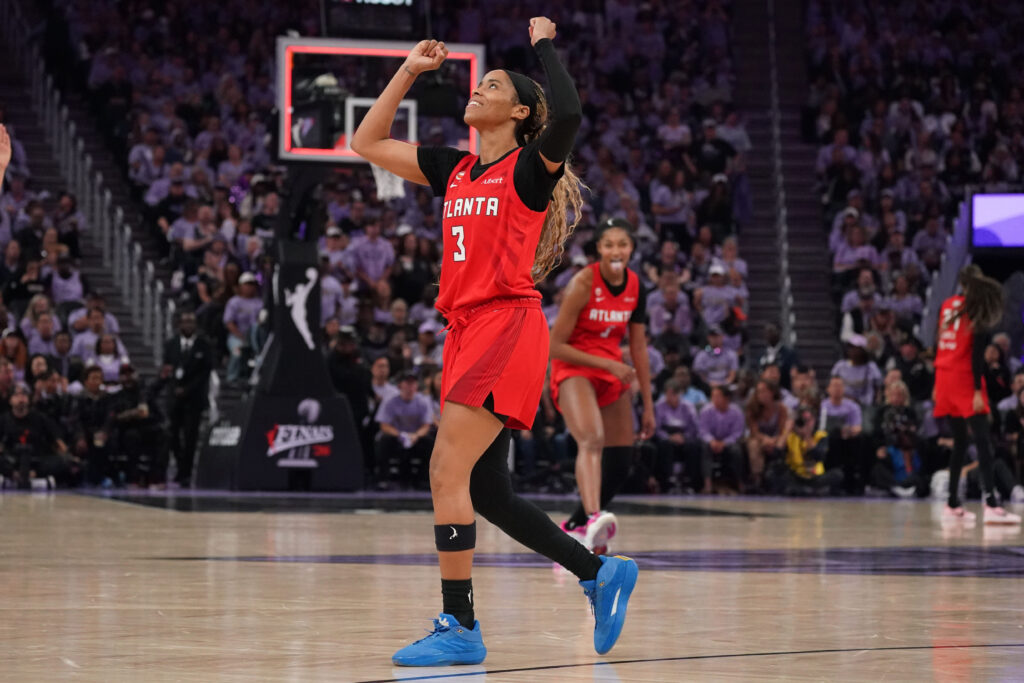
Watching Jordin Canada command the floor during the 2026 WNBA Finals reveals how quickly postseason basketball can upend regular-season certainty. Entering this championship series, external observers frequently framed the Atlanta Dream as resilient underdogs squaring off against the tactical powerhouse of the Golden State Valkyries. Yet as FOX Sports reported from the AP wire, Atlanta surged to a commanding 2-1 lead in the best-of-seven series heading into Game 4, leaving Golden State scrambling to regain its footing. While the national sports conversation frequently gravitates toward superstar spotlight figures, Atlanta’s actual on-court engine operates with surgical efficiency through its veteran point guard.
The postseason demands a specific kind of mental resilience that cannot be quantified solely through raw scoring box scores. It requires an athlete capable of reading defensive rotations before they manifest, managing late-clock pressure, and organizing teammates amid deafening arena noise. Across the first three games of the Finals, the Dream demonstrated that their regular-season development was merely a prelude to a far more sophisticated playoff identity.
The Regular Season Illusion and the Finals Reality
Heading into the championship round, skeptics repeatedly pointed toward recent history to cast doubt on Atlanta’s title credentials. As The New York Times previewed ahead of the series, the Golden State Valkyries swept the regular-season matchups against the Dream 3-0. On paper, that clean sweep suggested an insurmountable tactical mismatch. However, that statistical dominance carried a notable context: all three regular-season contests took place during an intense 11-day span between late June and early July.
In the months that followed that summer stretch, Atlanta restructured its interior rotations, refined its transition defense, and crystallized its backcourt hierarchy. When the championship stage arrived, Jordin Canada stepped forward as the catalytic X-factor that the Athletic’s tactical preview anticipated. The Golden State defensive shell, renowned for limiting paint touches and disrupting passing lanes, suddenly faced an adversary equipped with elite lateral speed, poise, and unshakeable court vision. The regular-season sweep faded into irrelevance as Atlanta proved that mid-summer basketball rarely mirrors the brutal, chess-match intensity of October postseason execution.
The Game 2 Statement and Demanding Absolute Perfection
The turning point of the series crystallized in Game 2. After dropping the opening clash, Atlanta needed a decisive response to prevent Golden State from seizing total control of the series. What unfolded was a tactical masterclass in backcourt control. As Just Women’s Sports highlighted, the Atlanta Dream rolled to a commanding 79-65 victory to level the Finals at 1-1, systematically dismantling Golden State’s defensive structure.
During that lopsided contest, Jordin Canada posted a near triple-double, dictating the tempo from the opening tip and neutralizing Golden State’s defensive pressure. Official league records from the WNBA showcased her 8-assist performance, detailing how she picked apart the Valkyries’ drop coverage with pinpoint bounce passes and baseline drift kick-outs. Her ability to probe deep into the key without committing costly turnovers altered the geometry of Golden State’s help-side defense.
Yet what resonated most deeply within the Atlanta locker room was her postgame demeanor. Despite putting up numbers that dominated highlight reels, she publicly expressed that she was far from satisfied with the outing. That refusal to celebrate an incomplete job set a ruthless tone across the roster. By demanding flawless execution, the veteran floor general reinforced that personal milestones meant nothing without the franchise’s first championship trophy in hand.

3 Strategic Masterstrokes Defining the Atlanta Point Guard
Breaking down Atlanta’s 2-1 series advantage reveals specific adjustments that transformed the Dream from a volatile offensive squad into a methodical postseason powerhouse. Evaluating how Jordin Canada dictates the tempo exposes three distinct tactical layers that have completely disrupted Golden State’s defensive scheme.
Dismantling the Valkyries Perimeter Traps
Golden State constructed its defensive identity around aggressive blitzes on high pick-and-rolls, attempting to force secondary ball-handlers to make hurried choices under duress. Throughout the regular season, this trap repeatedly forced Atlanta into live-ball turnovers that fueled the Valkyries’ transition attack. In the Finals, however, the Dream turned that defensive aggression into a costly liability.
Rather than retreating against perimeter doubles, the veteran ball-handler attacks the high foot of the trapper, creating severe recovery angles for the hedging big. By drawing two defenders above the three-point arc and releasing quick pocket passes before the trap fully closes, Atlanta consistently operates with a four-on-three advantage on the weak side. This tactical adjustment single-handedly neutralized the Valkyries’ primary perimeter ball-pressure schemes.
Complementing Angel Reese with Interior Precision
Much of the media coverage surrounding Atlanta’s championship run centers on the frontcourt dynamism of Angel Reese. As High Post Hoops observed, Angel Reese naturally commands the lion’s share of national headlines as the Dream close in on their first championship. However, that interior production does not materialize in a vacuum.
The dynamic connection between the frontcourt and backcourt thrives because Jordin Canada understands floor spacing and high-low passing timing with exceptional clarity. Rather than forcing Reese to create off static post touches against multiple defenders, the guard delivers the ball precisely on the move, allowing Reese to convert downhill momentum into easy rim finishes and offensive putbacks. Without this steady perimeter delivery, Atlanta’s frontcourt offensive output would grind to a halt against Golden State’s interior rim protectors.
Controlling the Clutch Pace in Transition
The difference between regular-season pacing and postseason survival often comes down to transition discipline. Golden State thrives when games descend into chaotic, up-and-down shootouts where defensive assignments break down. Atlanta, conversely, established its superiority by imposing structured transition breaks that force Golden State to defend for full twenty-four-second cycles.
Whenever the Valkyries mount a scoring run, the Dream point guard deliberately slows down the initial hit-ahead pass, walking the ball across the timeline to execute deliberate set plays that milk the shot clock. When the opportunity presents itself off a live defensive rebound or steal, the push is sudden, clinical, and direct. This mastery of game tempo prevents Golden State from generating the sustained crowd-fueled momentum necessary to swing games.
Why the Finals Heartbeat Matters More Than the Spotlight
Championship teams frequently feature an imbalance between public attention and tactical value. In modern professional sports, marketability and viral moments often determine who graces magazine covers and social feeds. Yet championship locker rooms run on a very different currency: dependability under fire.
High Post Hoops emphasized this exact dynamic, describing how the veteran guard functions as the Atlanta Dream’s true heartbeat even as younger superstars capture mainstream adoration. During high-leverage moments in fourth quarters, when defensive traps tighten and possession values skyrocket, the veteran composure from Jordin Canada provides the structural balance that keeps Atlanta composed.
Basketball operations function with underlying intricacies that casual viewers occasionally overlook. Just as unpredictable operational shifts can create sudden anomalies—similar to how the Google Play System Update Glitch Sparks Confusion with 3 Critical Android Surprises caught millions off guard in the tech world—sports dynasties often hinge on quiet mechanics beneath headline turbulence. When those underlying engines function seamlessly, the entire enterprise runs without disruption.
The High Stakes Ahead of Game 4
With the series standing at 2-1, the stakes of the 2026 Finals have reached a fever pitch. According to FOX Sports, the Valkyries remain vocal about their confidence despite trailing, pointing out that in a best-of-seven series, a single road win completely flips the psychological momentum. Golden State understands that Game 4 represents an existential hurdle; falling behind 3-1 would push them to the brink of elimination against an Atlanta squad playing with immense home-court swagger.
For Atlanta, the objective is ruthless execution. The Dream cannot afford to let Golden State’s experienced core rediscover their perimeter shooting touch or establish interior parity on the glass. If Atlanta secures its first franchise trophy, the legacy of Jordin Canada will be etched into WNBA history as the quintessential floor leader who silenced doubters and orchestrated a masterclass on the sport’s biggest stage.