Cast iron seasoning mechanics reveal 4 proven secrets to build indestructible cookware
Understanding cast iron seasoning mechanics transforms fragile, sticky pans into generational nonstick workhorses. Learn the thermal lipid chemistry behind creating an indestructible culinary surface.
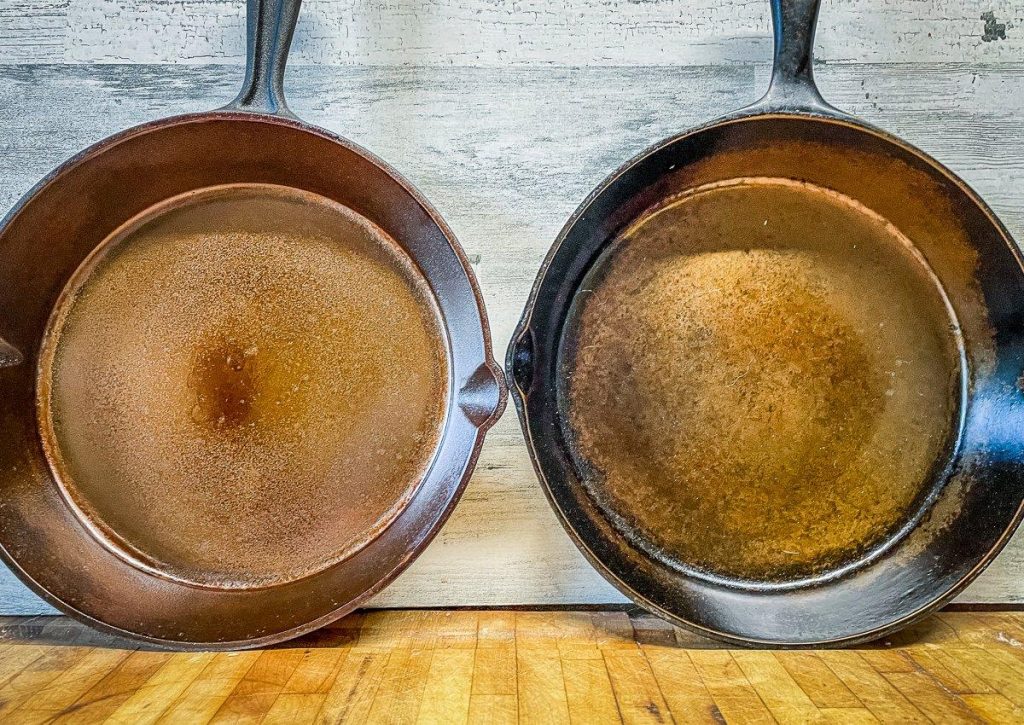
Mastering cast iron seasoning mechanics allows cooks to transform simple porous metal into an ultra-slick, resilient culinary surface that effortlessly outlasts modern synthetic cookware. For generations, home cooks and professional chefs have treated seasoned iron with a mixture of reverence and superstition. Whispered rules about avoiding soap, applying heirloom bacon grease, or baking pans for entire afternoons dominate culinary forums. Yet beneath this thick layer of folklore lies elegant, predictable chemistry. A skillet does not achieve nonstick perfection through luck or ancient incantations. It happens through the systematic conversion of liquid fats into a rugged, glass-like polymer skin that anchors directly into the metal itself.
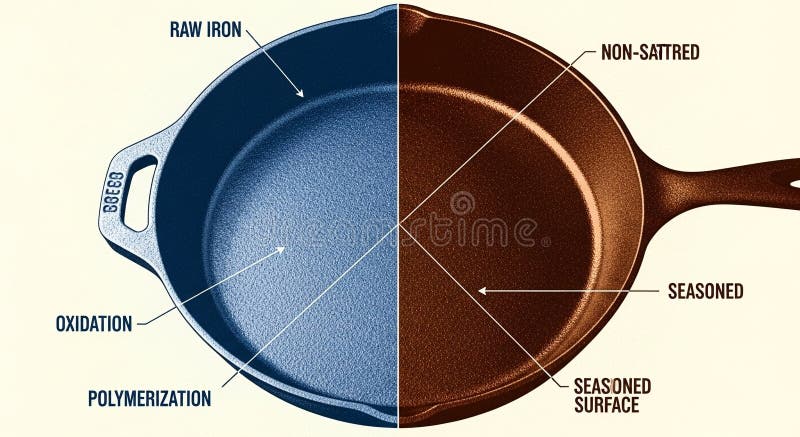
When you strip away culinary mythology, a cast iron pan is fundamentally an uneven landscape of raw iron crystals and microscopic pores. Without an engineered shield, bare iron oxidizes rapidly in the presence of ambient moisture, producing dull, flaky rust while grabbing onto proteins with ferocious tenacity. Understanding how heat, oxygen, and specific fatty acid molecules interact with this irregular surface provides the blueprint for culinary independence. Once you grasp the structural foundation of the process, maintaining exceptional cookware stops feeling like delicate alchemy and becomes an intuitive, reliable craft.
The molecular architecture of polymerized lipid coatings
A thorough examination of cast iron seasoning mechanics reveals that this dark veneer is neither dried grease nor simple carbon deposits. Seasoning is a hard, insoluble polymer matrix created through cross-linking unsaturated fatty acids under sustained thermal energy. When cooking oil meets high heat in the presence of atmospheric oxygen, it undergoes free radical auto-oxidation. As the weak double bonds within the carbon chains break down, the molecules link together into sprawling, three-dimensional networks known chemically as drying-oil polymers.
This transformative process binds the newly formed polymer directly into the microscopic fissures, ridges, and valleys of the cast iron substrate. Molten iron poured into sand molds cools into an abrasive surface dotted with microscopic peaks and crevices. When applied correctly, liquid oil migrates into these depressions via capillary action before heat fuses it in place. As confirmed by educational research published by the American Chemical Society, heat and atmospheric oxygen catalyze the cross-linking of unsaturated triglycerides, forming a tough organometallic bond that resists water, abrasion, and moderate chemical assault.
The resulting sheet of plasticized oil acts as a durable mechanical barrier. It prevents atmospheric water from touching reactive iron molecules, halting ferric oxide formation while providing a slick, low-friction surface that mimics synthetic fluoropolymer pans. However, unlike commercial nonstick pans that degrade irrecoverably after minor scratches, this natural polymer coating is self-renewing, self-healing, and mechanically intertwined with the parent metal.
Common thermal misconceptions that destroy delicate iron surfaces
Misunderstanding fundamental cast iron seasoning mechanics often drives well-meaning cooks to treat their skillets like deep fryers rather than precision metallurgy. The most pervasive error involves flooding the pan with excess fat in the mistaken belief that more oil equals thicker protection. When an excessively thick layer of grease undergoes heat, only the bottom layer touching the iron cures properly. The upper surface skins over prematurely, trapping unpolymerized, viscous liquid underneath. The result is a gummy, splotchy surface that peels away in sticky flakes the moment you introduce high-heat searing.
Just as mortgage amortization mechanics expose 4 costly errors that crush household wealth by showing how invisible compounded miscalculations drain capital over decades, neglecting the basic physics of thermal seasoning degrades expensive cookware through quiet, invisible erosion. Cooks frequently turn up stove burners to maximum heat, thinking aggressive temperatures accelerate curing. In reality, surpassing the thermal decomposition point of the lipid polymer disintegrates the cross-linked chains back into fragile, powdery carbon ash.
Equally damaging is the premature introduction of aggressive pan deglazing or simmering acidic reductions on an immature base layer. A freshly seasoned pan possesses only a few molecular strata of cross-linked oil. Exposing this fledgling film to wine, tomatoes, or citrus dissolves the ester bonds before they achieve structural density, stripping the finish back down to bare, vulnerable gray iron.
Four proven principles that forge a durable culinary barrier
Translating chemical theory into daily kitchen success requires mastering the four foundational pillars of cast iron seasoning mechanics. Each rule addresses a specific phase of the polymerization reaction, ensuring the final coating achieves optimal hardness, cohesion, and longevity.
Selecting the optimal fatty acid profile for maximum cross linking
The chemical composition of your seasoning oil dictates the structural integrity of the final polymer film. Saturated fats like lard, tallow, and butter contain single carbon-carbon bonds packed tightly together, making them exceptionally stable against auto-oxidation. While our ancestors relied on animal fat out of necessity, saturated fats actually produce brittle, soft coatings with minimal cross-link density. To forge an impenetrable protective coat, you must select oils high in polyunsaturated fatty acids, particularly linoleic and alpha-linolenic acids.
Polyunsaturated oils contain multiple carbon double bonds that open readily when heated, creating countless reactive bonding sites for adjacent molecules. Refined grapeseed oil, sunflower oil, and food-grade flaxseed oil possess remarkably high iodine values, which measure a lipid capacity to absorb oxygen and cross-link into a solid matrix. Refined grapeseed oil stands out as the practical gold standard for culinary performance. It provides high unsaturation for rapid curing, neutral flavor compounds, and a smoke point sufficiently elevated to prevent thermal scorching during application.
Applying microscopic wipe down layers rather than heavy pools
True seasoning requires an almost imperceptible quantity of lipid. When oil warms, its viscosity drops dramatically, allowing it to sheet across the pan. The proper technique demands applying a small quantity of oil across every square millimeter of the metal, followed immediately by aggressive buffing with clean, dry cotton towels. You must buff the pan until it appears completely dry and matte, as though you applied the oil by mistake and tried desperately to wipe it all off.
This aggressive wiping leaves behind a layer measured in mere nanometers. That ultra-thin film guarantees that atmospheric oxygen can penetrate the entire depth of the oil during the heating phase. Because oxygen is an indispensable catalyst for the cross-linking reaction, thin films cure into hard, crystalline sheaths. Thick coatings inevitably starve the lower layers of oxygen, yielding soft, sticky, and uneven patches that fail during heavy culinary service.
Reaching the critical polymerization temperature threshold
Thermal control represents another cornerstone of cast iron seasoning mechanics, because incomplete heating leaves oil wet, while excessive temperatures incinerate the polymer into fragile soot. Every lipid possesses a distinct smoke point where volatile organic compounds, free fatty acids, and moisture escape as visible vapor. True polymerization initiates right at this smoke point, where thermal energy overcomes the activation barrier needed to fracture double bonds and initiate radical chain propagation.
To cure a pan effectively, heat it in an oven set between 25 and 50 degrees Fahrenheit above the smoke point of your chosen oil. For refined grapeseed oil, an oven temperature between 450 and 475 degrees Fahrenheit provides ideal thermodynamic conditions. Maintaining this heat for a full sixty minutes ensures the radical reaction runs to completion, driving off volatile byproducts and condensing the remaining lipids into a dry, inert, and fully insoluble solid.
Layering thin crystalline coats through repetitive thermal curing
A single curing cycle provides a protective foundation, but true nonstick resilience comes from laminated micro-layers. Building a great skillet follows the identical structural logic used in manufacturing plywood or carbon fiber composites. Multiple distinct, microscopically thin strata possess vastly superior tensile strength and impact resistance compared to a single thick layer of the same overall mass.
Allow the oven and iron to cool completely between curing cycles. Cooling permits the newly formed polymer network to contract, settle, and stabilize onto the iron crystal grid. Repeating the ultra-thin wipe-down and high-heat baking process three to four times produces an exceptionally hard, dark patina with deep dimensional stability. This laminated surface shrugs off metal spatulas, handles high-temperature pan searing, and releases delicate egg proteins with remarkable ease.
Practical daily routines to defend and heal the slick patina
Sustaining a pan over years requires aligning post-cooking hygiene with core cast iron seasoning mechanics rather than obsolete kitchen superstition. The persistent myth that dish soap destroys seasoning dates back to an era when household cleansers contained harsh lye. Lye chemically saponifies oils through alkaline hydrolysis, dissolving fats and organic polymers alike. Modern liquid dish soaps, conversely, rely on gentle synthetic surfactants engineered to suspend surface grease without affecting cured, cross-linked plastics.
Using warm water, mild dish soap, and a non-abrasive sponge or chainmail scrubber will never harm a fully polymerized finish. What damages the pan is sustained moisture exposure. Iron begins oxidizing within minutes if left wet in a drying rack. Always hand-dry the skillet immediately with a towel, place it over a low stovetop burner for two minutes to evaporate lingering microscopic moisture, and rub a microscopic droplet of oil over the warm surface before storing. That quick stovetop routine continuously repairs micro-abrasions inflicted during cooking.
Transforming raw metal into a generational kitchen heirloom
Ultimately, respecting cast iron seasoning mechanics elevates cookware from a disposable consumable into an evolving, permanent culinary instrument. The modern impulse to discard pans when coatings scratch or warp reflects an artificial reliance on fragile chemical sprays. Cast iron rejects that planned obsolescence through elemental simplicity and sound material physics.
Every sear, sauté, and gentle bake contributes microscopic carbon-linked layers to the pan foundation, steadily improving performance across decades of continuous use. When you treat the iron not as delicate antique glass, but as a dynamic matrix of iron and heat-cured polymers, the pan rewards your understanding with unmatched thermal retention, natural food release, and culinary durability that outlives its maker.