Sourdough Fermentation Mechanics Reveal 4 Proven Secrets to Master Magnificent Bread
Demystify the invisible microbiology of wild yeast and lactic acid bacteria. Learn how microbial ecology and enzyme mechanics create an open crumb and complex aroma.

Mastering sourdough fermentation mechanics transforms home baking from an unpredictable gamble into a disciplined art of applied biochemistry. Many bakers treat their bubbling crock of flour and water like a moody pet, pleading for predictable rise times and fearing a flat, gummy loaf. In reality, wild fermentation is governed by repeatable laws of microbiology, thermodynamics, and enzymology. Once you understand what happens beneath the floury surface of your proofing basket, you gain total command over crumb texture, oven spring, and sourness.
Great bread does not happen by luck or kitchen folklore. It emerges from an invisible war between wild yeasts and lactic acid bacteria competing and cooperating inside a dense matrix of hydrated grain proteins. Every stage of the process, from refreshing your starter to timing your bulk rise, alters the microbial ratios and enzymatic activity that determine your loaf. When you know how these living components interact, you can manipulate temperature, hydration, and salt to build world-class sourdough in any kitchen.
The microscopic ecosystem living inside your flour jar
A mature sourdough culture is a self-selecting microbial collective dominated by two main organisms: wild yeasts and lactic acid bacteria. Unlike industrial baker’s yeast, which consists of isolated monocultures of Saccharomyces cerevisiae bred for aggressive carbon dioxide production, wild starters contain resilient yeast strains such as Kazachstania exigua or wild variants of Candida humilis. These yeasts tolerate high acid environments that would incapacitate commercial varieties.
Surrounding these wild yeasts are billions of lactic acid bacteria, predominantly belonging to the genus Lactobacillus. The bacteria outnumber the yeasts by roughly one hundred to one in a healthy culture. This symbiotic coexistence functions through nutritional division of labor. Many sourdough yeasts cannot metabolize maltose, leaving this plentiful sugar derived from broken-down grain starches entirely to the bacteria. In exchange, the bacteria lower the environmental pH by producing organic acids, creating an antimicrobial shield that kills off mold, pathogens, and spoilage microbes.
As grain starches break down via native alpha and beta amylase enzymes, complex polysaccharides convert into fermentable sugars. The wild yeasts consume simple sugars and discharge ethanol along with carbon dioxide, which fills the elastic gluten pockets and expands the dough. Simultaneously, the lactic acid bacteria consume maltose and generate organic acids that strengthen the protein network and tenderize the crumb. When you respect these sourdough fermentation mechanics, feeding a culture stops being an anxious chore and becomes an exercise in intentional biodiversity.
Why temperature dictates the balance between acid and gas
Temperature serves as the primary throttle for microbial metabolism. Yeasts and bacteria do not respond to thermal shifts in identical ways. Yeasts reach their optimal metabolic rate around 25 to 28 degrees Celsius, where they produce copious volumes of gas to lift the dough. Lactic acid bacteria, on the other hand, flourish at higher temperatures between 30 and 35 degrees Celsius, accelerating their acid synthesis dramatically.
The type of acid generated also hinges on ambient conditions. Lactic acid bacteria break down into homofermentative and heterofermentative strains. Homofermentative bacteria yield almost exclusively lactic acid, which offers a mellow, creamy, yogurt-like profile. Heterofermentative strains synthesize both lactic acid and acetic acid, alongside trace amounts of carbon dioxide. Acetic acid delivers the sharp, vinegary punch associated with classic rustic sourdough loaves.
Cooler fermentation slows bacterial metabolism, yet heterofermentative bacteria tilt their output toward acetic acid at lower temperatures, particularly between 12 and 16 degrees Celsius. Conversely, warm, humid conditions favor rapid lactic acid accumulation. A firm command of sourdough fermentation mechanics enables you to calibrate the final flavor of your bread before the dough ever touches the oven. Thermal management is as foundational to fermentation as structural engineering is to modern electronics. Much like the way thermal density and chassis design dictate chip efficiency, as illustrated by how the iPad Mini drives 5 crucial changes that could disrupt Apple hardware strategy, managing the heat flow around your fermenting mass dictates cellular performance and structural stability.
Four proven pillars that govern sourdough fermentation mechanics
Attaining an open, gelatinized crumb, blistered crust, and delicate aromatic complexity requires balancing four fundamental forces. These variables do not operate in isolation. Tweak one parameter, and every biological process inside the dough responds immediately.
Hydration levels dictate enzymatic breakdown and bacterial mobility
Water acts as the universal transport medium inside dough. At lower hydration levels around sixty percent, molecular diffusion moves slowly. Starches hydrate sluggishly, enzymes take longer to access substrate proteins, and bacteria struggle to migrate across the gluten matrix. This produces a tight, uniform crumb and an extended fermentation timeline, ideal for sandwich loaves requiring structural stability.
Increasing hydration to seventy-five or eighty percent radically transforms the environment. Water loosens the glutenin and gliadin chains, allowing enzymes like amylase and protease to dismantle starches and soften rigid protein bonds. Microbial mobility surges, accelerating both acidification and gas generation. However, excessive free water can over-soften the dough, causing fragile gas chambers to rupture under their own weight. Navigating these intricate sourdough fermentation mechanics allows bakers to engineer loaves with open honeycomb structures without sacrificing crumb tension.
Ambient temperature skews the acid balance between acetic and lactic notes
Controlling ambient proofing temperature grants direct control over the sensory qualities of your crumb. Baking science confirmed through comprehensive research on sourdough lactic acid bacteria and wild yeast interactions demonstrates that bacterial enzyme pathways adjust output ratios based on thermal stimulation. If you favor a mild, buttery loaf with prominent cereal sweetness, hold your bulk fermentation between 26 and 28 degrees Celsius to maximize yeast speed and lactic acid production.
If you prefer a pronounced tang, allow the dough to complete its initial bulk rise at room temperature before transferring it into a refrigerated retarder set to 4 degrees Celsius for eighteen to twenty-four hours. In the chill of the refrigerator, yeast dormancy sets in quickly, halting carbon dioxide inflation. Heterofermentative bacteria, while slowed, remain metabolically active, steadily churning out sharp acetic acid. This cold retardation yields a thin, shatteringly crisp crust covered in microscopic blistered pearls.
Fermentation timing dictates structural gluten integrity before collapse
Fermentation is an asymptotic curve that moves from under-fermentation toward inevitable structural collapse. When dough begins its bulk rise, native protease enzymes start breaking down protein bonds into smaller peptides. In moderate amounts, this enzymatic tenderization makes the dough pliable and extensible, allowing it to stretch around expanding pockets of carbon dioxide without tearing.
If bulk fermentation continues past peak microbial activity, progressive acidification creates an irreversible crisis. When dough pH drops below 3.8, gluten proteins destabilize and unravel. Concurrently, hyperactive proteases dismantle the structural matrix entirely. The dough degrades from a supple, elastic sheet into a runny, soupy fluid that cannot support its own weight or hold gas. Recognizing the exact point of peak rise, when the dough feels pillowy and domed along the edges, preserves the elasticity needed for explosive oven lift.
Osmotic pressure from salinity safeguards protein strands against proteolytic ruin
Salt serves far greater functions in sourdough than mere seasoning. Sodium chloride exerts osmotic pressure across microbial membranes, controlling fermentation velocity. Unsalted dough ferments aggressively, resulting in rapid gas accumulation accompanied by accelerated acid generation that outpaces structural development.
Salt ions screen ionic charges along glutenin proteins, allowing them to associate tightly and form robust, resilient strands. Furthermore, salt acts as an enzymatic brake, curbing overzealous protease activity. By keeping protease in check, a standard salinity of two to two-and-a-half percent based on total flour weight ensures the gluten envelope remains intact through prolonged bulk fermentation. Skimping on salt invites unchecked enzymatic breakdown, turning potential artisan loaves into flat, pale discs.
Calibrating your senses to read ambient fermentation shifts
Relying on rigid wall clocks rather than physical dough responsiveness fails because sourdough fermentation mechanics adjust continuously to subtle room fluctuations. A kitchen that is three degrees cooler in autumn extends bulk rise times by hours, while a humid summer afternoon can compress proofing windows drastically. To bake consistently, a baker must abandon mechanical timekeeping and cultivate sensory calibration.
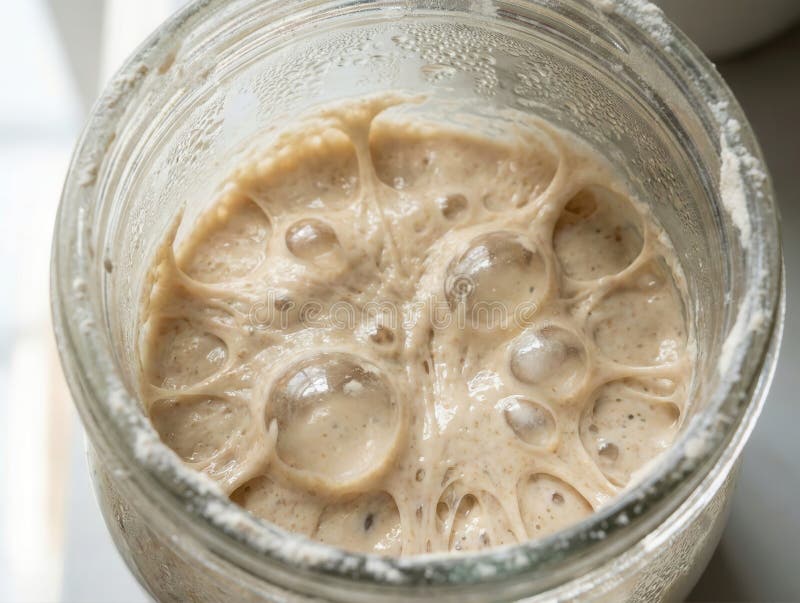
Learn to evaluate dough density through gentle surface tension checks. Lightly press the heel of your thumb into the center of the mass during bulk rest. Early in the rise, the dough feels dense and sluggish, resisting deformation. Near peak fermentation, it responds with an airy, buoyant resistance, vibrating subtly like a drum skin when the bowl is gently shaken. Translucent bubbles collect just beneath the surface, and the raw aroma transitions from raw flour and wet grass to sweet ethanol and mild apple cider vinegar.
The classic finger poke test remains an exceptional tool for assessing final shaped proofing. Press a floured fingertip half an inch into the dough. If the indentation rebounds instantly without leaving a trace, the dough requires more time to build internal gas. If the indentation remains indented without any recovery, the structural proteins are failing and the loaf must be baked immediately. A slow, graceful rebound that leaves a faint, shallow dimple signals optimal fermentation.
Sustainable practices for maintaining your culture over generations
Caring for a sourdough culture should never demand throwing away cups of flour daily or adhering to rigid twelve-hour schedules. In a stable home environment, wild cultures maintain vitality on low-frequency feeding regimes if preserved at low temperatures. A starter stored in the refrigerator requires refreshment only once every week or two, provided it is fed with unbleached, enzyme-rich whole rye or whole wheat flour.
Whole grain flours deliver ash content, micronutrients, and intact grain hulls rich in wild microbial inoculants. By keeping the inoculation ratio modest during maintenance feedings, such as one part mature starter to five parts water and five parts fresh flour, you dilute acid accumulation and give yeast populations ample runway to multiply before the substrate turns overly sour.
Treat the culture as an engine running on dynamic biochemical feedback. When your baking schedule ramps up, bring the jar to room temperature and provide two sequential feedings to rebuild vigor and exhaust residual acidity. By honoring the fundamental laws of sourdough fermentation mechanics, you transition from someone who merely follows bread recipes to a craftsperson who commands living systems. Your loaves will reward you with blistered mahogany crusts, creamy open crumbs, and the deep, complex nourishment that only natural fermentation provides.