Sequence of returns risk mechanics reveal 4 proven rules to protect portfolio wealth
Average market returns conceal a lethal mathematical trap for anyone entering retirement. Understanding sequence of returns risk mechanics is essential to preventing permanent capital destruction.

Mastering sequence of returns risk mechanics can mean the difference between enjoying thirty years of prosperous retirement and watching a lifetime of savings evaporate prematurely. Most investors spend their working lives conditioned to believe in the comforting gospel of long-term averages. If a broad equity index delivers an annualized historical return of seven percent after inflation, standard financial advice assumes a retiree can systematically liquidate four percent each year without risking ruin. The spreadsheet calculations appear bulletproof, clean, and predictable. Yet real portfolios do not compound inside the sterile vacuum of mathematical averages. The market moves in jagged, unpredictable bursts of expansion and contraction, and when capital withdrawals intersect with a severe downturn at the onset of retirement, the outcome changes catastrophically.
Imagine two distinct retirees who begin their post-career journey with one million dollars each. Both portfolios experience the exact same historical returns over a twenty-year horizon, averaging six percent per annum. Both individuals withdraw identical sums of fifty thousand dollars adjusted for inflation every twelve months. The only difference is the order in which those market returns manifest. The first retiree encounters a buoyant bull market during the opening five years, followed by stagnation and a punishing recession in the final phase. The second retiree steps straight into a devastating market collapse during year one, followed by decades of historic market recovery. By all traditional accounting logic based on averages, their ending balances should be comparable. In reality, the first retiree dies with millions in surplus wealth, while the second runs completely out of money before the twelfth anniversary.
Why average annualized returns disguise dangerous path dependency
Modern wealth accumulation teaches individuals to celebrate the arithmetic mean. When wealth managers showcase portfolio performance, they point toward five-year or ten-year annualized metrics to demonstrate historical stability. However, when transitioning from the accumulation phase to the decumulation phase, the arithmetic average loses its predictive power. In mathematical terms, portfolio distributions transform investment performance from an independent series of probability events into a strictly path-dependent trajectory.
Path dependency means that your ending portfolio value does not merely depend on where asset prices ultimately finish; it hinges almost entirely on the specific route prices took to get there. During wealth accumulation, market volatility acts as a quiet ally. When stock prices crater during your thirties, regular payroll contributions purchase equities at steep discounts, supercharging future upside through dollar-cost averaging. Volatility functions as an asset accumulator’s discount window. But the moment the flow of cash reverses—when wages stop and distributions begin—the underlying mathematical equation flips upside down.
This dynamic reveals why traditional retirement modeling frequently fails. When analyzing sequence of returns risk mechanics, the order of those returns is what dictates ultimate survival. An investor who withdraws fixed capital during a market decline sells more shares to generate the necessary cash flow. That mechanical liquidation permanently removes equity ownership from the portfolio, locking in downside losses and permanently castrating the portfolio’s capacity to rebound when market tides inevitably turn.
The lethal compounding effect of selling assets during market downturns
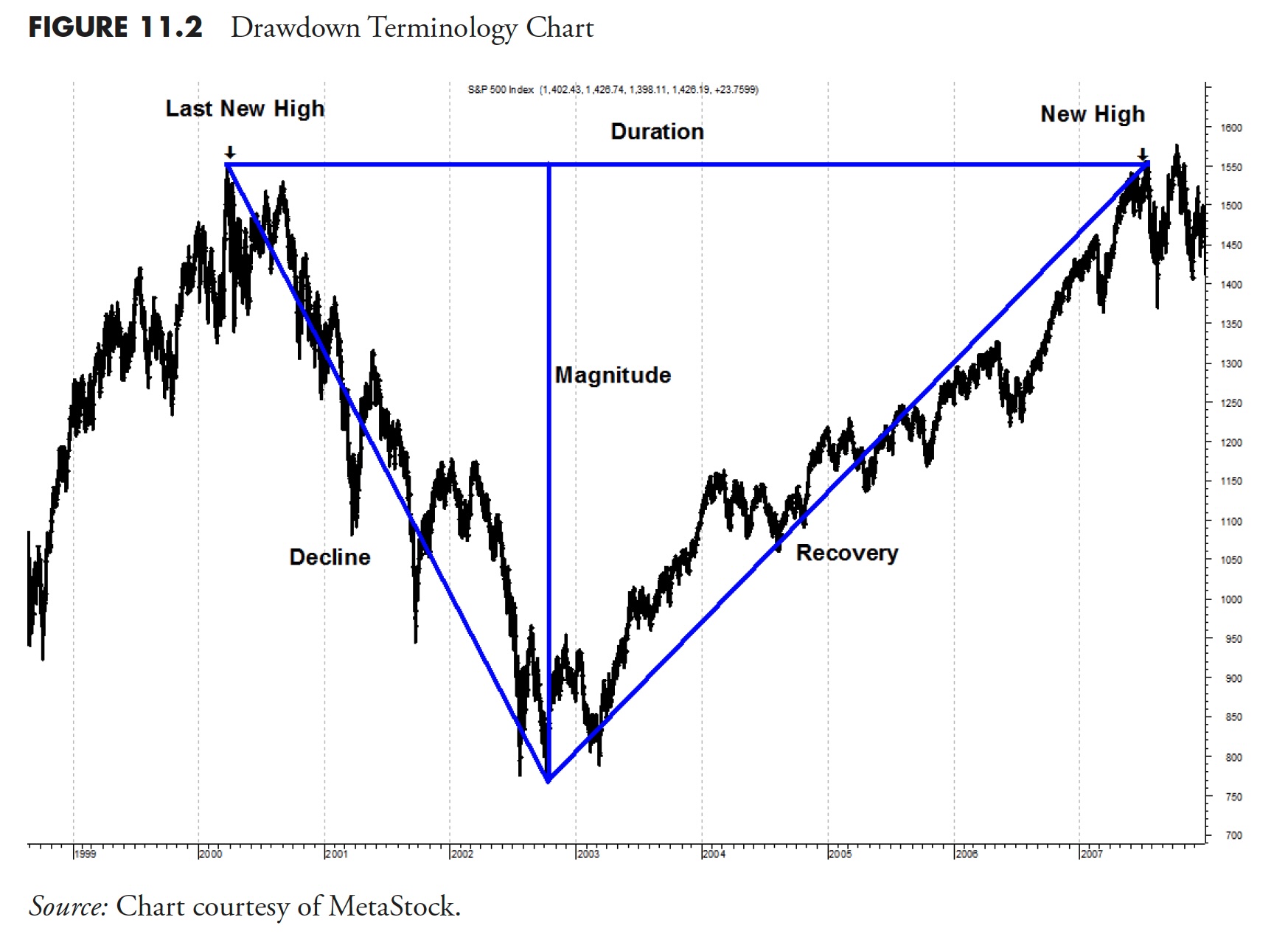
To understand why this phenomenon destroys balance sheets so rapidly, examine the mechanics of portfolio erosion during a severe market correction. Suppose an investor holds an equity portfolio that drops thirty percent in year one of retirement. In an accumulation setting, a thirty percent paper decline is painful but harmless so long as the underlying companies remain solvent and the investor avoids panic selling. The paper loss requires a forty-three percent subsequent gain to break even, a benchmark historical equities consistently achieve across multi-year cycles.
The math turns predatory when annual withdrawals are introduced into this equation. If the investor must withdraw forty thousand dollars for basic living expenses while the portfolio is already depressed, those dollars cannot wait for market recovery. The investor is forced to harvest equities at market troughs. Under the merciless laws of sequence of returns risk mechanics, these paper losses transform into realized and permanent reductions in portfolio unit count. The investor has sold off the very financial engine required to generate future compounding.
When the equity index eventually stages an explosive recovery, the portfolio no longer owns enough underlying shares to participate fully in the upside. Each subsequent year of mandatory living expenses demands an even higher percentage of the remaining depleted portfolio, accelerating a downward spiral known in actuarial science as wealth ruination. It is not volatility itself that bankrupts retirees; it is the lethal combination of unhedged volatility paired with mandatory, unyielding liquidation.
Four proven portfolio strategies to counteract distribution fragility
Surviving the perilous transition from wealth building to wealth consumption requires more than passive hope. Mitigating sequence of returns risk mechanics requires shifting from passive asset accumulation to active structural defense. Experienced wealth architects employ tactical structural frameworks designed to absorb market shocks without compromising the longevity of retirement capital.
Dynamic spending guardrails that flex across market cycles
Rigid withdrawal rules are the single greatest threat to long-term portfolio survival. The conventional four percent rule assumes an investor blindly increases distributions every year to match inflation regardless of whether markets are soaring or collapsing. In real-world decumulation, successful capital preservation requires responsive spending guardrails. Establishing predetermined rules—such as skipping annual inflation adjustments following a negative market year or trimming discretionary expenditures by ten percent during severe drawdowns—dramatically reduces the liquidation of depressed assets. By flexing lifestyle spending downward during economic contraction, retirees starve the sequence risk beast and leave equity engines intact to participate in market rebounds.
Multi-year liquidity reserves that insulate capital from forced liquidation
A robust distribution architecture must possess a reliable shock absorber. Establishing a tiered liquidity buffer containing two to four years of non-discretionary living expenses in cash equivalents and ultra-short government debt isolates day-to-day spending from equity volatility. When a cyclical bear market strikes, withdrawals are drawn exclusively from this stable liquidity fortress rather than from depressed equity positions. Deeply understanding sequence of returns risk mechanics teaches us that duration matching provides a psychological shield against panicked selloffs. By giving equities three to four uninterrupted years to cycle through economic troughs, investors completely bypass the forced liquidation trap.
Equity glide paths that adapt during vulnerable retirement transitions
Conventional financial wisdom suggests investors should perpetually reduce equity exposure as they age, following a linear, downward glide path toward conservative bonds. Groundbreaking research has challenged this orthodoxy, demonstrating that a reverse or U-shaped glide path offers vastly superior protection against distribution fragility. Under this framework, an investor reduces equity exposure to its lowest point right at the threshold of retirement—the five-year window before and after leaving the workforce, when sequence risk peaks. Once this fragile transition zone passes, equity allocations are systematically increased back up throughout later retirement. This strategic structure protects capital when portfolio balances are most vulnerable to market shocks while preserving the long-term compounding horsepower necessary to defeat longevity risk.
Non-correlated cash flow engines that generate resilient income
A truly resilient portfolio does not rely solely on asset liquidations to fund retirement cash flow. Incorporating structural assets that generate organic, non-correlated yield decouples living expenses from market price swings. High-quality income instruments, private credit facilities, real estate investment trusts, and infrastructure dividends generate independent liquidity that flows directly into the cash bucket. When baseline living expenses are substantially met by organic income rather than the sale of capital assets, the portfolio remains essentially indifferent to equity market corrections. Shares do not need to be liquidated at fire-sale discounts because the portfolio produces its own living wage.
Designing structural protection against severe market stress
Constructing a durable financial plan demands stress-testing assumptions against extreme market conditions rather than relying on average probabilities. In institutional asset management, financial planners modeling sequence of returns risk mechanics often recommend testing portfolios against historical stress events such as severe stagflation, debt crises, and sudden geopolitical shifts. According to CFA Institute research on portfolio distribution vulnerability, traditional fixed-allocation portfolios suffer an unacceptable probability of catastrophic failure when hit by prolonged bear markets during early distribution years.
Achieving long-term financial survival requires balancing structural defenses across asset classes. Just as culinary thermodynamic balance dictates whether an entrée burns or caramelizes—where Maillard reaction mechanics reveal 4 proven secrets to unlock unbelievable flavor and crust through thermal regulation—proper decumulation relies on managing the kinetic speed of asset withdrawals relative to market recovery. Integrating liquid cash reserves, dynamic withdrawal triggers, and uncorrelated yield engines creates a cohesive, multi-layered defense. This approach guarantees that even when major equity indexes crater fifty percent, capital distributions remain thoroughly insulated from market panic.
Long-term portfolio survival and the elimination of panic
The mathematical reality of decumulation is ultimately intertwined with human psychology. When an unprepared investor watches a portfolio decline by twenty-five percent in the first year of retirement while simultaneously making monthly withdrawals, the emotional pressure becomes unbearable. Panicked investors invariably capitulate at the exact bottom of the market, selling equities to preserve whatever capital remains. This human instinct transforms an otherwise manageable market cycle into a permanent, unrecoverable lifestyle disaster.
Equipping your portfolio with a systematic distribution architecture replaces emotional volatility with procedural certainty. When you establish predefined liquidity buckets and dynamic spending rules, you eliminate the daily terror of checking market indexes. You know with absolute clarity where the next three years of living expenses are coming from regardless of whether Wall Street surges or crashes. In this framework, mastering sequence of returns risk mechanics is ultimately less about predicting the next bear market and more about engineering an all-weather distribution architecture. By acknowledging that path dependency governs investment reality, you liberate your wealth from the dangerous illusion of mathematical averages and secure lasting financial sovereignty.