Foley sound design mechanics and 4 proven secrets that craft visceral cinematic realism
Cinematic realism relies on an acoustic deception performed on quiet soundstages around the world. Discover how master Foley artists manipulate physical matter, psychoacoustics, and spatial timing to ground audiences inside living visual worlds.

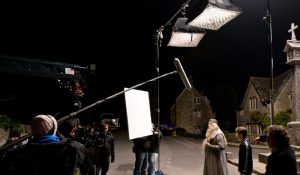
Mastering foley sound design mechanics transforms flat production audio into an intimate, physical reality that anchors audiences directly inside a story. When moviegoers watch a character sprint across a wet cobblestone alley, sink into a cracked leather armchair, or unsheathe a broadsword, they assume the microphone on set captured every scrape, rustle, and thud. The physical reality of film production shatters that assumption. Location microphones point directly at actors’ mouths, systematically rejecting ambient sounds to preserve clean, editable dialogue. Without the tactile layer of replacement audio crafted in post-production, films feel weightless, sterile, and eerily detached from human sensory experience.
The Hidden Architecture of Cinematic Tactility
To grasp the necessity of this acoustic art, one must confront the limitations of film set recordings. Production recordists deploy directional boom microphones and hidden lavaliers optimized solely for human speech frequencies. This hyper-focus on vocal intelligibility discards the acoustic friction of everyday existence. Footsteps disappear into soft carpets laid out to silence background noise, hand gestures emit no fabric rustle, and props made of lightweight resin sound hollow or completely silent when handled. Consequently, understanding modern foley sound design mechanics requires recognizing the fundamental inadequacy of location recording.
Jack Foley pioneered the practice during the transition to synchronized sound cinema, performing live movements in sync with projected film reels. Today, the craft has evolved into a disciplined branch of acoustic physics and expressive character study. The Foley artist does not merely replicate noise; they curate an emotional vocabulary of touch. Every fabric selection, stride cadence, and prop resonance conveys subconscious information about a character’s emotional equilibrium, physical mass, and internal tension. When an audience feels the dread of a predator stalking through dry autumn leaves, they are not reacting to an authentic jungle recording. They are responding to an artisan twisting dried audio tape and pine needles inside a soundproof chamber.
The Physics of Prop Selection and Acoustic Materiality
Film cameras often lie to capture a striking image, relying on plastic props, breakaway sugar glass, and foam rubber boulders. Because visual facsimiles lack physical authenticity, the auditory dimension must compensate by supplying the perceived physical weight. In practice, the literal object rarely produces the acoustic profile our brains associate with that object on screen. A real steel sword drawn from a leather scabbard yields a dull, scraping thud rather than the sharp, metallic ring audiences instinctually anticipate.
Foley artists resolve this perceptual divide by functioning as material illusionists. Cracking a head of chilled cabbage or snapping stalks of fibrous celery against a microphone recreates the sickening rupture of cartilage and bone far more convincingly than synthetic digital sound effects ever could. Squeezing wet chamois cloth produces visceral organic impacts, while antique rusted hand tools yield the menacing tension of mechanical hinges. Furthermore, at the heart of foley sound design mechanics lies the psychoacoustic phenomenon of synchresis, the spontaneous and irresistible mental fusion forged between an auditory event and an accompanying visual image when they occur simultaneously.

Four Proven Secrets That Transform Ordinary Noise Into Emotional Truth
Creating believable Foley requires far more than waving everyday junk in front of an expensive condenser microphone. Elite practitioners employ systematic methodologies to breathe psychological life into lifeless props.
1. Modulating Cloth Passes to Establish Subconscious Character Weight
The cloth pass forms the foundational fabric of any comprehensive Foley session. Performed using specialized garment racks stocked with silk, coarse denim, heavy wool, and weathered leather, this track captures the continuous friction generated by human movement. Sound artists do not merely wear the clothes; they perform them with their hands, matching the exact rhythm, velocity, and emotional agitation displayed on screen. A character experiencing acute panic moves with frantic, sharp twitches that demand erratic fabric snapping. Conversely, a poised aristocrat glides through a room with smooth, quiet sweeps of silk. This track operates just beneath conscious perception, gluing disconnected dialogue together while establishing spatial presence.
2. Building Multi-Layered Footstep Dynamics to Map Psychological Urgency
Footsteps communicate human intent more transparently than facial expressions. Walking is effectively controlled falling, and the distribution of weight between heel strike and toe push-off tells the audience whether a character is exhausted, arrogant, or terrified. Within sophisticated foley sound design mechanics, an actor walking across gravel is rarely represented by a single audio pass. Artists record distinct layers: the initial sharp heel strike on bedrock, the secondary crunch of loose aggregate shifting under the sole, and the subtle scatter of dislodged debris trailing behind. As explored in analyses of cinematic suspense mechanics and 4 proven rules that craft unbearable tension, holding back the anticipated acoustic resolution of a footstep creates unbearable narrative strain, pulling the audience directly into the character’s hesitation.
3. Exploiting Resonance Cavities to Manufacture Scale and Proximity
Microphone placement relative to acoustic chambers dictates perceived physical scale. Recording an object inside a small, sealed enclosure emphasizes low-mid frequency build-up, turning modest objects into colossal structures. By striking heavy iron plates positioned over wooden resonant pits, artists create the booming reverberation of industrial machinery. Similarly, manipulating air pressure through hollow tubes, vintage glass carboys, and empty wooden instrument bodies introduces tactile spatial cues. This approach enables sound artists to manufacture claustrophobia in confined spaces or devastating isolation in empty architecture without touching synthetic equalization plugins.
4. Synchronizing Imperfect Timing to Avoid the Uncanny Trap
Amateur Foley work often fails because of mechanical precision. When every sound transient hits dead-center on the exact video frame where contact occurs, the brain identifies the sound as artificial, triggering an auditory uncanny valley. Veteran practitioners operating within refined foley sound design mechanics intentionally introduce microscopic temporal offsets. A sound can lead or lag a visual impact by a fraction of a frame depending on acoustic distance. Because light travels faster than sound, an event occurring twenty paces away naturally reaches human ears milliseconds after the eyes register the impact. Respecting this physical truth preserves visceral credibility.
The Psychoacoustics of Spatial Alignment and Frequency Carving
Capturing magnificent acoustic textures on the Foley stage solves only half the cinematic equation. The true test of foley sound design mechanics occurs not in isolation on a foley stage, but inside the dense hierarchy of the final re-recording mix. A film soundtrack is a fiercely contested acoustic spectrum where human dialogue, dynamic musical score, and wall-to-wall sound effects compete for the listener’s ear canal.
Re-recording mixers must carefully carve dedicated frequency corridors for Foley to thrive. Dialogue strictly occupies the critical 1 kHz to 4 kHz range, the zone where human ears possess maximum sensitivity to consonant sounds. High-impact sound effects like explosions and engine rumbles claim the sub-bass frequencies below 120 Hz. Foley lives primarily in the delicate transience between these massive auditory pillars. Using high-pass filters to purge sub-audible stage rumbles, delicate notch carving to clear vocal resonances, and early-reflection convolution reverbs mapped to the geometry of the on-screen room, engineers embed the Foley tracks so seamlessly that the visual environment becomes physically tangible.
Sustaining Narrative Cohesion Across the Auditory Canvas
When sound design succeeds, the listener never pauses to admire the recording technique. The highest achievement of the craft is total transparency. Professional audio organizations maintain strict operational benchmarks, as outlined in the Motion Picture Sound Editors organization guidelines, emphasizing that fidelity must always surrender to narrative intent. A gunshot might sound technically louder, but if the story demands a personal focus on the victim, the microscopic whisper of their trembling fingers against an icy handrail must dominate the audio foreground.
Ultimately, the enduring brilliance of foley sound design mechanics rests on an invisible paradox. Sound artists construct total fabrications to deliver pure, unvarnished emotional truth. By bending physical matter, mastering room acoustics, and honoring the cognitive patterns of human psychoacoustics, they turn an artificial collection of flickering visual projections into a rich, tangible world that breathes, walks, and bleeds alongside the audience.