Russia Ukraine Border Security Zone Triggers 3 Critical Strategic Obstacles
Vladimir Putin has declared an unyielding 660-kilometer security zone carved inside Ukrainian territory. Moscow insists this border perimeter will remain entirely non-negotiable during any future peace talks.
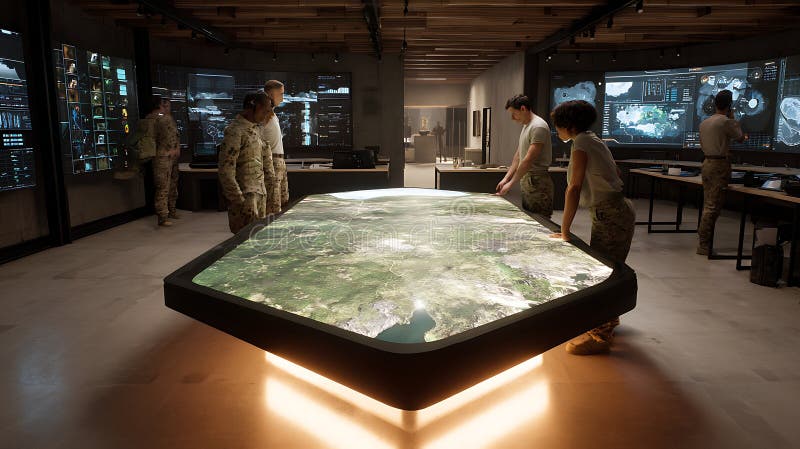
The sudden declaration of a russia ukraine border security zone by Vladimir Putin signals a profound territorial escalation along Eastern Europe’s battlefront. Speaking from a fortified military command post, the Russian president announced that Moscow is actively constructing an expansive defensive perimeter carved directly into Ukrainian territory along their shared frontier. The Kremlin quickly outlined the breathtaking physical scale of the project, framing it as an unyielding bulwark spanning hundreds of kilometers designed to insulate Russian frontier settlements from cross-border incursions, artillery strikes, and drone salvos.
Rather than presenting this barrier as a temporary operational measure, Russian leadership delivered an immediate diplomatic ultimatum to Kyiv and its Western allies. Moscow announced that the newly staked perimeter is fundamentally non-negotiable and will be permanently excluded from any future peace talks. The unilateral mandate fundamentally complicates international efforts to establish a diplomatic framework for ending the war, effectively demanding that Ukraine forfeit sovereign borderlands without negotiation before comprehensive peace terms can even be brought to a negotiating table.
The Command Post Proclamation and the 660 Kilometer Line
The strategic blueprint for the russia ukraine border security zone extends across a staggering 660 kilometers, according to measurements confirmed by Kremlin officials and reported by Reuters and The Guardian. Vladimir Putin unveiled the decision during a formal address delivered inside a Russian operational command post, flanked by defense officials and military planners. The setting itself was deliberate, chosen to project absolute command over frontline maneuvers while demonstrating that the initiative represents a permanent military directive rather than speculative political rhetoric.
The sheer breadth of a 660-kilometer perimeter covers significant portions of Ukraine’s northern and northeastern border provinces. For months, Russian regions such as Belgorod, Kursk, and Bryansk have faced sustained Ukrainian counter-battery fire, armed reconnaissance incursions, and drone strikes targeting supply depots. Moscow’s answer is not merely to reinforce its own border posts, but to physically absorb Ukrainian land into a defensive buffer. By pushing the security perimeter deep into Ukrainian sovereign territory, the Kremlin intends to move Russian residential communities and logistical arteries beyond the effective range of standard Ukrainian tube artillery and glide munitions.
Reports published by NewsCord and Reuters Connect confirm that Russian state media and official wire services treated the command post briefing as a definitive pivot in territorial doctrine. Rather than treating sovereign boundaries as fixed lines demarcated by post-Soviet treaties, Moscow is applying raw military force to construct a cordon sanitaire inside Ukraine. This dynamic shifts the border westward, asserting spatial control over land where thousands of Ukrainian civilians formerly resided and where defensive military positions once anchored Kyiv’s northern flank.
Why Moscow Declared This Buffer Completely Non-Negotiable
The most consequential dimension of Putin’s announcement lies in its diplomatic rigidity. Anadolu Ajansı and Reuters reported that Moscow insists the russia ukraine border security zone remains outside any future peace framework. In unequivocal language delivered directly to defense commanders, Putin emphasized that the zone would never be relinquished, traded, or compromised at a diplomatic bargaining table, regardless of which third-party mediators attempt to broker an end to hostilities.
To reinforce this unilateral mandate on the ground, Russian armed forces initiated what Putin described as massive, concentrated strikes targeting Ukrainian military-industrial facilities. According to statements documented by Anadolu Ajansı, these strikes targeted weapon manufacturing centers, repair plants, and strategic storage hubs throughout Ukraine. The dual approach illustrates a coordinated strategy where intense infrastructure strikes degrade Ukraine’s capacity to supply frontline units, while ground formations carve out physical buffer space along the frontier.
By preemptively declaring this 660-kilometer territory non-negotiable, the Kremlin is attempting to establish irreversible facts on the ground. Western and Ukrainian peace proposals have consistently centered on the complete restoration of territorial integrity and the sanctity of internationally recognized boundaries. Putin’s pronouncement cuts through those frameworks by insisting that Ukraine must surrender border depth simply to reach preliminary discussions, establishing an impossible precondition for Ukrainian President Volodymyr Zelenskyy and his governing coalition.
Breaking Down 3 Critical Pressures Created by the Buffer
The unilateral enforcement of this russia ukraine border security zone creates three distinct geopolitical and strategic crises that reverberate far beyond the trenches of the northern front.
Strategic Decoupling of Sovereign Ukrainian Territory
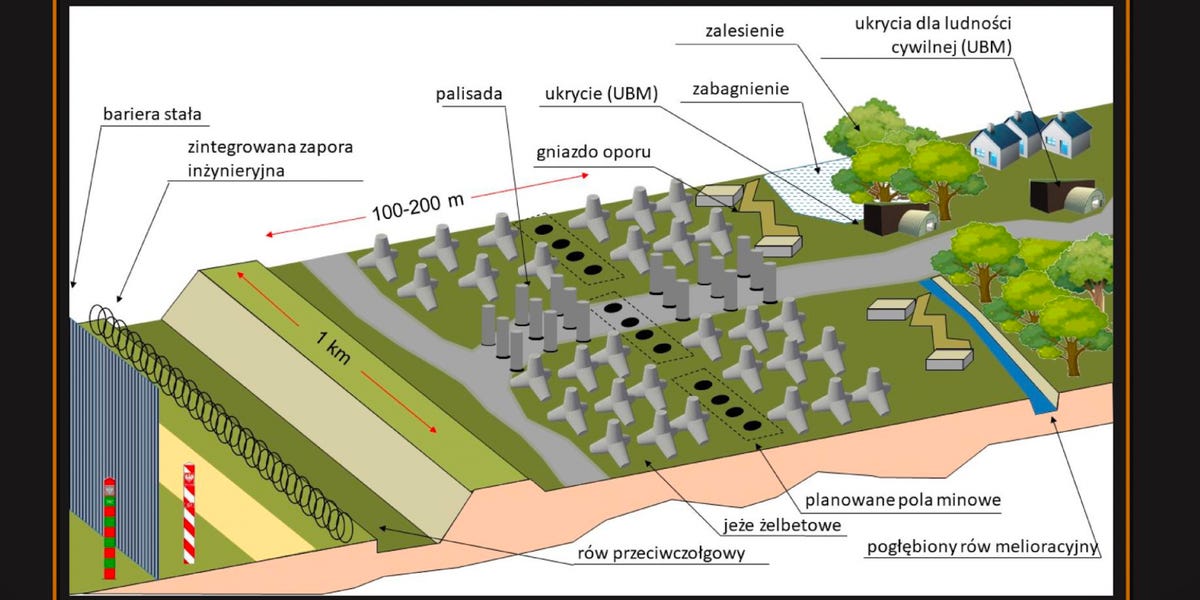
The immediate physical impact of a 660-kilometer buffer is the functional annexation of Ukrainian soil under the euphemism of border security. While the Kremlin avoids labeling this belt as outright annexed territory in constitutional terms, military occupation produces the same operational reality. Ukrainian forces are pushed back, civil administration is severed, and defensive obstacles such as minefields, dragon’s teeth, and fortified trench systems are constructed along sovereign Ukrainian farmland. This operational decoupling alters the tactical geometry of northern Ukraine, forcing Ukrainian high command to divert scarce mechanized brigades to monitor an expanding perimeter rather than concentrating resources in the contested Donbas basin.
The Escalation of Massive Industrial Strikes
The buffer policy operates hand-in-hand with an intensified aerial offensive designed to exhaust Ukraine’s defense manufacturing base. During his command post briefing, Putin explicitly linked border security to concentrated bombardment campaigns against Ukrainian factories and assembly plants. By synchronizing territorial seizure with nationwide industrial destruction, Moscow seeks to prevent Ukraine from producing the indigenous artillery, loitering munitions, and armored vehicles needed to contest the buffer zone. This dual-track strategy severely challenges Western supply lines, as allied nations must balance donating frontline equipment with backfilling industrial components that can no longer be assembled domestically inside Ukraine.
Complete Collapse of Preliminary Peace Frameworks
The uncompromising classification of the security zone as non-negotiable shuts the door on incremental peace talks. International diplomacy relies on negotiable leverage, where land, sanctions relief, and security assurances can be traded across working groups. By taking 660 kilometers of frontier land entirely off the negotiation table, Moscow eliminates any middle ground. Kyiv cannot legally or politically accept the permanent loss of frontier territory without risking national collapse, while Moscow has now publicly bound its operational credibility to maintaining this line. The diplomatic outcome is structural paralysis, ensuring that military force remains the sole mechanism dictating the war’s trajectory.
Geopolitical Repercussions Across European Defense Spheres
Across European capitals, Western defense analysts observe that the russia ukraine border security zone functions as an attempt to redraw international law through military coercion. If a warring power can unilaterally seize an adjacent sovereign buffer whenever cross-border skirmishes occur, the foundational principles governing European stability since the mid-twentieth century disintegrate entirely. NATO defense planners in the United Kingdom, Poland, and the Baltic States have closely monitored the command post dispatch, recognizing that an established Russian buffer zone on Ukrainian soil establishes a precedent Moscow could attempt along other frontiers.
The announcement also highlights the theatrical nature of contemporary military statecraft. State-controlled visual dispatches from high-ranking command bunkers are carefully crafted to convey methodical dominance, reassuring domestic audiences while unnerving foreign defense ministries. In high-stakes strategic communication, every visual and auditory detail is calculated to construct an illusion of inescapable momentum. The sensory choreography of modern warfare relies on careful narrative engineering, not unlike the meticulous discipline found in Foley sound mechanics and 4 proven methods that create breathtaking cinema to shape audience perception through manufactured atmospheric weight.
European security officials understand that accepting this buffer as an irreversible reality would validate an aggressive doctrine of territorial revisionism. Consequently, the Kremlin’s declaration is already generating calls across NATO member states to lift remaining restrictions on Western-supplied weaponry, enabling Ukrainian forces to strike the operational staging depots supporting the buffer zone deep inside Russian territory.
The Reality of Sustaining a 660 Kilometer Barrier
Announcing a strategic perimeter inside enemy territory is fundamentally different from holding it under constant fire. Sustaining a fortified russia ukraine border security zone along such a vast front demands enormous logistical stamina, deep defensive depth, and tens of thousands of deployed personnel. Ukrainian drone units, precision artillery batteries, and mobile strike teams will not permit Russian engineers to build fortifications unmolested. Every road, supply convoy, and trench-digging apparatus deployed inside Ukrainian territory remains a viable target for Kyiv’s armed forces.
Furthermore, maintaining static buffer lines exposes occupying units to attrition warfare. Russian forces must disperse heavy equipment along hundreds of kilometers of border terrain rather than massing combat power for decisive offensive breakthroughs elsewhere. Unless Russian forces achieve absolute air superiority and suppress all Ukrainian indirect fire systems, the designated security zone risks becoming a chaotic combat corridor rather than an impenetrable defensive wall.
The coming months will demonstrate whether Moscow possesses the engineering capacity and troop density required to transform this ambitious proclamation into a functional defensive reality. What remains undisputed is that the permanent codification of a russia ukraine border security zone has hardened diplomatic positions on both sides of the conflict. By formally declaring sovereign Ukrainian territory off-limits to future peace negotiations, Moscow has raised the stakes of the war, leaving no room for diplomatic ambiguity along Eastern Europe’s bloodiest frontier.