Asset allocation mechanics and 4 proven rules that prevent costly portfolio ruin
Discover the mathematical power of non-correlated assets and how disciplined rebalancing safeguards your balance sheet against devastating market crashes. Learn the four foundational rules that turn market volatility into compounding strength.
Understanding asset allocation mechanics determines whether an investor survives a catastrophic market crash or watches decades of compounding vanish overnight. Most retail participants obsess over the granular search for the next breakout stock or the exact market bottom. They spend endless hours dissecting quarterly earnings reports, monitoring macroeconomic headlines, and chasing speculative momentum. Yet empirical research consistently demonstrates that individual asset selection accounts for only a marginal fraction of long-term portfolio variance. The overarching framework of how your capital is distributed across non-correlated asset classes dictates your financial destiny.
Market drawdowns are not rare anomalies; they are guaranteed structural features of capitalism. Every economic epoch produces sudden liquidity freezes, debt crises, or speculative bubble implosions that test the emotional and financial fortitude of market participants. Without a pre-engineered defensive posture, panic takes over, converting temporary paper losses into permanent capital destruction. To build an impenetrable balance sheet, one must look beyond optimistic projections and understand the internal architecture of portfolio design.
The Hidden Mathematics of Uncorrelated Risk
At its fundamental core, modern asset allocation mechanics stem from the mathematical insights introduced by Harry Markowitz in his Nobel Prize-winning work on portfolio selection. Prior to this quantitative shift, investing was treated as an exercise in standalone risk. Analysts evaluated a company’s balance sheet, growth rate, and competitive moat in total isolation. If a stock appeared fundamentally sound, it was added to the ledger under the assumption that a collection of individually good companies inherently formed a good portfolio.
Markowitz dismantled this intuition by proving that an asset cannot be judged solely by its standalone risk and expected return. What truly matters is how its price movements correlate with the rest of your holdings. When two assets possess an imperfect or negative correlation, combining them creates a mathematical phenomenon often called the only free lunch in finance. The combined portfolio can achieve a lower overall volatility profile than either individual asset possessed on its own, without sacrificing equivalent expected returns.
Consider the standard deviation of returns as an engine running at high RPMs. If every component in the engine vibrates at the exact same harmonic frequency, the entire apparatus quickly shakes itself apart under mechanical strain. By introducing counter-cyclical assets whose price cycles operate independently, portfolio variance dampens. The efficient frontier represents this optimal curve where every unit of volatility taken is compensated with the maximum mathematical probability of return. Navigating this frontier requires moving past emotional intuition and embracing systemic structure.
How Asset Classes Behave Under Extreme Pressure
Every asset class serves a distinct, functional purpose within a broader balance sheet. Equities provide long-term real earnings growth and an operational shield against monetary inflation, representing direct ownership in human ingenuity and corporate enterprise. However, that high expected return comes at the cost of terrifying downward volatility. During a severe recession, equities routinely shed thirty, forty, or fifty percent of their nominal value as corporate earnings compress and credit markets freeze.
When evaluating real-world stress, functional asset allocation mechanics must account for correlation breakdowns that occur during systemic liquidity freezes. In normal economic climates, sovereign bonds, real estate, and equities trade with predictable divergence. Yet in the opening stages of an acute panic, correlations across historically independent assets tend to spike toward one. Distressed institutions face margin calls, forcing them to liquidate their most liquid and profitable holdings to raise immediate cash.
This mechanical dynamic explains why high-yield corporate debt or speculative real estate vehicles fail to provide genuine ballast during severe downturns. When liquidity dries up, anything that relies on accessible short-term credit suffers the same collateral damage as high-beta technology equities. Sovereign treasury obligations issued by reserve-currency governments, alongside physical cash equivalents, stand out as the few instruments that maintain absolute liquidity and price resilience when panic reaches a fever pitch. Recognizing how liquidity cascades flow through the financial ecosystem prevents an investor from building a portfolio that is diversified on paper but uniformly fragile in reality.

Four Proven Principles That Preserve Capital Across Market Cycles
Calibrate Equity Exposure Against True Liquidity Horizons
The single most destructive error an individual can commit is forcing an equity portfolio to solve a short-term cash requirement. Stocks are exceptional wealth accumulators over twenty-year cycles, but they are treacherous vehicles across twenty-four-month spans. If capital is required for an operational business expense, real estate purchase, or essential living reserve within three to five years, that money does not belong anywhere near the stock market. True risk tolerance is not an emotional feeling assessed during a buoyant bull market; it is an objective calculation dictated by your cash flow timeline. Aligning equity allocations strictly with capital that can remain undisturbed for seven to ten years neutralizes the fatal risk of being forced to sell at the bottom of an economic cycle.
Anchor Fixed Income as a Functional Ballast Rather Than a Yield Engine
A disciplined approach to asset allocation mechanics views the bond allocation not as a vehicle for aggressive capital appreciation, but as structural insurance. Many investors make the grave mistake of reaching for yield in their defensive sleeve, purchasing lower-tier corporate credit or complex structured products to squeeze out an extra two percentage points of return. In doing so, they unknowingly convert their defense into offense, introducing equity-like downside risk disguised in debt clothing. High-grade sovereign paper exists to preserve principal, guarantee contractually defined liquidity, and deliver an uncorrelated price spike when equity markets drop like a stone. Treating fixed income as ballast grants you the emotional stability and purchasing power needed to reallocate into distressed equities when blood is in the streets.
Integrate Systematic Rebalancing Bands to Strip Out Emotion
Left untended, a successful portfolio naturally engineers its own destruction. During a protracted expansion, risk assets surge in price, steadily expanding their footprint until an initial sixty percent equity weight balloons to eighty percent just as market valuations reach historic extremes. Conversely, after a brutal crash, equities shrivel to a fraction of the portfolio, leaving the investor under-allocated right before the subsequent economic recovery. Relying on gut feelings to reallocate capital under these conditions is a psychological impossibility for most human beings.
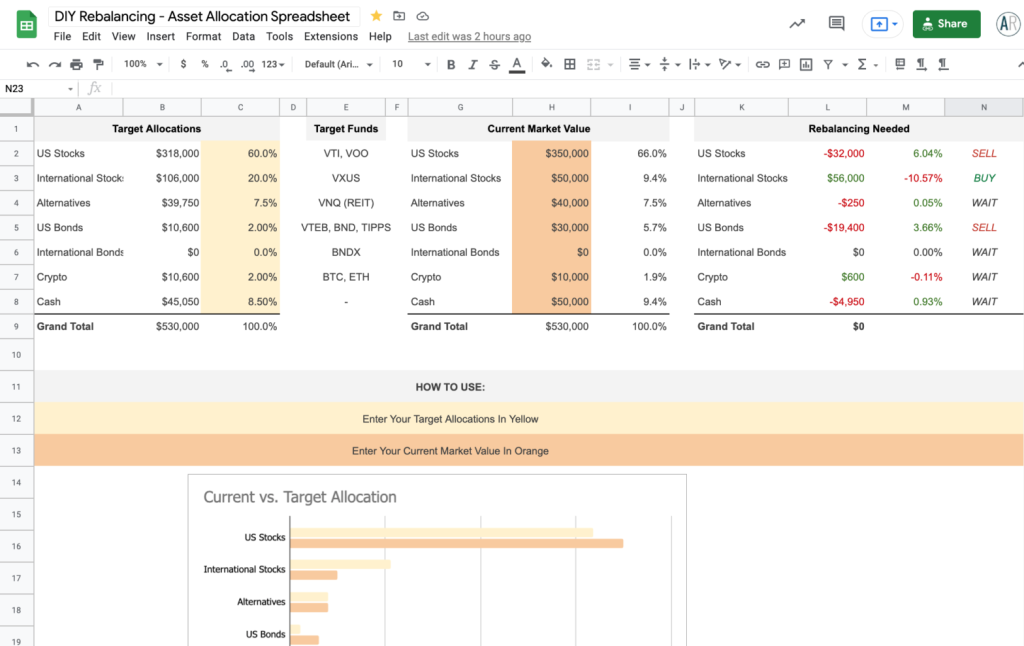
Just as cinematic suspense mechanics and 4 proven rules that create unbearable narrative tension rely on precise pacing and withholding relief until the exact psychological climax, financial markets prey on investors who react to panic before the structural cycle resets. Employing fixed rebalancing bands, such as triggering an adjustment whenever an asset class deviates five percentage points from its target weight, establishes a mechanical rulebook that systematically forces you to sell high and buy low without attempting to forecast macroeconomic turning points.
Account for Inflationary Drag with Resilient Tangible Assets
Paper wealth faces a silent, continuous adversary that operates far more quietly than market crashes. Prolonged periods of currency depreciation and structural inflation erode purchasing power with brutal efficiency. Traditional bond allocations that excel during deflationary recessions suffer severe negative real returns when interest rates climb to combat rising producer prices. True mastery of asset allocation mechanics requires an investor to build multi-dimensional resilience that defends against both asset deflation and monetary debasement. Integrating real assets, whether through short-duration inflation-protected securities, infrastructure assets, productive farmland, or cash-flow positive commodity enterprises, provides essential operational pricing power when nominal debt instruments lose their real value.
The Psychological Friction That Derails Disciplined Investors
The greatest vulnerability in executing sound asset allocation mechanics is not mathematical error, but emotional surrender. Humans are evolutionary pattern-seekers hardwired for social consensus and immediate self-preservation. When neighbors celebrate massive windfalls from speculative manias, conservative portfolio architecture feels like an unbearable handicap. Financial media capitalizes on this envy, publishing endless profiles of overnight fortunes that make systematic risk management appear hopelessly archaic and pedestrian.
Then the inevitable cycle turns. Euphoria vanishes, replaced by existential dread as asset valuations compress toward fundamental reality. The very diversification that frustrated the investor during the mania now becomes their lifeline, yet the psychological pain of holding red positions tempts them to abandon their long-term plan entirely. Capitulation at the point of maximum pessimism locks in cyclical losses that compound mathematical ruin. Acknowledging that asset allocation is fundamentally an exercise in emotional governance rather than quantitative genius is what separates perennial compounders from perpetual market tourists.
Constructing a Durable Wealth Framework for Decades to Come
Wealth preservation is not about optimizing for the highest possible rate of return in any single calendar quarter. It is about engineering an operational framework that eliminates the probability of total ruin under every conceivable macroeconomic regime. As legendary investors have long observed, the first rule of compounding is to never interrupt it unnecessarily. Every catastrophic financial collapse traces back to excessive leverage, concentrated exposure, and the hubris of assuming that tomorrow will replicate yesterday.
Ultimately, enduring wealth accumulation relies on asset allocation mechanics that prioritize durability over momentary outperformance. When your portfolio is structurally decoupled from singular points of failure, market turbulence ceases to be an existential threat. It transforms instead into an operational advantage, giving you the liquidity and peace of mind to act rationally while the broader crowd panics. Design your portfolio for survival first, and the compounding will take care of itself.