Baseball pitching mechanics and 4 proven rules that unleash explosive throwing velocity
A 95-mile-per-hour fastball is an anatomical miracle that pushes human joints to the brink of structural failure. Discover how flawless kinetic sequencing turns ground reaction force into explosive velocity while keeping the throwing arm intact.

Mastering baseball pitching mechanics unlocks the secret behind one of the most violent, fascinating physical movements in sports. In less than two-tenths of a second, an elite pitcher accelerates a five-ounce leather sphere from a stationary posture into a blinding blur exceeding ninety-five miles per hour. During this microsecond explosion, the throwing shoulder rotates internally at speeds surpassing seven thousand degrees per second. That is the fastest recorded human motion on earth. It generates rotational forces powerful enough to tear connective tissue clean off the bone if executed without absolute biomechanical harmony.
Spectators often look at a flame-throwing athlete and marvel at the raw strength of their throwing arm. This is a profound anatomical illusion. The human arm does not create high-velocity pitches. The arm operates as an organic whip, an anatomical conduit that receives, concentrates, and discharges massive energy produced by the largest muscles in the lower body. When a pitcher steps onto the mound, they engage in a high-stakes kinetic transaction with the earth itself. Every stride, hip rotation, and torso snap represents a physical calculation where momentum transfers across anatomical hinges. Flaws in this sequencing do not merely ruin pitch command. They transform minor delivery hitches into catastrophic structural wear.
The Biomechanical Kinetic Chain From Turf to Fingertips
The journey of a fastball begins nowhere near the pitcher’s hand. It starts at the contact patch where metal cleats bite into the dirt of the pitching rubber. As the pitcher pushes off the mound slope, ground reaction forces travel upward through the ankles, knees, and pelvis. This sequential energy flow is governed by the kinetic chain, a mechanical principle stating that individual bodily segments act as linked systems to transfer force from large, stable body parts to progressively smaller, faster extremities.
When flawed baseball pitching mechanics interrupt this chain, the upper extremities are forced to generate artificial velocity out of thin air. The shoulder and elbow were never designed to be the primary engine of ball propulsion. Instead, they operate as conduit pipes and steering mechanisms. If the lower half fails to transfer rotational energy cleanly into the pelvis and torso, the pitcher instinctively compensates by overusing the rotator cuff and forearm flexors.
The result is an alarming spike in elbow valgus torque. Biomechanical laboratory testing consistently shows that peak torque across the ulnar collateral ligament during an elite delivery frequently reaches sixty-four Newton-meters. That figure hovers precariously close to the ultimate tensile failure point of human ligamentous tissue. Surviving that strain season after season requires every link in the physical chain to fire with microscopic precision.
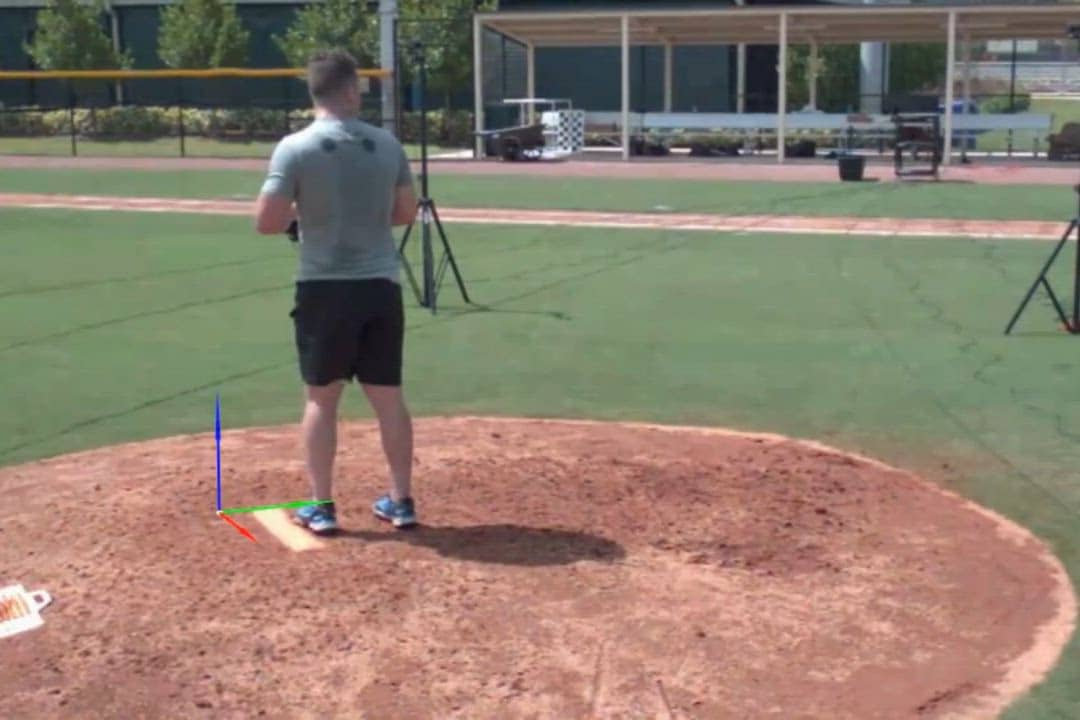
Four Proven Rules That Generate Extreme Ball Velocity and Protect Arm Health
Executing sound baseball pitching mechanics requires an athlete to synchronize four distinct structural landmarks within fractions of a second. Miss one, and the whip loses its snap, dumping raw destructive stress directly into the elbow joint.
Explosive Ground Reaction Force and Hip to Shoulder Separation
Velocity is bought and paid for at the rubber. When a pitcher drives down the mound slope, their back leg acts as a powerful piston pushing against the earth. However, raw forward push is useless without rotational delay. The first foundational rule of delivery involves maximizing hip-to-shoulder separation. As the lead foot plants firmly into the clay, the pelvis must snap completely open toward home plate while the upper torso remains square to the third-base line for a right-handed thrower.
This structural separation creates profound elastic tension across the core musculature, particularly the abdominal obliques, rectus abdominis, and latissimus dorsi. Biomechanists compare this to pulling back the elastic band of a slingshot. The pelvis leads the charge, snapping open ahead of the chest. If the pelvis and upper torso open simultaneously, a catastrophic amateur error known as rotational synchronization, the elastic stretch is completely lost. Without hip-shoulder separation, the arm must push rather than whip, instantly slicing miles per hour off the radar gun while spiking stress on the anterior shoulder capsule.
The Rigid Front Leg Block That Halts Linear Momentum
Forward momentum down the mound must be violently converted into rotational energy, and nothing achieves this better than the lead leg block. The instant the stride foot plants into the clay, the front knee must stop flexing forward and aggressively brace backward into extension. Think of a high-speed vehicle striking an immovable concrete barrier. The vehicle halts instantly, catapulting whatever is unrestrained inside forward through the windshield.
This immediate braking action is a foundational pillar of elite baseball pitching mechanics, converting linear run-up into rotational fury. When the lead knee locks into place, the kinetic energy racing down the mound has nowhere to go but upward into the hips and trunk. Pitchers who leak energy through a soft, bending front knee lose their mechanical pivot. Instead of rotating around a fixed fulcrum, their entire upper body drifts forward. The release point drops, pitch trajectory flattens out, and the ball arrives at home plate looking lazy and hittable.
Elastic Forearm Layback and Dynamic Shoulder Loading
Once the torso uncoils forward over the braced front leg, the throwing arm experiences external rotation, colloquially known as forearm layback. As the shoulder drives forward, the forearm and baseball lag behind, sinking into extreme horizontal abduction. High-speed cameras capture elite throwers achieving over one hundred and seventy degrees of external rotation, bending the forearm almost parallel to the surface of the mound.
This extreme layback is not achieved through conscious muscular contraction. It is an entirely passive, dynamic phenomenon created by the rapid forward acceleration of the chest while the forearm possesses mass and inertia. As the ball lags behind, the subscapularis and pectoralis major muscles stretch like massive industrial springs. When that stored elastic energy snaps forward into internal rotation, the arm unleashes terrifying speed. Achieving proper layback requires exceptional thoracic spine extension and glenohumeral mobility; without them, the elbow drops, loading destructive shear forces directly onto the inner elbow joint.
Uncompromising Deceleration and Full Trunk Extension Through Release
Accelerating the baseball to ninety-five miles per hour is only half the physical equation; the athlete must also bring a limb rotating at seven thousand degrees per second to a complete stop without tearing the posterior shoulder tissues to ribbons. Deceleration is the great protector of pitching longevity.
After the ball separates from the fingertips, the posterior rotator cuff muscles, rhomboids, and trapezius must contract eccentrically to slow the arm down. To assist these small muscles, the pitcher must allow their upper torso to flex deeply forward, letting the throwing shoulder travel across the body toward the opposite knee. Pitchers who cut off their follow-through by standing upright rob their body of braking distance. Physics dictates that shortening stopping distance drastically increases peak stopping force, forcing the delicate infraspinatus and teres minor to absorb forces they cannot endure.
The Fatal Fallacy of Pitching Purely With Arm Muscle
Generations of young athletes have been misled by well-meaning advice urging them to reach back further and throw harder with their arms. When coaches analyze high-velocity baseball pitching mechanics solely by looking at what the throwing hand is doing, they miss the engine entirely. Isolating the arm creates high-effort, low-efficiency deliveries that inevitably lead to orthopedic surgery.
The shift toward hyper-quantified sports science mirrors broader digital culture transformations; just as analyzing Twitch Streaming Trends Reveal 5 Critical Shockwaves Gripping the Digital World demonstrates how digital audiences devour micro-level performance metrics, modern baseball development has completely migrated toward high-speed optical tracking cameras and force plates. Groundbreaking American Sports Medicine Institute biomechanics research on pitching confirms that nearly half of total throwing energy originates in the legs and core. Chasing arm speed without establishing lower-half stability is like installing a jet engine onto a canoe. The frame simply cannot handle the thrust.
Neuromuscular Calibration and Sustainable Mound Longevity
Building high-velocity, injury-resistant movement patterns does not happen by executing thousands of mindless bullpen sessions. The central nervous system learns through varied resistance, spatial awareness, and feedback. Ultimately, sustainable baseball pitching mechanics emerge from high-level proprioception rather than rigid, robotic mental checklists. Throwers must cultivate a dynamic feel for ground friction, pelvic timing, and arm slot freedom.
Modern development systems emphasize overload and underload training with weighted spheres, plyometric wall throws, and mobility drills targeting the thoracic cage and hip capsules. These methods train the neuromuscular system to organize self-correcting movement solutions. By feeling where energy leaks during drill variations, an athlete’s brain naturally reorganizes movement into the path of least mechanical resistance.
Dedication to refined baseball pitching mechanics turns an otherwise punishing anatomical ordeal into a masterclass of human engineering. Pitching at the edge of human capability will always carry physical peril, but respect for the kinetic chain guarantees that every ounce of sweat yields blistering velocity rather than surgical rehabilitation.