Maillard reaction mechanics and 4 proven rules that unlock astonishing savory flavor
Surface browning is not merely cooking; it is an intricate thermodynamic dance of amino acids, heat, and moisture. Discover the core principles that separate boiled gray steaks from restaurant-grade crusts.
Mastering Maillard reaction mechanics separates timid home cooks who steam gray steaks from seasoned practitioners who orchestrate blistering, deeply savory crusts. We have all witnessed the culinary tragedy of a high-end cut of meat sliding out of a frying pan looking dull, rubbery, and washed out. The kitchen fills with tepid vapor instead of an intoxicating, nutty perfume, and the resulting bite tastes flat. That disappointment stems from a misunderstanding of how heat, water, and proteins converse across the micro-landscape of a skillet.
Great cooking rarely hinges on exotic ingredients or elaborate gadgets. Instead, it relies on mastering the microscopic physical transformations occurring between raw food and radiant metal. When you grasp how heat alters molecular structures, you stop hoping for a golden exterior and start manufacturing it with predictable, repeatable precision.
The Invisible Chemistry Between Reducing Sugars and Amino Acids
At its foundational level, Maillard reaction mechanics describe a complex web of non-enzymatic browning reactions discovered in 1912 by the French physician and chemist Louis-Camille Maillard. While attempting to model biological protein synthesis, Maillard observed that heating mixtures of sugars and amino acids yielded deep pigments and aromas reminiscent of baked bread, roasted coffee, and seared meat. Far from a single isolated reaction, the process encompasses hundreds of simultaneous chemical pathways unfolding across several cascading phases.
The transformation begins when an open-chain carbonyl group from a reducing sugar, such as glucose, ribose, or fructose, collides with the nucleophilic nitrogen of an amino acid or peptide chain. This collision produces an unstable glycosylamine, which rapidly undergoes what organic chemists classify as an Amadori or Heyns rearrangement. From this pivot point, the molecular cascade fractures into dozens of reactive dicarbonyl compounds, dehydrating and fragmenting across the hot surface.
During Strecker degradation, amino acids interact with these dicarbonyls to shed carbon dioxide, synthesizing volatile aroma molecules known as pyrazines, furans, pyrroles, and thiophenes. Pyrazines broadcast the roasty, nutty notes of roasted malt and toasted nuts, while sulfur-bearing thiophenes supply the deeply savory, meaty notes that characterize exceptional pan sauces. Detailed in American Chemical Society educational research on flavor chemistry, these compounds ultimately cross-link into high-molecular-weight polymers called melanoidins, which paint the food in rich shades of mahogany.
Crucially, this phenomenon differs from simple caramelization. Caramelization is the thermal pyrolysis of pure carbohydrates occurring at elevated temperatures without nitrogen participation. The Maillard sequence also sits entirely apart from carbonization, which represents pure thermal destruction where organic material incinerates into acrid, bitter carbon.
The Thermodynamic Barrier Where Surface Water Destroys Searing
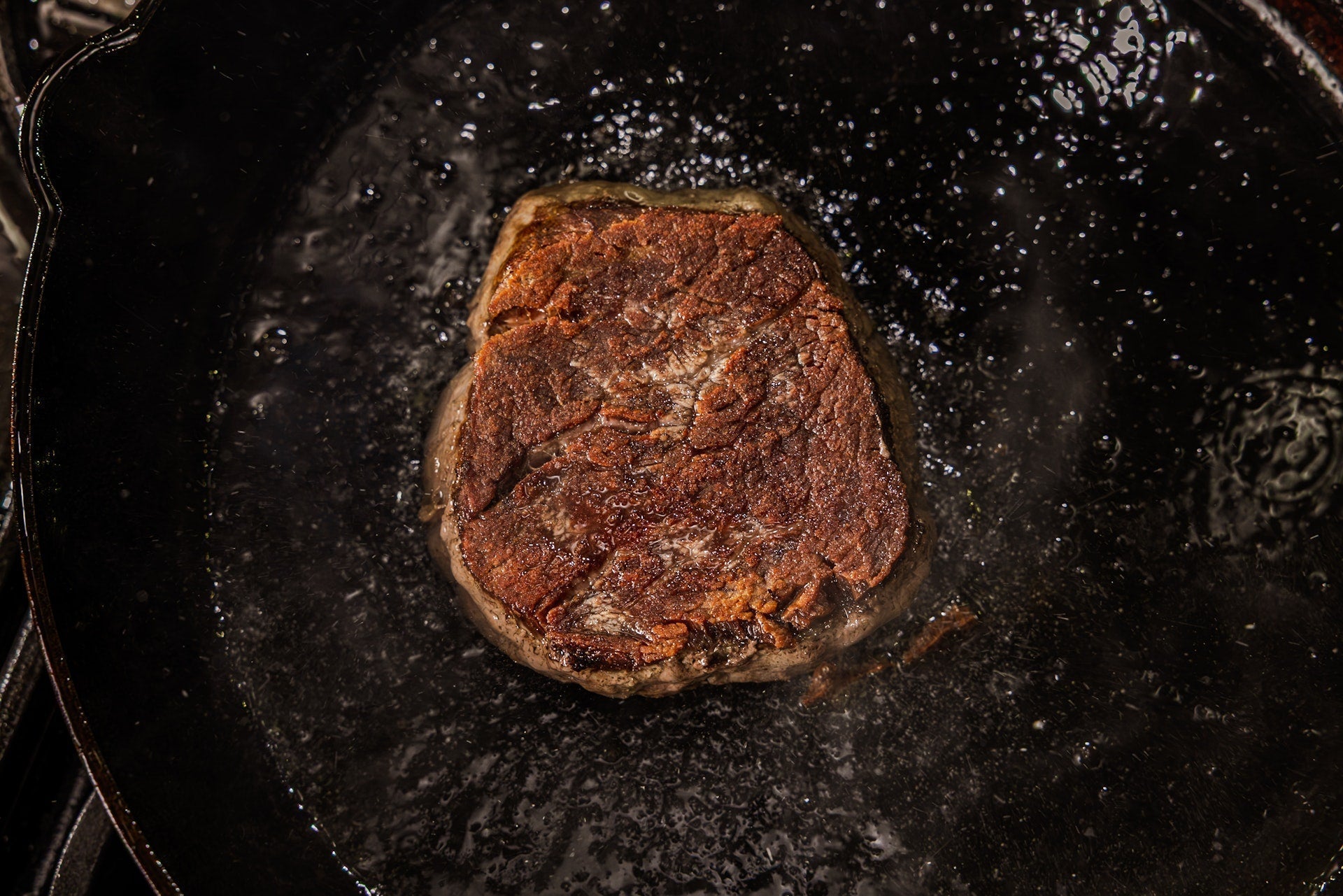
Delving into Maillard reaction mechanics requires confronting the unforgiving laws of thermodynamics, specifically the latent heat of vaporization. Water is the sworn enemy of surface browning. Under standard atmospheric conditions, liquid water cannot exceed 100 degrees Celsius (212 degrees Fahrenheit). As long as unbound liquid moisture blankets the surface of your ingredient, every joule of energy pumped by your stove burner goes toward boiling that liquid off rather than elevating the surface temperature of the food.
Liquid water demands roughly 2,260 kilojoules of energy per kilogram simply to phase-change into vapor. That massive thermal tax steals heat away from your skillet. While the Maillard cascade creeps forward sluggishly around 130 degrees Celsius, it only hits its hyper-efficient stride between 145 and 165 degrees Celsius (290 to 330 degrees Fahrenheit). If a damp pork chop hits hot fat, the surface temperature instantly pins at 100 degrees Celsius. The protein fibers stew in their own juices, squeezing interior water outward into an expanding puddle, turning the exterior battleship gray.
Four Proven Principles for Engineering the Perfect Savory Crust
Translating theoretical kitchen chemistry into repeatable dinnertime mastery requires anchoring your everyday technique around four essential Maillard reaction mechanics.
Evaporative Surface Desiccation Through Salting and Air Drying
Because surface moisture halts browning before it starts, stripping moisture off food before it contacts hot cooking fat is paramount. A quick blot with a paper towel removes free surface moisture, but it does nothing for the moisture trapped just beneath the cellular surface. Advanced crust engineering requires dry brining.
When you salt meat hours ahead of cooking, osmotic pressure initially draws intracellular juices to the exterior. Within forty-five minutes, that concentrated surface salinity dissolves and denatures muscle proteins, loosening their tight bundles. The muscle fibers relax, reabsorbing the seasoned liquid back into the protein matrix while permanently changing how the surface holds water. Placing that salted cut uncovered on a wire rack inside a dry, ventilated refrigerator pulls off an evaporative miracle. Cold refrigerator air desiccates the outer millimeter of tissue, forming a taut, moisture-free skin known as a pellicle. When that dehydrated barrier meets searing heat, browning ignites within ten seconds because no thermal energy is wasted boiling off puddles.
Surface Alkalinity Modification to Speed Carbonyl Condensation
The initial condensation step between reducing sugars and amino acids depends heavily on the protonation state of the amino acid. In acidic environments with a low pH, the amine nitrogen absorbs extra protons, creating a positively charged ammonium ion. That positive charge locks up the nitrogen’s lone pair of electrons, preventing it from executing the nucleophilic attack needed to merge with a sugar’s carbonyl group.
Shifting the surface environment toward slight alkalinity unleashes rapid molecular bonding. Alkaline conditions keep the amine groups neutral and unprotonated, radically accelerating the cascade. Bakers employ this exact principle when they dip Bavarian pretzels into an alkaline lye or baked baking soda bath before baking, yielding an instant, lustrous dark crust in minutes. You can harness this in savory pans by tossing thinly sliced onions with an imperceptible pinch of baking soda, dropping forty-five minutes of arduous onion caramelization down to ten minutes of rapid, uniform browning.
High Thermal Mass Management to Defeat Heat Sink Collapse
Dropping cold food into a hot pan represents an aggressive thermal shock. A heavy steak acts as an immediate heat sink, drawing thermal energy out of the metal far faster than a typical domestic burner can replenish it. If you use a thin, lightweight non-stick or cheap aluminum skillet, the surface temperature plunges well below the 140-degree threshold within two seconds of contact, causing moisture to seep into the pan and trigger boiling.
Controlling this thermal plunge demands high thermal mass. Dense cast iron, carbon steel, and heavy-gauge multi-ply stainless steel hold massive reservoirs of thermal energy within their crystalline structures. When cold protein strikes high-mass metal, the pan’s stored heat resists the temperature drop, evaporating microscopic moisture bursts instantly while holding pan temperatures firmly in the browning zone. The thermal capacity of your cookware directly dictates whether Maillard reaction mechanics can proceed unhindered or grind to a waterlogged halt. Never crowd the vessel. Crowding compounds the heat-sink effect while trapping plumes of evaporated steam beneath overlapping ingredients.
Precision Heat Modulation to Halt the Slide Toward Acrid Carbon
Savory flavor lives within a narrow temperature envelope. The magic happens between 140 and 165 degrees Celsius. If surface temperatures push beyond 190 to 200 degrees Celsius (375 to 400 degrees Fahrenheit), thermal degradation shifts from forming delicious melanoidins into aggressive pyrolysis. At this threshold, amino acids and creatine decompose into bitter heterocyclic amines, transforming sweet, savory roasted complexity into chalky, acrid soot.
Maintaining that tight window requires deliberate pan modulation. Rather than leaving meat stationary until it burns, frequent flipping distributes intense conduction heat across both sides evenly, preventing heat from tunneling too deeply into the core while allowing surface steam to flash away into the air. When finishing pan-seared proteins, classic French butter basting serves as an organic temperature regulator. The water content in whole butter constantly boils off at 100 degrees Celsius, physically preventing the fat temperature from spiking into destructive carbonization territory while depositing toasty milk proteins that furnish extra amino acids for the browning reaction.
Expanding the Browning Principles Beyond the Cast Iron Skillet
While home cooks associate these principles predominantly with searing butcher cuts, non-enzymatic browning governs nearly every foundational layer of kitchen flavor. When you analyze vegetable cookery through the lens of Maillard reaction mechanics, you begin to understand why steamed brassicas taste sulfurous while roasted florets taste nutty and sweet. Vegetables possess far higher water volumes and considerably lower concentrations of protein than meat. To induce browning in cauliflower or Brussels sprouts, you must roast at high ambient convection heat, roughly 220 degrees Celsius, so that dry air drives surface moisture away before the interior turns to mush.
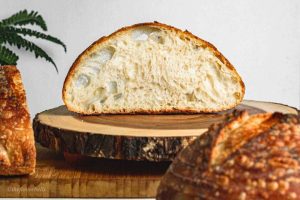
Starch-heavy baking relies on identical thermal pathways. Just as understanding Sourdough fermentation mechanics and 4 proven rules that transform dense ruined loaves reveals how yeast and lactobacilli produce the vital reducing sugars that paint a golden crust, your savory skillet depends on matching those sugars with amino acids. In bread baking, enzymes break long, tasteless starch chains down into maltose and glucose. As high oven heat drives off crust moisture, those liberated sugars react with gluten proteins to form the blistered, aromatic shell that crowns an artisan loaf.
Translating Sensory Cues and Deglazing into Culinary Instinct
Great cooks rarely stand over pans with infrared thermometers. Instead, they calibrate their sensory instincts against underlying thermodynamic cues. They listen to the sound of the pan. A high-pitched, splattering sizzle tells you water is boiling violently at 100 degrees Celsius, warning you that the pan is losing the thermal battle. A rhythmic, dry crackle indicates surface water has vanished and pure fat is conducting heat at 160 degrees Celsius, signaling that the browning cascade is charging ahead.
Olfactory signals provide clear indicators long before the eye catches sight of the crust. The air shifts from the metallic, raw aroma of cold iron and animal fat to the warm, biscuit-like scent of pyrazines. As proteins brown, they leave behind fond, which are microscopic deposits of concentrated melanoidins, sugars, and denatured gelatin baked onto the stainless steel cooking surface. These clinging deposits are packed with water-soluble flavor precursors.
Deglazing with stock, dry wine, or aromatic aromatics dissolves those immobilized flavor compounds back into liquid suspension. The reducing liquid hydrates the caramelized fond, incorporating millions of volatile aroma molecules into an emulsified pan sauce that coats the palate. Becoming an exceptional cook means leaving behind guesswork and realizing that Maillard reaction mechanics represent an active dialogue between heat, moisture, and time. When you respect the physics of water, maintain your pan’s thermal momentum, and treat surface chemistry as a craft, every dish you sear commands profound, mouthwatering depth.