Sourdough fermentation mechanics and 4 proven rules that transform dense ruined loaves
Tired of baking dense, gummy sourdough bricks that fail to rise in the oven? Explore the biological and physical mechanics governing wild fermentation to unlock soaring oven spring and an airy, custard-like crumb.
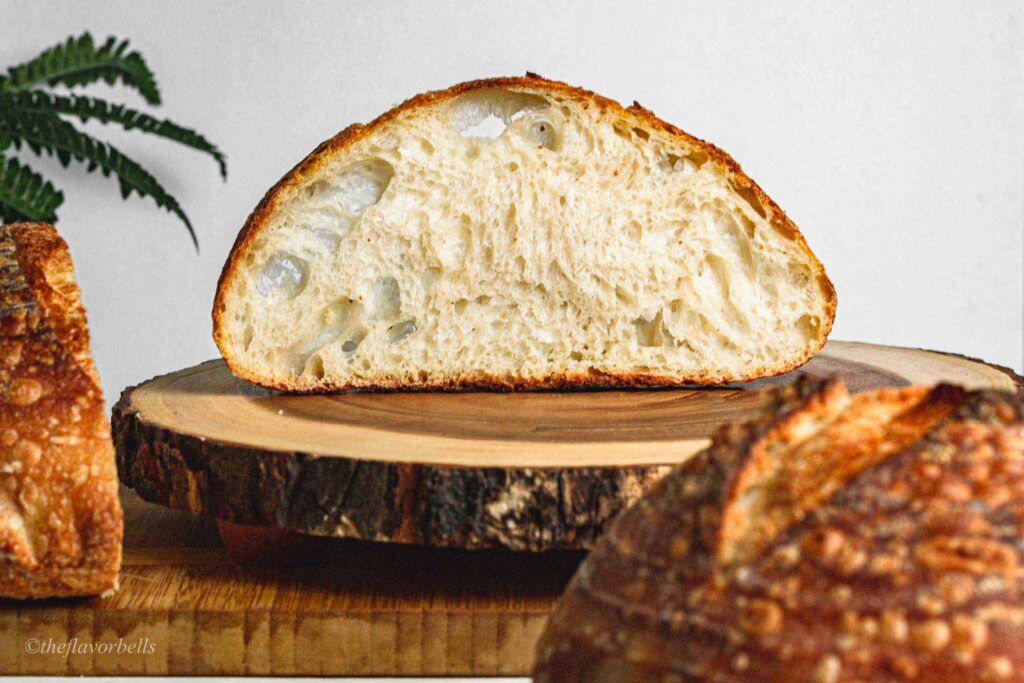
Mastering sourdough fermentation mechanics allows passionate home bakers to transform unruly flour and water into soaring, blistered boules with shimmering, open crumb structures. Yet countless bakers follow rigid recipe steps only to pull flat, sour, leaden bricks out of their ovens. The frustration stems from treating wild fermentation like commercial yeast baking. While commercial baker’s yeast operates with blunt mechanical predictability, a sourdough starter is a delicate, dynamic microbial ecosystem that dictates the physical properties of your dough from the molecular level upward.
When you mix flour and water, you awaken dormant enzymes, wild yeasts, and billions of lactic acid bacteria. These microscopic agents do not care about the timer on your microwave. They respond exclusively to heat, moisture, enzymatic activity, and pH thresholds. Understanding how these biological variables translate into mechanical dough strength separates tentative novices from intuitive master bakers.
The Living Crucible Inside Wild Flour and Water
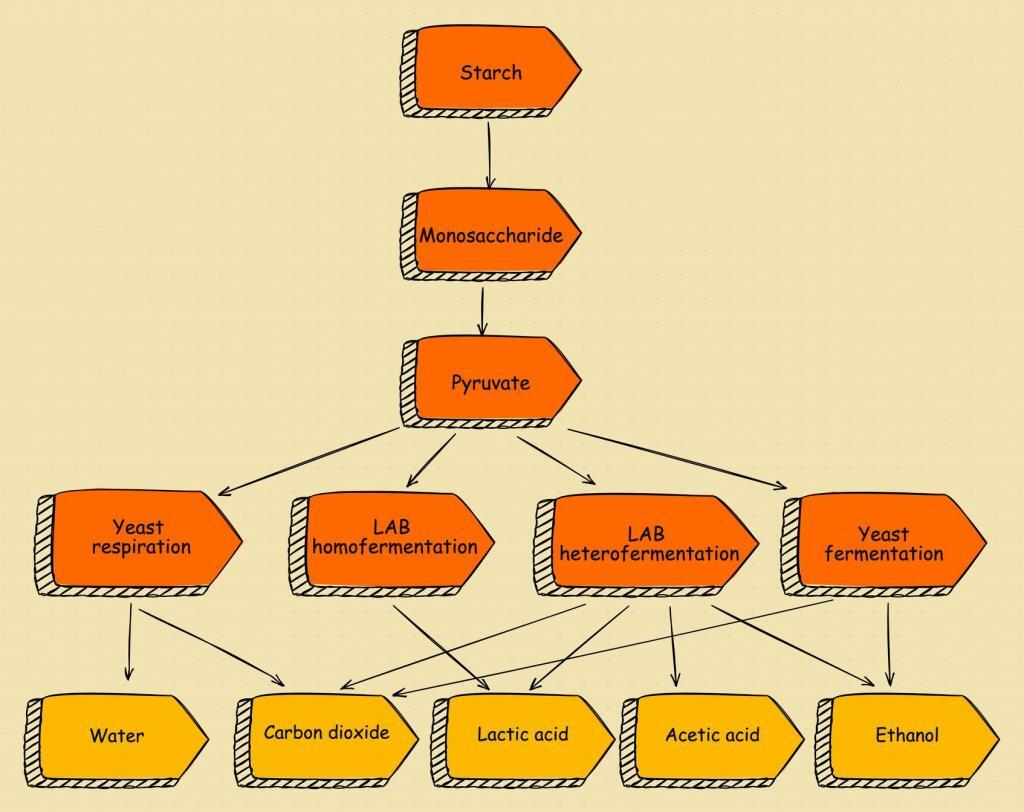
The underlying sourdough fermentation mechanics hinge on an ancient ecological partnership between wild yeasts and heterofermentative lactic acid bacteria (LAB). Unlike monoculture commercial baking, where Saccharomyces cerevisiae works solo to pump carbon dioxide into gluten strands, sourdough dough hosts a complex colony where bacteria outnumber yeast cells by roughly one hundred to one.
According to peer-reviewed research published by the American Society for Microbiology, sourdough starters host diverse consortiums of yeasts alongside specialized bacteria such as Fructilactobacillus sanfranciscensis. This partnership works because of a brilliant evolutionary trick known as metabolic harmony. The bacteria feed greedily on maltose released by broken-down flour starches, while leaving behind fructose and other simple sugars that wild yeasts crave. Neither organism starves the other.
As the yeasts consume these available simple sugars, their cellular respiration yields carbon dioxide and ethanol. The carbon dioxide migrates into microscopic air pockets created during mixing. Without this steady infusion of gas, your dough has no pneumatic potential. Concurrently, the bacteria ferment starches into organic acids. These acids do not merely inject sharp flavor; they fundamentally alter the structural resilience of the gluten matrix.
The Invisible Acid Curve That Makes or Breaks Oven Spring
When you evaluate sourdough fermentation mechanics through the prism of organic chemistry, acidity emerges as both the hero and the villain of loaf structure. Lactic acid bacteria generate two primary organic acids during bulk fermentation: lactic acid and acetic acid. Lactic acid produces a soft, creamy, yogurt-like dairy sweetness, whereas acetic acid yields the sharp, vinegar-like punch traditionally associated with rustic San Francisco sourdough.
This balance goes beyond palate preference. Acidity directly dictates enzymatic velocity within your dough. As fermentation advances and bacteria generate organic acids, the overall dough pH drops from around 5.8 down into the acidic range of 3.8 to 4.2. In moderation, this drop strengthens the gluten sheath by encouraging protein cross-linking, giving the dough tensile resilience.
Push that fermentation too far, however, and catastrophe strikes. As the pH drops below 4.0, native protease enzymes in the flour awaken with destructive vigor. Protease enzymes dissolve gluten bonds, slicing long, elastic protein chains of gliadin and glutenin into short, unbindable fragments. When proteolysis outpaces gas production, the dough liquefies into a sticky, unmanageable batter. Once baked, an over-acidified dough cannot hold gas; it collapses into a flat, sticky disc with zero oven spring.
Four Proven Rules That Yield Magnificent Airy Crumb
Mastering practical sourdough fermentation mechanics requires abandoning rigid kitchen timers in favor of physiological dough cues. By manipulating heat, volume, bacterial acid production, and structural elasticity, you can steer wild dough toward peak mechanical performance every single bake.
Regulate Ambient Dough Temperature Rather Than Relying on Kitchen Clocks
Ambient kitchen temperature dictates the microbial throttle. A recipe instructing you to ferment your dough on the counter for four hours is fundamentally flawed if it neglects temperature. A dough sitting at 78°F (25.5°C) ferments nearly three times faster than a dough sitting at 68°F (20°C).
Wild yeasts hit their metabolic sweet spot between 78°F and 82°F (25°C to 28°C), whereas lactic acid bacteria proliferate aggressively as temperatures rise higher toward 86°F (30°C). If your room is cold, yeast slows down dramatically, causing bakers to mistake slow fermentation for finished bulk rest. Calculate your Desired Dough Temperature (DDT) before mixing by measuring the temperature of your flour, ambient room, and sourdough starter, then adjusting your water temperature to hit an internal dough target of 76°F to 78°F. Maintaining steady dough temperature provides the thermal stability your wild microflora require to predictably expand.
Track Volumetric Expansion With Straight Sided Vessels
The standard baker’s instruction to let dough double in size ruins countless loaves. Because sourdough starters vary widely in strength and acidity, allowing a standard wild dough to expand by one hundred percent during bulk fermentation frequently pushes it past the proteolytic cliff into over-fermentation.
Switch from curved ceramic bowls to a transparent, straight-sided container with printed volumetric markings. For typical artisanal loaves containing twenty percent inoculated starter, aim for a volume expansion of thirty to fifty percent at warm temperatures, or up to sixty percent in cooler environments. A straight-sided container eliminates the optical illusion of curved bowls, giving you an exact metric of gas accumulation. When dough exhibits convex dome edges, visible aeration through the glass, and pillowy resistance upon gentle pressing, it is primed for shaping.
Balance Lactic and Acetic Acidity Through Hydration Ratios
You can fine-tune the flavor profile and crumb texture of your bread by controlling the hydration of your starter and your primary dough. Acetic acid thrives in stiff, drier dough environments with cooler temperatures and plenty of oxygen. Lactic acid thrives in warm, wet, anaerobic dough environments.
If you prefer a sweet, open, custard-like crumb with mild dairy notes, maintain your starter at one hundred percent hydration (equal weights flour and water) and keep your dough hydration between seventy-two and seventy-eight percent. Higher hydration accelerates enzymatic starch breakdown, easing gluten extensibility so gas bubbles expand freely into irregular, airy pockets. If you desire a deeply sour, tangy loaf with tighter, sandwich-friendly structure, drop your starter hydration to sixty percent and subject the shaped loaf to an extended cold retard in the refrigerator.
Protect Gluten Tensile Strength Before Protease Enzymes Strike
Because sourdough fermentation mechanics involve both gas generation and enzymatic degradation, waiting too long creates irreversible gluten fatigue. The gluten network must remain strong enough to trap rapidly expanding steam and carbon dioxide the instant the loaf meets the scorching heat of a baking surface.
Think of this delicate structural tension like advanced industrial hardware design. Just as the engineered hinge discussed in our breakdown of how the Apple iPhone Duo Sparks 5 Crucial Shifts in the Premium Foldable Race requires relentless mechanical resistance without cracking under repeated stress, a developing dough demands optimal tensile elasticity before protease enzymes fatigue its scaffolding. Regular stretch-and-fold sessions during the initial two hours of bulk fermentation distribute yeast pockets evenly, equalize dough temperatures, and align gluten sheets. Stop manipulating the dough once it shows aerated buoyancy, and shape it while the gluten still holds tactile tension.
Diagnosing Fermentation Catastrophes Before Dough Hits the Dutch Oven
A forensic view of sourdough fermentation mechanics helps diagnose why so many well-intentioned loaves emerge looking like pale hockey pucks or collapsed gummy pancakes. Most baking failures do not originate during shaping or oven baking; they stem from mistimed bulk fermentation.
Under-fermented dough reveals unmistakable mechanical symptoms. The dough feels dense, heavy, and sluggish during shaping. When baked, it exhibits what bakers call fools crumb: large, cavernous voids clustered near the top crust surrounded by dense, unbaked-looking, gummy dough near the base. This catastrophe happens because weak, underdeveloped yeast activity created isolated bursts of carbon dioxide that ripped through an unyielding, tight gluten network instead of dispersing through thousands of micro-alveoli.
Over-fermented dough exhibits the exact opposite failure mode. The dough feels hyper-extensible, wet, and fragile during shaping. It sticks stubbornly to the bench knife and puddles outwards into an amorphous pancake the moment it leaves the banneton proofing basket. In the oven, it produces zero ear and minimal spring because the proteolytic enzymes have destroyed gluten integrity, allowing carbon dioxide to leak out into the oven air rather than expanding the crumb.
The Intuitive Baker and the Architecture of Living Dough
Once you internalize sourdough fermentation mechanics, artisanal baking ceases to be an anxious guessing game. You no longer watch the clock with nervous uncertainty or follow recipe times that conflict with your kitchen’s seasonal temperature swings. You begin reading the sensory markers written directly into the dough itself.
You notice the sweet, yeasty aroma giving way to a gentle, tingling lactic fragrance. You see the rounded, convex top surface of the bulk container, the tiny fermentation bubbles clustering beneath a translucent skin, and the springy rebound when you nudge the dough with a floured finger. When you align your hands with the microbiological rhythm of wild yeast and lactic bacteria, you achieve that coveted combination of crackling blistered crust, towering oven spring, and an open, translucent crumb that elevates rustic breadmaking into pure culinary art.