Meat brining mechanics and 4 proven rules that prevent dry ruined roasts
Tough, desiccated meat is a failure of cellular moisture management under thermal stress. Unpack the biophysics of muscle protein solvation and discover how simple mineral diffusion guarantees extraordinarily juicy roasts.

Mastering meat brining mechanics transforms an unpredictable Sunday roast into a remarkably succulent centerpiece by manipulating cellular osmotic pressure before heat ever touches muscle fibers. Every home cook has experienced the quiet heartbreak of carving into what should have been a magnificent pork loin or holiday bird, only to watch dry, fibrous shreds crumble onto the cutting board. We tend to blame the oven calibration, an extra five minutes of cooking time, or the absence of basting butter. Yet the true culprit almost always traces back to what happened long before the meat met the heat. When muscle tissue enters an oven untreated, its microscopic architecture is primed for catastrophic moisture loss.
Heat is inherently violent toward meat. As thermal energy penetrates skeletal muscle, structural proteins denature, coagulate, and physically wring out bound water molecules like a squeezed bath sponge. Without intervention, raw meat routinely forfeits up to thirty percent of its total mass in evaporated juice and pan drippings. Brining changes the fundamental rules of this thermal contraction. Far from being a cosmetic flavor trick, brining is an exact chemical intervention that alters muscle protein solubility, expands hydration capacity, and builds a thermodynamic buffer against desiccation.
The cellular physics of moisture retention under thermal stress
Understanding meat brining mechanics requires abandoning the simplistic notion that meat is merely a passive culinary sponge. Animal muscle consists of roughly seventy-five percent water, twenty percent protein, and a modest distribution of lipids and minerals. That water is not floating freely inside open chambers. Instead, it remains tightly trapped within the microscopic grid of filament proteins known as actin and myosin, organized neatly into muscle fibers and bound by connective collagen sheets.
Under normal conditions, this myofibrillar matrix holds water through capillary force and delicate electrical charges. As heat climbs toward 140 degrees Fahrenheit, myosin filaments begin to unravel and stick together. At 150 degrees, the collagen sheaths surrounding muscle fascicles shrink longitudinally, applying tremendous mechanical pressure to the interior cells. Finally, as temperatures reach 160 degrees, actin denatures into a rigid, compacted lattice. This relentless tightening squeezes free water out of intracellular channels, forcing it toward the surface where it evaporates or collects in the roasting pan as dry gray runoff.
Salt disrupts this destructive pathway through straightforward ionic physics. When sodium and chloride ions penetrate raw muscle tissue, they dismantle the electrostatic bonds that keep actin and myosin tightly bundled. The negatively charged chloride ions bind selectively to protein filaments, causing adjacent filaments to repel one another like matching magnetic poles. This electrical repulsion forces the tightly wound protein bundles to swell and drift apart, creating physical space within the myofibrillar grid to hold twice as much water as unbrined tissue.
Crucially, dissolved salt solubilizes a significant portion of the myosin protein itself. As these proteins dissolve, they form a viscous gelatinous matrix within the cell walls. When thermal energy subsequently enters the meat during cooking, this hydrated protein gel coagulates into a soft, flexible barrier rather than a constricted knot. Instead of squeezing out moisture, the newly formed matrix locks free water molecules in place. Independent Exploratorium science of cooking research on protein denaturation confirms that pre-salting fundamentally reshapes how muscle fibers react to high heat, ensuring that meat retains upwards of ten to fifteen percent more bound moisture throughout the entire roasting cycle.
Why traditional marinades fail where salt solutions succeed
Culinary tradition frequently conflates brining with marinating, leading home cooks down an expensive path toward disappointing dinners. Classic marinades rely heavily on oil, aromatic herbs, and acidic liquids such as wine, vinegar, or citrus juice. While these mixtures smell intoxicating in a prep bowl, their molecular geometry prevents them from penetrating beyond the outermost millimeter of muscle tissue. Acid molecules denature proteins instantly upon contact, coagulating the exterior into an unpleasant mushy rind while leaving the deep interior fibers untouched and vulnerable to drying out.
This fundamental chemical discrepancy explains why meat brining mechanics focus strictly on mineral ionic exchange rather than complex acidic emulsion. Sodium and chloride ions are extraordinarily small particles capable of slipping through dense cell membranes via passive diffusion. While large organic molecules like citrus terpenes and garlic sulfur compounds remain hopelessly stranded on the exterior skin, salt moves inexorably toward regions of lower mineral concentration until equilibrium is reached across the entire cut.
Four proven rules to master meat brining mechanics in any kitchen
Deploying meat brining mechanics successfully at home does not demand an industrial laboratory, but it does require abandoning outdated culinary dogma. Precision, temperature discipline, and an understanding of diffusion kinetics are non-negotiable prerequisites for repeatable success. By following four proven rules, any cook can eliminate culinary guesswork and achieve deeply seasoned, exceptionally succulent results across any cut of meat.
Calibrate salt concentration against tissue density and total cooking time
The greatest danger in brining is the reckless over-salting of delicate proteins. Different meats feature vastly distinct muscle architectures, fat distributions, and moisture levels. A fine-grained chicken breast absorbs salt ions at a radically faster rate than a dense, fibrous pork shoulder or a marbling-heavy beef prime rib. Treating every cut with an identical brine concentration guarantees either bland under-penetration or an intensely salty disaster that ruins the natural character of the meat.
For whole roasts and thick poultry, calibrate your approach around equilibrium ratios. When seasoning meat directly, measure precisely 1.0 to 1.5 percent of the meat total weight in pure kosher salt. Fine table salt contains microscopic grains that pack tightly into measuring spoons, delivering nearly double the salinity of coarse kosher flakes by volume. Always calculate by mass using a digital gram scale. Dense mammalian roasts require at least twenty-four to thirty-six hours of advance contact to permit ion migration to the core, whereas smaller poultry cuts achieve equilibrium within twelve to eighteen hours.
Ditch waterlogged wet baths for dry equilibrium salting
For decades, standard kitchen advice mandated submerging whole turkeys and pork loins into massive five-gallon buckets filled with cold, salty water. While wet brining undoubtedly injects water into muscle tissue, that moisture is largely unseasoned tap water trapped by capillary action. As the meat roasts, this excess reservoir dilutes the concentrated savory flavors of the meat juices. Worse still, wet-brined meat emerges waterlogged, saturating the dermal layers and preventing the surface from exceeding the boiling point of water, which completely halts caramelization.
Dry brining eliminates this catastrophic dilemma by harnessing the meat own natural juices. When coarse salt is distributed across raw meat, osmotic pressure initially draws intracellular liquid to the surface within minutes. This fluid dissolves the salt grains into a hyper-concentrated bead of surface brine. Over the subsequent hours, natural ionic diffusion pulls that concentrated, highly flavorful brine back deep into the interior muscle fibers. This counterintuitive cycle forms the foundation of modern meat brining mechanics, yielding a bone-dry exterior primed for aggressive Maillard reactions alongside an exquisitely seasoned interior.
Incorporate delicate aromatics without compromising surface dehydration
A persistent myth suggests that steeping rosemary sprigs, cracked peppercorns, and crushed garlic cloves in a brine infuses those deep flavors straight into the core of the roast. In reality, aromatic flavor compounds consist of bulky, hydrophobic organic molecules that cannot penetrate the electrical defenses of muscle tissue. Dousing a roast in wet herb slurries during the brining phase achieves nothing except creating a soggy barrier that impedes salt movement and burns bitterly in the oven.
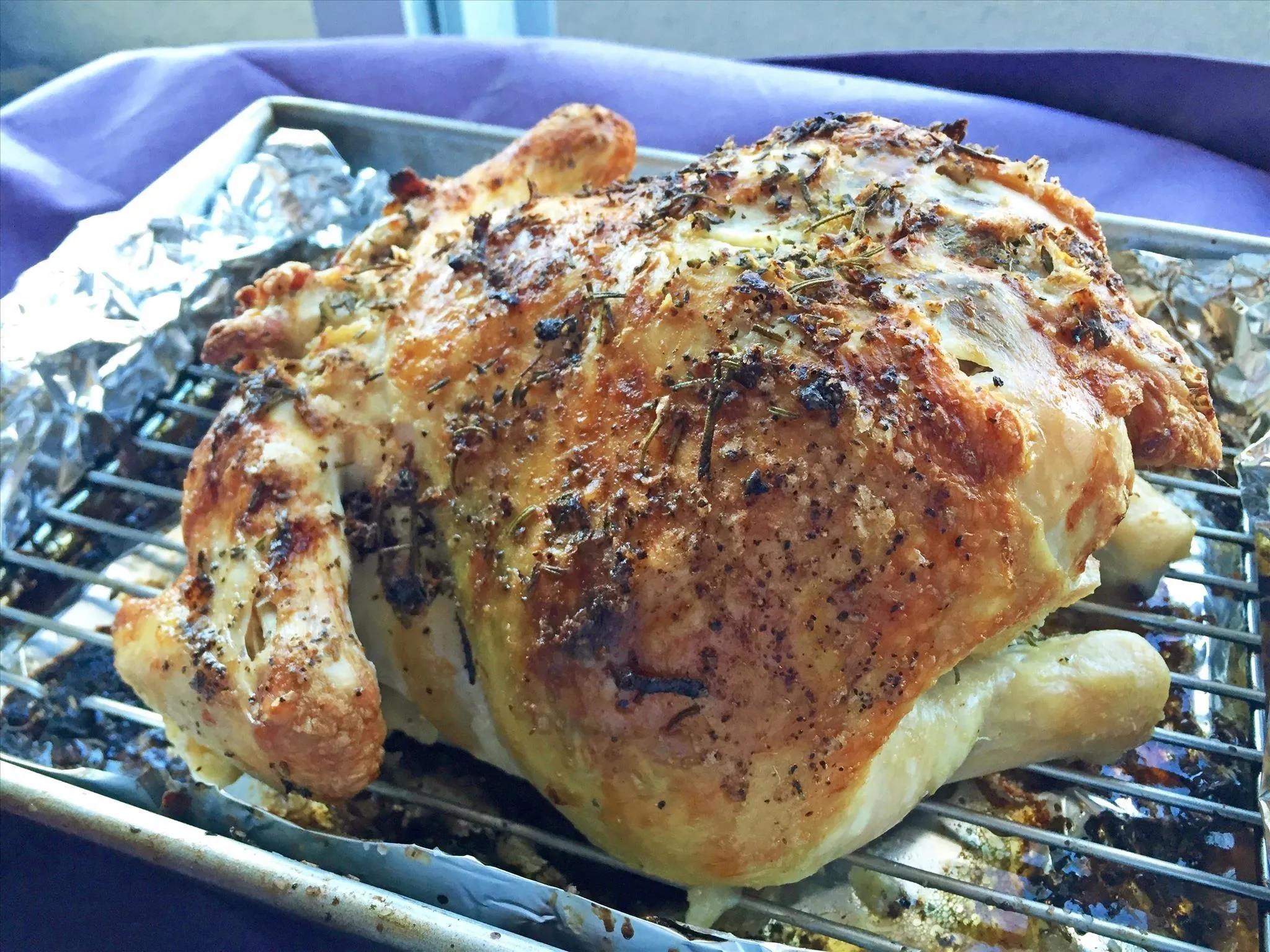
Extract genuine aromatic complexity by isolating surface treatment from ionic penetration. Apply only pure salt to the meat during the primary diffusion phase, leaving the cut uncovered on an elevated wire rack inside the refrigerator. The circulating cold air dehydrates the skin or outer fat layer into a thin, translucent parchment. Only in the final hour before roasting should you apply cracked spices, herb oils, or aromatic pastes. Because the outer protein layer has already been desiccated by dry salting, these surface aromatics adhere firmly and fry gently in rendering fat without scorching or trapping trapped steam beneath them.
Respect the resting redistribution threshold before carving
Even the most meticulously brined cut will bleed out its moisture advantage if carved immediately upon leaving the heat source. During roasting, the intense temperature differential between the scorching exterior and the cooler core creates an internal pressure gradient. As outer muscle fibers contract under high heat, mobile water molecules migrate inward toward the cooler, less constricted center of the roast. If you slice into the meat while this pressure differential remains active, that collected reservoir escapes onto the cutting board in an unstoppable rush.
Culinary timing mirrors financial asset evaluation: just as an analyst calculates terminal returns rather than deceptive short-term revenue spikes in Discounted cash flow mechanics and 4 proven rules that prevent costly valuation traps, a disciplined cook must prioritize fluid equilibrium at the carving stage over immediate service gratification. Allow large roasts to rest undisturbed until the internal temperature stabilizes and begins its downward descent. As the meat cools by ten to fifteen degrees, the coagulated myosin gels relax, capillary pressure equalizes throughout the cross-section, and the free moisture rebinds securely to the protein matrix. When you finally carve, every drop of savory juice stays precisely where it belongs, suspended within the tender meat fibers.
Bridging the gap between empirical kitchen chemistry and culinary intuition
When you strip away the mystique of legacy recipes, the undeniable power of meat brining mechanics rests on verifiable cellular physics. Cooking is not an exercise in hoping for good fortune from a stubborn oven; it is the deliberate application of thermal energy to biological structures. Once you comprehend how salt ions unravel actin-myosin filaments and create resilient internal moisture gels, you cease relying on arbitrary cooking timers or panic-induced basters.
Intuition develops naturally when backed by physical principles. You will learn to recognize the visual cue of properly dry-brined poultry when its skin shifts from opaque white to a glossy, taut amber beneath the refrigerator lights. You will feel the structural transformation in a thick beef roast as its raw flaccidity yields to a firm, resilient elasticity that promises uniform tenderness. By leaning into reliable meat brining mechanics, you liberate yourself from culinary anxiety, ensuring that every substantial cut of meat emerges from the oven tender, juicy, and profoundly flavorful.