Dry brining meat mechanics and 4 proven rules that guarantee unbelievably juicy roasts
Surface salting is not a superficial seasoning step but a profound biochemical chain reaction. Explore the molecular physics of osmotic migration and discover how to lock in moisture while producing blistered, crackling skin every single time.
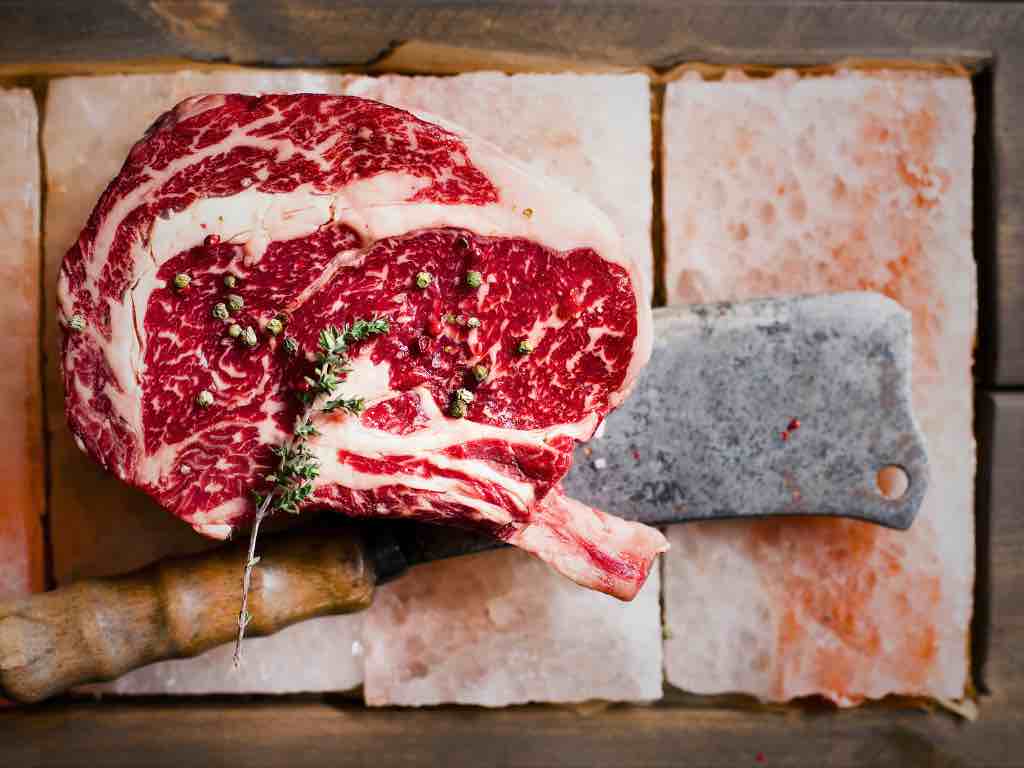
Understanding dry brining meat mechanics transforms a bland, rubbery roast into a succulent centerpiece boasting crackling skin and deeply seasoned muscle fibers. Most cooks treat salt as a last-minute sensory enhancer sprinkled immediately before heat hits the pan. That approach leaves muscle tissue chemically defenseless against thermal contraction. When raw protein encounters extreme cooking temperatures, its internal structural filaments tighten like coiled cables, wringing out intracellular water and leaving behind a stringy, parched texture. By contrast, salting meat hours or days ahead of cooking triggers an intricate physical sequence that fundamentally restructures how proteins bind moisture.
Dry brining is not a shortcut or a passing kitchen trend. It represents applied biochemistry operating under basic thermodynamic and osmotic principles. Once you comprehend what happens beneath the surface of a steak, pork shoulder, or whole turkey during a prolonged chill, you stop relying on kitchen folklore and start controlling your results with absolute culinary precision.
The molecular journey from surface salt to core hydration
The entire dry brining process relies on a four-phase osmotic and ionic exchange. When pure sodium chloride crystals fall onto the cool surface of raw meat, they do not immediately penetrate the muscle fibers. Instead, the salt draws free water outward across semipermeable cell membranes via osmotic pressure. Within fifteen to twenty minutes, the exterior of the protein appears wet, covered in micro-beads of moisture. This initial outward migration marks the first crucial stage within dry brining meat mechanics, acting as the catalyst for cellular redistribution.
As surface moisture dissolves the solid mineral granules, it forms a hypertonic saline film concentrated directly against the exterior cell walls. Here, the physics shifts from outward osmosis to inward diffusion. Governed by chemical concentration gradients, the dissolved sodium and chloride ions steadily migrate back into the interior muscle tissue, moving from an area of high solute concentration to an area of lower concentration. This inward ionic migration unfolds slowly, penetrating muscle tissue at an average speed of approximately one millimeter every two hours depending on lipid density and muscle grain.
Once inside the intracellular matrix, the true transformation begins. Muscle fibers consist predominantly of actin and myosin protein filaments packed together in tight bundles. Under normal cooking conditions, heat denatures these filaments, causing them to knot tightly together and expel up to thirty percent of their resting water volume. Chloride ions alter this dynamic by penetrating the protein matrix and binding to the filament walls. These ions shift the electrical charge of the muscle proteins, causing adjacent filaments to repel one another like matching magnetic poles.
This microscopic repulsion forces the myofibrillar protein matrix to relax and uncoil, expanding the physical space between individual protein strands. The loosened structure can hold significantly more capillary water during cooking. Rather than squeezing out moisture as the core temperature rises toward medium-rare or medium thresholds, the salted protein lattice traps free water within swollen filament pockets. The meat retains its natural juices even when subjected to intense oven heat.
Why submerged wet brining dilutes culinary flavor
For decades, traditional cooking advice urged home cooks to plunge holiday birds and thick pork chops into five-gallon buckets of salty tap water mixed with brown sugar and aromatics. While submerged brining reliably introduces moisture, it does so through brute hydrostatic volume rather than cellular restructuring. A wet-brined turkey does not simply absorb seasoned liquid. It sponges up hundreds of grams of pure water, diluting the bird’s natural myoglobin and intrinsic savory peptides.
When that waterlogged bird enters a hot oven, that excess water works actively against high-heat cooking. Water possesses an exceptionally high specific heat capacity, meaning it requires enormous thermal energy to rise in temperature and evaporate. While your oven pumps radiant heat toward the bird, that energy does not brown the skin or develop deep aromatic crust compounds. Instead, the energy is consumed simply boiling away the excess water pooling on the skin and leaching out of the meat fibers.
The result is a poached, flabby exterior and meat that tastes faintly watery, even if it feels wet on the tongue. In contrast, dry brining introduces zero supplementary water. It relies exclusively on the meat’s own native moisture to dissolve the salt, redistribute the brine inward, and leave the exterior surface completely desiccated. This side-by-side disparity illustrates why culinary scientists favor this technique, highlighting how dry brining meat mechanics preserves natural savory juices rather than waterlogging the cell walls. Extensive laboratory trials documented in Texas A&M University meat science research confirm that ionic protein solubilization retains natural myofibrillar juice far more effectively than artificial external hydration.
Four proven operational rules for flawless dry brining
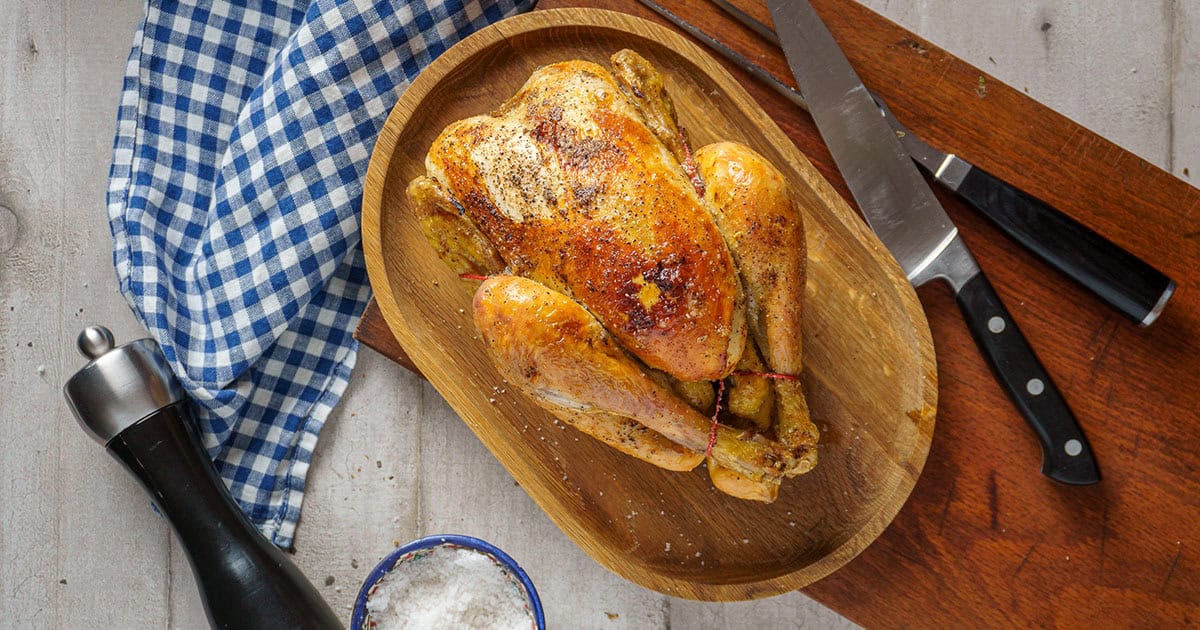
While the underlying biochemistry is elegant, mastering dry brining meat mechanics requires precise physical protocols to ensure consistent results. Straying from correct salt ratios, misjudging resting timelines, or trapping ambient humidity can easily ruin an expensive cut of meat. Applying these four systematic rules ensures flawless protein texture every time you fire up your kitchen.
Calculate kosher salt by mass rather than volume
Never measure dry brine with standard tablespoons. A single tablespoon of fine table salt weighs roughly nineteen grams, whereas a tablespoon of Diamond Crystal kosher salt weighs barely ten grams due to its hollow, pyramid-shaped flake geometry. Morton kosher salt sits somewhere between the two, weighing roughly fourteen grams per tablespoon. If a recipe tells you to use three tablespoons of salt without specifying the exact brand, you risk either severely under-seasoning or rendering your meat unpalatably briny.
Weigh your protein on a digital kitchen scale and apply coarse kosher salt at a ratio of 1.0 to 1.5 percent of the total meat mass. For a four-pound chicken (roughly 1,800 grams), measure out eighteen to twenty-seven grams of salt. This ratio hits the exact salinity window necessary to loosen the myosin matrix without overwhelming human palate thresholds or making the exterior taste cured like corned beef.
Respect the diffusion timeline across muscle thickness
Patience governs ionic diffusion. Because salt migrates inward through passive transport, depth dictates your required timeline. A bone-in ribeye measuring an inch and a half thick needs at least twelve hours to achieve equilibrium, though twenty-four hours produces a noticeably juicier crumb. A large, dense standing rib roast or twelve-pound turkey demands forty-eight full hours in the cold to allow sodium ions to reach the interior bone line.
Rushing this timeline disrupts the fundamental sequence of dry brining meat mechanics, leaving salt concentrated only on the outer millimeter. When cooks panic and cut the diffusion window short, the sudden burst of pan heat forces moisture outward in a chaotic mess. It resembles how an unseasoned team crumbles when internal pacing collapses, an unraveling captured when the JJ McCarthy Giants Debut Exposes 3 Major Problems in Landover under sudden, unyielding defensive pressure. Meat cookery demands structural discipline; shortcuts collapse your timing entirely.
Elevate protein on wire racks in circulating refrigeration
Placing salted meat flat on a solid ceramic plate or rimmed baking sheet creates a catastrophic moisture trap. As salt draws free water to the surface during the opening phase of brining, gravity pulls that liquid downward to the bottom of the plate. The underside of the cut ends up stewing in a puddle of cold brine, softening the skin and preventing air circulation from desiccating the surface.
Set a stainless steel wire cooling rack inside a rimmed sheet pan and lay the seasoned protein across the wire grid. Place the entire assembly uncovered into the coldest section of your refrigerator. Modern domestic refrigerators function as powerful dehumidifiers, continually cycling cold, dry air over the exterior of the food. Elevating the cut ensures full three-hundred-and-sixty-degree air exposure, allowing the surface to form a taut, leathery barrier known as a pellicle while the interior proteins happily absorb the salt.
Resist the urge to rinse and calibrate heat application
A frequent error made by home cooks transitioning from wet brining is rinsing the meat with cold water before it hits the pan or oven. Rinsing completely defeats the mechanical purpose of dry brining. By the end of your resting window, there is no loose salt left on the surface to wash away; every granule has dissolved and diffused into the deeper muscle layers.
Washing the meat reintroduces surface water to your pristine, desiccated pellicle, forcing the protein to steam during the initial stages of cooking. Remove the meat from the refrigerator, pat it dry with a paper towel if any residual condensation formed during room-temperature tempering, and transfer it straight to your preheated cooking vessel. Because the surface is devoid of moisture, heat energy transfers instantly into the meat tissue rather than burning off surface dew.
Thermal crust mechanics and the science of blistering skin
Beyond interior moisture retention, the crowning achievement of dry brining meat mechanics is the transformation of the exterior crust. Whether dealing with the crackling skin of a roasted duck or the mahogany sear of a thick-cut New York strip, surface desiccation is the absolute prerequisite for the Maillard reaction. This complex chemical network between reducing sugars and amino acids begins in earnest only above 284°F (140°C), accelerating rapidly between 300°F and 330°F.
Liquid water boils at 212°F (100°C) under sea-level atmospheric pressure. As long as liquid moisture coats the outside of your steak or roast, the surface temperature of the food cannot exceed that boiling threshold. The meat is literally stewing in its own expelled water vapor. To push past 212°F and unlock the savory pyrazines, furans, and thiophenes that comprise a mouthwatering crust, your heat source must first vaporize every drop of surface moisture, consuming enormous energy through the latent heat of vaporization.
Because an uncovered dry-brined bird spends twenty-four to forty-eight hours dehydrating in cold circulating refrigerator air, the epidermal layer becomes papery, translucent, and virtually waterless. When this parched surface meets radiant thermal energy, browning occurs almost instantly. The subcutaneous fat directly beneath poultry skin renders rapidly, frying the skin in its own natural tallow without the insulating steam barrier that produces flabby, rubbery results. The collagen within the skin denatures, melting into gelatin before puffing up into delicate, micro-crisp blisters.
Everyday kitchen troubleshooting for tough cuts
Dry brining works wonders across nearly every culinary scenario, but different proteins require slight adjustments. Lean cuts like pork loin chops or boneless chicken breasts possess minimal intramuscular marbling. For these cuts, keep the brining window between two and eight hours. Extending past twelve hours on very thin cuts can alter the protein matrix too aggressively, creating a cured, ham-like texture rather than the tender chew of fresh meat.
For massive, collagen-heavy cuts intended for low-and-slow barbecue or braising—such as beef brisket, pork shoulder, or bone-in short ribs—salting forty-eight hours ahead of smoking provides an unmatched competitive advantage. The deep salt penetration keeps the muscle bundles juicy over twelve hours of continuous smoke, while the bone-dry exterior accelerates the development of a dark, peppery bark that withstands high-temperature rendering without turning soggy.
Ultimately, embracing dry brining meat mechanics gives every cook total control over texture, moisture, and savory depth. It strips away the unpredictable guesswork of timing and temperature, replacing culinary anxiety with dependable physical laws. By measuring salt by mass, providing adequate hours for cellular diffusion, and letting refrigerator airflow parch the exterior, you ensure that every roast emerging from your oven delivers deep, uncompromised flavor encased in an unforgettable, crackling crust.