Mortgages Confront 4 Critical Pressures as Borrowers Take an Uncertain Gamble
Amid unpredictable interest rate swings and lingering economic headwinds, American homebuyers are adopting high-stakes financing strategies. Here is how shifting rate locks, adjustable bets, and rental-backed loans are redefining property debt.
Navigating the volatile world of mortgages has become a high-stakes test of nerve for millions of prospective homeowners across the country. Over the past several quarters, financing a home has transformed from a straightforward administrative milestone into an unpredictable macroeconomic riddle. Prospective buyers find themselves caught between contradictory economic signals, tracking daily fluctuations in sovereign debt yields while attempting to decipher the future trajectory of borrowing costs.
For many households, the dream of homeownership now demands aggressive financial choreography. As benchmark rates hover near levels unseen for more than a generation, standard monthly obligations have multiplied, forcing families to make uncomfortable trade-offs. The resulting strain has fundamentally rewritten the behavioral playbook of the housing market, turning everyday consumers into amateur bond traders who scrutinize Federal Reserve commentary and employment metrics with unprecedented intensity.
The Unstable Horizon Between Falling Dips and Higher Benchmarks
The broader housing climate remains defined by intense narrative whiplash. According to recent daily tracking from U.S. News, borrowing rates have demonstrated a modest downward nudge from recent multi-month highs, offering a temporary window of relief for active shoppers attempting to salvage their purchasing power. These fractional dips provide a psychological cushion for families on the edge of qualification, yet they exist alongside deeper anxieties regarding underlying monetary resilience.
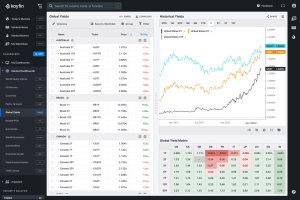
Contrasting sharply with those incremental declines, an analytical breakdown from Yahoo Finance warns that the specter of an eight percent borrowing threshold cannot be entirely ruled out. That reporting emphasizes that sticky consumer price pressures, resilient economic indicators, and substantial sovereign bond issuance continue to exert upward pressure on benchmark yields. When long-term Treasury yields remain elevated, the conversation surrounding long-term mortgages has turned increasingly urgent, with institutional analysts questioning whether borrowing costs will stay higher for substantially longer than the consensus initially anticipated.
This persistent tension between temporary rate dips and systemic upward pressure leaves house hunters suspended in uncertainty. A buyer who hesitates today might secure a marginal discount next month, or they might watch borrowing costs ratchet sharply upward if macroeconomic data surprises to the upside. The resulting environment rewards neither outright passivity nor reckless optimism, demanding instead a cold assessment of household liquidity and long-term risk tolerance.
The High Stakes Gamble of Rate Locks and Floating Debt
Faced with intense rate volatility, property shoppers must determine precisely when and how to commit to their financing terms. Reporting from The Wall Street Journal underscores the delicate mechanics of locking in a borrowing rate, a process where small shifts in calendar timing can alter monthly housing payments by hundreds of dollars. Once a purchase contract is finalized, buyers must decide whether to execute a standard rate lock, let the rate float in anticipation of market drops, or pay an upfront premium for a float-down option that captures potential improvements before closing.
Rate lock windows typically span thirty to sixty days, and extending those guarantees in the event of construction delays or prolonged underwriting reviews can rack up steep administrative fees. Today, borrowers navigating residential mortgages face an unforgiving dilemma because floating their terms exposes their transaction to catastrophic rate spikes, while locking prematurely risks leaving money on the table if economic conditions soften. Financial advisors note that the peace of mind offered by a definitive lock often outweighs the speculative upside of market timing, particularly when household budgets cannot absorb unexpected payment increases.

4 Crucial Forces Reshaping Property Financing in 2026
The collision of restrictive monetary conditions and stubborn home prices has catalyzed structural transformations across the residential lending spectrum. Rather than waiting passively for market conditions to normalize, consumers and institutional real estate participants are actively exploring alternative structures to bypass affordability barriers.
The Resurgence of Adjustable Rate Bets
As monthly costs push standard debt out of reach, buyers are increasingly turning to flexible debt products to gain short-term financial breathing room. Coverage from CNBC reveals that the recent resurgence of adjustable-rate mortgages highlights how buyers are attempting to bypass high borrowing costs by accepting introductory periods that reset after five, seven, or ten years. These structures offer initial interest rates noticeably below standard thirty-year fixed benchmarks, reducing upfront monthly overhead.
Yet financial planners caution that this maneuver represents a serious gamble on the future trajectory of monetary policy. If interest rates fail to decline prior to the adjustment date, or if a borrower experiences sudden income disruption or declining home equity that blocks refinancing, the eventual payment adjustment can prove financially devastating. Consumers taking this route are effectively shorting interest rates over a multi-year horizon, wagering their financial stability on the hope that central banks will engineer a dovish retreat.
The Expansion of Debt Service Coverage Ratio Lending
While traditional owner-occupants wrestle with strict debt-to-income ratios, an entirely different lending model is transforming neglected urban corridors. An investigative report by The Wall Street Journal highlights the rapid growth of Debt Service Coverage Ratio, or DSCR, financing. These specialized instruments bypass traditional income verification, evaluating applications entirely on the property’s projected rental yield rather than the personal tax returns, W-2 earnings, or liquid assets of the investor.
This unique framework has allowed experienced real estate renovators to target blighted properties in overlooked neighborhoods, injecting private capital into housing stock that traditional retail lenders refuse to finance. By decoupling borrowing capacity from personal earned income, these credit facilities provide agile investors with the liquidity needed to rehabilitate neglected inventory and expand rental supply, offering a powerful counterweight to the stagnation seen in the owner-occupant sector.
The Macroeconomic Tug of War Between Bond Yields and Inflation
At the root of current lending friction lies an ongoing macroeconomic confrontation between core inflation metrics and government bond dynamics. As Yahoo Finance outlines, mortgage pricing tracks the yield on the ten-year United States Treasury note rather than short-term central bank target rates. Whenever institutional investors demand higher yields to absorb massive government debt issuance or hedge against persistent inflation, long-term borrowing costs march upward in tandem.
This dynamic disconnects home financing from short-term public rhetoric. Even during periods when the central bank pauses rate hikes or hints at future cuts, secondary market investors can continue pushing bond yields higher if they anticipate stubborn price pressures. The resulting spread between the federal funds rate and long-term borrowing products has created a persistent floor beneath consumer debt, confounding buyers who assumed rate cuts would automatically trigger cheap real estate financing.
The Timing Calculations Surrounding Rate Lock Windows
The operational art of securing credit has become dramatically more technical as market swings widen. As detailed by The Wall Street Journal, lenders are seeing heightened demand for specialized float-down provisions, which permit a borrower to lock in a ceiling rate while retaining a one-time option to reset their terms lower if the market improves by a designated margin prior to closing.
These features carry upfront costs and strict operational rules, often requiring the market to drop by at least a quarter of a percentage point before the borrower can activate the adjustment. Navigating these requirements demands exceptional communication between buyers, loan officers, and closing attorneys, turning routine paperwork into a time-sensitive hedging operation where minor administrative delays carry tangible financial consequences.
Hidden Structural Mechanics Behind Modern Lending Friction
To truly understand why borrowing costs feel so detached from daily realities, one must look beneath the visible headlines of consumer finance. Much like the craft explored in our examination of Foley sound design mechanics and 4 proven rules that build breathtaking cinema, where subtle, unseen layers create an immersive illusion of reality, modern capital markets rely on intricate technical backdrops that determine how rate movements resonate on the surface.
The spread between benchmark sovereign bonds and residential loan yields has remained unusually wide compared to historical norms. Typically, thirty-year fixed borrowing rates trade roughly one hundred seventy basis points above the ten-year Treasury yield. In the current cycle, that spread has frequently blown out past two hundred fifty basis points, driven by elevated prepayment uncertainty, regulatory capital requirements for regional banks, and reduced liquidity from institutional investors. Consequently, the mechanics governing secondary bond markets and residential mortgages operate beneath public view, exacting a steep hidden premium from everyday families regardless of their pristine credit scores.
Furthermore, this structural rigidity has created a frozen housing market. Millions of existing property owners remain locked into legacy loans secured at two or three percent during the previous decade, completely unwilling to list their properties and forfeit their historic terms. This lack of organic inventory keeps home prices stubbornly elevated despite deteriorating affordability, creating a dual squeeze where both asset prices and financing costs remain uncomfortably high at the exact same moment.
Strategic Realities for Borrowers Navigating Tomorrow
Surviving this financial landscape requires shifting from speculative optimism toward rigorous capital preservation. The era of ultra-cheap debt was an extraordinary historical anomaly rather than a baseline expectation, and prospective borrowers evaluating future mortgages must look past day-to-day headlines to build budgets capable of weathering sustained volatility.
Relying on future refinancing opportunities as an emergency safety valve is a dangerous strategy. Borrowers choosing adjustable-rate structures must ensure their household balance sheets can absorb worst-case adjustment caps without triggering default. Simultaneously, buyers must treat rate locks as definitive risk management tools rather than speculative trading instruments, securing terms they can comfortably service regardless of what financial markets do tomorrow.
Ultimately, the current market reshuffling rewards informed realism. As innovative financing tools like DSCR loans demonstrate, capital continues to find creative pathways through structural bottlenecks, revitalizing neglected communities even as traditional avenues remain constrained. For the modern homebuyer, financial survival hinges on recognizing that the market has changed, ditching outdated assumptions, and building borrowing plans grounded in durable mathematical reality.