Posterior chain mechanics and 4 proven rules that forge unstoppable athletic power
Raw athletic speed and explosive jumping power do not originate in the knees or quads. True kinetic force flows through an interconnected muscular engine that demands meticulous calibration.
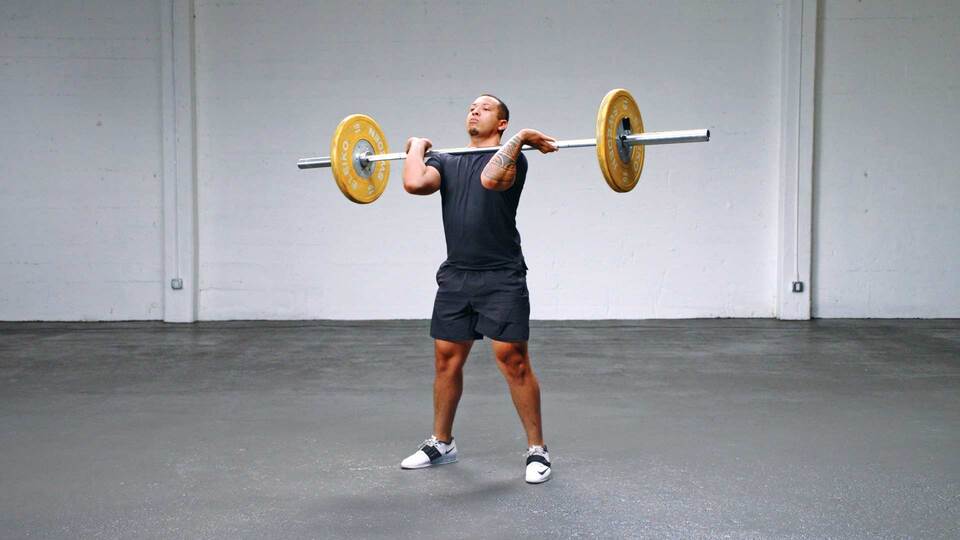
Mastering posterior chain mechanics separates elite power athletes from gym enthusiasts who continually struggle with persistent lower back pain and stalled performance numbers. The human body is not an assortment of isolated muscles acting on solo levers. It is an integrated tensegrity structure where force generated at the floor must travel through the ankles, knees, hips, and spine without leaking energy. When an athlete sprints, jumps, or hinges to lift dead weight, the vast majority of horizontal and vertical propulsion comes from the muscular slings running from the base of the skull all the way to the plantar fascia of the feet.
Yet modern fitness culture remains obsessed with what lifters can see directly in the mirror. Decades of quad-dominant squatting, excessive seated machine work, and chronic daily sitting have created an epidemic of dormant gluteal complexes and overstressed lumbar vertebrae. When you strip away fitness gimmicks and analyze human locomotion through the lens of pure biomechanics, the rear half of the body dictates how effectively you can express force. Understanding how this intricate network operates transforms fragile movement into a durable, explosive athletic engine.
The Anatomy of Force Transfer Along the Posterior Line
The posterior chain is not a single muscle group but an anatomical highway comprising the calves, hamstrings, gluteus maximus, thoracolumbar fascia, erector spinae, and latissimus dorsi. These structures do not operate in a vacuum. They are bound together by sheets of tough collagenous fascia that store and release mechanical energy like coiled steel springs. When you drop into a countermovement before a vertical jump, your hamstrings and Achilles tendons undergo rapid eccentric elongation, storing elastic strain energy that is immediately recovered during the concentric drive.
At the center of this engine sits the gluteus maximus, the largest and most potent force-producing muscle in the human frame. Its primary job is hip extension, pulling the femur backward relative to the pelvis. In sprinting, hip extension creates horizontal ground reaction forces, driving the earth backward so the body propels forward. Working alongside the gluteals, the hamstrings act as biarticular power modulators, crossing both the hip and the knee joints to coordinate deceleration and knee flexion simultaneously.
Further up the chain, the massive broad sheet of the thoracolumbar fascia links the gluteus maximus on one side to the contralateral latissimus dorsi on the other. This diagonal sling, known as the posterior oblique subsystem, locks the sacroiliac joint during single-leg support phases such as sprinting or cutting. The erector spinae run parallel to the vertebral column, acting not as primary movement drivers during high-load hinges, but as rigid isometric stabilizers that keep the spinal column neutral while the hips do the heavy lifting. Crucially, when posterior chain mechanics function in concert, the body acts as a coherent catapult rather than a series of disconnected segments.
Why Modern Training Regimens Break Down the Kinetic Chain
Most lower-body injuries do not originate at the site where pain ultimately flares up. A torn hamstring, a strained lumbar facet joint, or chronic patellar tendinopathy are almost always compensatory cries for help caused by failure elsewhere in the kinetic chain. When someone sits for eight hours in an office chair, the hip flexors adaptively shorten while reciprocal inhibition blunts neural drive to the glutes. The brain literally forgets how to recruit the gluteus maximus with maximum motor-unit velocity.
When an athlete with dormant glutes attempts a heavy hinge or an all-out sprint, the nervous system seeks the path of least resistance to fulfill the movement demand. It forces the hamstrings to act as the primary hip extensors rather than secondary stabilizers, predisposing them to high-speed strain injuries at the proximal tendon junction. Simultaneously, the lumbar spine flexes under load, distorting natural posterior chain mechanics by forcing the spinal erectors to shoulder mechanical loads intended for the massive gluteal complex.
Just as seasoned investigative journalists rely on rigorous newsroom verification mechanics and 4 proven rules that prevent costly editorial disasters to ensure raw claims withstand intense scrutiny before going to print, elite strength coaches insist on diagnostic movement screening before loading an athlete’s spine with near-maximal weight. Bypassing biomechanical verification guarantees that faulty movement motor programs become deeply ingrained under load, setting the stage for acute structural failure.
The 4 Proven Principles That Rebuild Unstoppable Hip Extension
Re-establishing optimal posterior chain mechanics demands unlearning lazy compensation patterns and re-establishing clean neuromuscular signaling from the ground up. Whether your goal is a heavier deadlift, a faster ten-meter split, or chronic back pain resilience, these four structural principles govern genuine kinetic development.
Master the Pure Hip Hinge Before Loading Vertical Compression
The foundational pattern of the entire rear chain is the hip hinge, a movement characterized by maximal hip displacement with minimal knee flexion. Too many lifters turn deadlifts and kettlebell swings into low squats, bending the knees forward and turning the exercise into an anterior-dominant quad workout. In a true hinge, the shins remain near vertical, the pelvis shifts horizontally backward in space, and the torso folds forward over a neutral, locked spine.
This mechanics creates a long internal moment arm for the hips, placing immense stretch and subsequent load directly onto the gluteus maximus and adductor magnus. To execute this correctly, imagine pushing a heavy car door closed behind you using only the back of your hips while keeping your ribs pulled down toward your pelvis. By keeping the tibia vertical, you prevent the quadriceps from stealing the movement and force the posterior structures to handle both eccentric loading and explosive concentric return.
Train Foot-Ankle Compliance to Anchor Ground Reaction Forces
Power originates at the contact point between the foot and the floor. You cannot fire your glutes with maximal intensity if your brain senses an unstable base of support. Grounded research published by the National Strength and Conditioning Association research on kinetic chain force transmission emphasizes that ground reaction forces depend heavily on ankle stiffness and tripod foot stability. If the arches of your feet collapse inward into excessive pronation during a lift or jump, the tibia internally rotates, knocking the knee inward and disengaging the lateral hip stabilizers.
Before you hinge, you must root your feet into the ground. Distribute pressure evenly across three points: the base of the big toe, the base of the pinky toe, and the calcaneus (heel). From there, actively corkscrew your feet into the floor without turning your toes outward. This external rotation torque creates tension that spirals upward through the lower limbs, setting the head of the femur cleanly into the acetabulum and pre-activating the gluteus medius before the lift even initiates.
Balance Glute Dominance Against Hamstring Tendon Elasticity
A common error in posterior training is treating the glutes and hamstrings as interchangeable hip extensors. They are functional partners with distinct duties. The gluteus maximus thrives on pure mechanical tension, maximal voluntary contraction, and full hip extension against high loads. The hamstrings, particularly the long head of the biceps femoris, thrive on high-velocity eccentric lengthening and tendon recoil, which is the cornerstone of sustainable posterior chain mechanics under extreme strain.
Training both requires blending high-load hip extension exercises like barbell hip thrusts and heavy Romanian deadlifts with high-velocity eccentric hamstring loading like Nordic curls and sprint drills. Neglecting high-speed eccentric strength leaves the distal and proximal hamstring tendons vulnerable to acute tearing during the transition between late swing phase and foot strike in sprinting. You must build glutes that can crush concrete while simultaneously developing hamstrings that can absorb and rebound thousands of newtons of ground force within milliseconds.
Integrate Rotational Core Stiffness into Every Unilateral Drive
Human movement is rarely bilateral in nature. Sprinting, jumping off one leg, cutting, throwing, and striking are unilateral actions that introduce violent torsional and shearing forces through the pelvis and lumbar spine. If your core cannot resist rotation, energy leaks out of the system, draining propulsion and punishing your lower back discs.
Training the posterior chain requires challenging it unilaterally through Bulgarian split squats, single-leg Romanian deadlifts, and heavy sled pushes. In these movements, the gluteus medius, tensor fasciae latae, and contralateral quadratus lumborum work in overdrive to prevent the pelvis from dropping or twisting. By locking down the anterior core via anti-rotation exercises like the Pallof press, you create a rigid cylindrical canister that channels every ounce of hip power directly through the ground.
Common Fallacies That Sabotage Posterior Development
A widespread misconception is that simply performing traditional barbell squats will sufficiently develop the posterior chain. While squats are an incredible movement for lower-body mass, electromyography studies consistently demonstrate that conventional squats are overwhelmingly quad-dominant. As the knees track forward over the toes, the moment arm at the knee joint increases, shifting the metabolic stress to the rectus femoris and vastus lateralis while the glutes and hamstrings act merely as stabilizers.
Relying exclusively on squats while disregarding posterior chain mechanics in favor of quad-heavy compound lifts invariably leads to muscular imbalances, anterior knee pain, and chronic hamstring tightness. Tight hamstrings are often not short muscles at all. Rather, they are neurologically overstretched tissues struggling under the tension of an anteriorly tilted pelvis caused by overactive hip flexors and weak glutes. Aggressively stretching a hamstring that is already pulled taut like an over-tuned guitar string only exacerbates the instability, making deliberate strengthening through a full range of motion the only genuine cure.
Another dangerous fallacy is the belief that spinal erectors should actively arch the back during the lockout of a deadlift or hinge. Overextending the lumbar spine at the top of a movement takes the tension off the glutes and jams the posterior facet joints of the lower vertebrae together under axial compression. True lockout occurs when the hips achieve neutral extension, the glutes squeeze tightly, and the ribcage stays pinned over the abdominal wall.
Sustaining Lifelong Resilience Through Deliberate Tension
Athletic longevity is not an accident of genetics. It is the predictable outcome of structural balance, tissue capacity, and intelligent kinetic loading. When you commit to developing the muscles behind you with the same intensity that most gymgoers devote to the muscles in front, your entire physiological posture shifts. Walking becomes more buoyant, sprinting feels lighter and more violent, and chronic lower back tightness melts away as the glutes resume their rightful role as primary pelvic stabilizers.
By treating the hips as the true mechanical center of human power, athletes who master posterior chain mechanics build an indestructible physical armor that preserves joint longevity for decades. Stop viewing your body as a collection of isolated parts. Learn to hinge with discipline, anchor your feet to the earth, stabilize your spine with unrelenting core tension, and let the most powerful muscular engine in your body propel you forward.