Maillard reaction mechanics and 4 proven rules that unlock unbelievable savory depth
Surface browning is not merely cooking food until it turns brown. Learn how thermal mass, latent heat, and molecular chemistry create the richest savory crusts in your kitchen.
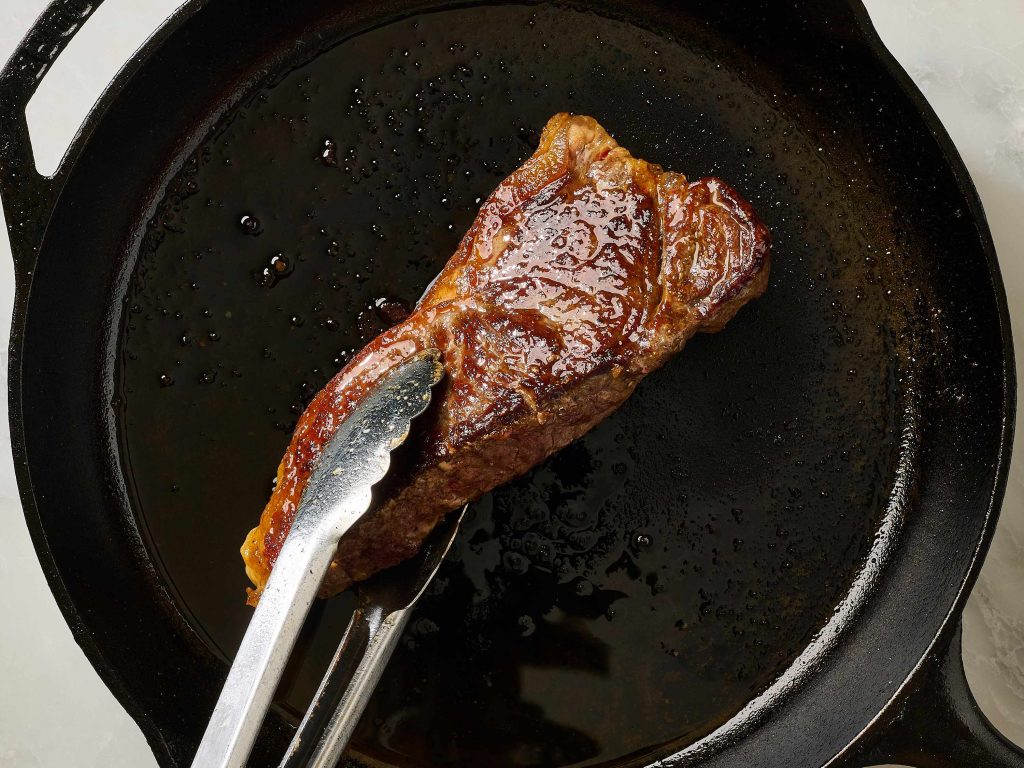
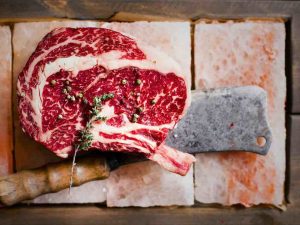
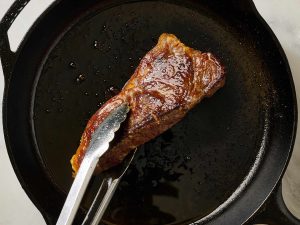
Mastering Maillard reaction mechanics gives every cook an almost unfair advantage when transforming humble ingredients into deeply complex culinary centerpieces. Listen closely to the sharp, violent hiss of a cold ribeye landing in smoking cast iron. When the skillet rings out with a steady, crackling roar, flavor is multiplying exponentially at the molecular boundary. If the pan settles into a dull, sputtering murmur, an avoidable tragedy is underway. Instead of developing a crisp, mahogany crust packed with savory aromatics, the protein is simply poaching in its own expelled moisture.
Every dedicated cook has stared down this culinary heartbreak. You buy prime cuts, crank the burner, and end up with a rubbery, pale gray surface ringed by bitter scorch marks. Browning food appears deceptively simple on paper, yet true browning is a sophisticated thermal event that requires orchestrating temperature, moisture, and atomic structure. When you strip away culinary folklore and inspect the pan through the lens of thermodynamics, the path to a golden crust becomes reliable, repeatable, and deeply satisfying.
The Invisible Cascade of Amino Acids and Reducing Sugars
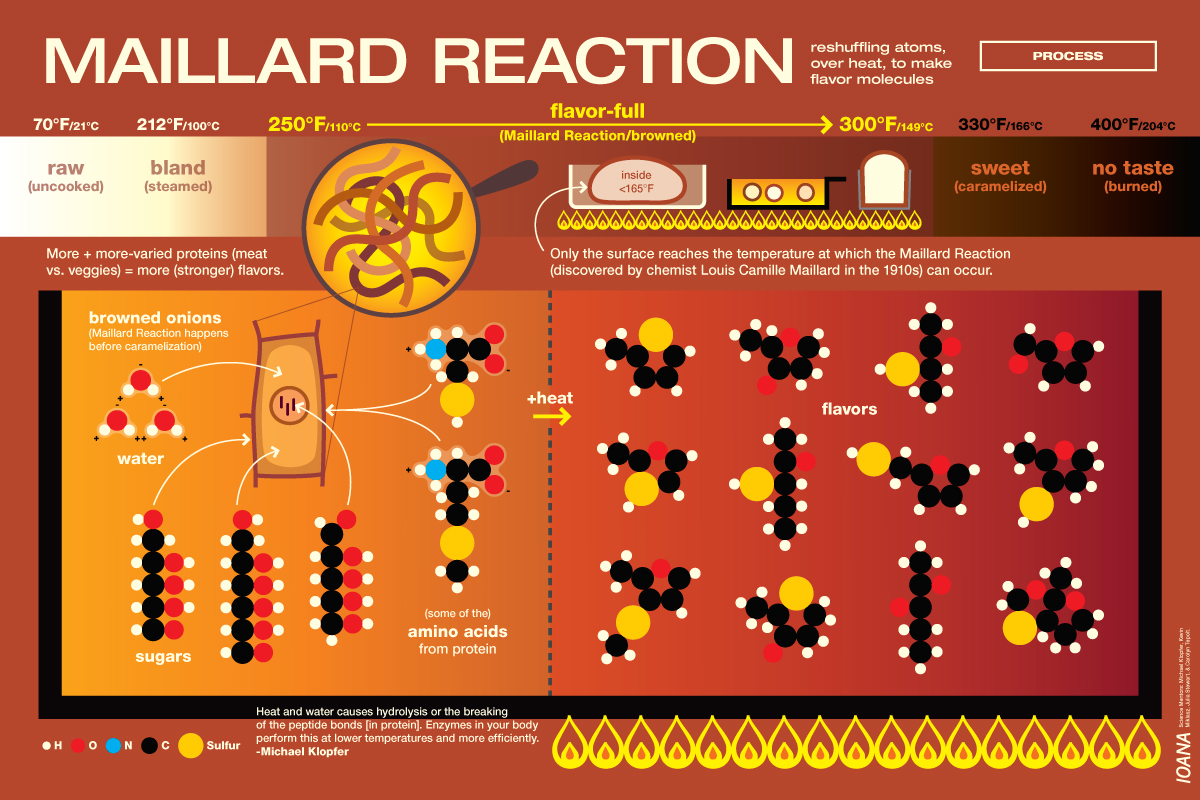
In 1912, French physician Louis-Camille Maillard attempted to model biological protein synthesis. He mixed amino acids and simple sugars in test tubes, heated them, and watched the solutions darken into an aromatic broth. He had stumbled upon the master engine of culinary savoriness. Examining core Maillard reaction mechanics explains why a seared steak smells fundamentally different from melted sugar on a crème brûlée. Caramelization involves the thermal decomposition of pure carbohydrates at elevated temperatures. The Maillard reaction requires an intimate collision between the amine group of an amino acid and the carbonyl group of a reducing sugar.
That initial pairing forms an unstable glycosylamine, which swiftly undergoes an Amadori rearrangement. From this tiny molecular fork in the road, the reaction branches into hundreds of volatile pathways. As detailed in an authoritative American Chemical Society review on non-enzymatic browning, these pathways generate pyrazines that smell roasty and nutty, furans that evoke toasted bread, and thiophenes that contribute rich, meaty undertones. These aromatic molecules polymerize into melanoidins, the complex brown pigments responsible for the appetizing visual crust on seared steaks, roasted coffee beans, and artisanal bread.
Why Surface Moisture Destroys Your Culinary Ambitions
The primary enemy of savory browning is plain tap water. The physics governing phase changes create an uncompromising boundary layer in every pan. Water liquidates heat. To transition one gram of water from room temperature to boiling requires a modest amount of thermal energy. Converting that same gram of liquid water at its boiling point into steam requires an astonishing 2,260 joules of energy, a thermodynamic reality known as the latent heat of vaporization.
As long as free water coats the exterior of a chicken breast or mushroom, the surface temperature cannot climb significantly past 212 degrees Fahrenheit (100 degrees Celsius). The Maillard reaction, however, requires surface temperatures between 280 and 330 degrees Fahrenheit (140 to 165 degrees Celsius) to proceed at a culinary pace. Without respecting these thermodynamic limits, Maillard reaction mechanics simply cannot initiate, trapping your food in a prolonged, gray, waterlogged purgatory while the delicate interior overcooks.
Four Proven Rules That Perfect Savory Browning Every Single Time
Achieving restaurant-grade browning does not require industrial ranges or mysterious chef secrets. It demands strict adherence to four non-negotiable thermodynamic principles.
Dry Every Surface With Ruthless Determination
Patting raw meat with a flimsy sheet of paper towel thirty seconds before cooking is entirely insufficient. Muscle tissue is roughly seventy-five percent water. When raw protein encounters a hot pan, cellular walls contract, weeping liquid outward onto the metal surface. To counteract this, serious cooks employ evaporative desiccation. Salting meat heavily hours in advance draws out water through osmosis. That concentrated brine dissolves surface proteins before being drawn back into the meat fibers. Uncovered refrigeration on an elevated wire rack for twelve to twenty-four hours then allows dry refrigerator air to desiccate the outer layer into a glossy, parchment-thin skin. Optimizing surface dryness directly facilitates Maillard reaction mechanics, allowing thermal energy to trigger browning instantaneously rather than wasting time boiling off microscopic moisture droplets.
Match Thermal Mass to Protein Volume
A roaring flame beneath a pan creates heat flux, but the pan itself supplies heat capacity. Light aluminum and thin stamped steel lose thermal energy the instant cold food touches down. The pan drops below the browning threshold, the protein begins weeping juices, and the food simmers. To maintain the requisite 300-degree threshold, choose heavy cast iron, carbon steel, or thick clad stainless steel. These dense materials store substantial thermal energy within their crystalline matrices. When a thick cut of meat lands, the pan absorbs the thermal shock without dropping below the critical threshold, sealing the outer cellular layer before interior liquids escape.
Manipulate Surface PH to Accelerate Flavor Development
Chemical environment dictates reaction velocity. The nucleophilic amine groups on amino acids must remain unprotonated to attack reducing sugars effectively. In acidic conditions, excess hydrogen ions bond with these amine groups, pacifying them and grinding browning to a halt. In mildly alkaline conditions, those amine groups stay exposed, primed, and chemically aggressive. Tweaking chemical alkalinity is one of the most clever ways to supercharge Maillard reaction mechanics when cooking delicate vegetables or poultry skin. Dusting sliced onions with a microscopic pinch of baking soda cuts caramelization time in half. Similarly, tossing chicken wings in baking powder before oven-roasting raises the surface pH, triggering rapid melanoidin synthesis and exceptionally crisp skin long before the meat dries out.
Arrest Heat Transfer Before Bitterness Takes Over
The sweet spot for savory browning spans 280 to 350 degrees Fahrenheit. If temperatures breach 400 degrees Fahrenheit (204 degrees Celsius), the reaction tumbles over a dangerous precipice into pyrolysis. Pyrolysis represents thermal decomposition in the absence of control: the molecular chains snap completely, leaving behind acrid heterocyclic amines, polycyclic hydrocarbons, and chalky black carbon. Flavor shifts abruptly from rich, nutty roastiness to acrid, mouth-drying bitterness. True browning requires managing burner output dynamically. Blast the initial sear to jump-start color, then ease heat downward or baste with foaming butter to hold the surface within the aromatic window without charring the exterior.
Common Pitfalls That Turn Golden Brown Crusts Bitter and Tough
Even seasoned home cooks fall prey to common thermal misjudgments. The most pervasive error is crowding the cookware. Packing four chicken thighs tightly into a ten-inch skillet creates an inescapable moisture trap. Steam rising from one piece condenses against its neighbor, extinguishing the heat of the metal floor. Always leave generous spacing between individual items, searing in unhurried batches rather than crowding the metal.
Another common mistake involves introducing sugary marinades too early. High-fructose sauces and honey-laden glazes burn well below the target temperature for protein browning. When exterior sugars blacken within thirty seconds, cooks reflexively lower the heat, abandoning the meat interior to undercooked flabbiness. Sear the naked, seasoned protein first. Introduce glazes and sticky reductions only in the final moments of thermal assembly.
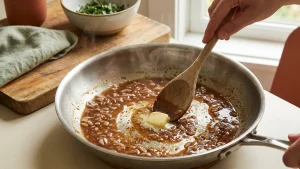
When those caramelized amino acids and sugars accumulate as fond on the bottom of a pan, understanding Pan sauce emulsion mechanics and 4 proven rules that create unforgettable velvety depth guarantees that you convert those crusty brown bits into a luxurious finish rather than scouring them down the sink. Navigating these mistakes requires an intuitive grasp of Maillard reaction mechanics, ensuring your pan remains hot, dry, and balanced throughout the entire sear.
The Transformative Power of Deliberate Heat Management
Great cooking rarely hinges on exotic ingredients or decorative garnishes. It rests on how deliberately you govern phase changes and chemical bonds at the interface between food and metal. When you view a raw steak, a halved onion, or a head of cauliflower through the lens of thermodynamics, dinner ceases to be a frantic gamble. You no longer hope for color; you engineer it with absolute confidence.
Dry the surface with patience, harness heavy metal to preserve thermal reserves, gently elevate surface alkalinity when time demands, and guard the border between golden browning and carbonized ash. Ultimately, commanding Maillard reaction mechanics turns the kitchen from a realm of unpredictable guesswork into a space of repeatable culinary magic. Every sizzle becomes intentional, every aroma carries purpose, and every meal leaves a lasting impression on the palate.