Tennis Serve Kinetic Chain Mechanics and 4 Proven Rules That Unlock Devastating Power
Brute arm strength cannot produce world-class service speed on the court. Discover how elastic energy travels from the baseline up to deliver repeatable, blistering aces.
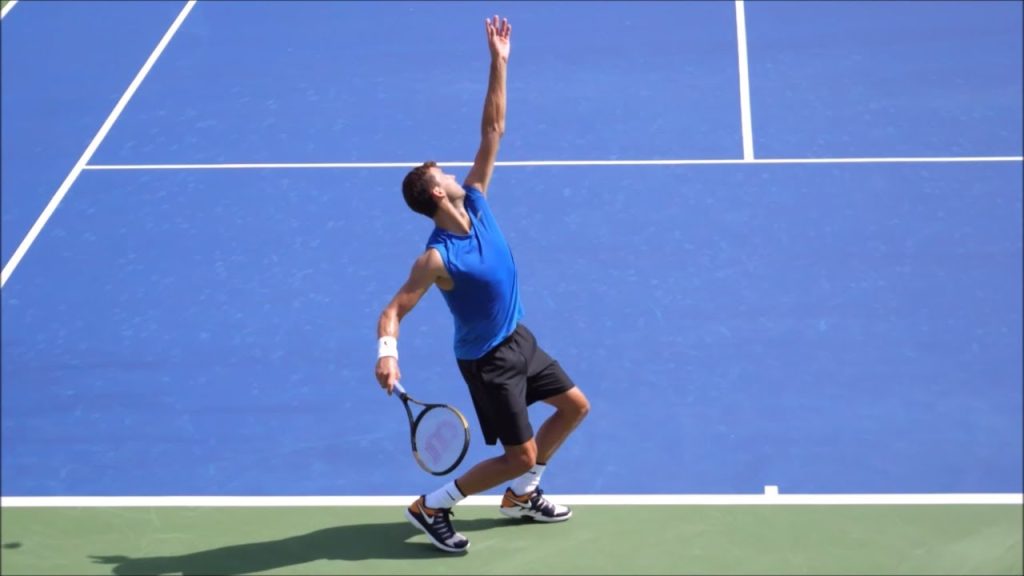
Mastering the tennis serve kinetic chain separates erratic weekend hitters from lethal baseline commanders who can dictate rallies from their very first strike. Many amateur players assume elite service speed is born in the biceps or forged through furious wrist snaps. That instinct is not just biomechanically false; it is an express lane to chronic shoulder impingement. The human shoulder joint is simply not engineered to generate 120 miles per hour of ball velocity in isolation. When you witness a world-class server launch a flat bomb that skids off the chalk, you are not watching upper-body brute force. You are witnessing an unbroken sequential transfer of mechanical energy that originates in the soles of the shoes, cascades up through the torso, and uncoils through the racket head at the millisecond of impact.
The Biomechanical Fallacy of the Strong Arm
Recreational tennis courts are littered with players trying to muscle the ball across the net. They grip the racket with white knuckles, heave their throwing arm forward with maximum muscular tension, and wonder why their serves either float harmlessly into the service box or slam into the tape. Even worse, by the third set, their anterior deltoids burn and their rotator cuffs throb with dull, radiating pain.
When researchers map the tennis serve kinetic chain, they observe an intricate biomechanical system rather than an isolated striking motion. According to landmark biomechanical research published in Sports Health, the lower extremity and trunk produce over fifty percent of the total kinetic energy and ground force delivered during an overhead serve. The shoulder, elbow, and wrist act primarily as dynamic funnels and transmitters. Their role is to channel, multiply, and redirect energy produced by massive muscle groups in the legs and core rather than manufacture that force from scratch.
Treating the arm as the primary engine creates a severe physical bottleneck. Muscular contraction alone cannot move human limbs as quickly as elastic recoil can. When you attempt to push the ball using arm strength, you forfeit the elastic potential stored within the fascial networks of your core and torso. True serve velocity is an acoustic phenomenon: a whiplash effect where massive, slow-moving bodily segments transfer momentum to progressively lighter, faster segments until the racket tip explodes through the hitting zone.
How Elastic Energy Travels from Court to Strings
Think of the human body during a service motion as a segmented bullwhip. The handle of the whip is thick, heavy, and moves relatively slowly. Yet, as energy travels down the tapering cord, each successive segment moves faster than the one behind it, culminating in a supersonic crack at the very tip. On the tennis court, your feet and legs represent the heavy handle of the whip, while the racket head represents the tip.
This kinetic transfer relies heavily on the stretch-shortening cycle of skeletal muscle. When a muscle is actively stretched under load immediately prior to shortening, it stores strain energy in its elastic tendons and connective tissue. When that stored energy is released within fractions of a second, the resulting concentric contraction produces vastly more power than a contraction initiated from a static posture.
Athletic mastery demands an obsessive commitment to sequencing and timing. Just as media organizations enforce strict protocols around news embargo agreements and 4 proven rules that prevent catastrophic leaks to ensure that information releases with maximum coordinated impact, an elite server cannot release kinetic force before the previous segment reaches its mechanical apex. Without this rhythmic synchronization, the tennis serve kinetic chain collapses into an exhausting arm stroke that drains stamina and bleeds ball speed.
Four Essential Principles of Kinetic Energy Transfer
Achieving a modern, effortless service motion requires deliberate calibration across four anatomical phases. Each phase acts as a vital link; if any link slips out of alignment or fires prematurely, the energy wave dissipates before reaching the racket.
Ground Reaction Force Generates the Foundational Surge
Every powerful serve begins with the court beneath your feet. Through Newton’s third law of motion, the force you drive downward into the asphalt returns upward through your skeletal structure as ground reaction force. Whether you utilize a platform stance with stationary feet or slide your back foot into a pinpoint stance, deep knee flexion is non-negotiable. Elite servers drop their center of mass by bending their knees to roughly fifty to seventy degrees of flexion, loading the quadriceps, gluteal complex, and calves. As the knees explode upward, this vertical thrust does not merely lift the player into the air; it initiates an upward kinetic wave that drives the hips upward and forward into the court.
Pelvic and Thoracic Separation Stores Elastic Torque
Once the legs launch the body upward, the pelvis begins its forward rotation toward the target. However, elite servers do not turn their entire upper body at once. To unlock the full output of the tennis serve kinetic chain, the hips must rotate toward the net while the torso remains coiled in a strong shoulder-over-shoulder tilt. This delay creates an anatomical phenomenon known as the hip-to-shoulder separation angle. By holding the chest sideways while the hips drive forward, the server stretches the abdominal obliques, latissimus dorsi, and pectoral complex across the torso like a loaded slingshot. When this elastic core snaps forward to catch up with the hips, it unleashes tremendous rotational torque without requiring excessive muscular strain.
Shoulder External Rotation Preserves the Elbow Joint
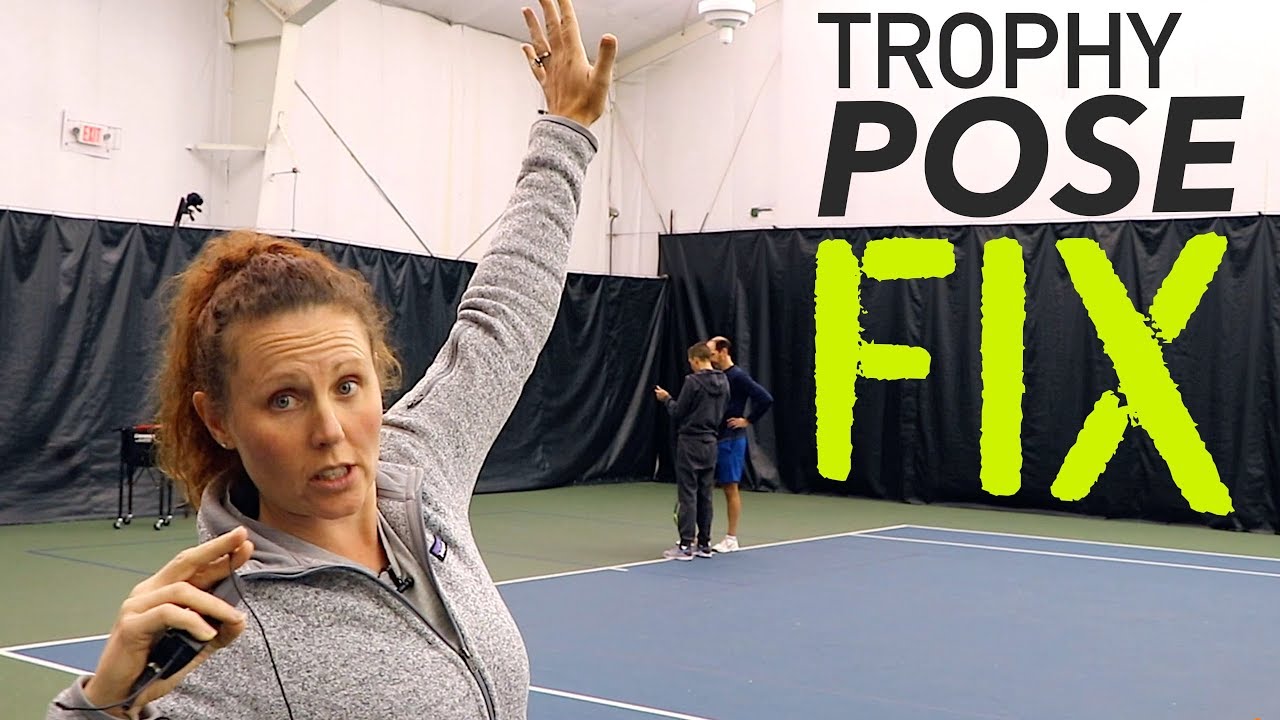
During the transition known as the trophy pose and subsequent racket drop, the hitting shoulder undergoes radical passive external rotation. The racket head falls down behind the server’s back while the elbow points skyward. Amateurs often mistakenly pull the racket down using their hand, but in an efficient motion, the racket drops because the body is accelerating upward and forward while the arm remains completely relaxed. The racket head trails behind due to its own inertia, stretching the internal rotators of the shoulder to their anatomical limits. This extreme stretch prepares the subscapularis and pectoralis major for a violent, elastic internal rotation that rockets the racket upward toward the contact point.
Pronation Delivers Snap at Peak Height
The terminal phase of the kinetic sequence is often misunderstood as a downward wrist snap. Snapping the wrist downward into flexion is biomechanically unstable and frequently leads to flexor tendonitis. True terminal velocity is produced by rapid forearm pronation combined with shoulder internal rotation. As the arm reaches maximum extension at contact, the forearm rotates outward, turning the palm from facing the side fence to facing outward toward the right (for a right-handed player). This corkscrew action presents the racket strings square to the ball at the exact millisecond of contact, delivering maximum linear force before allowing the arm to decelerate across the body naturally.
Diagnosing Energy Leaks Before They Cause Costly Injuries
When a serve feels heavy, slow, or physically exhausting, an energy leak is almost certainly present somewhere along the line. An energy leak occurs when a joint fails to stabilize, a muscle group fires out of order, or posture collapses during force transmission. Every structural disruption in the tennis serve kinetic chain forces smaller downstream joints to absorb destructive shear loads.
The most rampant energy leak is the notorious waiter’s tray error. Instead of keeping the racket edge leading upward in an edge-on orientation before rotating at contact, the player opens the strings flat to the sky early in the backswing, resembling a waiter balancing a tray of drinks. This posture completely eliminates shoulder external rotation and forearm pronation. Energy generated by the legs hits a dead end at the shoulder, forcing the player to push the ball using the elbow joint. Over months of play, this flaw creates debilitating medial epicondylitis, commonly known as golfer’s elbow, or severe strain across the anterior rotator cuff.
Another subtle leak stems from an unstable tossing arm. The non-dominant arm is not merely an aiming stick; it functions as an essential counterweight that controls dynamic balance. If the tossing arm drops prematurely toward the stomach after releasing the ball, the hitting shoulder dips with it, causing the server’s chest to collapse downward before the kinetic wave can clear the hips. Keeping the tossing arm elevated until the racket starts its upward trajectory keeps the chest upright, preserves the hitting shoulder’s elevation, and allows clean vertical clearance over the net.
Practical Drills to Build an Unbreakable Kinetic Sequence
Rebuilding the tennis serve kinetic chain requires stripping away arm-dominant habits and grooving segmental sequencing. You cannot master this progression by simply hitting buckets of balls with full speed, because old muscular compensation patterns instantly reassert themselves under maximum effort.
Begin with progressive medicine ball rotational throws. Using a light two-kilogram medicine ball, stand perpendicular to a concrete wall in your standard service stance. Sink into your legs, coil your hips away from the wall, and launch the ball into the brick solely by driving through your back leg and unwinding your hips and trunk. Keep your arms relaxed, treating them as loose ropes connecting the ball to your torso. This drill teaches the neuromuscular system that genuine rotational propulsion begins in the lower body.
Next, transition to throwing an American football or a weighted baseball across the court. The biomechanics of an overhand football pass mirror the kinetic chain of an elite tennis serve with striking accuracy. To throw a tight spiral over distance, you must lead with the elbow, initiate with the hips, allow the forearm to lag, and finish with rapid pronation. If you attempt to throw a football with a flat waiter’s tray motion, the ball wobbles and dies in mid-air. Once your shoulder learns the elastic sensation of the overhand throw, pick up your tennis racket and replicate that identical, whip-like rhythm on court.
Cultivating a resilient tennis serve kinetic chain requires disciplined kinematic awareness rather than brute physical force. When you stop fighting your own anatomy and start orchestrating your joints into an integrated spring, your service motion transforms. The ball leaves your strings with explosive, effortless velocity, your placement sharpens, and your shoulder remains healthy and pain-free through the final game of every match.