
Stretch Shortening Cycle and 4 Proven Rules That Build Explosive Athletic Power
Pure muscular strength is too slow to explain elite athletic speed. Discover how the biological spring of the stretch shortening cycle stores kinetic strain to produce effortless velocity and explosive rebound.

Harnessing the biological mechanics of the stretch shortening cycle separates sluggish movers from elite, spring-loaded athletes who seem to float over turf effortlessly. Watch an Olympic triple jumper strike the runway or an elite sprinter glide across the track. There is no visible pause, no lumbering muscular struggle, and no hesitation. The foot strikes the ground with a crisp whip-crack, and the body rockets forward as if propelled by a concealed titanium coil. Most spectators assume this violent propulsion stems entirely from massive muscular contractions, picturing quads and glutes squeezing with desperate force to heave body weight through space.
Yet biomechanists have demonstrated that voluntary muscular contraction is far too slow and metabolically costly to explain elite sprinting speed or gravity-defying vertical leaps. When human limbs move at maximum velocity, muscles act less like grinding hydraulic pistons and more like tension clamps holding tight while tendons stretch and snap. Muscles and connective tissues combine to form an evolutionary spring that stores and releases kinetic energy with breathtaking mechanical efficiency. Without this mechanism, running would deplete glycogen reserves in minutes, and jumping would resemble the stiff hop of a wooden mannequin. Understanding this biological spring fundamentally transforms how athletes approach power, speed, and movement durability.
How Biological Springs Outperform Pure Muscular Contraction
To grasp why tendons dominate athletic locomotion, consider what happens when a rubber ball bounces off concrete. The ball expends no chemical fuel to rebound. Instead, its material deforms under impact, converting downward momentum into stored potential strain energy, and immediately reforms its shape to push off the surface. Human movement mirrors this sequence through three interconnected stages: the eccentric pre-stretch, the amortization phase, and the concentric explosion.
During the eccentric pre-stretch, external forces—such as gravity pulling a landing sprinter toward the track—force the muscle-tendon unit to lengthen under tension. In this stage, active muscle fibers contract quasi-isometrically, locking their physical length while elastic tendons stretch like industrial bungee cords. Tendon collagen fibrils possess extraordinary tensile strength. As they elongate under violent deceleration, they swallow kinetic energy that would otherwise rattle joints and damage delicate bone tissue. This elastic recoil defines how the stretch shortening cycle functions under dynamic loading, giving biological organisms a free energetic boost that bypasses metabolic fatigue.
Within the structural architecture of the sarcomere, a giant filament protein named titin contributes additional recoil. Titin functions as a molecular spring that stiffens when calcium floods the muscle cell. As the muscle lengthens under load, titin resists elongation and stores strain energy, returning mechanical work during takeoff without burning extra adenosine triphosphate.
The Neurological Architecture Behind Explosive Movement
Mechanical elasticity accounts for only part of the propulsion equation. The nervous system acts as the high-speed conductor regulating the exact timing and magnitude of the bounce. Within every muscle belly sit microscopic sensory receptors known as muscle spindles, coiled around intrafusal fibers like microscopic tripwires. When a sudden stretch jerks the muscle, these spindles fire an electrical distress signal straight to the spinal cord via fast-conducting afferent pathways.
The spinal cord interprets this sudden elongation as a danger signal that could tear joint structures. To avert catastrophic tissue failure, it fires an involuntary reflex arc along alpha motor neurons, commanding the stretched muscle to contract violently and resist the elongation. This is the classic myotatic reflex, the exact neural circuit tested when a physician taps a rubber mallet against a patient’s patellar tendon. In dynamic athletic movement, this reflex serves as an involuntary turbocharger, amplifying concentric force output beyond what conscious willpower could ever summon.
However, optimizing the stretch shortening cycle demands rapid communication between peripheral mechanoreceptors and the central nervous system. If the reflex fires late, stored strain energy dissipates into unusable thermal heat. If the protective Golgi tendon organs—tension sensors that suppress contraction under extreme loading—become overly sensitive, they shut down the bounce prematurely. Elite sprinters and jumpers train their nervous systems to suppress excessive Golgi tendon inhibition while sharpening muscle spindle sensitivity, enabling them to strike the ground violently and rebound instantaneously.
Four Essential Principles That Maximize Elastic Power Transfer
Transforming raw biological mechanics into unstoppable field speed requires specific neuromuscular conditions. Tendons and reflexes do not automatically deliver effortless propulsion simply because an athlete can back squat impressive weight. The biological spring must be calibrated, stiffened, and tuned with surgical precision.
Minimizing the Amortization Phase to Prevent Energy Loss
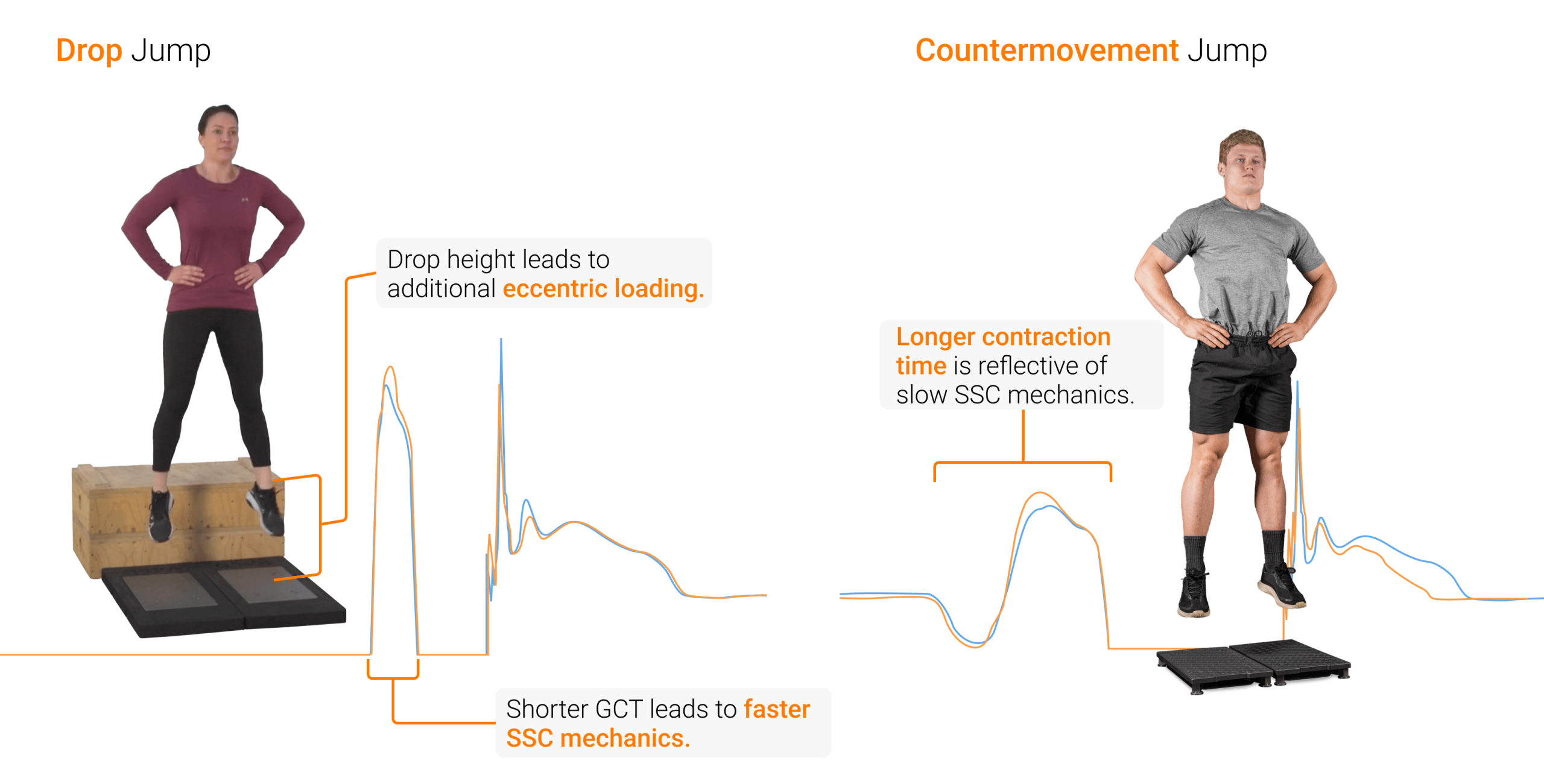
The amortization phase is the transitional interval suspended between the eccentric landing and the concentric takeoff. It is the athletic valley of death. If an athlete lingers in this transition for more than two tenths of a second, the stored elastic potential energy within the tendon begins to bleed away as thermal heat. Shortening the amortization phase preserves the kinetic energy harvested by the stretch shortening cycle during high-speed impacts, ensuring that stored rebound transfers directly into forward velocity.
High-speed motion capture demonstrates that world-class sprinters spend less than ninety milliseconds on the ground with each footstrike. During that razor-thin sliver of time, the ankle joint barely yields. The Achilles tendon stretches and snaps back almost instantaneously, converting downward force into horizontal flight. Athletes who collapse at the knees or ankles drag out amortization, forcing their slow muscular machinery to regenerate momentum from a dead stop.
Developing Tendon Stiffness Over Bulky Muscle Mass
In everyday gym conversations, stiffness carries a negative connotation, conjuring mental images of restricted mobility and creaky joints. In sports biomechanics, however, tendon stiffness represents the true foundation of top-end velocity. A stiff tendon acts like a high-tension steel coil, whereas an overly compliant tendon behaves like a loose rubber band. Under massive landing forces, a compliant tendon deforms excessively, absorbs energy slowly, and fails to return that force with sharp velocity.
A stiff tendon resists deep structural deformation, forcing muscle fibers to hold their isometric lock while connective tissue snaps back with violent speed. Developing this structural stiffness requires heavy mechanical tension. Isometric holds, slow eccentric resistance training, and high-intensity shock landings prompt tenocytes to synthesize dense, cross-linked collagen bundles, transforming the Achilles and patellar tendons into rigid springboards that tolerate staggering ground reaction forces.
Optimizing Pre-Activation and Muscle Spindle Sensitivity
Elastic recoil cannot happen if a limb waits to contract until after it strikes the surface. By the time sensory nerves register ground contact, the limb will have already buckled beneath the downward mass. True athletic speed relies on feedforward motor control, commonly known as muscle pre-activation.
Long before the foot strikes the turf, the central nervous system sends predictive electrical signals down the spinal cord, firing the calves, quadriceps, and hamstrings while the leg is still in midair. This pre-tension prepares the limb for impact, transforming soft tissue into an unyielding biomechanical pylon microseconds before collision. Without this pre-programmed activation, the stretch shortening cycle collapses into a passive shock absorber rather than a catapult, leaving the athlete sinking into the floor rather than rebounding off it.
Calibrating Rhythm and Mechanical Coordination Under Fatigue
Peak athletic performance is fundamentally an art of temporal precision. Every biological spring-mass system possesses a natural resonant frequency, an ideal tempo at which energy oscillates with maximum efficiency and minimum waste. If an athlete mistimes muscle pre-activation or dampens joint flexion by just a fraction of a second, the elastic wave breaks, and kinetic energy disperses aimlessly through the skeleton.
Just as comedic artists know that a split-second pause dictates whether a punchline explodes or dies—as explored in our breakdown of Comedic Timing and 4 Proven Rules That Make Humor Hit Harder—an athlete’s neuromuscular system must nail temporal accuracy down to the millisecond. When fatigue creeps into late-game situations, the nervous system slows its conduction velocity. Pre-activation slips out of sync, amortization lengthens, and fluid, effortless sprinting degenerates into a heavy, grinding labor. Mastery over elastic propulsion demands training this temporal rhythm until it withstands exhaustion.
Costly Flaws That Drain Elastic Rebound on the Field
Many dedicated athletes train for years without ever awakening their biological springs because conventional weightroom dogma idolizes slow concentric output. Lifting heavy barbells through grinding cadences builds muscular hypertrophy, but it does little to cultivate the rapid cross-bridge cycling and reflex sensitivity that govern dynamic sport. A frequent mistake is assuming that heavy slow lifting alone improves the stretch shortening cycle without dedicated velocity drills, plyometric contacts, and multi-directional decelerations.
Another devastating leak occurs through joint laxity and postural collapse. When an athlete lands with weak hip stabilizers, the femur rotates inward, the knee collapses into dynamic valgus, and the arches of the foot flatten uncontrollably. These structural collapses are literal energy leaks. Instead of driving force straight down into the floor to receive an equal and opposite reaction, kinetic energy scatters laterally, tearing at cartilage and ligaments while bleeding away takeoff speed. Elastic power requires an unyielding kinetic chain where no joint buckles under pressure.
Sustaining High Velocity Elastic Performance Across a Lifetime
Nurturing tendon health requires a vastly different biological timeline than conditioning muscle bellies. Skeletal muscle is rich with capillaries, bathing in oxygenated blood that repairs microtears in forty-eight to seventy-two hours. Tendons, by contrast, are largely avascular, resembling smooth cords of dense white fibrous tissue that rely on slow fluid extrusion to nourish their cellular matrix. As highlighted in peer-reviewed research on human stretch-shortening cycle dynamics published through the National Center for Biotechnology Information, understanding the metabolic and structural limits of tendon adaptation is paramount for preventing chronic overuse patellar tendinopathy or Achilles degradation.
True mastery of athletic longevity means balancing high-velocity plyometric exposures with deliberate periods of tissue remolding. Progressive isometric pauses under load stimulate collagen synthesis without subjecting irritated tendon sheaths to abusive shearing forces. When an athlete respects this distinct connective timeline, they preserve their springiness long into their veteran years. Proper connective tissue adaptation guarantees that your stretch shortening cycle retains its elasticity over decades of hard training, keeping your movements fluid, reactive, and electric.