Meteor Shower Watchers Prepare for 4 Major Night Sky Spectacles Across Autumn Skies
Autumn skies are igniting with rare fireballs, unpredictable outburst showers, and astronomical history. Here is everything stargazers need to know about this season’s celestial lineup.
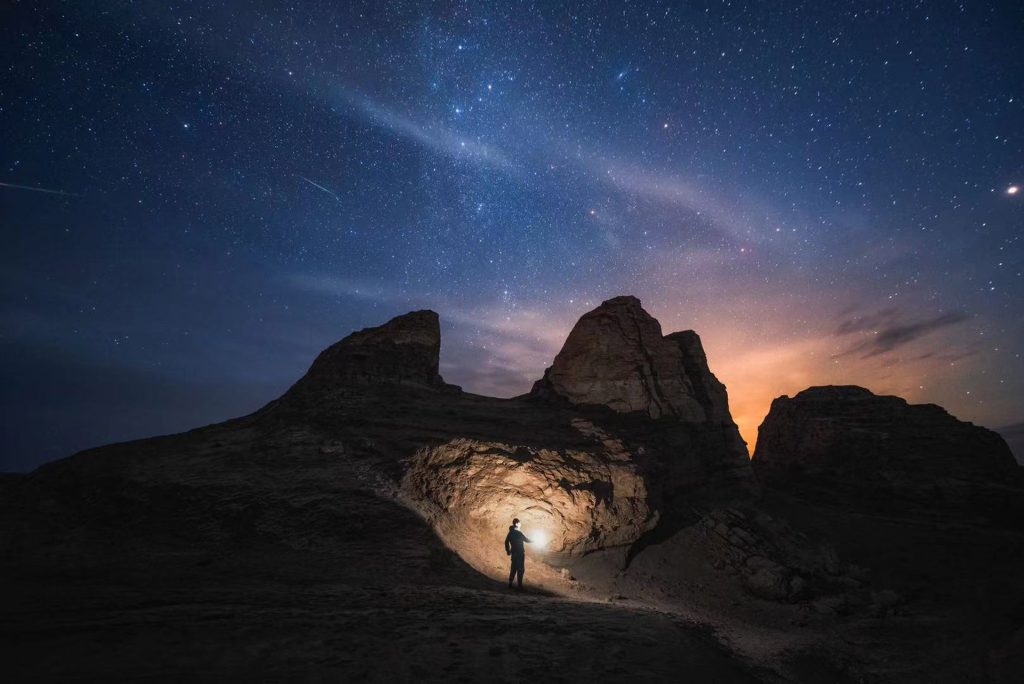
HAIXI, CHINA - AUGUST 12: The Perseid meteor shower illuminate the night sky over the Eboliang Yardang landform on August 12, 2022 in Haixi Mongolian and Tibetan Autonomous Prefecture, Qinghai Province of China. (Photo by Wu Zhengjie/VCG via Getty Images)
Stepping outside to watch a brilliant meteor shower illuminate crisp autumn skies offers an immediate connection to the broader cosmos. As October deepens, skywatchers around the globe are turning their eyes upward to witness a dramatic convergence of interplanetary dust, dazzling fireballs, and historic celestial lore. The transition from late summer into early winter hosts several distinct interplanetary debris trails that cross Earth’s orbital path, delivering celestial spectacles that reward both seasoned astronomers and backyard observers.
Recent atmospheric activity has reignited global fascination with these cosmic encounters. Between sudden bursts of fast-moving streaks and slow, incandescent fireballs that light up entire landscapes, autumn creates a dynamic viewing window. Understanding the mechanics of these events transforms an ordinary evening stroll into an encounter with ancient remnants of cometary decay and planetary evolution.
Why Autumn Celestial Displays Demand Attention Right Now
Astronomical patterns shift noticeably as Earth crosses multiple cometary dust streams in rapid succession. Unlike events that demand shivering in predawn hours, the unpredictable Draconid meteor shower rewards watchers immediately after dusk, shifting standard skywatching routines on their head. As reported by Live Science, the Draconids peak around October 8 and 9, originating from the dusty wake of Comet 21P/Giacobini-Zinner.
Most annual displays require observers to wait until the early morning hours when a viewer’s local horizon rotates directly into Earth’s directional vector of travel. The Draconids defy that rule because their radiant point sits inside the northern constellation Draco the Dragon. Because Draco flies highest in the northern sky right as darkness settles, prime viewing begins the moment twilight fades. While typical activity hovers at a modest rate of five to ten shooting stars per hour, historical records reveal that the stream can periodically erupt into full-blown storms, producing hundreds or even thousands of falling streaks per hour under rare orbital configurations.
The Cosmic Anatomy of Fireballs and Atmospheric Airbursts
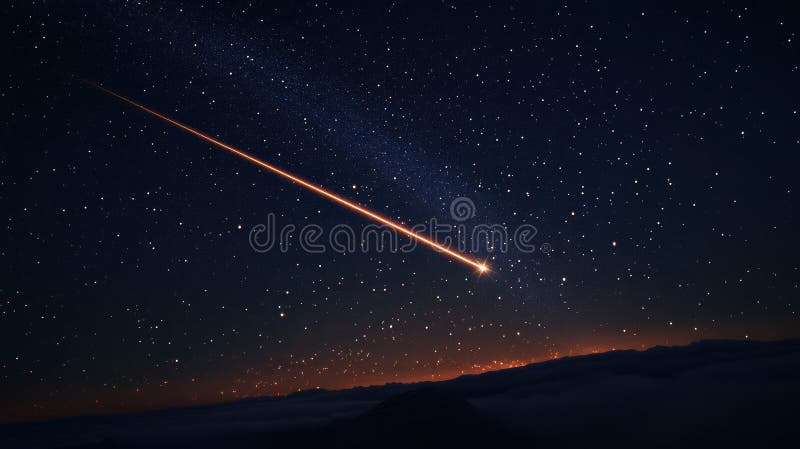
Not every streak of light in the night sky shares the same origin or size. While most dust grains incinerate harmlessly at altitudes above fifty miles, larger debris associated with a dense meteor shower complex can generate blinding bolides that cast distinct shadows across the ground. These fireballs occur when objects the size of marbles, pebbles, or boulders hit the upper atmosphere at velocities exceeding forty thousand miles per hour, generating extreme frictional heating and ionizing the surrounding air molecules.
The violent physics of atmospheric entry occasionally escalate into massive historical events. As detailed in archival analysis published by Space.com, the legendary June 30, 1908 atmospheric explosion over the Podkamennaya Tunguska basin in Siberia leveled eighty million trees across more than eight hundred square miles. Scientists continue to investigate whether that historic airburst was triggered by a rogue fragment of an ancient, fragmented comet related to the broader Taurid debris complex. Tunguska serves as a sobering reminder of the tremendous kinetic energy packed into interplanetary bodies when they plunge through our planetary shield.
4 Major Astronomical Events Defining the Season
The current astronomical calendar brings together an unusual assortment of celestial phenomena, historic milestones, and even interactive digital experiences. Four distinct events highlight why the night sky is commanding worldwide interest this month.
The Volatile Peak of the Draconids
The Draconids stand apart due to their extreme unpredictability and convenient evening schedule. Comet 21P/Giacobini-Zinner circles the sun every 6.6 years, dropping trails of gravel and grit that occasionally drift directly into Earth’s path. In 1933 and 1946, observers recorded historic outbursts where thousands of meteors cascaded through the atmosphere within a single hour. While modern passes generally remain calmer, astronomers keep a close eye on the radiant point every October to detect any sudden surge in localized particle density.
The Taurid Halloween Fireballs Across October and November
Known among stargazers for producing dazzling ‘Halloween fireballs’, the Taurid meteor shower delivers sluggish, long-lasting flares across October and November. According to reporting from Space.com, the Taurids are divided into two distinct components, the Southern and Northern branches, both linked to the disintegrating debris stream of Comet 2P/Encke. Unlike typical showers characterized by faint, fleeting streaks, the Taurids feature larger pebble-sized masses that burn slowly, creating brilliant trails that glow with vivid hues of green, yellow, and orange right through late autumn.
The Legacy of the August Perseids and Summer Baselines
NASA skywatching guides routinely highlight the August Perseid meteor shower as the gold standard for reliable summer shooting stars, establishing a benchmark against which autumn activity is measured. In monthly skywatching updates from NASA Science, astronomers emphasize how annual showers overlap with shifting planetary alignments and lunar cycles. The reliable baseline established by the summer Perseids gives researchers valuable comparison data when analyzing the shifting velocity, atmospheric penetration depth, and mineral composition of later autumn displays.
Starlight Realism Inside Mobile Gaming and Modern Pop Culture
The fascination with celestial dust has officially spilled over into global digital entertainment. Developers at Niantic announced that their mobile title Pokémon GO is weaving real-world starlight and cosmic themes directly into gameplay mechanics. During special nighttime windows celebrating celestial activity, players venturing outside under a meteor shower can encounter Minior, a creature inspired by cosmic debris that battles in its armored Meteor Form until its health falls below fifty percent, revealing its colorful Core Form underneath. This fusion of authentic astronomy with augmented reality reflects how deeply skywatching culture permeates modern digital media.
How Modern Observers Can Maximize Nighttime Viewing Conditions
Catching a glimpse of fast-moving meteors requires patience, preparation, and an understanding of ambient environmental conditions. To maximize viewing opportunities during any major meteor shower, casual observers should trade city streetlamps for open horizons located well away from artificial light pollution. Dark sky preserves, state parks, and rural backroads offer the stark atmospheric contrast needed to resolve fainter streaks that wash out in metropolitan suburbs.
Human eyesight requires at least twenty to thirty minutes to adapt fully to nighttime darkness. Checking smartphone screens during a skywatching session instantly resets night vision, wiping out an observer’s ability to spot subtle flares. Stargazers should recline on lawn chairs with an unobstructed view of the open sky rather than staring directly at the radiant constellation, as meteors streak outward in every direction across the firmament. Dramatic sudden surges in visibility mirror the unpredictability found in live entertainment, much like how unexpected plot twists unfold when Carmelo Hayes Sparks 3 Major Surprises After Shocking Bloodline Ambush during high-stakes broadcasts, catching spectators entirely off guard.
Planetary Defense Lessons from Earth Atmospheric Encounters
Beyond providing stunning visual entertainment, tracking recurring particle streams plays a fundamental role in global planetary defense. Every trail of cosmic gravel represents a structural signature of comets and asteroids that have orbited within the inner solar system for millennia. By measuring the trajectory, velocity, and deceleration of incoming fireballs, astrophysicists refine predictive models that calculate how larger hazardous objects might behave if on an intercept course with Earth.
Ground-based camera networks and space agency monitoring programs continually map these debris belts to ensure that larger, denser fragments do not catch terrestrial observatories unawares. As October draws to a close and gives way to the icy nights of November, the night sky serves as an expansive laboratory. By looking up, observers connect with the continuous, delicate dance between our home planet and the ancient remnants drifting throughout the solar system.