Meat Brining Mechanics and 4 Proven Rules That Prevent Disastrously Dry Roasts
Tired of carving into dry, chalky roasts that shed all their moisture before reaching the plate? Understanding meat brining mechanics at a cellular level transforms tough muscle fibers into succulent, moisture-trapping feasts.
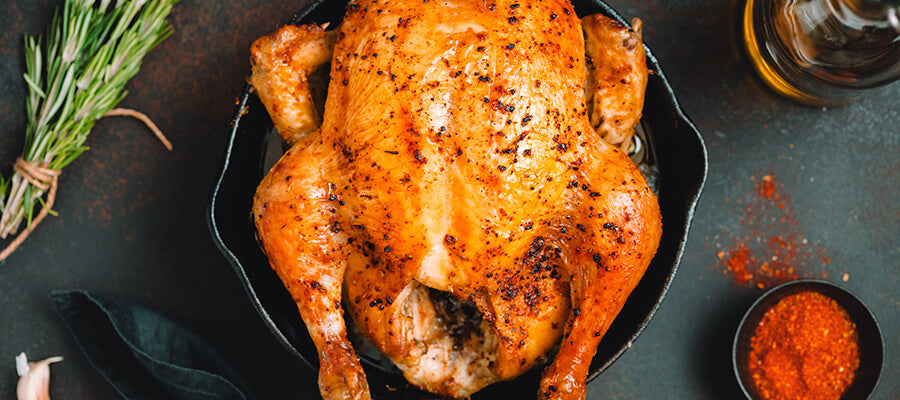
Mastering meat brining mechanics transforms lean cuts from predictably leathery roasts into remarkably succulent showstoppers. Every home cook and professional chef has confronted the silent horror of carving into a roasted turkey breast, pork loin, or beef roast only to find the texture of damp sawdust. You rested the meat. You monitored the core temperature with an expensive probe. Yet, the moment the carving knife broke the surface, precious juices gushed onto the cutting board, leaving the actual meat fibers dry, stringy, and resistant to chewing.
The culinary failure here is rarely about timing or oven calibration. Instead, the breakdown happens on a microscopic tier long before the meat ever touches heat. Raw animal muscle is fundamentally a biological machine designed to contract, hold tension, and flex. When exposed to roasting heat, those same contracting mechanisms backfire spectacularly, squeezing out interior moisture like a clenched fist wringing water from a sponge. Brining is the only culinary intervention capable of physically restructuring those protein filaments before heat forces them to choke out their own hydration.
The Physics of Moisture Loss Inside Animal Muscle
To grasp why roasts dry out, you must look at meat through the lens of structural biophysics rather than standard kitchen recipes. Skeletal muscle consists of approximately seventy-five percent water, twenty percent protein, and five percent lipids, glycogen, and minerals. Crucially, that water does not float around loosely inside the meat like soup in a bowl. It is locked inside an intricate network of muscle fibers, held hostage within microscopic tubes called myofibrils by capillary forces and electrical surface charges.
The primary structural engines inside these myofibrils are two filamentary proteins named actin and myosin. In living tissue, actin and myosin slide past one another to generate movement. In the kitchen, however, heat turns them into relentless hydraulic presses. As heat penetrates raw muscle, thermal energy causes the coiled protein strands to denature, unspooling from their native shapes and clumping together into tightly knit matrices. This process begins around 120 degrees Fahrenheit (49 degrees Celsius) when myosin begins to coagulate.
By the time meat crosses 140 degrees Fahrenheit (60 degrees Celsius), the real destruction unfolds. Actin proteins denature and contract vigorously along their longitudinal axes. Simultaneously, the connective collagen sheaths wrapping each muscle bundle shrink inward. This combined radial and axial squeeze collapses the physical space between protein filaments. The myofibrillar lattice shrinks by up to twenty-five percent in volume. Because water molecules are incompressible, the contracting protein walls force the trapped capillary water outward into the extracellular spaces, where gravity and oven convection vaporize it or wash it away onto the pan bottom.
How Salt Ion Penetration Alters Protein Architecture
Unraveling real meat brining mechanics requires discarding the outdated notion that salt simply pulls moisture inward through simple osmosis. In reality, osmosis is only the opening act in a far more dramatic biochemical sequence. Pure osmosis actually drives water out of meat initially, because water naturally migrates across cell membranes toward areas of higher solute concentration. The true magic of brining begins when sodium and chloride ions actively diffuse into the muscle interior.
As salt dissolves, it breaks down into positively charged sodium ions and negatively charged chloride ions. These tiny charged particles slip through the muscle tissue, fundamentally altering the electrostatic equilibrium of the meat proteins. Muscle proteins normally rest close to their isoelectric point, a specific pH level where positive and negative charges balance out. In this balanced state, the filaments rest relatively close together, leaving minimal room for water molecules to nestle between them.
Chloride ions exhibit a fierce chemical affinity for the thick myosin filaments. As chloride ions bind to the protein strands, they impart a strong net negative charge throughout the entire myofibrillar network. Just like identical poles of two magnets pushing violently apart, the negatively charged protein filaments repel each other. This electrostatic repulsion forces the tightly bound myofibrillar lattice to swell and physically widen. Deep structural gaps open up inside the meat, creating cavernous microscopic reservoirs that pull in and securely anchor water molecules through hydrogen bonding.
At the same time, this ionic invasion partially dissolves the structural protein bridges that tether muscle fibers together. The filament ends unravel into a viscous, gel-like matrix. Just as stabilizing an all-day pan sauce depends on understanding culinary emulsion mechanics and 4 proven rules that prevent disastrous sauce separation, tenderizing animal muscle depends on mastering ion interactions at a cellular scale. When heat later causes these salt-treated proteins to coagulate, they form a delicate, elastic gel rather than a dense, rigid knot. They can no longer contract forcefully enough to expel their internal hydration. The meat emerges from the oven retaining up to fifteen percent more liquid than an untreated cut.
The Great Kitchen Debate Between Wet Submersion and Dry Salting
Culinary schools and professional kitchens have long argued over whether wet submersion brines or dry salting methods produce the superior finished roast. When you observe meat brining mechanics across both techniques, the underlying molecular destination is identical, yet the textural results diverge drastically.
Wet brining involves submerging meat into a diluted saltwater bath, frequently infused with herbs, sugar, and aromatics. The surrounding bath provides an endless reservoir of free water, which the swelling protein lattice greedily absorbs. While this yields a remarkably forgiving roast that is virtually immune to overcooking, it comes at a steep sensory price. The absorbed water is essentially tap water, which dilutes the natural, concentrated flavor of the meat. Furthermore, wet brines saturate the exterior skin and surface tissue, creating a soggy dermal barrier that actively fights against crisp browning.
Dry brining, or pre-salting, works through a more elegant cycle of moisture recovery. You sprinkle dry salt across the exterior of the meat and let time do the heavy lifting. Initially, the salt draws a minuscule fraction of surface water out of the meat via osmosis. The salt crystals dissolve into those tiny droplets of meat juice, creating an intensely concentrated micro-brine sitting right on the meat surface. Gradually, through simple diffusion and capillary suction, the meat reabsorbs this hyper-concentrated brine, pulling the salt ions deep into the center over hours. Dry brining achieves the exact same protein-relaxing and water-trapping benefits without forcing extraneous water into the muscle cells, preserving the rich, unadulterated flavor profile of the animal.
Four Proven Rules That Prevent Disastrously Dry Roasts
Translating laboratory chemistry into dependable kitchen execution requires strict adherence to practical rules rooted in meat brining mechanics. Ignoring these principles inevitably results in either unpalatably salty borders surrounding an unseasoned core, or rubbery, water-logged meat that refuses to brown.
Calculate Salt Concentration by Total Mass Rather Than Water Volume
Equilibrium salting represents the gold standard of meat brining mechanics because it eliminates guesswork entirely. Traditional recipe cards frequently instruct cooks to make a ten percent brine by boiling a cup of salt in a gallon of water, dropping a turkey in, and praying nobody leaves it submerged for an extra hour. Such brute-force brines rely on steep concentration gradients that easily oversaturate the outer half-inch of meat while leaving the core untouched.
To implement equilibrium salting, weigh the meat and any water used together on a digital scale in grams. Calculate precisely 1.0 to 1.5 percent of that total combined weight in pure kosher salt. If you are dry brining, the math is even simpler: weigh the raw roast and apply exactly 1.2 percent of its mass in salt evenly across all surfaces. Because the overall system contains only the amount of salt you actually want in the finished dish, the meat can rest indefinitely without ever becoming unpleasantly salty. The ions will migrate until concentration throughout the entire cut reaches absolute mathematical balance.
Account for Diffusion Speed Across Varying Muscle Thickness
Salt diffusion is governed by fundamental physical laws, specifically Fickian diffusion kinetics. Salt ions do not race through dense animal muscle; they crawl. Under standard refrigeration temperatures, salt penetrates meat at a rate of roughly one to two millimeters per hour, and that rate slows exponentially as the ions penetrate deeper and the concentration gradient flattens.
A thin pork chop or spatchcocked chicken may achieve full ionic saturation in as little as four to six hours. A thick, eight-pound bone-in pork shoulder or standing rib roast demands forty-eight to seventy-two hours for salt ions to reach the deepest interior muscle bundles. Applying salt thirty minutes before roasting does nothing more than season the outer crust; it leaves the interior proteins completely vulnerable to thermal contraction and dehydration. Plan your preparation window according to muscle depth rather than total weight.
Maintain Near-Freezing Temperatures to Preserve Structural Integrity
Temperature during the brining phase dictates both microbiological safety and enzymatic meat texture. When meat rests in a wet or dry salt environment, it must remain strictly between 34 and 38 degrees Fahrenheit (1 to 3 degrees Celsius). Allowing meat to brine at elevated ambient temperatures accelerates endogenous proteolytic enzymes, particularly calpains and cathepsins.
While controlled enzymatic aging is desirable in dry-aged steaks, the uncontrolled combination of salt diffusion, moisture shift, and warmth turns poultry and pork into a mushy, repulsive paste. Keeping temperatures near freezing slows down these destructive enzymes while allowing ionic diffusion to proceed unhindered. For definitive thermal thresholds, always reference the USDA Food Safety and Inspection Service guidelines on brining poultry to avoid hazardous food handling errors during long cures.
Enforce an Uncovered Resting Window for Crispy Skin Development
Many cooks neglect surface treatment, forgetting that meat brining mechanics must coordinate with surface evaporative cooling during roasting. The primary enemy of crisp skin is water. Water requires tremendous heat energy to convert from liquid into steam—specifically, 540 calories per gram at boiling point. As long as water is bubbling away on the surface of your roast, the skin cannot climb above 212 degrees Fahrenheit (100 degrees Celsius), completely locking out the Maillard reaction.
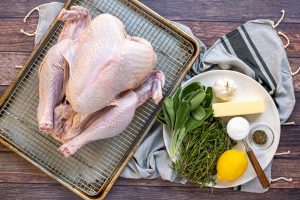
Once the internal diffusion window has finished, place the brined roast on an elevated wire rack over a rimmed baking sheet. Transfer it to the bottom shelf of your refrigerator completely uncovered for the final twelve to twenty-four hours. The dry, moving cold air inside the modern frost-free refrigerator strips residual moisture from the epidermal layers. The skin becomes translucent, taut, and leather-like. When hit by oven heat, this dehydrated skin crisps instantly into a shatteringly brittle, golden shell while the deeply brined meat below stays exceptionally juicy.
Thermal Dynamics and the Final Payoff in the Oven
The ultimate triumph of meat brining mechanics reveals itself when meat encounters intense roasting heat. In an unbrined cut, thermal shock triggers an escalating chain reaction of moisture expulsion. As the meat climbs past 150 degrees Fahrenheit (65 degrees Celsius), unbrined myofibrils curl tightly, and the collagen perimysium contracts with immense mechanical force, crushing the intracellular spaces.
In contrast, the brined roast possesses an entirely different internal architecture. Because salt ions have broken key cross-links and swelled the protein filaments, the internal matrix absorbs heat without executing that fatal squeeze. The dissolved myosin proteins form a soft, hydrophilic gel network that effectively traps boiling moisture, stabilizing juices within the cellular matrix even as temperatures creep upward toward well-done thresholds.
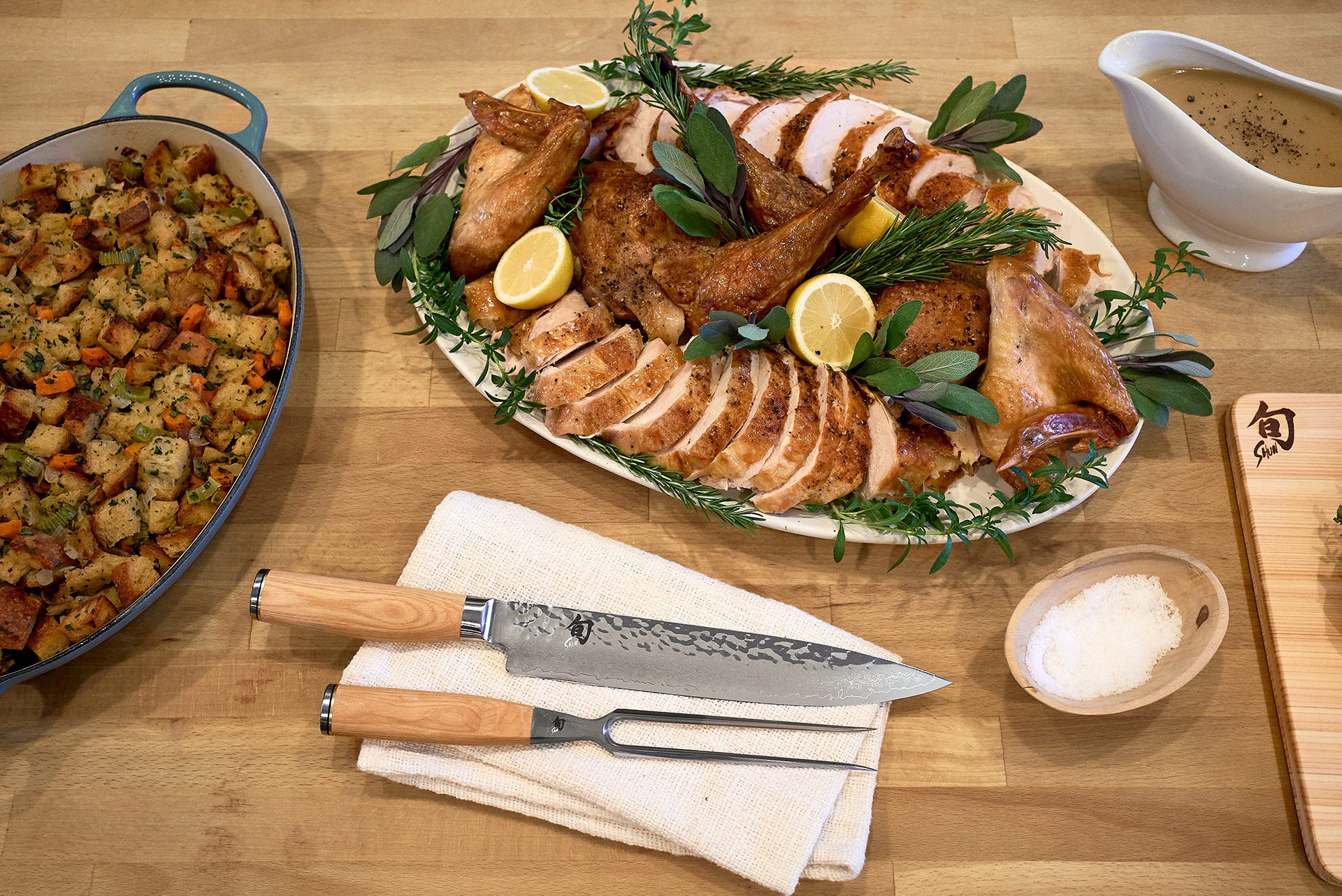
Even resting protocols become far more forgiving. While unbrined roasts must be rested with surgical precision to allow contracted proteins to relax and reabsorb free fluids, brined meats naturally retain their juices far more efficiently under the knife. The result is a roast that defies ordinary kitchen anxiety: deeply seasoned down to the bone, remarkably tender across every grain, and encased in blistered, golden skin. By honoring the physics of muscle and salt, you turn unpredictable roasting from a high-stakes gamble into a repeatable, triumphant certainty.