Meat Braising Mechanics and 4 Proven Rules That Yield Melting Tenderness
Transforming fibrous cuts of meat into spoon-tender culinary triumphs requires an understanding of thermal degradation and connective tissue. Discover how moisture, heat, and time interact inside a closed vessel to create unmatched flavor.
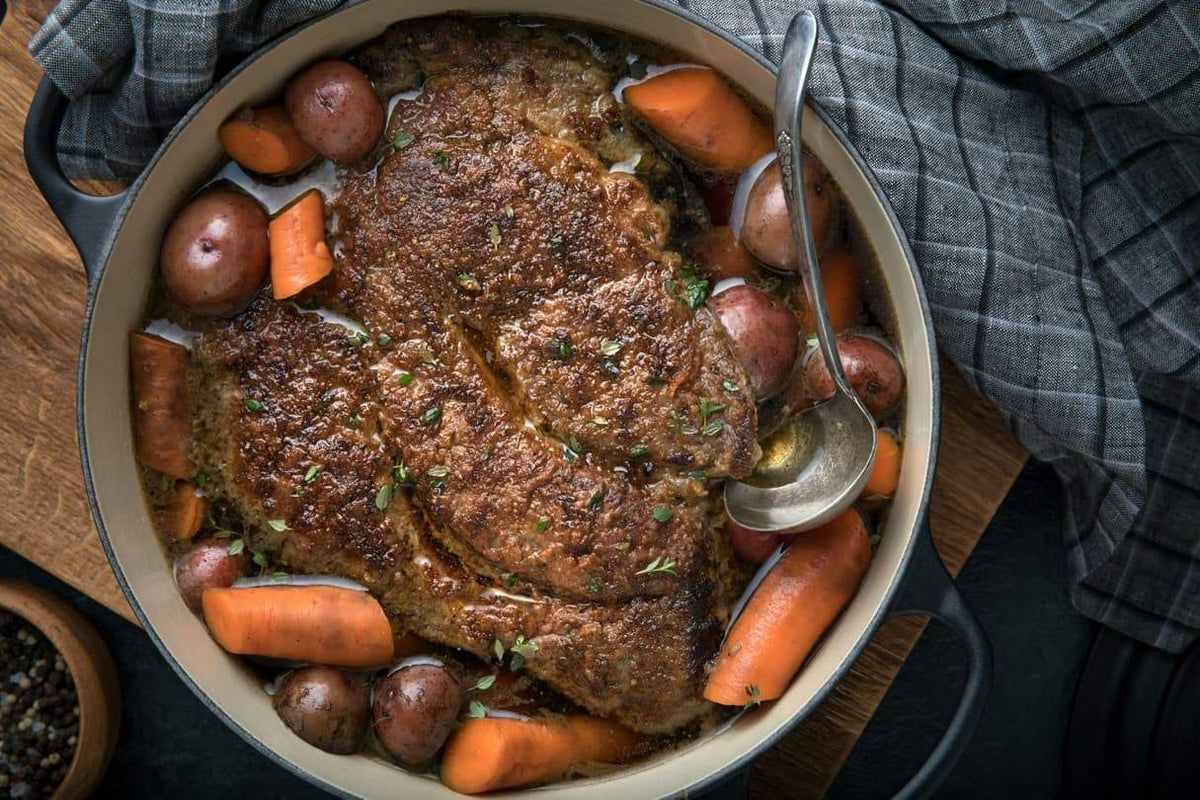
Mastering meat braising mechanics transforms the most stubborn, sinewy cuts into meltingly tender culinary showstoppers through deliberate patience and precise physical chemistry. There is an almost primal satisfaction in sliding a heavy enameled cast-iron lid off a Dutch oven after hours of slow simmering. The intoxicating aroma of caramelized alliums, wine reductions, and roasted bone marrow fills the room, accompanied by the gentle, rhythmic murmur of a low-velocity simmer. Yet many home cooks find themselves disappointed when their finished pot roast turns out stringy, dry, and chewy despite floating in pints of seasoned liquid.
To truly appreciate the process, we must look beyond folk culinary wisdom and examine how meat braising mechanics govern cellular changes under low, sustained heat. Braising is fundamentally a dual-phase cooking technique designed specifically for hard-working muscular cuts loaded with connective tissue. Unlike tenderloin or ribeye, which demand lightning-fast searing to preserve fragile intracellular water, cuts like beef shank, oxtail, pork shoulder, and lamb neck require a hostile-looking environment dismantled over time. The goal is never simply to boil meat until it yields, but rather to orchestrate an intricate biochemical conversion that trades moisture for luscious gelatin.
The Molecular Transformation of Collagen into Gelatin
Muscles that bear the animal’s weight are packed with thick bundles of muscle fibers held together by an unforgiving scaffolding of connective tissue. This structural framework consists largely of collagen, a rigid, rope-like triple helix of amino acid chains that evolved to resist extreme mechanical strain. When you subject collagen to direct, dry heat, it shrinks rapidly at around 140 degrees Fahrenheit (60 degrees Celsius), squeezing intracellular water out of the surrounding muscle fibers like water wrung from an old sponge.
If cooking stops there, the result is leather. However, when you sustain moist heat between 160 and 190 degrees Fahrenheit (71 to 88 degrees Celsius), something extraordinary happens. The hydrogen bonds holding the rigid collagen helices together begin to vibrate and break down. The tightly wound triple helices unravel, dissolving into loose, flexible gelatin molecules that disperse freely into the surrounding cooking liquor.
Gelatin possesses a remarkable physical property. It can hold up to ten times its own weight in water, coating every single contracted muscle fiber in a silken, moisture-locking blanket. While the meat does indeed lose much of its original water content during this prolonged heating cycle, the newly liberated gelatin mimics true juiciness, delivering that luxurious, melt-in-the-mouth sensation that no tender cut cooked rare can ever duplicate. As detailed in Texas A&M Department of Animal Science research on meat tenderness and collagen solubility, the conversion rate of insoluble collagen into soluble gelatin accelerates drastically with stable heat exposure, provided the moisture barrier remains intact.
The Thermodynamics of the Dutch Oven Environment
Understanding meat braising mechanics requires recognizing that a Dutch oven operates as a miniature thermodynamic ecosystem rather than a simple hot water bath. Within this heavy vessel, three distinct modes of heat transfer work simultaneously. Conduction delivers direct energy from the pan bottom into the seared meat. Convection currents circulate through the shallow sea of aromatic braising liquid. Meanwhile, radiant heat emanates downward from the heavy cast-iron lid, constantly basting the exposed upper portion of the roast.
This closed environment creates an evaporative equilibrium. As moisture evaporates from the surface of the braising liquid, it rises toward the relatively cooler lid, condenses, and cascades back down onto the meat. If the pot is sealed too loosely, this precious moisture escapes as steam, desiccating the top layer of the meat and concentrating the liquid prematurely into an acrid, burned sludge. If the lid is hermetically sealed without any temperature control, internal pressure rises, pushing the liquid past its boiling point and agitating the delicate meat fibers into ragged shreds.
A proper braise relies on subtle headspace dynamics. By keeping the cooking vessel inside a steady, low-temperature oven rather than perched over an aggressive direct stovetop flame, you ensure uniform radiant energy penetrates the vessel from all directions. The thermal mass of cast iron acts as an energetic buffer, smoothing out temperature spikes and allowing the delicate chemical transitions to unfold without violent turbulence.
Four Proven Rules That Guarantee Flawless Braised Meat
Achieving consistently sublime results requires leaving nothing to chance. These four practical principles harness thermal and chemical laws to guarantee that tough cuts emerge tender, deeply savory, and structurally intact.
Sear with Ruthless Heat to Build Fond
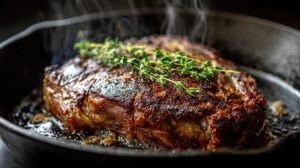
Every master cook who commands meat braising mechanics knows that foundational flavor begins long before any broth touches the pan. Searing does not seal in juices, despite the persistent nineteenth-century kitchen myth. Rather, searing is entirely about the Maillard reaction, a complex cascade of chemical reactions between amino acids and reducing sugars that occurs at temperatures above 300 degrees Fahrenheit (150 degrees Celsius).
Just as Sprint acceleration mechanics and 4 essential rules that build explosive track speed depend on a low, violent drive phase to set up maximum velocity, an exceptional braise requires a decisive, high-heat initial sear to build the structural foundation of the pan fond. Pat the surface of the meat bone-dry with paper towels before it touches hot fat. Any surface water present will flash into steam, limiting the pan temperature to 212 degrees Fahrenheit and turning the meat a dull, boiled grey instead of building a mahogany crust. Take your time, browning each side deeply in a shimmering layer of high-smoke-point oil, and celebrate the glazed fond accumulating at the base of the pot.
Restrict Liquid Levels to Preserve Complex Texture
One of the most widespread kitchen errors is drowning the meat in liquid. Braising is fundamentally not boiling, poaching, or stewing. If you submerge your roast entirely beneath broth and wine, you deprive the meat of radiant convective roasting.
The ideal liquid level sits roughly one-third to one-half of the way up the side of the meat. This deliberate boundary creates two distinct cooking zones within a single vessel. The submerged half gently extracts collagen and absorbs aromatics through moist convection. Meanwhile, the unsubmerged crown absorbs radiant heat, allowing surface sugars to caramelize repeatedly as condensation washes over the meat. Turning the cut halfway through cooking ensures both sides enjoy equal exposure to these dual culinary microclimates.
Regulate the Gentle Simmer Below Boiling Point
Violent agitation is the sworn enemy of tender braised meat. If your braising liquor is actively rolling and boiling at 212 degrees Fahrenheit (100 degrees Celsius), the muscle proteins contract violently into tight, dehydrated knots faster than collagen can comfortably dissolve. The result is dry, stringy meat that shreds into sawdust upon chewing.
Maintain an oven ambient temperature between 275 and 300 degrees Fahrenheit (135 to 150 degrees Celsius). Inside the pot, the liquid should exhibit nothing more than a lazy, occasional bubble breaking the surface, hovering reliably around 180 to 195 degrees Fahrenheit (82 to 90 degrees Celsius). This gentle thermal rhythm gives actin and myosin proteins time to relax while collagen slowly unspools without thermal shock.
Rest the Finished Cut Inside Its Cooling Liquor
Here lies one of the most overlooked realities of meat braising mechanics is that cooking softens the meat, but cooling rehydrates it. When the roast is fork-tender, pulling it immediately out of the steaming pot into open air is a critical mistake. Exposed to room air, moisture flashes off the surface as steam, leaving the exterior parched.
Instead, pull the vessel from the oven and allow the meat to cool down resting inside the braising liquid for at least forty-five minutes, or ideally overnight in the refrigerator. As the muscle fibers cool, their internal pressure drops, functioning like microscopic sponges that draw the rich, gelatin-saturated cooking liquor straight back into the core of the cut. An overnight rest also allows the rendered animal fat to solidify on the surface, making it effortless to lift off cleanly before reheating.
Common Texture Pitfalls and How to Diagnose Them
When cooks misunderstand meat braising mechanics, they often produce beef that is simultaneously swimming in sauce yet chalky and dry to chew. This frustrating paradox almost always traces back to excessive cooking temperature. Boiling meat drives moisture out far faster than gelatin can replace it. If the meat is tough and resists the probe of a fork, it simply needs more time for collagen breakdown. If it falls apart instantly into dry, stringy cords, the pot ran too hot for too long.
Another common misstep involves dumping aromatics into the vessel at the very beginning of a four-hour braise. Delicate vegetables like carrots, celery, and shallots disintegrate into mush if subjected to prolonged heat. For an immaculate presentation and vibrant taste profile, use a coarse mirepoix during the initial braising phase strictly to build the aromatic profile, then strain the spent solids out and introduce freshly cut, glazed vegetables during the final thirty minutes of cooking.
Elevating the Residual Liquor into Liquid Velvet
The cooking liquid remaining in your Dutch oven is not mere runoff water; it is liquid gold enriched with rendered collagen, aromatic oils, and caramelized fond. Once the meat is resting safely, strain the liquid through a fine-mesh sieve into a wide saucepan. Bring it to a rapid, uncovered boil to drive off excess water and concentrate the flavor profiles.
Because the liquid is already loaded with natural gelatin from the dissolved connective tissue, reduction will naturally yield a glossy, body-rich consistency that coats the back of a spoon without the need for heavy cornstarch or flour slurries. Whisk in a splash of red wine vinegar, lemon juice, or dry sherry to cut through the heavy richness, and finish off the heat with a knob of cold, cubed butter swirled vigorously into the sauce to create a brilliant, lustrous sheen.
Ultimately, respecting meat braising mechanics turns everyday cooking into an intuitive, deeply rewarding craft that bridges rigorous physics with soulful hospitality. By honoring the structural limits of tough cuts, balancing radiant heat with controlled moisture, and allowing resting time to restore equilibrium, you master the ancient art of culinary transformation.