Jaylen Waddle Faces 3 Costly Realities in Denver Disjointed Offense
Denver’s marquee offseason investment has run into a statistical wall through five games. Here is the operational breakdown behind Jaylen Waddle and his puzzling offensive stall.
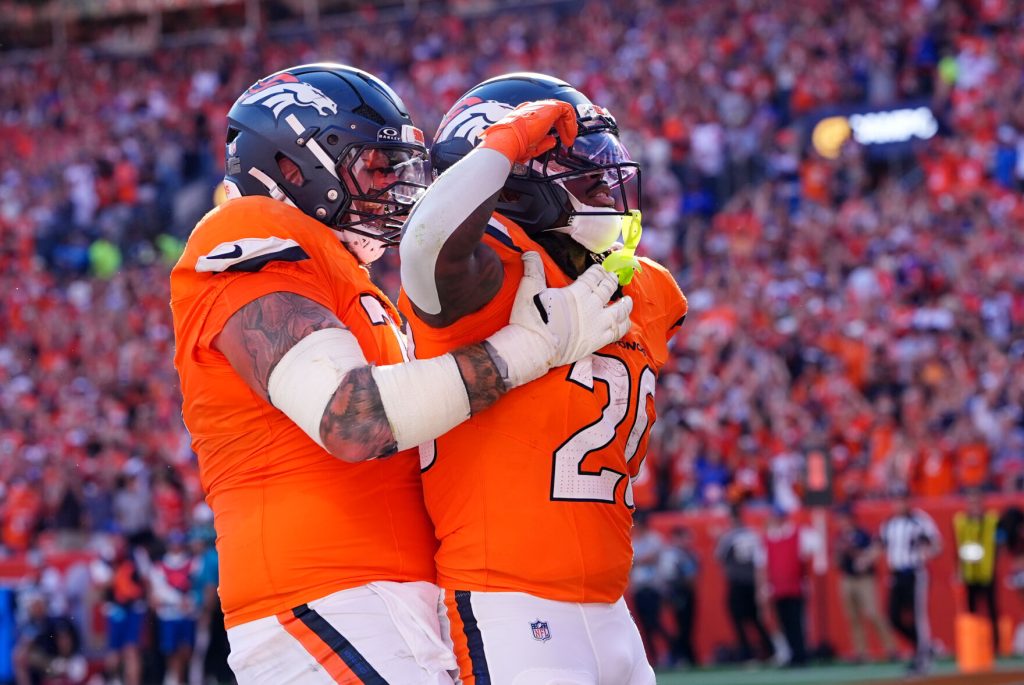
Denver Broncos running back Jonah Coleman (20) is congratulated by Ben Powers after Coleman scored a touchdown against the Jacksonville Jaguars in the second half of an NFL football game in Denver, Sunday, Sept. 20, 2026. (AP Photo/David Zalubowski)
The sudden offensive stall surrounding Jaylen Waddle has become one of the most polarizing storylines across the professional football landscape this autumn. Brought into Denver as a marquee offseason acquisition designed to transform a sluggish passing attack into a high-octane machine, the dynamic receiver finds himself mired in an agonizing statistical desert. The expectations accompanying his arrival were astronomical, rooted in his track record as one of the fastest and most elusive open-field playmakers in recent league history. Yet five weeks into the 2026 campaign, the reality on the gridiron looks starkly disconnected from the front office’s pristine vision.
Fans who envisioned explosive deep completions down the seams and blistering yards after the catch have instead watched a stagnant scheme sputtering at the line of scrimmage. Across national sports media and fantasy analytics circles, the conversation has pivoted from early optimism to genuine alarm. The issue is no longer a temporary timing hiccup between a quarterback and his primary weapon. It is an operational breakdown that threatens to define Denver’s season unless drastic schematic corrections take place immediately.
An Expensive Investment Running in Place
When Denver executed the blockbuster move to land their new pass-catcher, the decision was heralded as the final puzzle piece for an ascending roster. Front offices rarely commit significant assets unless they intend to feature a player heavily within their structural blueprint. Analysts widely projected that shifting into a primary role would elevate the dynamic athlete toward career-best target volume. Instead, the opening month of football has produced a jarring paradox where Denver secured Jaylen Waddle as their premier offseason acquisition only to watch his deployment shrink into predictable perimeters and contested traffic.
According to investigative coverage from ESPN, the team’s massive offseason bet is off to a painfully slow start. Rather than serving as the engine of a balanced attack, the wideout has been largely neutralized by opposing defensive coordinators who recognize Denver’s inability to exploit intermediate zones. Defensive backs are routinely pressing at the line, daring Denver to beat them over the top, yet the necessary protection and timing simply have not materialized. This friction highlights how fragile offensive ecosystems can be when the underlying infrastructure fails to support individual brilliance.
Dissecting the Stagnant 204 Yard Reality
The numbers through five weeks tell an undeniable story of tactical failure. As reported by ESPN, Denver’s prized target has accumulated just 204 receiving yards across five games, an output that averages barely 40 yards per contest. For an athlete capable of ripping off 60-yard scores on simple slant patterns, totaling 204 yards across more than 300 minutes of competitive football represents a baffling ceiling cap. Opponents have not even needed to deploy exotic double teams to achieve this containment. They have simply choked off throwing lanes and let Denver’s erratic execution do the rest.
The frustration among teammates and analysts is visible on every series. Film breakdowns reveal repeated instances of broken progressions, late releases from the pocket, and throws sailed out of bounds on third downs. While public discourse often targets individual effort when star numbers plummet, the game tape points directly toward systemic incoherence. Much like the invisible synchronization required in audio production, where specialists dissect Foley sound mechanics and 4 proven techniques that bring cinematic worlds alive through precise orchestration, an NFL passing tree demands flawless acoustic harmony. When the quarterback, offensive line, and play-caller fall out of rhythm, the entire performance collapses into jarring static.
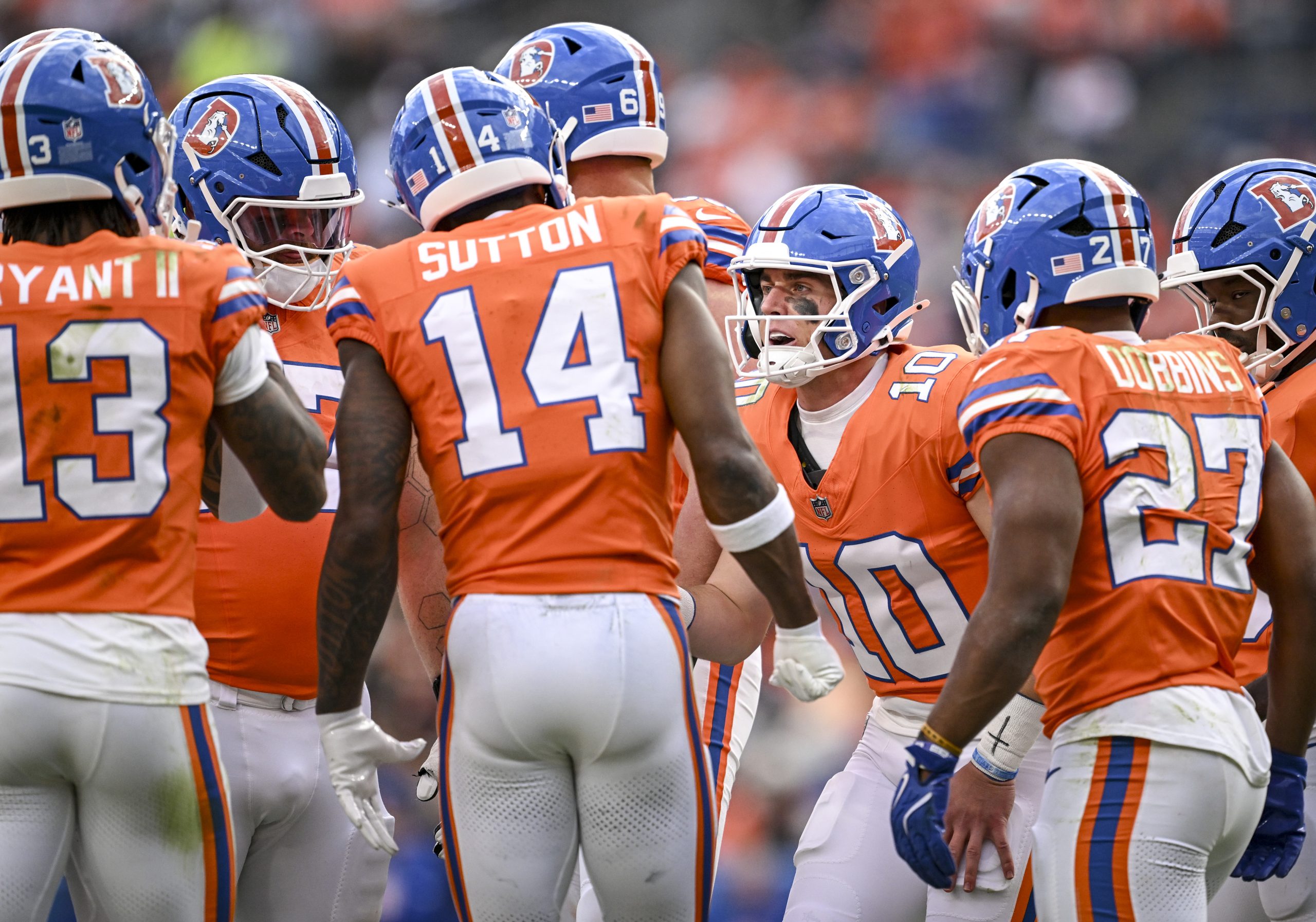
The statistical stagnation has also triggered a ripple effect across Denver’s entire sideline. With opposing safeties creeping into the box without fear of getting burned deep, the rushing lanes have narrowed, forcing the offense into recurring third-and-long situations. In those predictable passing downs, pressure arrives quickly, leaving Jaylen Waddle with an uncharacteristic 204 receiving yards across five games while defensive coordinators smile through their headset adjustments.
Three Critical Drivers Behind the Systemic Collapse
Understanding why an elite talent appears handcuffed requires analyzing multiple layers of failure across play design, execution, and tactical decision-making.
Perimeter Isolation and Broken Route Concepts
A detailed technical review from Yahoo Sports underlines that the struggles stem directly from Denver’s disjointed offense rather than individual regression. Modern NFL offenses create explosive chunk gains by putting their best route runners in pre-snap motion, stacking alignments, and creating mismatches against linebackers and nickel corners. Denver has done the opposite. By frequently lining up static on the boundary against physical cornerbacks, Denver’s disjointed offensive system has effectively stranded Jaylen Waddle on low-percentage route concepts that take too long to develop behind an inconsistent pass-blocking unit.
When route trees are predictable, defensive coordinators can instruct boundary cornerbacks to maintain outside leverage and funnels all safety help toward hash marks. This alignment takes away the receiver’s signature inside cuts and intermediate crossing patterns. The lack of motion or creative bunch sets means that every yard earned requires beat-your-man separation under tight physical coverage with minimal room for error.
The Disjointed Passing Rhythm Gripping Denver
Football passing games depend entirely on the delicate marriage of quarterback footwork and receiver stem breaks. If a quarterback hits his back foot on a five-step drop, the ball must come out before the receiver enters his break. In Denver, that internal clock is completely fractured. Quarterback hesitancy, combined with pocket collapses off the edge, has led to second-reaction throws rather than anticipatory strikes.
Yahoo Sports emphasized that the entire offensive apparatus cannot get anything to function smoothly, transforming standard drop-back concepts into chaotic survival drills. When passes arrive half a second late, defensive backs have already closed the recovery cushion, turning routine completions into punishing collisions or broken-up passes. This fundamental breakdown in timing strips away the yards-after-catch potential that made the receiver one of the most terrifying weapons in football.
Week 6 Sell Pressure from National Fantasy Analysts
The collapse has resonated nowhere more intensely than the fantasy football landscape, where statistical production dictates value above all else. In their Week 6 evaluation, NBC Sports fantasy analyst Alfredo Brown issued a direct verdict for managers looking to salvage their rosters. Brown formally advocated selling high-profile underperformers before values crater completely, highlighting an aggressive pivot to buy Bhayshul Tuten while actively advising fantasy managers to sell the struggling receiver.
The rationale behind the recommendation is straightforward. With five full weeks of negative data on tape, banking on an immediate turnaround represents an unacceptable risk for competitive fantasy rosters. When an offensive coaching staff displays persistent unwillingness or inability to manufacture touches for its best athlete, holding out hope becomes a losing strategy, prompting analysts like Alfredo Brown at NBC Sports to formally urge managers to sell Jaylen Waddle before his market capitalization drops even further.
Evaluating the High Stakes Lineup Paradox
For millions of fantasy players who drafted the star receiver in early rounds, benching or trading him feels counterintuitive. Sitting elite draft capital goes against every traditional instinct of fantasy football management. Yet as FantasyPros documented in their Week 6 Start and Sit wide receiver lineup advice, these start-or-sit decisions have grown excruciating precisely because the name brand clashes violently with weekly box scores.
Fantasy managers are left agonizing over whether benching a former superstar means watching him erupt on their bench or whether starting him guarantees another miserable four-point outing. Simultaneously, the Fantasy Footballers Podcast highlighted Week 6 matchups to consider, emphasizing that matchups against disciplined coverage units make volatile assets almost impossible to trust with confidence. The consensus across high-stakes leagues is shifting rapidly toward pragmatism. Name recognition does not score points, and evaluating whether Jaylen Waddle can reverse course or remains a lineup liability has become the defining dilemma of mid-season roster management.
Trade negotiations across competitive platforms reflect this uncertainty. Savvy managers attempting to buy low are offering bench depth or speculative waiver adds, while frustrated owners are debating whether accepting fifty cents on the dollar is preferable to riding the roller coaster to zero. The leverage rests entirely with the skeptics until Denver demonstrates that its offensive philosophy can adapt.
Restructuring the Passing Tree to Avert Season Disaster
The path forward for Denver demands structural humility from the coaching staff. Continuing to run long-developing perimeter concepts while the pass protection leaks will only produce more stalled drives and public frustration. If the offensive staff intends to rescue its investment, the playbook must incorporate high-percentage touches such as wide receiver screens, quick jet sweeps, and drag routes across the middle of the field where speed can punish over-aggressive pursuit angles.
Modern NFL play-callers regularly engineer touches for their premier playmakers, treating their involvement as a fundamental requirement rather than an afterthought. If Denver adopts this approach, the passing efficiency metrics will naturally rebound, opening up the deep play-action shots that have been conspicuously absent through October. The athletic talent has not vanished, but the schematic framework must evolve to unleash it.
Week 6 looms as a watershed moment for both Denver’s locker room and the broader football community watching this saga unfold. The coaching staff faces an unavoidable test of whether Denver can salvage its scheme before Jaylen Waddle spends the remainder of the 2026 season trapped inside an ineffective offensive construct. Until Denver proves it can orchestrate a coherent aerial game plan, the scrutiny will only intensify with every empty drive and missed opportunity.