Golf swing transition mechanics and 4 proven rules that create effortless ball striking
Discover how the kinetic sequence and ground reaction forces govern elite directional change in the downswing. Learn four foundational principles to build repeatable, effortless compression.
Mastering golf swing transition mechanics separates frustrated amateurs who heave their shoulders from elite ball strikers who compress the ball with deceptive, effortless ease. That split-second inflection point where the backswing concludes and the downswing initiates governs everything that follows. When executed properly, this micro-window harnesses the body’s kinetic chain, creates dynamic lag, and drops the club onto a shallow, powerful delivery path without active steering.
Most golfers assume that clubhead speed is born out of ferocious muscle contraction during the initial drop from the top. In reality, violent muscular effort initiated by the arms or upper torso acts as a primary speed killer. Directional reversal is not a violent snatch; it is an elastic stretching event rooted in ground reaction forces and rotational sequencing. By unpacking the underlying physics, you can transform a chaotic, steep over-the-top swipe into an automatic whip of pure kinetic energy.
The Physics of Directional Change in the Elite Swing
When high-speed 3D motion capture cameras inspect golf swing transition mechanics, they reveal that directional change is never a synchronized full-body pause. There is no single moment where the entire body freezes before reversing direction. Instead, elite ball strikers operate under a principle called continuous kinematic sequencing, where distinct segments of the body reverse direction at staggered intervals.
Long before the clubhead reaches the pinnacle of its backswing journey, the lower body has already anchored into the turf and initiated its lateral and rotational unwind toward the target. This phenomenon creates an overlapping sequence known as bidirectional movement. While the clubshaft, hands, and shoulders are still winding backward under momentum, the pelvis is actively re-centering and shifting pressure onto the lead foot.
This opposing directional pull loads the torso muscles like a drawn archery bow. According to a biomechanical analysis published by the National Center for Biotechnology Information, peak pelvic rotational acceleration must precede peak thoracic acceleration, which subsequently precedes peak arm and clubhead speed. This proximal-to-distal energy transfer relies on the stretch-shortening cycle of the core musculature. If you attempt to start the downswing as one monolithic unit, this elastic loading is destroyed instantly.
The Destructive Impulse of Misunderstood Downswing Initiation
The most destructive breakdown in golf swing transition mechanics happens when a player attempts to generate speed using the hands, arms, and upper torso first. Driven by the primal instinct to hit the ball sitting on the turf, the brain instructs the dominant muscles of the chest, shoulders, and trail arm to fire immediately from the top of the swing. The outcome is the infamous casting motion or over-the-top delivery.
When the trail shoulder pitches outward and forward early, the clubhead is thrown outside the optimal swing plane. The club unhinges its accumulated wrist angles prematurely, dumping energy into the empty air thirty inches before impact. By the time the clubface reaches the ball, it has exhausted its acceleration phase and is actively decelerating, resulting in weak slices, heavy chunks, or thin mishits.
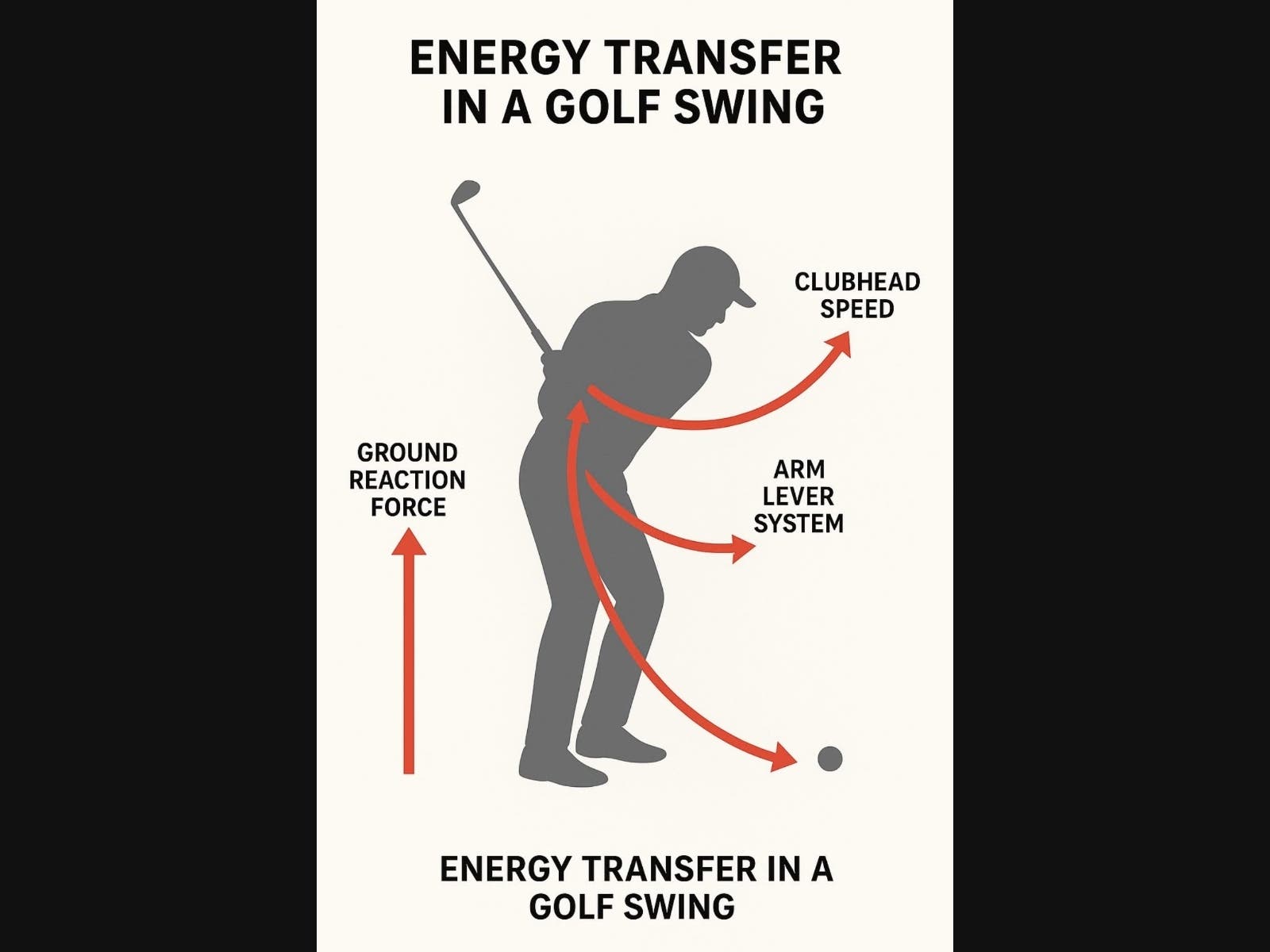
Just as understanding curveball spin mechanics and 4 proven rules that unlock unhittable pitch movement demonstrates how rotational torque generates deceptive trajectories through aerodynamic Magnus force, elite golf relies on precise rotational decoupling to whip the clubhead through impact. Power in the swing cannot be created through raw arm strength. It is an emergent property of segment deceleration, where the hips brake to transfer momentum into the torso, which then brakes to slingshot the arms, wrists, and clubhead through the strike.
Four Proven Principles That Govern Perfect Transition Mechanics
Deconstructing world-class golf swing transition mechanics highlights how athletic sequencing relies on an unyielding chain of kinetic events. These four core rules establish the foundational physical movements required to convert backswing momentum into devastating downswing velocity.
Establish Ground Pressure Before the Backswing Completes
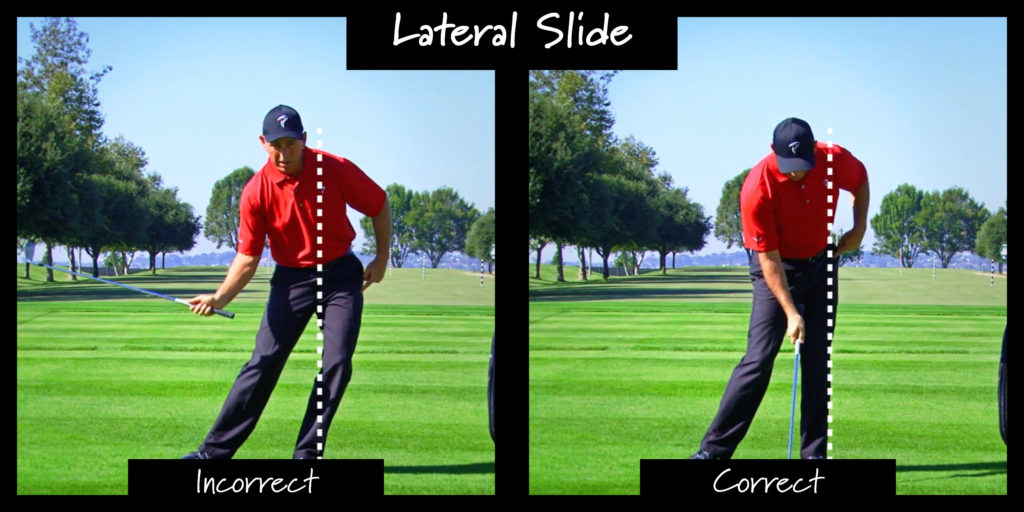
Elite transition begins from the ground up, well before the club reaches the top of the swing. As your lead shoulder completes its rotation under your chin, approximately seventy to eighty percent of your pressure should already begin shifting back toward your lead heel. You must push down into the turf with the lead foot to create ground reaction force. This vertical and horizontal push provides the mechanical leverage necessary to rotate the pelvis open toward the target without sliding laterally past the ball.
Maintain Pelvic and Thoracic Dissociation Through the Turn
True rotational power requires decoupling your pelvis from your ribcage. During the early transition phase, the hips must rotate open while the chest remains closed to the target line. This separation creates what biomechanists call the X-Factor stretch. If the shoulders rotate prematurely along with the hips, the separation collapses, the club gets thrown steep, and the natural whip effect is eliminated. Keeping your back facing the target for a fraction of a second while the pelvis shifts and turns preserves this vital torsional tension.
Allow Gravity and Latissimus Stretch to Drop the Arms
The arms do not need to pull or muscle the club downward. As the lower body shifts and rotates forward, the hands and arms should experience a passive dropping sensation driven by gravity and the stretching of the broad latissimus dorsi muscles. This drop naturally places the club into the delivery slot on an inside path. When the arms fall passively behind the turning torso, the clubhead tracks on a shallow arc that encourages clean, ball-first turf interaction rather than a steep, digging chop.
Preserve Wrist Angle Through Proximal Deceleration
Lag is never achieved by actively holding or freezing the wrists in a cramped, tight position. Trying to hold lag mechanically produces tension that slows down clubhead delivery. Instead, lag is preserved naturally when the proximal segments accelerate ahead of the distal segments. As the hips rotate and suddenly decelerate toward impact, their rotational energy is forced up through the torso and down the arms, pulling the unhinging wrists into an explosive late release. Understanding this physiological chain explains why optimized golf swing transition mechanics feel remarkably effortless to the player while generating blistering velocity at the clubface.
Diagnostic Cues and Drills to Lock in Kinetic Sequencing
Ingraining reliable golf swing transition mechanics requires neuromuscular conditioning rather than reckless full-speed repetitions. The brain struggles to reprogram a motion that occurs in less than two-tenths of a second while you are fixated on ball flight. Diagnostic drills break down the sequencing so your nervous system can register the distinct proprioceptive feelings of pressure transfer and segment lag.
One of the most effective methods is the step-and-swing protocol. Address the ball with your feet close together. As you initiate your backswing, allow your momentum to load your trail side, and just before your hands reach shoulder height, take a deliberate step toward the target with your lead foot. Planting that foot firmly into the turf while the arms are still completing their upward ascent forces your kinetic chain to experience the sensation of bidirectional loading.
Another powerful sensory exercise is the pause-at-the-top progression. Take the club back to the top of your swing, hold your position for two full seconds to eliminate artificial momentum, and initiate the downswing solely by pushing into your lead heel and turning your hips. This drill exposes any subconscious urge to jerk the club downward with the hands. If your upper body fires first from a static stop, you will immediately feel off-balance and disconnected.
Sustaining Repeatable Power Without Sacrificing Control
Many players mistake a correct transition for an aggressive, hurried plunge. They rush the top of their swing, thinking faster tempo equates to higher clubhead speed. Yet observing the greatest ball strikers across generations reveals a remarkable tranquility at the transition point. Their movement looks soft, graceful, and unhurried because the forces are balanced and the structural levers are aligned.
Rushing the transition shortens your backswing turn, restricts hip depth, and forces the arms to take over the downswing as an emergency compensation. When you give the clubhead adequate time to complete its natural arc while the lower body plants and pivots, the club slots itself with minimal manipulation. The strike becomes effortless because your body is no longer fighting against opposing mechanical levers.
Ultimately, sustainable mastery of golf swing transition mechanics protects the lumbar spine from pathological stress while providing devastating consistency. Rather than relying on timing, athletic hand-eye coordination, or violent upper-body lunges, your swing becomes a self-organizing kinetic system. When the sequencing from ground to grip is pure, effortless speed and tour-level compression follow naturally on every swing.