Foley sound mechanics and 4 proven rules that create unforgettable cinematic immersion
Behind every spine-chilling footstep and devastating cinematic punch lies a secret world of everyday props and psychoacoustic mastery. Discover the hidden physics and practical craft that turn mundane physical objects into unforgettable film audio.
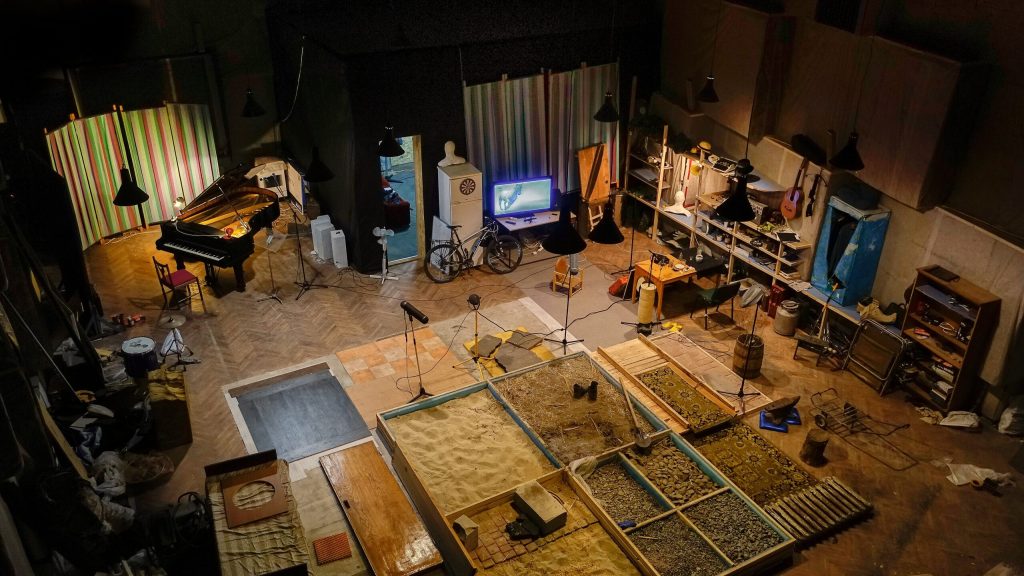
Mastering Foley sound mechanics transforms ordinary cinematic visuals into visceral, physical experiences that hijack the human nervous system before the conscious mind can react. When an audience watches a heavyweight fighter absorb a sickening blow on screen, they assume their ears are hearing the actual collision captured during production. In truth, the production microphone taped to the boom pole captured almost nothing beyond a dull, muddy patter drowned out by ambient stage noise, camera dollies, and distant crew whispers. The bone-splintering impact that reverberates through the theater seats was born days later on a soundstage, created by an artist smashing a chilled head of cabbage with a wooden mallet while stomping inside an iron-filing pit.
Cinema is fundamentally an acoustic illusion. Since the dawn of synchronized talkies in the late 1920s, when pioneer Jack Foley stepped onto Universal’s soundstages to save musical numbers by performing live physical effects in single continuous takes, filmmakers have recognized an undeniable production truth. Microphones on set are engineered solely for dialogue intelligibility. They feature directional pickup patterns designed to isolate human vocal cords while actively rejecting incidental movement. If set recordists boosted their gain to catch the subtle rustle of a silk dress or the scrape of leather shoe leather across parquet flooring, background hiss and ventilation hum would render the speech unusable. Understanding core Foley sound mechanics reveals why location microphones rarely capture the evocative weight of footsteps, rustling silk, or drawing a sword. Everything audiences feel on a visceral level is deliberately rebuilt from scratch, gesture by gesture.
Why pristine movie audio is almost completely manufactured
Film sets are loud, chaotic, and acoustically hostile environments. Massive lighting rigs emit low-frequency electrical hums, camera cooling fans whir continuously, and cavernous soundstages reflect stray flutter echoes across concrete floors. Production sound mixers must prioritize clean vocal frequencies, typically between 85 Hertz and 255 Hertz for fundamentals, while ignoring the rest of the sonic landscape. Consequently, the dialogue track arrives in post-production stripped of tactile context. An actor may slam a heavy brass goblet onto an oak table, but because the set prop was lined with dense foam to keep from ruining the spoken line, the resulting visual is eerily silent.
This vacuum forces audio teams to reconstruct the physical universe inside an isolated Foley suite. Unlike traditional field recording, where sound recordists capture isolated vehicle engines or animal vocalizations out in the wild, Foley is a live theatrical performance synchronized precisely with projected picture. Foley artists do not simply record items; they inhabit the bodies of the actors on screen. They match their breathing, replicate their emotional cadence, and mimic their physical weight distribution. Every garment shift, fingernail tap, and hesitant stride is performed by hand and foot on specialized acoustic stages. Without this dedicated layer of bespoke movement, films feel hollow, synthetic, and emotionally detached.
The psychoacoustic paradox of silver screen reality
A peculiar quirk of human perception governs movie audio. Real life sounds surprisingly disappointing. A genuine bone fracture produces a muffled, wet snap that barely carries across an emergency room. An authentic gunshot in an open field registers as a sharp, dry pop resembling a small firecracker rather than the thunderous, low-end blast moviegoers crave. If filmmakers inserted literal, unaltered acoustic recordings of real events into a dramatic scene, audiences would immediately reject them as amateurish, weak, and fake.
Here lies the foundational brilliance of Foley sound mechanics: our auditory cortex expects an emotional caricature of an action rather than an acoustically literal transcription. The human brain interprets sensory input through contextual expectation and cross-modal reinforcement. When eyes see an armored knight collapse onto gravel, the subconscious demands a dense cacophony of groaning iron, grinding stones, and rattling chainmail. As documented across decades of Audio Engineering Society research on perception thresholds, listeners consistently rate hyper-accentuated tactile sounds as far more authentic than actual unvarnished recordings.
The human brain assembles fragmented sensory inputs into a coherent narrative much like an analytical mind piecing together complex daily challenges; just as studying NYT Connections hints to master puzzling daily grids relies on recognizing subtle patterns across seemingly disparate categories, our auditory system continually scans incoming soundscapes for logical associative bridges. If an artist provides the right acoustic textures, the mind happily accepts the most absurd physical props as genuine cinematic truth.

Mastering the discipline through 4 proven rules of acoustic illusion
When veteran sound designers step onto custom pit floors, they obey four classic Foley sound mechanics designed to trick the human ear into absolute belief. These principles separate clumsy noise generation from world-class storytelling.
Layer texture before adjusting raw decibel volume
Amateur audio engineers instinctively push faders up when an action feels underwhelming. If a punch lacks punch, they amplify the master track, which only results in harsh distortion and ear fatigue. Master artists build perceived power through harmonic complexity and textural layering rather than sheer volume. A truly devastating physical blow requires at least three independent acoustic components: a sharp high-frequency transient to communicate the initial contact, a textured mid-range crunch to signal structural damage, and a sustained low-frequency resonance to convey mass.
To create a heavy fist striking a jaw, an artist might layer the sharp slap of a wet leather belt against a wooden butcher block, followed immediately by the splintering crack of a stalk of celery, underpinned by the low-end thud of a wet phonebook dropped onto concrete. None of these elements need to play at high decibels. When balanced correctly across distinct frequency bands, the listener’s brain merges them into a single, devastating impact that feels immense without clipping the soundboard.
Synchronize performance micro-movements rather than gross motion
Footsteps are the bread and butter of daily Foley work, yet they remain the most difficult discipline to master. A novice watches the actor’s feet and attempts to stomp whenever a heel strikes the floor. The result is invariably stiff, wooden, and detached from the narrative. Human locomotion is not a sequence of isolated impacts; it is a fluid shift of skeletal weight, fabric friction, and postural intent.
Elite performers watch the actor’s hips, shoulders, and spine. A character carrying deep grief moves with heavy, dragging heels and lingering toe drag. An anxious character walks primarily on their balls and toes, shifting weight quickly with minimal heel pressure. Furthermore, a realistic footstep sound contains multiple micro-events: the quiet brush of pant legs rubbing together, the subtle creak of shoe leather bending, the initial heel contact, the rolling impact of the sole, and the gritty scuff of the toe push-off. Capturing these micro-movements transforms a generic walking effect into an intimate window into the character’s psyche.
Exploit unexpected material physics over literal sound sources
One of the earliest lessons on a Foley stage is that the literal object shown on camera almost never creates the best sound for that object. Metal swords pulled from leather scabbards in historical epics do not sing with that iconic, shimmering metallic screech in the real world. In reality, steel slides against oiled leather with a dull, anti-climactic friction rub. Foley artists create that thrilling cinematic zing by scraping old rusty shears against a violin bow or sliding a heavy kitchen cleaver along an aluminum ladder rung.
The prop closet of an accomplished artist looks like an eccentric junkyard. To produce the crunch of footsteps traversing deep, sub-zero snow, artists squeeze leather pouches stuffed with cornstarch or rock salt. To replicate the grotesque tearing of alien flesh, they peel apart sticky cantaloupes or twist wet chamois cloths coated with petroleum jelly. The flapping wings of a startled pigeon are born from an old pair of leather gardening gloves whipped rhythmically through the air. By understanding the mechanical physics of vibration and air displacement, artists look past what an object is and focus entirely on what an object can express.
Preserve spatial acoustics within the sterile recording pit
A common mistake in post-production audio is recording every effect directly against a microphone diaphragm in a dead, padded vocal booth, intending to fix the depth later using digital reverb plugins. Digital reverb can simulate reflections, but it cannot recreate how acoustic waveforms naturally disperse through three-dimensional space before reaching a capsule. In modern studio facilities, refined Foley sound mechanics bridge the jarring gap between a close-up camera frame and an expansive cavernous environment.
Artists control depth physically during performance. For a medium shot, the artist stands several feet back from a matched pair of condenser and ribbon microphones, allowing the sound to interact with the reflective surfaces of the Foley room. If the camera captures a wide-angle shot of a lone wanderer walking down an empty hallway, the artist moves across the room toward reflective brick or tile surfaces, adjusting their physical energy to match the optical perspective. Matching acoustic perspective to camera focal length ensures that the sound lives inside the image rather than sitting artificially on top of it.
The hidden cost of digital audio sterility in modern production
The proliferation of digital audio workstations and massive pre-recorded WAV libraries has introduced a serious hazard to modern filmmaking. Editors under crushing deadlines frequently assemble tracks by cutting and pasting canned sound effects from searchable hard drives. A soldier drops an assault rifle, and the editor drops in a standardized gun-drop WAV file. The soldier drops the rifle again two scenes later, and the identical acoustic file plays once more.
Relying purely on drag-and-drop sound libraries strips away the human imperfection that makes traditional Foley sound mechanics feel thrillingly alive. Pre-recorded files lack spontaneous reactive dynamics. They are recorded in isolation, stripped of the specific room reverberation, floorboard flexibility, and temporal rhythm of the scene being cut. When every door closure and footstep is an unvarying, static audio sample, the audience experiences subconscious fatigue. The world feels robotic and simulated. The human ear possesses an astonishing sensitivity to subtle variations in pitch, velocity, and resonance. When two steps sound identical, the subconscious illusion shatters, exposing the cinematic apparatus behind the curtain.
Building an enduring vocabulary of cinematic resonance
Sound operates beneath conscious scrutiny. While viewers actively analyze lighting, acting choices, and costume details, they accept sound effects unquestioningly as ground truth. This asymmetry grants sound artists immense storytelling leverage. By manipulating physical textures, artists can induce panic, spark intense nostalgia, or establish deep physical intimacy without uttering a word of dialogue.
The craft requires an uncommon blend of physical athleticism, acoustic physics, and emotional empathy. It demands that a performer spend grueling twelve-hour days standing in dusty pits filled with gravel, broken glass, and mud, wearing mismatched high heels or work boots, constantly calibrating the pressure of their joints against custom-built surfaces. Ultimately, enduring cinema endures because dedicated Foley sound mechanics bridge the emotional void between two-dimensional light on a screen and the tactile reality of being human. Long after a film’s dialogue fades from memory, the haunting scrape of a closing door or the heavy, mournful crunch of footsteps in gravel remains permanently etched into our collective consciousness.