Foley Sound Design Mechanics Reveal 4 Proven Secrets Behind Cinema Realism
Discover how Foley sound design mechanics bring cinema to life through tactile props, kinetic movement, and acoustic deception. Learn the physics and craft behind the sounds you believe on screen.
Every time an actor steps across crunchy autumn gravel on screen, Foley sound design mechanics quietly fool your brain into believing the physical illusion. When a detective leans back into a weathered leather armchair, pours two fingers of whiskey into a heavy crystal tumbler, or draws a steel blade from a scabbard, virtually none of that acoustic texture originated on the filming set. Movie sets are chaotic, noisy industrial environments dominated by hums from heavy electrical generators, whining camera cooling fans, and crew members whispering in the dark. The clean, tactile reality viewers experience in the cinema is an entirely manufactured illusion built by hand long after the cameras have wrapped.
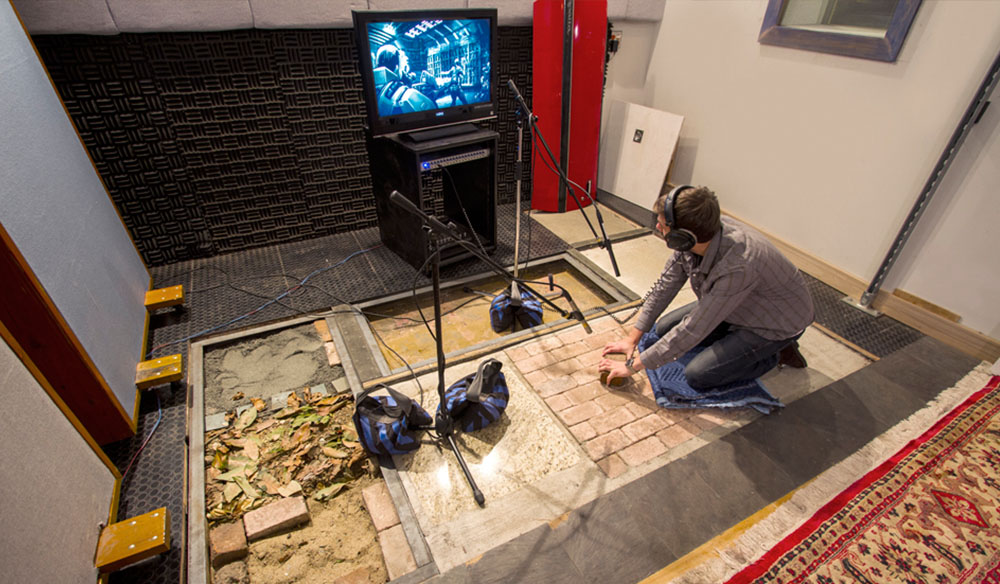
The craft traces its origins to early cinema pioneer Jack Foley, who realized in the late 1920s that silent film actors suddenly felt hollow and ghostlike when sync sound arrived without the subtle physical noise of daily life. Today, what began as a pragmatic fix for sparse dialogue tracks has evolved into a sophisticated discipline combining acoustic physics, material science, and physical acting. Foley artists perform in specialized studios, watching high-definition projections while manipulating bizarre collections of everyday junk to inject physical weight and emotional resonance into cold visual media.
The Hidden Acoustic Deception of Motion Picture Sound
Audiences take cinema audio for granted because human hearing is fundamentally wired to associate sight with corresponding vibration. When your eyes register a heavy iron gate swinging shut, your brain demands an immediate mechanical clang paired with low-frequency resonance. If that auditory confirmation is missing or delayed by even two frames, the suspension of disbelief instantly collapses. The viewer might not consciously realize the sound is absent, but the scene suddenly feels synthetic, cheap, and emotionally detached.
Modern production sound focuses almost exclusively on capturing pristine dialogue. Production sound mixers intentionally position supercardioid boom microphones and miniature lavaliers to isolate the human voice while rejecting environmental noise. If an actor drops a coffee mug during an emotional monologue, the set recordist views that impact not as rich realism, but as an acoustic disaster that risks rendering the line un-editable in post-production. Set audio is actively scrubbed, gated, and filtered to create clean speech stems, leaving behind an eerie, sterile void where physical life ought to be.
Why Production Microphones Strip Away Intimate Physical Action
Understanding modern Foley sound design mechanics begins with realizing that raw set audio is fundamentally incomplete. Highly directional shotgun microphones perform remarkably well when pointing directly at an actor’s mouth from two feet away, but their polar patterns deliberately suppress off-axis frequencies. The delicate brush of wool against denim, the scrape of shoe leather across an oak floor, and the gentle chime of keys in a pocket are systematically eliminated before the audio data even touches a hard drive.
Furthermore, film sets rarely use real materials. Castle walls are constructed from lightweight hollow fiberglass, stone stairs are built out of carpeted plywood to dampen footsteps during filming, and massive medieval doors are often fabricated from lightweight polyurethane foam painted to resemble aged timber. If film mixers relied on production microphones to capture the sound of an actor walking across a faux-stone dungeon, the audience would hear the hollow, springy thud of a residential subfloor. Foley artists replace this acoustic falsehood with the genuine density of real earth, slate, and iron.
Four Physical Pillars That Create Tangible Cinematic Realism
Examining practical Foley sound design mechanics demonstrates how tactile performers engineer hyper-real acoustic worlds out of salvage yard debris and rhythmic body movement. Rather than relying on static digital audio libraries, Foley artists physically perform every single movement in sync with the projected image, injecting subtle micro-variations that software simply cannot replicate.
Prop Materiality and the Art of Sonic Counterfeiting
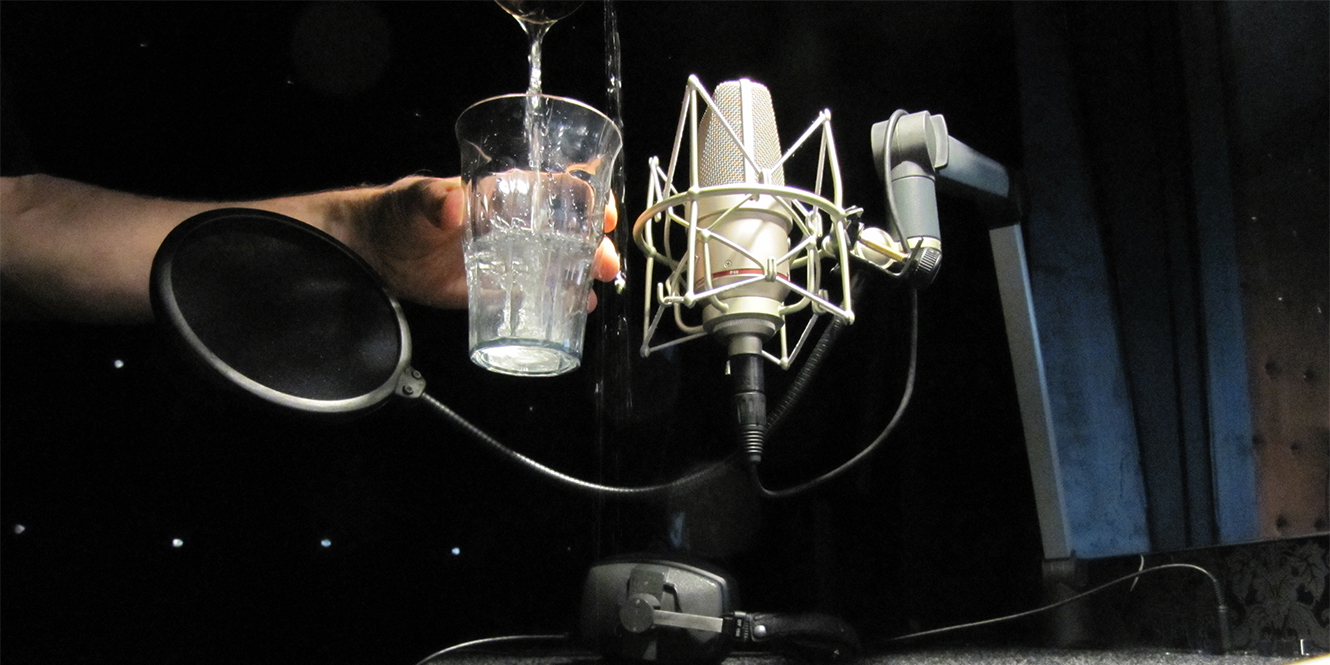
One of the most surprising realities of the Foley stage is that real objects rarely sound like themselves when recorded up close with sensitive studio condenser microphones. If you record an authentic metal sword being drawn from a leather sheath, the resulting audio is dull, flat, and underwhelming. To produce the razor-sharp cinematic whoosh audiences instinctively expect, a Foley artist might scrape a rusted machete against a metal brake caliper while simultaneously sliding a butter knife out of an old leather boot.
Material substitution is an essential engineering skill on the Foley stage. A snapping femur in a brutal fight sequence is rarely simulated with wood, which splinters with a dry, hollow snap. Instead, artists twist stalks of cold celery wrapped around wet heads of romaine lettuce, providing the ideal mixture of fibrous structural fracture and wet tissue resistance. Feathers flapping on a startled pigeon are simulated by shaking heavy leather work gloves. Walking through fresh snow is rendered inside the studio by rhythmically kneading leather pouches packed with cornstarch. The artist does not seek the literal object; they seek the acoustic archetype that resonates with human memory.
The Micro Kinetics of Human Movement and Cadence
Foley is fundamentally an athletic, physical acting performance. Walking footsteps for a character requires deep psychological alignment with the on-screen performance. A ninety-pound child walks with quick, erratic center-of-gravity shifts and light heel strikes, whereas an exhausted, weary veteran moves with heavy heel landings, subtle scuffs, and prolonged contact time. The Foley walker must match every hesitation, stumble, and shift in emotional energy frame by frame.
To execute this, artists maintain extensive collections of footwear. A single Foley studio might house hundreds of pairs of shoes, ranging from rigid military boots and spike high heels to worn-out canvas sneakers with partially detached rubber soles. Each pair produces a distinct attack transient and decay envelope. The artist meticulously conditions the footwear, breaking down stiff soles or shaving tread patterns to prevent unwanted squeaks while emphasizing the character’s specific physical weight and narrative purpose.
Texture Layering and Frequency Separation Around Dialogue
A full Foley recording session is divided into distinct passes, typically separating footsteps, specific prop handling, and the continuous movement of clothing known as the cloth pass. The cloth pass provides the subtle acoustic glue that anchors an actor to the environment. The artist manipulates bolts of fabric, such as vintage tweed, heavy denim, parachute nylon, or raw silk, in sync with the actor’s upper-body gestures.
A hallmark of sophisticated Foley sound design mechanics is knowing how to tuck these transient textures beneath dialogue without cluttering the vocal presence. The human voice sits predominantly between 250 Hz and 4 kHz, the exact frequency zone where human hearing is most sensitive. Skilled Foley artists and their recording engineers select fabrics and strike angles that generate energy in the upper air frequencies above 6 kHz or down in the subtle low-mid register. By avoiding direct frequency masking with the dialogue track, the Foley team ensures that the actor’s speech remains crystal clear while the scene retains its tactile warmth.
Room Acoustics and Proximity Dynamics on the Foley Stage
A premier Foley stage is a triumph of variable acoustic engineering. Built into the floor of the recording space are multiple custom pits, each measuring several feet deep and filled with contrasting geological materials. A single facility typically includes pits dedicated to river gravel, deep dirt, crushed pea gravel, smooth marble, hollow parquet wood, asphalt, and concrete, alongside a deep, insulated water tank fitted with drainage systems.
The spatial relationship between the performer, the prop pit, and the microphone array dictates the depth of the scene. Foley stages rely on dead acoustic environments treated with broad-band absorption to eliminate flutter echoes and unwanted room modes. To place an actor thirty feet down a dark hallway, the engineer does not simply slap an artificial digital reverb onto a close-mic recording. Instead, the Foley artist works further back on the stage, projecting their movements toward boundary-layer pressure zone microphones or distant figure-eight ribbons to capture genuine acoustic air attenuation and natural inverse-square-law decay.
Psychoacoustics and the Brain Demand for Hyper Real Detail
The human auditory processing system does not evaluate sound like a laboratory spectrum analyzer. Human ears evolved as survival instruments designed to extract threat signals and social cues from chaotic background noise. We are exquisitely tuned to micro-transients, the initial milliseconds of an impact that reveal the density, velocity, and hardness of an approaching object. If those onset transients are muted or muffled, the human brain registers the event as distant, harmless, or entirely fake.
Cinema exploits this psychoacoustic bias through strategic exaggeration. When audio post-production teams rush past these psychoacoustic benchmarks under aggressive studio deadlines, the whole narrative infrastructure unravels, an institutional breakdown reminiscent of how hospital system turmoil exposes costly realities reshaping patient care globally when operational stress compromises core standards. The cognitive science underlying Foley sound design mechanics reveals that humans equate emotional intensity with high-frequency transient detail and exaggerated low-frequency weight. In nature, a bare-knuckle punch to the jaw produces a dull, sickening thud with minimal sonic flare. In cinema, that same punch requires a three-layer acoustic stack: a sharp slap for the skin-on-skin transient, an organic wet crunch for cartilage deformation, and an artificial low-end punch to vibrate the listener’s chest cavity. The result is completely untruthful to physics, yet completely honest to human emotion.
Why Tactile Human Performance Survives the Digital Revolution
In an era dominated by generative neural networks, deep sampling libraries, and synthetic acoustic modeling, physical Foley remains one of the few departments in film production that stubbornly resists complete automation. Sound libraries contain tens of thousands of immaculate footsteps and door creaks, but drag-and-drop digital editing consistently fails to match the organic continuity of a human being moving in real time.
Every human step contains micro-jitter: fractional variations in speed, angle, pressure, and rebound that the ear recognizes as living biology. When a digital editor stitches together identical sampled footsteps, the ear immediately detects the repetition, triggering an acoustic equivalent of the uncanny valley. Foley artists adjust their energy on the fly, intuitively reacting to an actor’s sudden hesitation, a slight drag of a heel, or an anxious quiver in a hand holding a porcelain saucer.
Organizations setting professional audio benchmarks, including the Audio Engineering Society technical standards for cinematic audio, continue to study the delicate interaction between physical room acoustics and the complex acoustic radiation patterns of non-traditional sound generators. Even as machine learning tools attempt to automate acoustic post-production, Foley sound design mechanics remain tethered to the nuance of human touch. The human ear possesses millions of years of evolutionary experience decoding physical friction, weight, and material truth. As long as stories depend on the fragile, imperfect reality of human emotion, the illusion of cinema will rely on artists standing in dark, prop-littered rooms, breaking celery, rustling silk, and walking in worn-out shoes. Mastering these timeless Foley sound design mechanics ensures that cinematic storytelling preserves its visceral, handcrafted heartbeat no matter how technology evolves.