Ethel Kennedy and 4 Critical Truths Behind Her Untold Resilience
Decades after national tragedy thrust her into single parenthood, the private world of the Kennedy matriarch comes to light through daughter Kerry Kennedy’s intimate new biography.

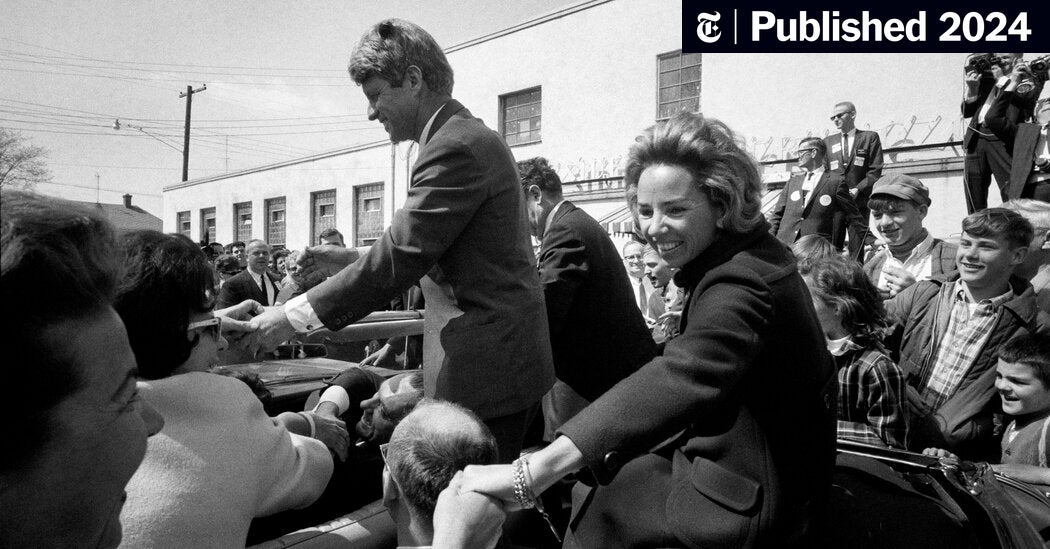
The enduring public memory of Ethel Kennedy has long been defined by immense poise amid moments of shattering national grief and profound historical change. For decades, the global public viewed her primarily through the black-and-white frame of iconic newsreels: a stoic, courageous widow standing beside ten young children, bearing unimaginable sorrow with dignity. Yet, as revealed in her new biographical volume, Ethel Kennedy: The Extraordinary Life and Bold Legacy, author Kerry Kennedy peels back the curated mythology of Camelot to reveal a vibrant, complex woman who refused to let profound loss extinguish her joy.
When asked by The Boston Globe why she chose to author this comprehensive volume now, Kerry Kennedy offered a disarmingly simple, emotional explanation: “Well, I loved her.” That singular sentiment animates a narrative that moves far past traditional political hagiography. Instead of presenting a remote monument to mid-century stoicism, the project brings forth the kinetic reality of a matriarch who navigated private trauma with extraordinary vitality, unyielding Catholic faith, and an infectious sense of fun that transformed Hickory Hill into an oasis of life.
The Unbroken Spirit Behind America’s Most Storied Political Dynasty
To comprehend the scale of her life, one must return to the harrowing midnight hours of June 5, 1968, at the Ambassador Hotel in Los Angeles. Fresh from celebrating a decisive California primary victory that positioned him on a clear path to the presidency, Senator Robert F. Kennedy was gunned down in a hotel kitchen pantry. Standing merely inches away in that crowded, chaotic corridor, his wife witnessed the unthinkable. At the time of the assassination, when Ethel Kennedy was pregnant with her eleventh child, Rory, her world was violently dismantled on international television.
Most individuals would have crumbled under the compounding weight of such public catastrophe. Robert’s assassination followed the shocking murder of her brother-in-law, President John F. Kennedy, five years earlier, alongside the sudden losses of other relatives in private aviation crashes. Yet, as CBS News reported in its appraisal of Kerry Kennedy’s chronicle, the defining characteristic of her mother was not brooding mournfulness, but rather an indomitable appetite for living. She chose defiance over despondency, intentionally cultivating an environment where her children could thrive rather than wither in the shadow of tragedy.
The family residence in McLean, Virginia, became a lively sanctuary populated by rescue animals, intense athletic competitions, visiting civil rights leaders, and endless rounds of political debate. Ethel steered this sprawling brood through grief not by walling off the outside world, but by throwing the doors wide open. She instilled a rigorous expectation that personal pain must be channeled directly into civic responsibility and human rights advocacy, laying the groundwork for what would eventually become the Robert F. Kennedy Human Rights organization.
Inside the Unbreakable Sisterhood with Jacqueline Kennedy Onassis
Popular culture has frequently indulged in manufactured rivalries between the prominent women of the Kennedy orbit, often contrasting the bookish, high-fashion cosmopolitanism of Jackie with the sporty, boisterous energy of Ethel. However, an exclusive excerpt published by Vanity Fair paints a dramatically different picture of the deep dynamic shared between Ethel Kennedy and Jacqueline Kennedy Onassis. Bound together by identical baptisms of fire, the two sisters-in-law possessed an unspoken intimacy that few outsiders could ever fathom.
Both had watched their husbands murdered in public view; both were left to raise fatherless children under the glaring, merciless lens of international media. They shared summers in Hyannis Port, exchanged private jokes that punctured the stuffiness of official Washington society, and provided each other with a safe emotional harbor when public expectations grew suffocating. When life dealt its most brutal blows, the superficial differences in their temperaments dissolved entirely, leaving behind an ironclad mutual devotion.
Perhaps the most poignant demonstration of this lifelong bond occurred in May 1994, during Jackie’s final days as she succumbed to non-Hodgkin’s lymphoma at her Fifth Avenue apartment in Manhattan. As detailed by TODAY.com, Kerry Kennedy recounted a sacred private moment where Ethel Kennedy crawled into bed beside Jackie during the former first lady’s final hours. Whispering words of love, comfort, and decades-old memories, she held her dying sister-in-law close, offering gentle warmth as Jackie drifted from this life. It was a raw, devastatingly tender act that revealed the true depth of their shared history.
4 Critical Insights from Kerry Kennedy on Her Mother’s Living Legacy
Kerry Kennedy’s reflections, shared across recent interviews with Town & Country Magazine and national broadcasters, offer four critical perspectives that dismantle traditional tropes surrounding the famous matriarch, highlighting how personal courage can overcome devastating public loss.
Boundless Resilience in the Face of Shattering Tragedy
Surviving the public murder of a spouse while carrying an unborn child requires a psychological fortitude that borders on the miraculous. In her reflections with Town & Country, Ethel Kennedy refused to allow the household to drown in sorrow, consciously rejecting the role of the tragic, cloistered widow. She understood that her remaining children needed stability, laughter, and structure more than they needed tearful memorials. Her resilience was an active, daily practice: waking up early, organizing school routines, and demonstrating to eleven young minds that life, despite its horrors, remained worth engaging fully.
Fierce Athletics and Vigorous Physical Discipline
Physical movement was never a superficial hobby for the family; it was a fundamental discipline and an emotional release valve. The Kennedy compound at Hyannis Port and the sprawling grounds of Hickory Hill were legendary proving grounds for relentless physical pursuit. Every afternoon brought demanding tennis matches, equestrian jumping, sailing through treacherous Atlantic swells, and rigorous ocean swimming routines. This demanding pursuit of physical endurance mirrored the athletic focus detailed in Freestyle swimming propulsion mechanics and 4 proven keys to build devastating aquatic power, serving as an outlet where physical exhaustion quieted the mental anguish of enduring national trauma.
Deeply Grounded Spiritual Conviction and Public Advocacy
Her Catholic faith was not an ornamental social tradition; it was the bedrock that held her world upright. Ethel attended daily Mass and rooted her moral framework in liberation theology and social justice, decades before such concepts gained mainstream prominence. She marched alongside Cesar Chavez and the United Farm Workers, traveled to conflict zones to advocate for prisoners of conscience, and leveraged her legendary family name to elevate marginalized voices around the globe. For her, spiritual devotion was inherently political: to love God was to fight fiercely for the dignity of the dispossessed.
The Quiet Intimacy Behind the Public Armor
Beneath the athletic swagger and the grand political gatherings lay an intensely private interior life. While the global press captured her flashbulb moments at state dinners, congressional hearings, and international galas, her truest self existed away from the cameras. She was an avid reader of poetry, a loyal friend who penned thousands of handwritten letters of condolence to grieving strangers, and a mother who possessed an uncanny ability to sense when any one of her children was quietly struggling, offering unconditional presence without judgment.
Why the World Still Yearns for the Kennedy Tenacity
In an era marked by deep cynicism and fractured political discourse, the resurgence of interest in Ethel’s story speaks to a widespread cultural longing for moral clarity and genuine courage. Her narrative reminds modern audiences of a period when public service was viewed not merely as a route to social media influence or cable news notoriety, but as a solemn, sacrificial calling worthy of life itself.
Rather than retreating into bitterness after paying such a catastrophic personal toll, she spent over half a century continuing the work that she and Bobby began together. Through every political shift, familial heartache, and societal transformation, she held the Kennedy standard high without ever surrendering her infectious, irrepressible humor. Ultimately, the life and memory of Ethel Kennedy offer something far more profound than mere nostalgia; they provide a timeless masterclass in how human grace, anchored by conviction and familial love, can shine brilliantly through the darkest corridors of history.