Bicycle drafting mechanics reveal 4 proven secrets to conquer punishing cycling fatigue
Riding in another cyclist’s slipstream is not merely taking shelter from the wind; it is a masterclass in applied fluid dynamics. Discover the aerodynamic forces and tactical maneuvers that allow peloton riders to conserve monumental amounts of energy.

At high velocities, air acts less like an empty void and more like thick syrup. Mastering bicycle drafting mechanics transforms this brute physical struggle into an elegant masterclass in fluid physics. When an isolated rider accelerates beyond twenty miles per hour, mechanical rolling friction against the asphalt fades into a secondary concern. Instead, aerodynamic drag steps forward as the supreme adversary, greedily swallowing up to ninety percent of every watt generated by burning leg muscles. Cutting through this invisible fluid wall alone demands staggering metabolic expenditure, but tucking millimeters behind another rider fundamentally alters the equations of motion.
To the untrained spectator, drafting resembles a simple game of hide-and-seek behind a teammate’s torso. In reality, it represents a dynamic negotiation with pressure differentials, chaotic turbulent wakes, and microscopic boundary layers. The slipstream is an invisible aquatic tunnel carved out of the atmosphere. Riders who know how to inhabit this pocket do not just survive punishing breakaways; they flourish while their unshielded rivals slide inexorably into physiological ruin.
The Invisible Atmospheric Wall Facing Every Speed Increase
Air possesses mass, viscosity, and inertia. As a solo cyclist propels forward, their helmet, handlebars, chest, and knees relentlessly collide with millions of stationary gas molecules, violently shoving them aside. This collision produces a zone of high stagnation pressure immediately in front of the rider. Simultaneously, the air sheared across the rider’s flanks cannot seamlessly reconnect behind their back. It detaches in violent, chaotic eddies, leaving behind an expansive low-pressure cavity. This differential between the high forward pressure and the low rearward suction produces aerodynamic pressure drag, an invisible tether pulling the athlete backward.
What makes this atmospheric wall so unforgiving is the velocity-cubed relationship governing aerodynamic power. If you decide to double your speed on a flat roadway, the resistive drag force you encounter quadruples, but the muscular power output required to overcome that resistance spikes eightfold. A rider pushing two hundred watts to cruise smoothly might require four hundred watts to sustain a modest five-mile-per-hour leap forward. Far from being a simple passive shield, effective bicycle drafting mechanics manipulate the way air molecules rejoin, collapsing that backward-pulling low-pressure suction and transforming brutal head winds into manageable drafting corridors.
How Fluid Dynamics Rewrites Energy Expenditure on Two Wheels
For decades, traditional cycling lore held that the trailing rider merely enjoyed an effortless free ride inside an empty air pocket. Modern wind tunnel measurements and computer-modeled fluid simulations tell a far more fascinating tale. Seminal Eindhoven University of Technology cycling aerodynamic simulations demonstrated that aerodynamic drag within dense pelotons drops by up to ninety percent deep in the pack, turning what should be an agonizing sprint into an easy spin.
Furthermore, computational fluid dynamics research shows that bicycle drafting mechanics produce a mutual aerodynamic partnership rather than a one-sided parasite relationship. When a follower tucks closely behind a pacemaker, the follower physically occupies the chaotic low-pressure vortex that would otherwise drag the leader backward. By filling that vacuum, the rear cyclist helps air flow smoothly past both bodies, acting as an aerodynamic tail fairing. This interaction actively reduces the lead cyclist’s drag by two to five percent. Rather than slowing down the front runner, an aligned trailing rider accelerates the efficiency of the entire moving unit.
The 4 Proven Principles Powering Elite Peloton Aerodynamics
Operating safely inside the slipstream requires an intimate appreciation of flow patterns, spatial geometry, and reactive momentum. These four interconnected principles dictate how kinetic efficiency is harvested within close-proximity riding.
Low Pressure Wakes and Millimeter Wheel Spacing
At the core of practical bicycle drafting mechanics lies the turbulent low-pressure cavity trailing directly behind a cyclist’s rear wheel. The protective envelope created by an upright torso is relatively short; boundary layers split around the shoulders and begin collapsing inward almost immediately. To capture maximum wattage savings, the trailing rider must hold their front tire within six to twelve inches of the lead wheel. At this proximity, wind resistance plummets by thirty to forty percent. Extending that gap beyond half a bike length causes turbulent ambient air to rush back into the void, rapidly eroding the aerodynamic umbrella and forcing the chaser back into raw ambient air.
The Hidden Push Effect Benefiting the Front Rider
Fluid dynamics dictates that downstream obstacles influence upstream pressures. When a follower maintains an unbroken cadence mere inches behind a leader, the stagnation pressure generated on the follower’s helmet exerts a gentle forward pressure field into the leader’s wake. This stops the leader’s wake from detaching prematurely. In competitive time trials and track pursuits, elite teams use this counterintuitive mechanism to rotate seamlessly, knowing that a tightly organized train cuts through atmospheric drag with far greater systemic speed than any lone human could ever sustain alone.
Crosswind Echelons and Dynamic Yaw Angle Alignment
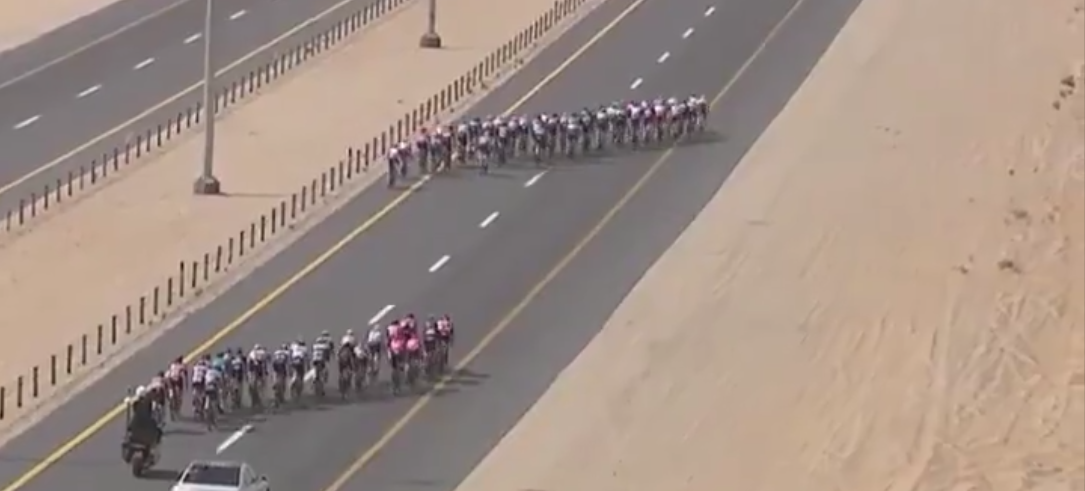
When prevailing winds strike diagonally rather than head-on, bicycle drafting mechanics shift from linear alignment into dynamic angled formations known as echelons. Under a thirty-degree crosswind, the protective wake drifts across the leeward hip of the leading rider rather than streaming straight behind their rear tire. Smart packs immediately form diagonal stair-step lines across the asphalt, with each rider overlapping wheels slightly to nestle inside the diagonal low-pressure shelf. Tactical discipline within an echelon functions much like information control in sensitive media rollouts; just as press embargo mechanics reveal 4 essential rules to prevent costly leaks through strict timing and collective protocol, an echelon survives only when every rider respects their exact rotation window. When a road runs out of physical asphalt, trailing riders in the gutter lose their draft shelter completely and snap off the back in absolute exhaustion.
Rotating Pacelines and Kinetic Momentum Conservation
Maintaining high velocity across hundreds of kilometers requires continuous, rhythmic rotation. In a circular or double paceline, often called a Belgian turnstile, two parallel columns of riders advance at fractional speed differentials. The advancing line works slightly harder against incoming headwinds until the leader smoothly shifts into the retreating line, feathering their power output just enough to slide backward through the group’s protective wake. This constant loop ensures that nobody remains exposed at the front long enough to trigger anaerobic debt, harvesting the massive efficiency of the collective slipstream while maintaining breakneck speeds.
Biomechanical Preservation and Neuromuscular Energy Savings
The primary physiological prize unlocked by refined bicycle drafting mechanics is profound glycogen preservation. Inside the human body, skeletal muscles rely on two fundamental metabolic systems during endurance cycling: aerobic lipid oxidation, which runs smoothly for endless hours, and anaerobic glycogen combustion, which burns rapidly and generates fatiguing byproducts like hydrogen ions and lactate. When a cyclist battles headwinds alone at race pace, they cross their functional threshold power, rapidly burning through finite liver and muscle glycogen stores.
By nesting inside a draft, a rider cruising at thirty miles per hour can reduce their required heart rate by twenty to thirty beats per minute compared to an exposed competitor. Their oxygen consumption plunges, their respiratory exchange ratio stabilizes, and their muscles remain comfortably fueled by slow-burning fatty acids. This explains why tactical stage racers spend hours appearing virtually invisible in the heart of the peloton. They are not merely resting their legs; they are preserving high-octane intramuscular glycogen for the explosive, race-winning acceleration required on the final mountain ascent.
Translating Aerodynamic Science into Safe Group Riding
Ultimately, executing precise bicycle drafting mechanics on open roads requires both cool-headed poise and acute spatial awareness. Moving at rapid speeds with tire treads spinning inches apart introduces zero room for frantic reactions. Novice riders often fall into the trap of staring fixedly at the black rubber tire directly in front of them, an error that causes jerky overcorrections, sudden braking, and dangerous phantom accordion waves throughout the line.
Experienced pack riders look entirely past the front rider’s shoulders, scanning the roadway hundreds of feet ahead to anticipate terrain changes, potholes, and wind shears before they arrive. Speed adjustments in a well-drilled slipstream are executed through soft pedaling or by briefly sitting upright to expose a fraction more chest surface to the air, using aerodynamic air braking rather than grabbing fistfuls of rim or disc brakes. Fluidity is safety. When every member of a paceline trusts the underlying physics and respects the delicate boundaries of the atmospheric slipstream, group riding ceases to be a nerve-wracking gamble and turns into pure kinetic poetry.