Animatronic creature mechanics and 4 proven rules that bring terrifying cinema beasts to life
Behind every legendary cinematic beast lies a furious symphony of aircraft cables, hydraulic valves, and collaborative puppeteers. Here is how master engineers build terrifying monsters that command real physical presence.
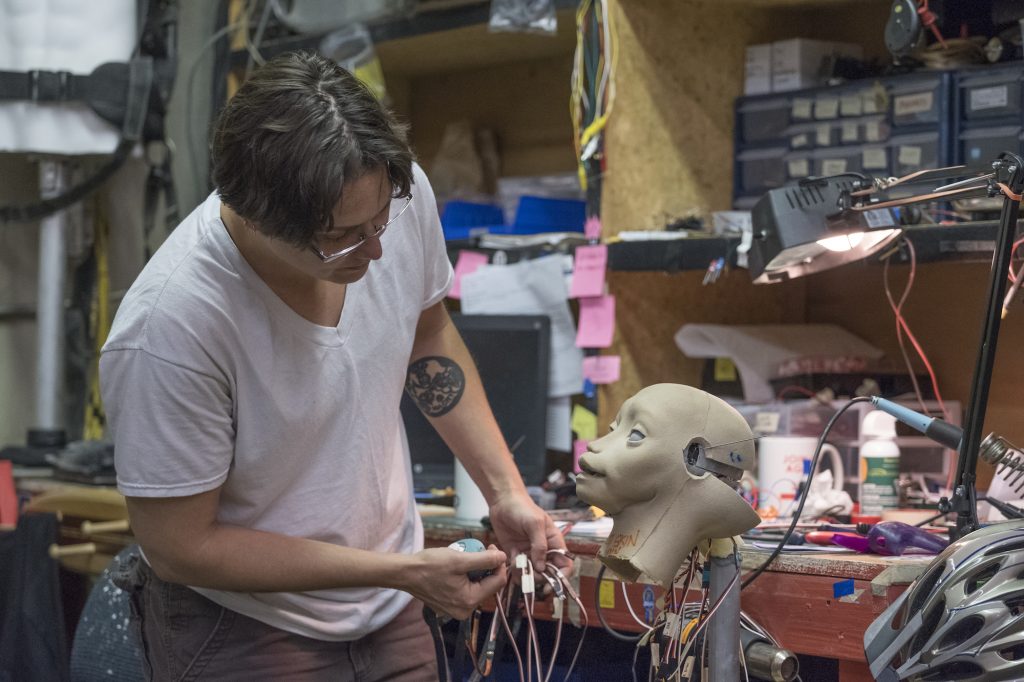
Muppets_0382.RAF
Mastering animatronic creature mechanics requires an intimate collision between industrial engineering, biological anatomy, and sheer performance art under blistering soundstage spotlights. When a nine-foot extraterrestrial queen hisses inches away from an actor’s face, the trembling in that performer’s jaw is rarely fabricated. The dread is real because the threat is occupying physical space. It displaces air, leaks viscous fluid, groans under structural load, and commands immediate respect from every human standing on set.
For decades, naysayers predicted that purely digital imagery would consign practical creature fabrication to cinematic history. Yet audiences and visionary directors routinely experience digital fatigue. Modern moviegoers instantly detect weightless pixels, unconvincing light bounces, and characters that never seem to plant their footsteps into the soil. Practical fabricators understand that monsters feel terrifying only when governed by the relentless laws of mass, friction, and inertia.
The visceral presence of practical engineering over digital pixels
Understanding the sheer complexity of animatronic creature mechanics reveals why practical monstrosities continue to outlive their purely computational counterparts. Digital assets exist in mathematical perfection, which ironically exposes their artificiality. Human eyes are ruthlessly evolved diagnostic tools. We perceive micro-movements, the dampening of heavy limbs, and the microscopic lag between muscle flex and surface skin sliding across bone. When an entirely computer-generated creature screams, our visual cortex often categorizes it as a brilliant drawing rather than an impending physical predator.
A physical monster built in a studio workshop faces the identical natural universe as the actors running from it. Dust motes floating in the air cling to its humid rubber epidermis. Studio tungsten lamps illuminate its teeth with authentic optical refraction, specular highlights, and natural subsurface scattering. When its jaws snap shut, the thud sends physical vibration through the floorboards. The fear produced in that environment ripples directly through the lens and onto the audience.
To build an organism that does not exist in nature, workshop artisans work backwards from evolutionary biology. They draft skeletal blue-prints rooted in vertebrate mechanics, calculating leverage points, center of gravity, and joint limits. Every hydraulic line mirrors an arterial pathway, and every braided steel aircraft cable mimics a tendon anchored to an artificial bone.
The architectural anatomy beneath the artificial skin
At the structural foundation of animatronic creature mechanics lies the endoskeleton, a chassis crafted from aircraft-grade aluminum, high-density plastics, and machined steel. Weight is the eternal enemy. A mechanical skull overloaded with components requires heavier support structures in the neck, which in turn demands massive base actuators that quickly balloon the creature into an unmanageable behemoth. Engineers shave every surplus gram from skeletal struts using waterjet-cut trusses and lightweight carbon fiber layups.
Actuation methods determine how the monster breathes and attacks. Designers select power sources based on required velocity and force. Pneumatics offer lightning-fast, explosive striking speed, perfect for a snake-like lunge or a jaw snap, but they struggle with gentle, nuanced positioning because compressed air cushions and bounces. Hydraulics deliver monumental torque and silky, fluid motions capable of lifting hundreds of pounds of synthetic muscle, yet they require messy fluid lines, continuous high pressure, and heavy safety precautions. Small direct-current servomotors and stepper motors handle fine micro-articulations around the nostrils, eyelids, and lips, where millimeter accuracy sells emotional intent.
Over this metal armature sits the mechanical muscle tissue, comprised of hand-wound Bowden cables routed through flexible nylon housings. These cables pull against return springs to curl snouts, flare gills, or pull back lips in a snarl. As documented throughout the Academy of Motion Picture Arts and Sciences technical archives, legendary workshop teams frequently developed proprietary cable junctions simply to give operators manual feedback on how much physical strain the creature’s synthetic ligaments were absorbing during a take.
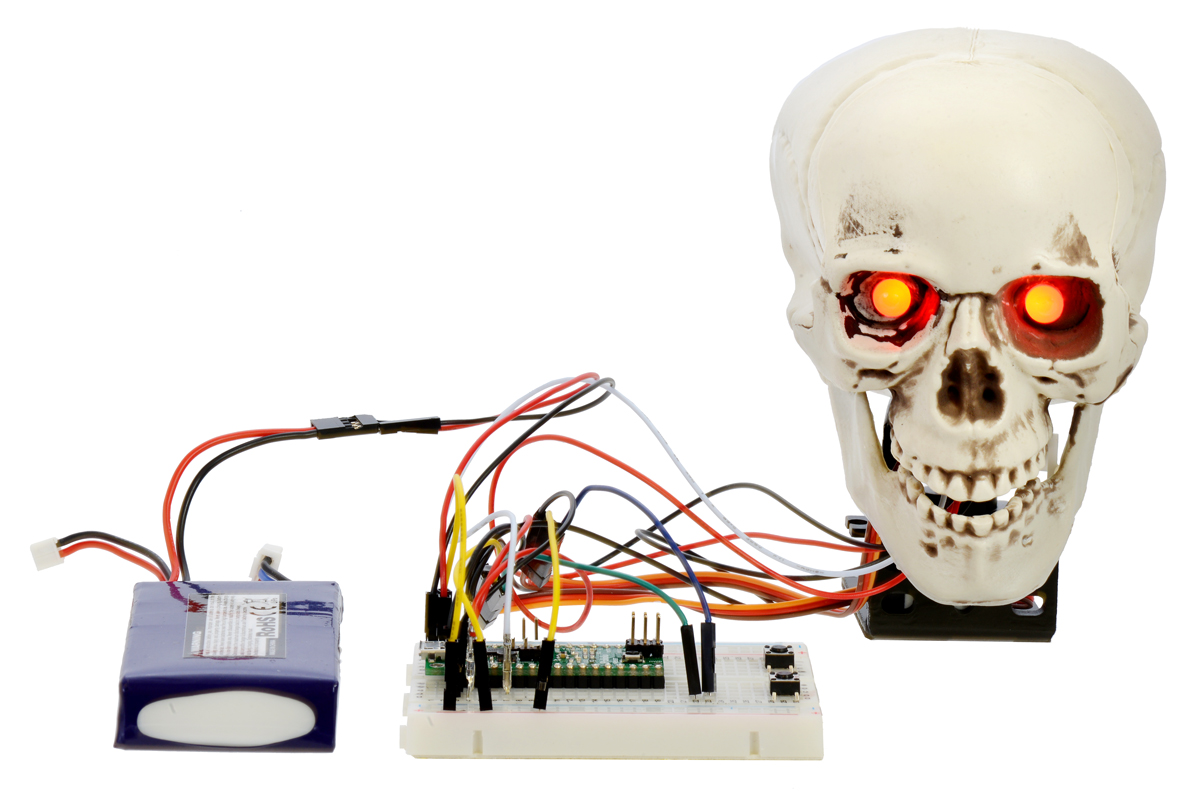
4 proven rules that master builders use to engineer believable monsters
When veteran creature fabricators discuss animatronic creature mechanics on set, they do not talk about technology in isolation. They talk about deception, rhythm, and material behavior. Bringing an artificial abomination to life on camera depends on four battle-tested principles developed over generations of cinema craft.
Anchor motion limits to biological muscle fatigue
Robots move with linear acceleration and mathematical precision, which is precisely why traditional automation looks stiff and robotic. Biological creatures are governed by soft tissue limits, fluid dampening, and muscular resistance. A predatory beast does not stop its head instantly; its neck muscles overshoot slightly, fight the kinetic momentum of the skull, and settle with an organic tremor.
Master animatronics technicians mechanically tune internal joints with elastomeric dampers, progressive return springs, and variable-friction washers. Furthermore, skilled puppeteers purposefully inject human hesitation into the controls. When a beast turns its head, the eyes flick first, followed by the neck twisting, and finally the shoulder girdle compensating for the shift in mass. Mimicking this natural kinetic chain prevents the creature from looking like an amusement park ride.
Synchronize multi-operator puppetry into an instinctive hive mind
Rarely does a single technician operate an entire mechanical beast. Large-scale practical monsters require an ensemble of five to twelve puppeteers working simultaneously through analog joysticks, foot pedals, and telemetry rigs. One person commands jaw snapping and tongue extension, another controls eye convergence and brow raises, two manage neck elevation and lateral tilt, while others drive arm sweeps or lung inflations.
This performance demands ruthless synchronization. If the eye operator glances left while the neck operator turns right, the creature appears confused or mentally fractured. Puppeteers rehearse choreography for days, developing non-verbal rhythmic breathing patterns so their inputs blend seamlessly into a singular conscious creature. Much like waiting for fleeting streaks across the upper atmosphere when the Orionids Meteor Shower Offers 5 Crucial Viewing Secrets for a Breathtaking Night, orchestrating a monstrous performance demands an instinctive grasp of temporal rhythm and environmental patience.
Match silicone skin durometer with mechanical drive tension
Within the high-stakes discipline of animatronic creature mechanics, the interface between the interior metal skeleton and the outer synthetic skin represents the most vulnerable failure point. Early creature work relied heavily on foamed latex rubber, a material loved for its lightweight flexibility but plagued by atmospheric oxidation and rapid tearing under mechanical stress. Today, platinum-cure silicone is the gold standard, offering unmatched translucent depth that catches set illumination exactly like real mammalian or reptilian flesh.
Silicone, however, is exceptionally heavy and possesses zero inherent structural rigidity. If the skin is poured too thick, internal servomotors stall under the dead load, burning out their tiny motor coils. If poured too thin, the skin buckles into unnatural geometric creases rather than supple flesh folds. Craftsmen tailor the Shore hardness rating of the silicone across different bodily zones. They use ultra-soft durometers for the cheeks and eye corners to allow effortless stretching, transitioning to stiffer, fiber-backed silicone across the forehead and snout where skin naturally anchors tightly to bone.
Exploit atmospheric lighting and selective optical framing
A practical monster is never designed to be evaluated under flat, sterile fluorescent bulbs on a laboratory workbench. Creature effects thrive in deep darkness, directional chiaroscuro, heavy atmosphere, and calculated camera distance. Master builders design monsters with exaggerated ridges, deep skin troughs, and pronounced brow bones specifically engineered to catch low-angle rim lighting.
Director and creature shop work hand-in-hand to establish selective focal reveals. A monster should not be presented in full wide-angle view during its opening frames. Audiences shudder when they catch fragmented glimpses: a slime-coated claw wrapping around a doorframe, a steamy nostril exhaling condensation into cold air, or a pair of hyper-reflective pupils adjusting to flashlight glare. The camera lens acts as the monster’s final layer of skin, transforming steel pushrods and pigmented elastomer into an undisputed nightmare.
The eternal durability of tangible cinematic craftsmanship
The enduring legacy of animatronic creature mechanics proves that humanity still longs for the tactile magic of physical performance. Even within state-of-the-art hybrid workflows, directors utilize physical creature builds on set as lighting reference models, spatial guides for actors, and the core medium for tight close-up shots where organic authenticity matters most.
A computer file can be duplicated infinitely with zero friction, but a physical animatronic beast remains an unrepeatable work of mechanical sculpture. It smells of vulcanized rubber, machine lubricant, and sweaty workshop determination. When those steel tendons pull tight and those glass eyes lock onto an actor, everyone on the soundstage forgets the cables running out the back of the carcass. In that electric moment between action and cut, the monster is alive.