Maillard reaction mechanics reveal 4 proven secrets to unlock rich culinary flavor
Unravel the non-enzymatic science of surface browning to transform everyday searing into extraordinary culinary depth. Discover how moisture, heat, and alkalinity govern deliciousness on a molecular level.
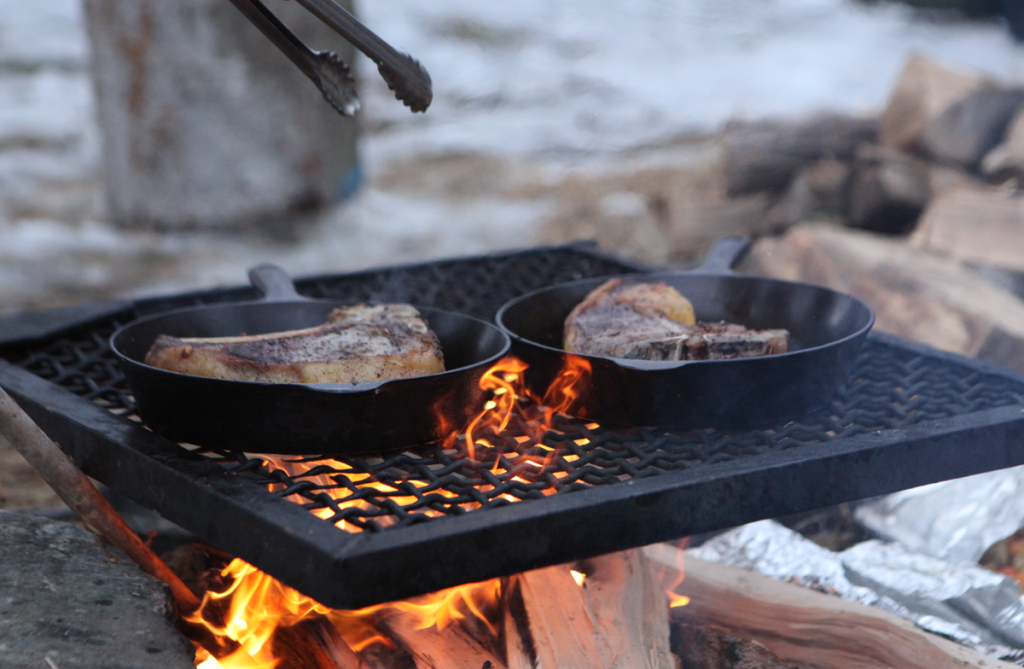
Understanding Maillard reaction mechanics will immediately elevate how you sear meat, roast root vegetables, or bake a crusty loaf of artisanal bread. Drop a thick, marbled ribeye into a smoking cast iron skillet, and the senses instantly register what is happening. The kitchen fills with a deep, roasted aroma while the gray, wet protein transforms into a mahogany crust packed with savory complexity. This familiar kitchen magic is not simple charring or surface burning. It is the result of intricate, non-enzymatic reorganizations first documented by French physician and chemist Louis-Camille Maillard in the early twentieth century.
For home cooks and professional culinary artists alike, browning is often treated as a lucky byproduct of high heat. You turn the dial, wait for smoke, toss in your ingredients, and hope for a golden exterior before the interior overcooks. Leaving browning to chance, however, regularly produces soggy poultry skin, gray stew meat, and bitter, scorched crusts. Stepping behind the line as a culinary scientist means treating the cooking surface as a chemical reactor where heat, moisture, and molecular composition dictate flavor.
The molecular dance behind the brown crust
When you analyze Maillard reaction mechanics at a molecular level, you realize you are witnessing one of the most complex cascades in organic chemistry. The reaction begins when the nucleophilic amino group of an amino acid or peptide attacks the electrophilic carbonyl carbon of an open-chain reducing sugar. This initial condensation produces an unstable compound called an N-substituted glycosylamine, which quickly loses a water molecule to form an iminium ion before rearranging into a Schiff base.
From there, the molecules undergo what chemists classify as Amadori or Heyns rearrangements, depending on whether the starting sugar was an aldose or a ketose. These intermediate structures do not possess much aroma or color on their own, but they are intensely volatile and unstable. As heat continues to pump into the food matrix, these Amadori compounds break down along several divergent pathways. Some dehydrate into dicarbonyl intermediates, while others undergo retro-aldol cleavage into tiny reactive fragments.
As documented in American Chemical Society food chemistry research, the initial condensation between an unprotonated amine and a reducing sugar triggers a cascade of hundreds of distinct intermediate compounds. The true sensory explosion occurs during Strecker degradation, where dicarbonyl intermediates react with additional amino acids. This process decarboxylates the amino acids and generates transaminated aldehydes and aminoketones. These fragments condense into heterocyclic aroma compounds including pyrazines, which provide earthy and roasted notes, thiazoles, which evoke meaty flavors, and furanones, which generate sweet, malty aromas. Eventually, these volatile compounds polymerize into large, complex nitrogenous pigments known as melanoidins, which provide the signature brown color of perfectly roasted coffee, baked bread, and seared steak.
Why caramelization and enzymatic browning are entirely different beasts
Culinary conversations routinely conflate browning reactions, using caramelization as a catch-all term for anything turned golden in a skillet. Conflating these processes leads to significant kitchen errors because each mechanism operates under completely distinct rules, temperatures, and raw ingredients.
Enzymatic browning requires no heat at all. When you slice an apple, score an eggplant, or drop an avocado half on the counter, the cellular walls rupture. This exposes polyphenol oxidase enzymes to atmospheric oxygen, catalyzing the oxidation of phenolic compounds into dark melanin pigments. This enzymatic activity causes produce to turn brown and unappetizing at room temperature without generating roasted, savory flavors.
True caramelization, on the other hand, is pure thermal pyrolysis of carbohydrates. It requires no amino acids or proteins whatsoever. When pure sucrose, glucose, or fructose is heated above roughly 160 degrees Celsius (320 degrees Fahrenheit), the sugar molecules melt and decompose without water. The thermal energy shatters the glycosidic bonds, producing volatile compounds like diacetyl for buttery notes, maltol for toasty sweetness, and furans for nutty aromas. While delicious in confectionery, caramelization cannot yield the savory, savory-sweet, meaty undertones generated when nitrogen-bearing proteins participate in the reaction.
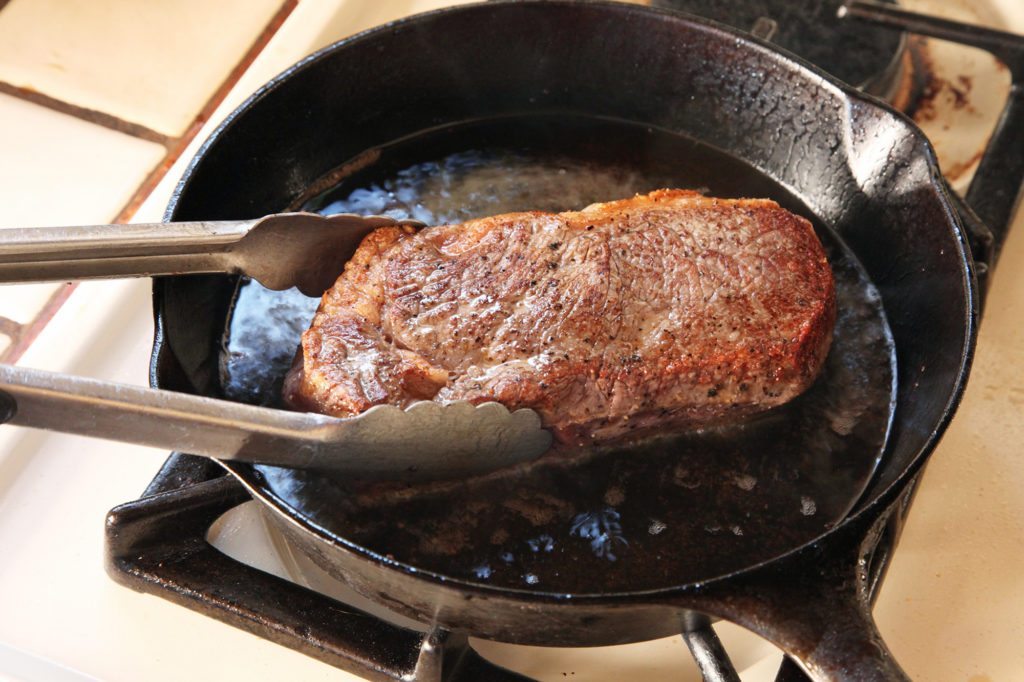
The 4 fundamental pillars controlling Maillard reaction mechanics
Manipulating flavor in a professional kitchen is not about memorizing recipes. It is about controlling reaction kinetics. The 4 fundamental pillars controlling Maillard reaction mechanics allow any cook to dial in color, texture, and aroma on demand.
Surface moisture elimination and the thermal roadblock of water
Water is the absolute enemy of non-enzymatic browning. Under standard atmospheric conditions, liquid water cannot exceed 100 degrees Celsius (212 degrees Fahrenheit). As water transitions from liquid to gas, it absorbs an enormous quantity of energy known as the latent heat of vaporization, requiring approximately 2,260 kilojoules per kilogram. When an un-dried piece of meat hits a hot pan, all the thermal energy radiating from the metal is consumed by boiling away surface moisture rather than accelerating molecular reactions.
The meat effectively steams in its own expelled liquid at 100 degrees Celsius, a temperature far too low to initiate the transformation of amino acids and reducing sugars. True browning kinetics only begin once the local surface moisture has been completely driven off, allowing the surface temperature to climb past 140 degrees Celsius. Drying surfaces thoroughly through salting, refrigeration, or blot-drying shortens this evaporative phase, demonstrating how subtle changes in moisture alter Maillard reaction mechanics on the meat exterior.
The kinetic sweet spot of temperature and heat transfer rate
Browning reactions crawl along at an imperceptible pace at room temperature, which is why aged soy sauce and cured hams develop dark tones over months rather than minutes. In the kitchen, the sweet spot for the reaction sits squarely between 140 degrees Celsius (284 degrees Fahrenheit) and 165 degrees Celsius (330 degrees Fahrenheit). At this thermal range, the kinetic energy of the molecules is sufficient to overcome activation barriers rapidly without torching the food.
Push past 200 degrees Celsius (392 degrees Fahrenheit), and you venture into destructive pyrolysis. At excessive temperatures, the delicate aroma-bearing heterocycles degrade into acrid, carbonaceous soot, and nitrogenous compounds fuse into bitter heterocyclic amines and polycyclic aromatic hydrocarbons. The objective is rapid heat transfer that maintains the surface within the productive kinetic window while preventing the internal tissue from overcooking through thermal conduction.
Alkaline modulation and the catalytic impact of surface pH
The rate of the initial condensation between sugar and amine depends heavily on the protonation state of the amino acid. Under acidic conditions, the amino group picks up an extra hydrogen ion to become protonated (-NH3+). In this positively charged state, the nitrogen atom lacks the free lone pair of electrons required to launch a nucleophilic attack on the carbonyl carbon of the sugar. Acid effectively shuts down browning.
Shift the environment toward an alkaline state, and the amino group sheds its excess proton, leaving an active, unshared electron pair ready to bond. This chemical reality explains why traditional German pretzels are bathed in an alkaline lye solution before baking to produce their deep mahogany sheen and distinctive pretzel aroma. It also explains why modern chefs add minuscule pinches of sodium bicarbonate to sautéed onions, shifting the pH upward to slash cooking times from forty minutes down to ten.
Precursor concentration and reactant density across food matrices
The speed and character of the reaction depend on what starting materials are physically present on the food surface. Non-reducing sugars like sucrose cannot participate in the reaction until they are broken down through thermal acid hydrolysis into glucose and fructose. Meats with higher concentrations of reducing sugars like ribose brown far more rapidly than tissues depleted of glycogen prior to harvest.
Similarly, the specific profile of amino acids dictates the resulting aroma bouquet. Foods rich in cysteine and methionine generate sulfurous, intensely meaty, and roasted flavors. Foods high in proline, such as bread dough, produce unmistakable biscuit and cracker notes. Understanding reactant density allows cooks to deliberately supplement surfaces with specific amino-sugar precursors to engineer targeted flavor profiles.
Common kitchen blunders that extinguish complex flavor development
The most frequent failure in pan-searing is overcrowding the cooking vessel. Every piece of food added to a pan absorbs heat energy and releases moisture as intracellular proteins denature and squeeze out water. Just as information channels must avoid congestion to deliver timely dispatches across continents—an operational reality where wire service distribution mechanics reveal 4 proven systems that feed global newsrooms—a hot skillet requires unimpeded pathways for moisture to vent away from the cooking surface.
When a pan is packed edge-to-edge, the venting water vapor cannot escape into the atmosphere. It condenses against neighboring cold ingredients, pools on the bottom of the skillet, and traps the surface temperature at the boiling point of water. Trapping moisture in a packed skillet instantly stifles the natural progression of Maillard reaction mechanics, leaving you with gray, rubbery meat devoid of depth. Another widespread mistake is fidgeting with the food. As proteins undergo their early bonding phase with the skillet surface, they cling tightly to microscopic crevices in the metal. Forcing the meat off the pan prematurely tears the developing crust. If you allow the reactions to progress undisturbed, the contracting melanoidins and surface dehydration will naturally release the protein cleanly from the cookware.
Practical benchtop techniques to harness maximum savory depth
Translating chemical mechanics into dinner plate reality requires specific tactical habits. The most effective method for accelerating surface browning is dry brining. By salting meat several hours or even a full day ahead and leaving it uncovered on a wire rack inside the refrigerator, you trigger a sequence of physical phenomena. The salt initially draws out moisture via osmosis, dissolves into a concentrated surface brine, and then diffuses back into the muscle tissue, altering protein structures to trap internal water.
Meanwhile, the dry, moving air of the refrigerator evaporates residual exterior moisture, forming a dry, glossy exterior known as a pellicle. When this bone-dry exterior touches a hot pan, there is zero latent heat barrier to overcome. The surface temperature shoots immediately into the reactive zone, forming an intense, savory crust within seconds while keeping the interior juicy and tender.
Cooks can also deliberately introduce dry milk powder to pan sauces, roasted vegetables, or browned butter. Milk powder provides a concentrated payload of lactose and casein proteins, essentially supercharging the precursor pool without adding liquid water. A light dusting on roasted chicken skin or inside a skillet of sautéed mushrooms sparks explosive color and rich, roasted flavor compounds that standard cooking times cannot achieve.
By harnessing deliberate Maillard reaction mechanics in everyday cooking, you step beyond guesswork and step into repeatable culinary mastery. You stop relying on vague visual cues and begin managing the specific thermal and chemical levers that forge extraordinary flavor. Once you master these Maillard reaction mechanics, your instincts at the stove will permanently shift from following rigid recipes to manipulating heat and molecules with absolute precision.