Bicycle Drafting Aerodynamics Mechanics Reveal 4 Proven Secrets to Conserve Massive Energy
Tucking behind a lead cyclist does far more than block oncoming gusts. Uncover the fluid dynamics, wake structures, and counterintuitive pressure bubbles that govern endurance speed.
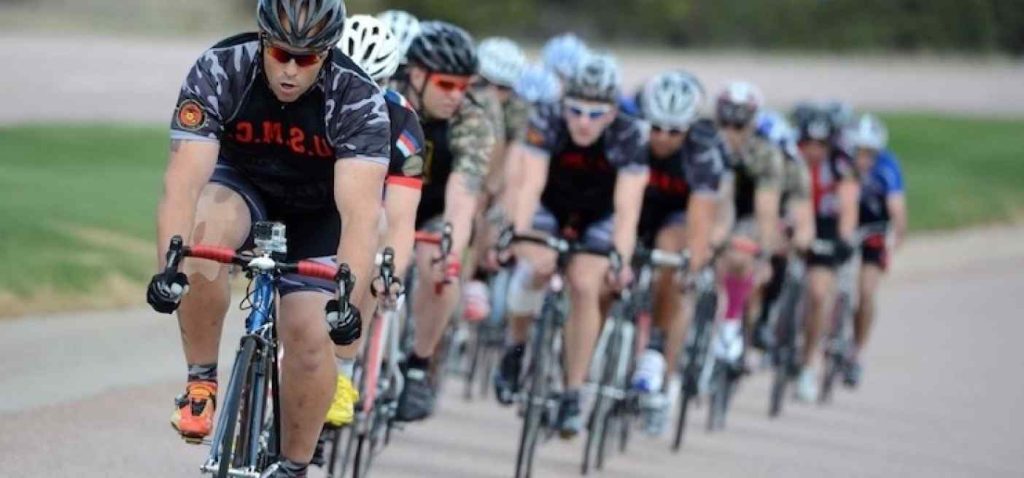
Mastering bicycle drafting aerodynamics mechanics provides competitive cyclists and endurance athletes with the single most powerful tool for conserving physiological energy at high speeds. Anyone who has ever slotted into a brisk paceline knows the visceral sensation immediately. The deafening roar of wind rushing past your helmet quietens to a murmur, the heavy resistance pushing against your chest evaporates, and your legs suddenly spin with effortless cadence while maintaining speeds that felt punishing just seconds before. What feels like miraculous relief on the road is actually a masterclass in fluid dynamics.
Far from a simple matter of hiding behind a human shield, riding in the wake of another cyclist reshapes the surrounding atmosphere. Cyclists move through ambient air as blunt, non-streamlined bodies, trailing chaotic wakes of low pressure, turbulent eddies, and detached boundary layers. The physical interaction between leading and trailing bodies creates localized microclimates of airflow that redistribute pressure differentials across both machines. By examining the fundamental physics at play, endurance athletes can turn invisible air currents from their greatest physical adversary into an engine of sustainable velocity.
The Invisible Fluid Ocean Surrounding Every Cyclist
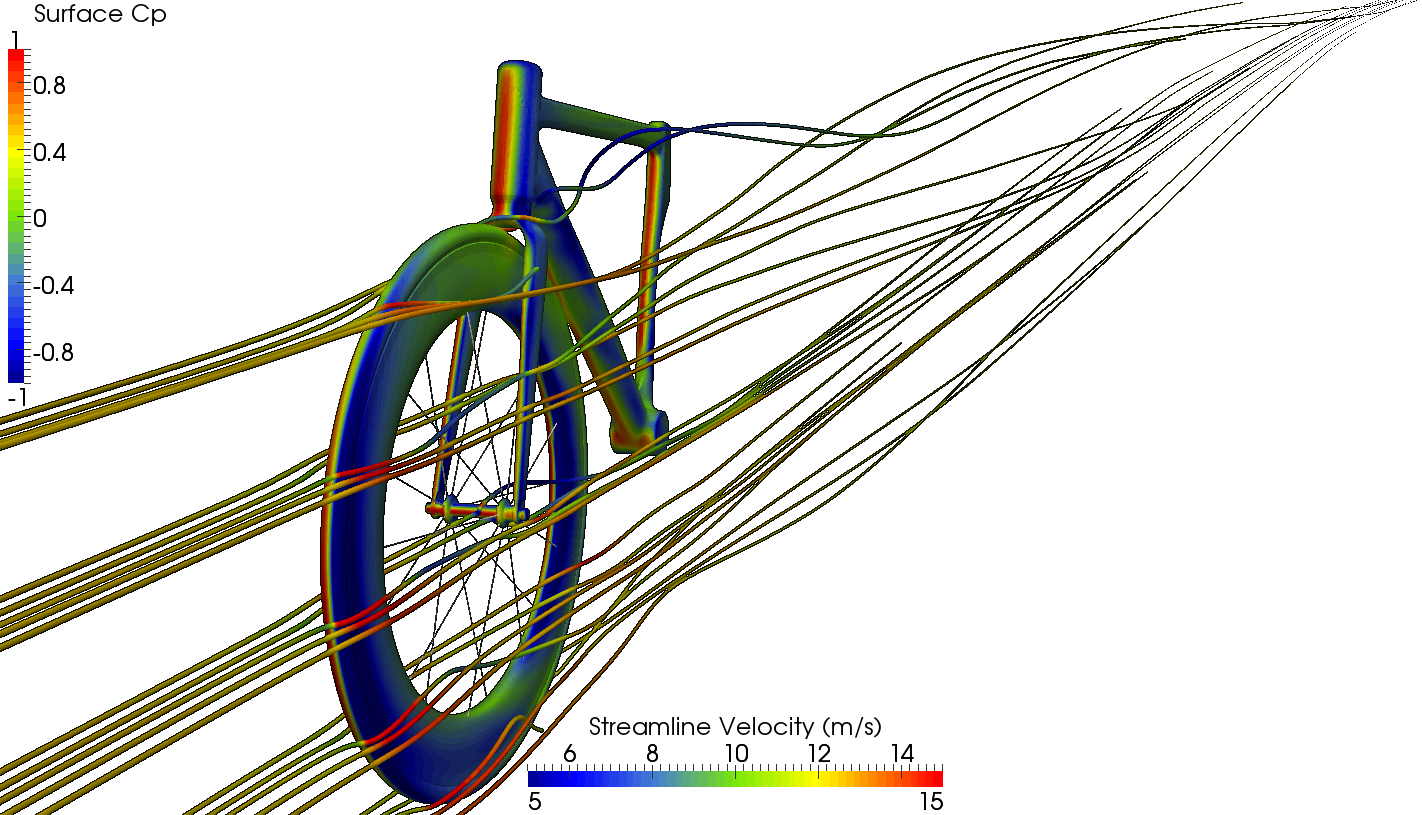
Human beings rarely think of ambient air as a tangible fluid, yet at cycling velocities, the atmosphere behaves precisely like a dense, viscous ocean. As an athlete propels a bicycle forward, the front surfaces of the helmet, handlebars, fork, and chest collide with stationary gas molecules, creating an area of elevated static pressure known as stagnation pressure. Air molecules must rapidly accelerate to divert around these blunt obstructions, sliding across the athlete’s limbs and frame tubes in what fluid aerodynamicists call the boundary layer.
Because human bodies are irregular and non-aerodynamic, air cannot remain smoothly attached to the rider’s contours for long. As the air sweeps past the shoulders, hips, and saddle, it violently separates from the physical surface, tumbling into an expansive, recirculating wake. This wake is characterized by significant turbulence and a sharp drop in static pressure. The net aerodynamic drag that retards a cyclist is primarily pressure drag, calculated as the massive difference between the high-pressure wall pushing backward on the front of the rider and the low-pressure suction pulling backward from the turbulent pocket behind them.
Understanding this atmospheric displacement is fundamental to deciphering why drafting works so profoundly. Early sports science models assumed that a drafting rider simply avoids oncoming air, treating drag as an obstacle course of physical particles. Modern computational fluid dynamics models exploring bicycle drafting aerodynamics mechanics emphasize that slipstreams function as integrated pressure systems. When two riders occupy the same lane of travel in close proximity, their flow fields merge, fundamentally altering the wake structures and pressure coefficients of both participants simultaneously.
Why Air Resistance Dominates Modern Endurance Speed
On completely flat terrain at low recreational speeds, a cyclist spends the majority of their energy overcoming the mechanical rolling resistance of tires against tarmac and the internal friction of drivetrain components. However, aerodynamic drag does not increase in a gentle, predictable linear fashion. Aerodynamic resistance scales quadratically with speed, while the metabolic power required to overcome that resistance scales with the cube of velocity. When velocity doubles, the power required to cut through the air increases by a staggering factor of eight.
For a solo rider traveling on flat asphalt, aerodynamic drag overtakes rolling resistance at roughly fifteen kilometers per hour. By the time that athlete accelerates to forty kilometers per hour, aerodynamic resistance accounts for nearly ninety percent of their total power output. Every fraction of a watt expended above this threshold goes directly toward battering through atmospheric stagnation and dragging an enormous envelope of turbulent low pressure behind them. Without intervention, human physiology rapidly reaches its anaerobic ceiling when fighting this escalating cubic power curve alone.
Wind tunnel testing and high-fidelity computer simulations demonstrate that the human engine possesses strict biological limitations that make raw muscular output inefficient for chasing sustained top-end speed. Even minor adjustments in frontal surface area yield noticeable performance gains, but no aerodynamic helmet, carbon-fiber deep-dish wheelset, or hyper-aggressive time trial posture can rival the staggering physical wattage reductions granted by atmospheric slipstreaming. Riding behind another body fundamentally alters the baseline velocity equation.
Four Proven Aerodynamic Principles That Power the Slipstream
Dissecting bicycle drafting aerodynamics mechanics across elite velodromes and open roads demonstrates that the slipstream is not merely an empty void behind a lead vehicle. It is a highly dynamic fluid environment governed by specific physical interactions that benefit every rider positioned within its perimeter.
The Bow Wave Pressure Bubble That Pushes the Lead Rider
One of the most persistent misconceptions in cycling is that the front rider performs work entirely unassisted while providing a one-way charitable service to everyone stacked behind. Rigorous aerodynamic research published in Sports Engineering demonstrates that a trailing rider actually reduces the drag of the lead cyclist by up to three percent. This counterintuitive phenomenon occurs because the trailing rider acts as an aerodynamic fairing for the leader.
In a solo configuration, air separates abruptly from the lead rider’s lower back and hips, collapsing inward and creating an immense, drag-inducing low-pressure vacuum. When a second cyclist follows closely, their own front stagnation bubble acts as a physical wedge that bridges the leader’s wake. This trailing high-pressure zone pushes forward against the leader’s trailing low-pressure zone, partially equalizing the differential. By delaying flow separation and raising the static pressure behind the front rider’s saddle, the trailing bicycle effectively reduces the rearward suction force on the leader.
The Low Pressure Recirculation Zone Shielding the Trailing Wheel
While the leader enjoys a modest reduction in back pressure, the primary beneficiary of drafting remains the following cyclist, who experiences a dramatic reduction in total drag ranging from twenty-five to over forty percent depending on wheel separation. The front cyclist has already performed the exhaustive mechanical work of displacing the stationary air mass, leaving a trailing cavity of moving fluid in their wake. As the follower enters this corridor, their front stagnation pressure drops precipitously.
Rather than slamming into undisturbed atmosphere, the follower moves through air that has already been accelerated in the direction of travel. Furthermore, the underlying bicycle drafting aerodynamics mechanics show that turbulent eddies push inward along the perimeter of the slipstream, reducing the velocity differential between the rider’s limbs and the local air currents. The closer the trailing tire sits to the leader’s rear hub, the more completely the follower’s torso is sheltered within the low-pressure pocket, leading to massive energy conservation and reduced oxygen consumption at high speeds.
Lateral Wind Vectors and the Complex Geometry of Echelons
Pure headwind conditions represent an idealized baseline that rarely exists on open asphalt. Natural ambient winds strike moving riders at compound angles, creating an effective yaw angle that shifts the trailing wake diagonally away from the centerline of the leading frame. When cyclists encounter strong crosswinds, a direct wheel-to-wheel tailing formation leaves the trailing rider fully exposed to the oncoming oblique air stream, eliminating the protective benefits of the slipstream.
To maintain aerodynamic shelter under crosswind conditions, riders arrange themselves into an echelon, fanning out diagonally across the roadway. The lead cyclist anchors the windward edge, while successive riders offset their front wheels alongside the downwind hips of the teammate ahead. This diagonal alignment mirrors the wake trajectory, ensuring that the low-pressure pocket continuously cascades from one rider to the next. The width of the road naturally caps the capacity of an echelon, sparking fierce tactical battles for the sheltered interior positions.
Peloton Deep Field Microclimates and Multi Rider Compounding
The aerodynamic dynamics of a two-person tandem pairing are magnified exponentially within the swirling center of a massive peloton. When dozens of riders travel in compact formation, individual wakes coalesce into an immense, collective microclimate of forward-moving air. The compounding reality of bicycle drafting aerodynamics mechanics reaches its apex in dense road races, where athletes buried inside the core of the main pack experience drag reductions exceeding ninety percent.
Mid-pack cyclists effectively travel within a localized atmospheric slipstream that is moving nearly as fast as the bicycles themselves. The physical demand drops from an all-out threshold effort to a conversational aerobic cruise. Within this rolling fluid cocoon, riders conserve glycogen reserves, hydrate safely, and maintain race pace while generating a mere fraction of the power required by the sacrificial domestiques driving the pace at the exposed front of the peloton.
Tactical Application in Pacelines and Solo Breakaways
Understanding the physics behind drag reduction is only half the battle; putting bicycle drafting aerodynamics mechanics into practice demands exquisite bike handling and spatial discipline. In a standard single paceline, riders trade off the front through smooth, uninterrupted rotations. The lead rider pulls for a calculated duration before indicating their departure, pulling off the front line, and drifting rearward into the draft while the second wheel smoothly inherits the role of breaking the oncoming air.
In higher-speed scenarios, teams deploy a continuous circular rotation known as a rolling paceline or double echelon. In this dynamic configuration, two columns of cyclists move at marginally different speeds. One line advances forward while the other slowly drifts backward. The moment a rider reaches the front of the advancing line, they slide laterally into the retreating line, immediately decreasing their power output while settling into the shelter. This constant cycling of effort ensures that no individual rider exhausts their anaerobic reserves, allowing the collective unit to sustain blisteringly high speeds.
Just as sports production directors continuously adapt how they broadcast high-speed races while Apple TV navigates critical streaming rivalries and price pressures in the broader entertainment marketplace, cycling teams must constantly calibrate their tactical investments against harsh physical realities. A solo breakaway rider who attempts to outrun a coordinated chase pack is not merely competing against human endurance; they are waging a lone war against fluid dynamics. While the solo attacker must continuously overcome one hundred percent of their aerodynamic drag, the pursuing group distributes that mechanical tax across several rotating athletes, illustrating why lone breakaways rarely succeed unless tactical hesitation paralyzes the chasing group.
The Future of Aerodynamic Efficiency on Open Roads
The continuous refinement of cycling speed increasingly relies on quantifying the invisible boundaries of aerodynamic flow. Modern teams utilize on-bike real-time aerodynamic sensors that calculate a rider’s dynamic coefficient of aerodynamic drag, pairing speed, wind velocity, and power output to measure efficiency changes across changing road surfaces and pack positions. Computational fluid dynamics software models entire multi-team pelotons, predicting how subtle variations in clothing fabrics, rider spacing, and pacing schedules influence energy conservation over grueling distances.
Despite the rise of high-tech gear and algorithmic race tracking, the foundational laws governing fluid flow remain constant. Air will always resist blunt intrusion, boundary layers will inevitably separate, and turbulent low-pressure wakes will continue to trail behind any mass charging through the atmosphere. Whether navigating an amateur group ride or analyzing the tactical ballet of world-class grand tours, a deep appreciation of bicycle drafting aerodynamics mechanics changes how we perceive endurance sport, proving that peak speed is not just an expression of physical grit, but an enduring collaboration with the physics of the open air.