Bryce Underwood Faces 4 Major Reality Checks Behind a Costly College Football Drama
Michigan’s bold gamble took a stunning turn when Tommy Carr started against Indiana while Bryce Underwood watched from the sideline. Here is an inside breakdown of the strategic crossroads facing college football’s most scrutinized quarterback.
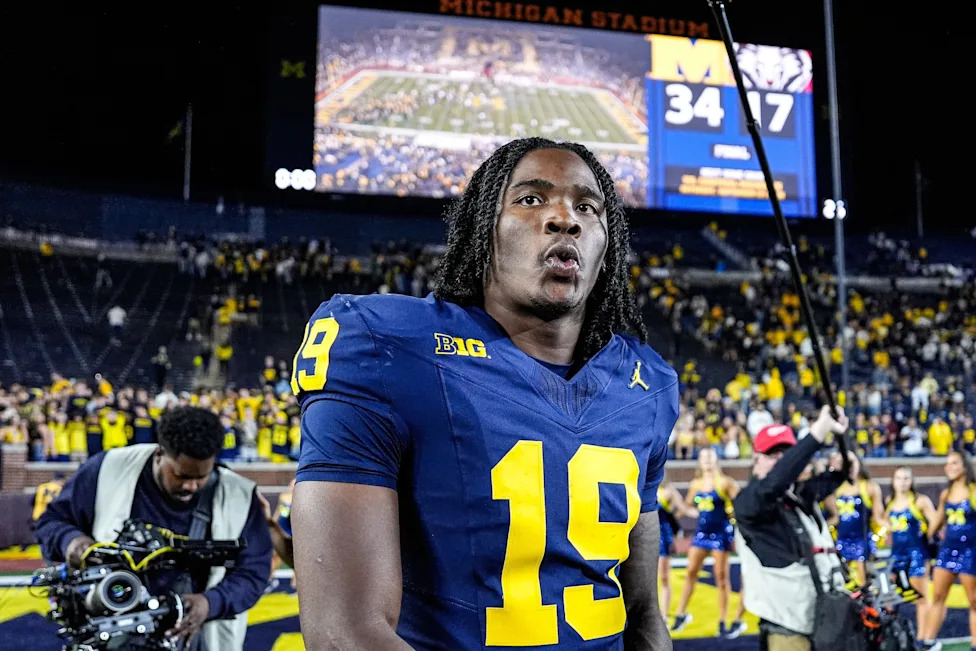
When Michigan took the field against No. 6 Indiana, Bryce Underwood stood quietly on the sideline while backup Tommy Carr directed the starting offense onto the gridiron. The immediate sight of college football’s most heralded teenage recruit holding a clipboard sent shockwaves through the sport. For months, the program had celebrated a landmark recruiting coup, securing the nation’s premier high school passer through an eye-popping financial and developmental commitment. Yet, when the pivotal midseason whistle sounded against an undefeated top-ten conference rival, the coaching staff opted for stability over raw recruiting pedigree.
According to game-day reporting from Yahoo Sports, Carr took the opening snaps under center while Underwood remained confined to the bench without taking the field. For observers who tracked Michigan’s aggressive pursuit of top-tier talent over the preceding year, the benching represents a dramatic inflection point. In the contemporary landscape of high-stakes college football, elite talent guarantees national headlines, but it cannot purchase protection from the relentless weekly demands of Big Ten execution.
The Multi-Million Dollar Recruiting Crucible and a Modern Cautionary Tale
The swift change at quarterback in Ann Arbor arrives amid escalating national scrutiny over how elite athletic departments construct their rosters in the era of revenue sharing and open-market recruiting. As detailed in a scathing breakdown by FOX Sports, the Bryce Underwood experiment has quickly transformed into a high-profile cautionary tale for programs attempting to fast-track championships with unvetted high school phenoms. Athletic departments across the country have poured staggering sums into NIL war chests to outbid competitors, assuming that top-ranked high school talent would immediately translate into dominance between the hashes.
The reality unfolding in Ann Arbor proves far more complex. While blue-chip high school quarterbacks often dominate lower-tier competition with superior physical tools, the leap to major college football demands advanced schematic processing, complex defensive disguise recognition, and extraordinary operational discipline. When Michigan struggled to consistently generate points in earlier contests, the margin for error evaporated. Boosters and evaluators who anticipated a smooth coronation suddenly witnessed the growing pains of an offense struggling to establish its identity. Rather than serving as an instant savior, the prized freshman found himself navigating the harsh glare of national scrutiny while the coaching staff sought alternative answers under center.
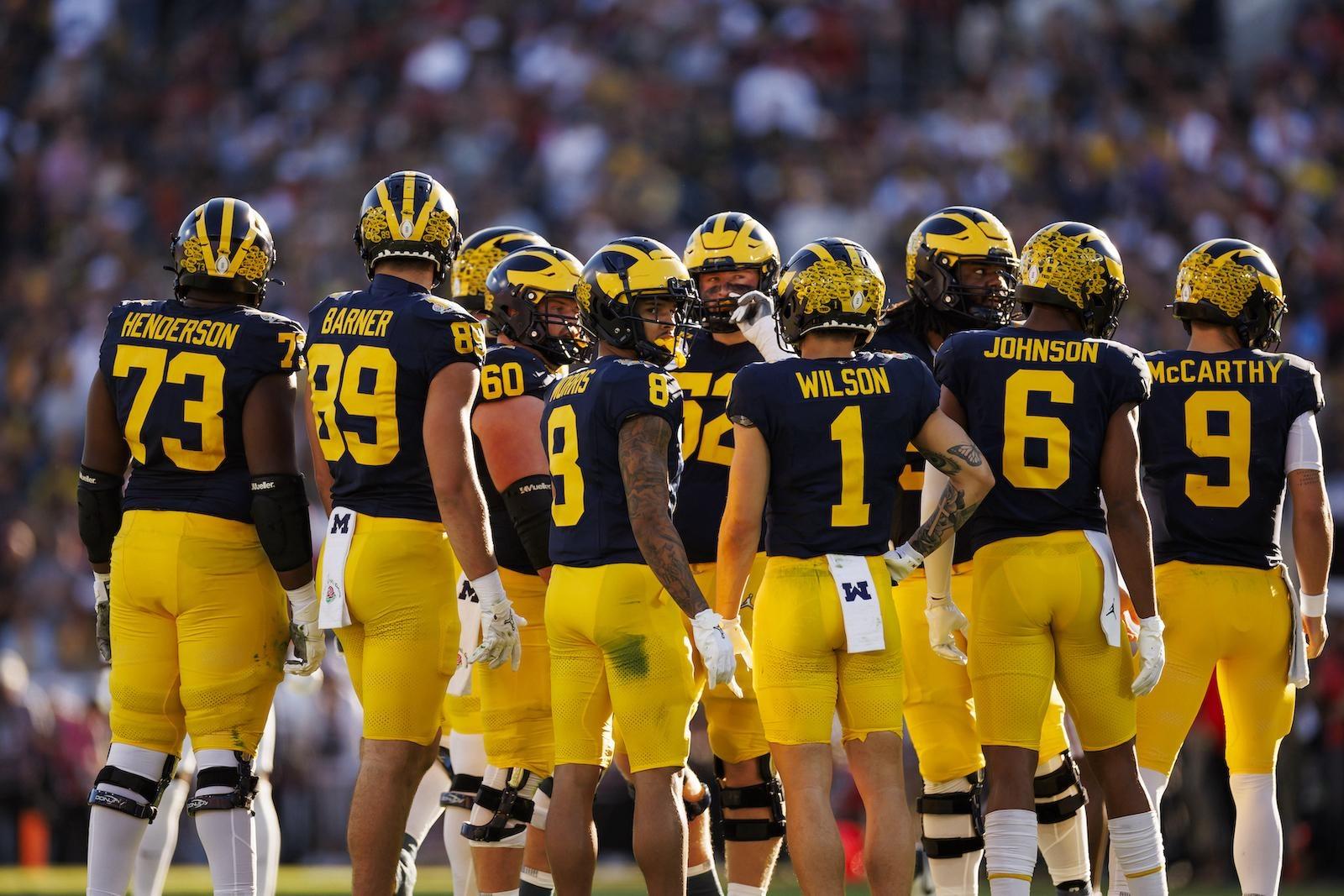
4 Major Factors Reshaping the Michigan Quarterback Room
Understanding how the Wolverines reached this dramatic crossroads requires examining the collision of on-field performance, locker room dynamics, and unprecedented external expectations. The internal evaluation of Bryce Underwood at Michigan reveals several critical forces that forced the staff to alter their depth chart before facing Indiana.
The Sudden Ascent of Tommy Carr Under Center
Tommy Carr did not merely inherit the starting role by default; he seized it through steady practice command and operational efficiency. When coaches evaluate signal-callers during high-leverage conference game weeks, minimizing catastrophic turnovers and managing the play clock often carry far greater weight than highlight-reel arm strength. Carr demonstrated a functional grasp of the playbook that allowed the offensive staff to call plays with predictable pacing. Facing an aggressive Indiana defensive front that feast on rookie mistakes, Michigan’s staff determined that Carr gave the unit its most dependable pathway toward sustained offensive drives.
Nick Saban Blunt Verdict on Locker Room Competition
The high-profile benching resonated well beyond Michigan’s borders, drawing pointed analysis from the sport’s greatest coaching minds. As reported by On3, legendary former Alabama head coach Nick Saban reacted directly to Michigan’s decision to start Carr over Underwood, delivering an unambiguous endorsement of meritocracy by declaring that competition is good. Saban explained that regardless of recruiting hype, contractual arrangements, or national prestige, every locker room requires accountability to maintain internal trust. When coaches bench a celebrated recruit for an unheralded competitor who performed better during preparation, it reaffirms that snaps must be earned rather than awarded based on external reputation.
Quarterbacks pushed into the national spotlight early in their development routinely face sudden structural hurdles when depth charts fluctuate unexpectedly. This volatility mirrors the pressure seen across both elite collegiate and professional tiers, reminiscent of how Spencer Rattler Faces 3 Critical Decisions in Dramatic Saints Roster Dilemma when transitioning through intense quarterback room evaluations.
Lingering Doubts Over a Long-Term Future in Ann Arbor
The benching against Indiana immediately sparked intense discussions regarding the long-term viability of the relationship between player and program. A detailed community debate hosted by Maize n Brew openly raised the burning question of whether Bryce Underwood will ever take another meaningful snap for the Wolverines. In previous decades, a true freshman quarterback being held out to develop was considered standard practice. In the modern landscape defined by the transfer portal and immediate eligibility, a benching of this magnitude often signals deep tactical friction that can lead directly toward an offseason departure.
Should the Wolverines conclude that their immediate system does not match Underwood’s current developmental trajectory, both sides could face difficult conversations during the upcoming portal cycle. Michigan invested immense institutional capital to secure his commitment, and watching that partnership unravel during his true freshman campaign would mark an unprecedented setback for the current coaching regime.
Strategic Off-Field Maneuvers and Questionable Timing
Complicating the on-field decision were curious developments outside the stadium gates. According to reporting from Athlon Sports, the personal announcement made by Bryce Underwood ahead of kickoff generated additional conversation among fans and analysts trying to decipher his internal focus. In an era where top athletes operate as independent media entities with dedicated brand representation, off-field messaging often runs parallel to athletic performance.
Releasing personal news and brand updates in the immediate hours before a defining matchup against an undefeated opponent underscored the divided attention modern college athletes must navigate. While commercial management is now an accepted reality of the sport, timing remains critical. To critics and anxious supporters, the juxtaposition of off-field public relations moves against an immediate game-day benching illustrated the challenging environment surrounding top-tier quarterback rooms in modern college football.
What College Football Must Learn from the Ann Arbor Shakeup
The unfolding saga surrounding Bryce Underwood underscores a fundamental shift in how college football evaluates risk. Programs can no longer assume that massive recruiting victories automatically resolve operational deficiencies at the sport’s most critical position. Relying on teenagers to shoulder multi-million dollar expectations creates immense psychological and tactical burdens that few players can manage without extensive developmental scaffolding.
Michigan’s willingness to bench its highest-profile asset in favor of Tommy Carr serves as a clear warning to athletic directors and booster collectives across the country. Talent acquisition remains essential, but team culture, locker room integrity, and weekly accountability cannot be compromised for recruiting prestige. As Bryce Underwood navigates this unexpected developmental chapter, the sport watches closely to see whether this public reset becomes the catalyst for eventual collegiate greatness or the defining moment of a broken gamble.