Cast Iron Seasoning Mechanics and 4 Proven Rules to Build an Indestructible Nonstick Skillet
Cast iron seasoning is not a mysterious coating of baked grease, but a precise chemical transformation known as oil polymerization. Unpack the thermodynamic rules that turn a raw slab of porous iron into a slick, generational heirloom.
Mastering cast iron seasoning mechanics transforms what many home cooks consider a fussy, unpredictable skillet into an indestructible, naturally slick culinary workhorse. Heavy black pans often carry an aura of grandmotherly superstition. People whisper about never washing them with soap, treat them like fragile artifacts, or abandon them to rust after an egg bonds stubbornly to the cooking surface. Yet cast iron is simply an alloy of iron and carbon, and the glossy black sheen that makes it miraculous is not a layer of baked grease. It is an engineered polymer matrix created through heat, fat, and elemental metal.
When you strip away the folksy kitchen folklore, the skillet stops being a gamble and becomes a precision instrument. Achieving that glass-smooth, egg-sliding surface does not require decades of generational frying. It demands an appreciation for thermal energy, oil chemistry, and surface tension. Once you understand the physical and chemical reactions occurring between the iron substrate and cooking fats, you can build, repair, and maintain an exceptional nonstick surface on any skillet in an afternoon.
The Molecular Chemistry Behind Iron and Oil Polymerization
Seasoning is not grease. Greasy pans are merely dirty pans. The glossy, slippery coating that defines top-tier cast iron is a solid plastic-like polymer formed when unsaturated fatty acids undergo thermal oxidation and polymerization.
Understanding cast iron seasoning mechanics requires a look into organic chemistry. Fats and oils consist of triglycerides, which are three fatty acid chains bound to a glycerol backbone. When you heat an oil past its smoke point in the presence of atmospheric oxygen and iron—which serves as a potent catalytic agent—the fatty acid chains break down. Their double carbon bonds open up, cross-linking with neighboring molecules to form long, interconnected carbon chains.
As these chains interlock, they cross-link three-dimensionally, converting liquid oil into a hard, dry, insoluble solid film. The American Chemical Society analysis on cast iron chemistry illustrates how this high-heat transformation binds the resulting matrix directly into the microscopic fissures of the metal. If the oil is saturated, such as beef tallow or coconut oil, it lacks sufficient double bonds to cross-link effectively into a durable polymer. Conversely, oils packed with polyunsaturated fats, such as grapeseed, sunflower, or canola oil, possess abundant bonding sites. They polymerize rapidly into a rugged, glass-like coating that resists heat and mechanical friction far better than saturated animal lards.
Microscopic Topography and Why Raw Metal Demands Heat
Hold a brand-new cast iron skillet under strong light and run your fingertips across the cooking floor. You will feel a gritty, sand-like texture. Modern commercial manufacturers pour molten iron into green sand molds. When the iron solidifies and the mold breaks away, the metal retains a landscape of microscopic peaks, valleys, and pores. Older vintage pieces from the early twentieth century were machine-ground smooth on stone wheels, but contemporary pieces arrive with raw, textured topography.
Seasoning functions as a leveling agent. The underlying cast iron seasoning mechanics depend heavily on this granular architecture. Capillary action draws hot, liquefied fat down into the microscopic crevices and porous valleys of the iron. As heat rises, the oil expands and polymerizes directly inside these microscopic voids, anchoring the polymer matrix to the iron crystal lattice.
Each layer you bake onto the pan fills in the valleys without climbing completely over the microscopic peaks. Over multiple successive treatments, the surface levels out, transforming a jagged, sandpaper-like floor into a slick, continuous plateau. If you heat the iron improperly or apply oil when moisture is trapped inside those pores, the polymer cannot bond to the crystalline iron. It will simply peel off in brittle black flakes the first time you sear a ribeye steak.
Four Fundamental Protocols for an Unshakeable Foundation
Achieving a durable patina is not an art of intuition. It is a repeatable industrial process translated for the home kitchen. Follow these four foundational rules to forge an ironclad nonstick patina.
Strip Away Rancid Fat and Microscopic Impurities Completely
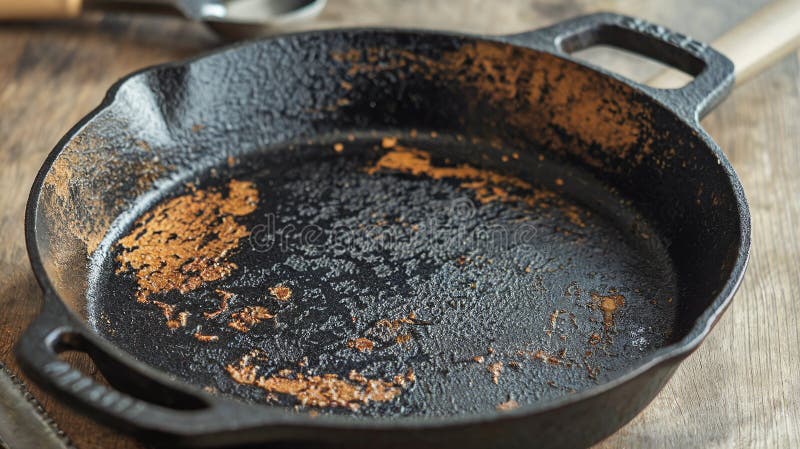
You cannot construct a skyscraper on wet clay, and you cannot lay a durable polymer over scorched food remnants, degraded fats, or oxidation. If you inherit an old pan encrusted with carbon crust or an uneven brown sticky sheen, you must strip the surface down to bare iron. A soak in a basic lye solution or an application of standard yellow-cap oven cleaner effortlessly breaks down old organic bonds without harming the underlying iron metal. If rust has taken hold, a brief bath in a balanced dilution of water and white vinegar dissolves the iron oxide. Once stripped, rinse the pan thoroughly in cold water and dry it immediately on the stovetop over low heat. Moisture is the mortal enemy of bare iron. The pores must be completely free of humidity before introducing a single molecule of fresh oil.
Apply Oil Thin Enough to Feel Like an Absolute Mistake
The single most universal failure in seasoning cast iron is applying too much fat. When cooks pour a tablespoon of oil into the pan, swirl it around, and shove it directly into a blistering oven, the surface turns mottled, splotchy, and intensely gummy. In fluid dynamics, this is a pooling catastrophe. Liquid oil pools into tiny droplets as surface tension pulls it together under heat.
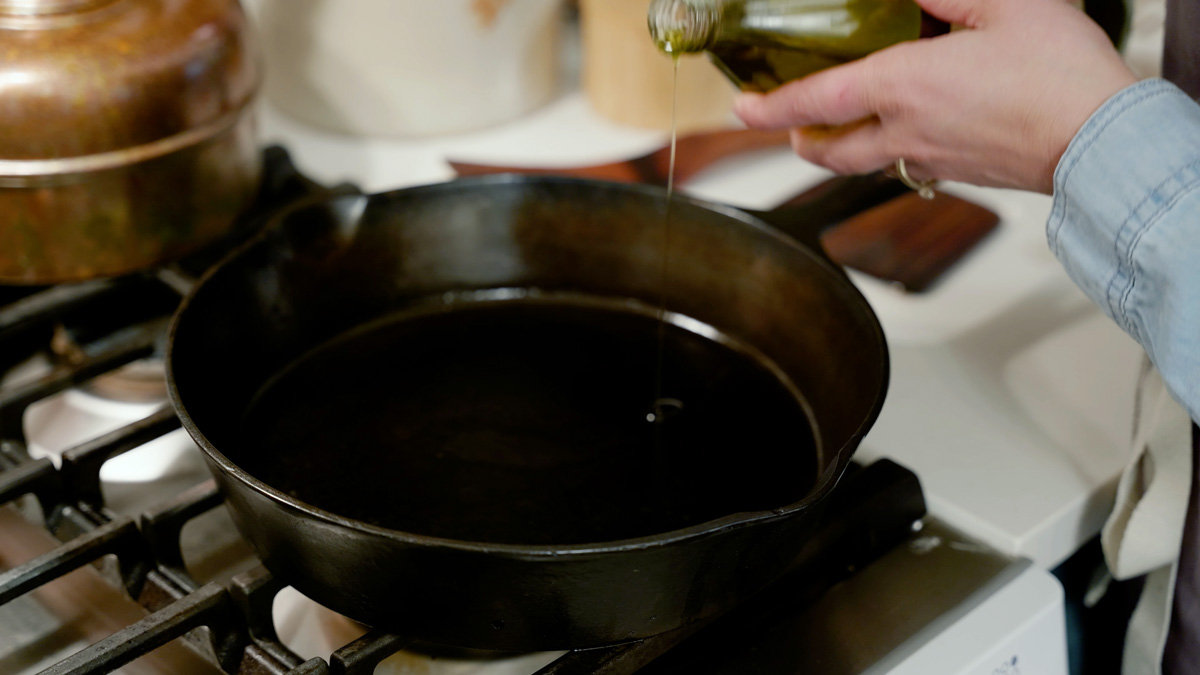
When executing proper cast iron seasoning mechanics, less oil is invariably more. Pour a half-teaspoon of high-smoke-point oil into the warm pan. Rub it across the entire surface—inside, outside, handle, and bottom—with a clean cotton cloth or shop towel. Then, grab a second, completely dry towel and aggressively wipe the pan clean as if you made an awful mistake by applying the oil in the first place. You want only a microscopic monomolecular layer left behind. The pan should look completely matte and dry to the naked eye. If it looks wet or shiny before entering the oven, you have left too much oil behind.
Cross the Thermal Threshold Past the Smoke Point
Polymerization requires aggressive, unyielding thermal energy. Many well-meaning guides recommend baking cookware at 350 degrees Fahrenheit. This temperature is far too low. At lower temperatures, oil warms, loses volatile compounds, and oxidizes into a sticky, tacky resin that never cures into a glass-hard solid.
You must heat the skillet past the specific smoke point of your chosen oil—typically between 450 and 480 degrees Fahrenheit for refined oils like canola or grapeseed. At these temperatures, volatile free fatty acids vaporize and the remaining triglycerides link into durable polymers. Just as tactical precision matters on the hardwood, like examining Bam Adebayo and 3 Critical Shifts Reshaping the Miami Heat Title Pursuit, mastering your skillet requires calculated discipline rather than brute guesswork. Place the pan upside down on the middle rack of the oven with a foil sheet beneath to catch theoretical drips, and maintain that elevated heat for at least sixty minutes. This sustained furnace environment forces full cross-linking.
Cool Slowly Inside the Oven to Relieve Thermal Stress
The physical phase of cast iron seasoning mechanics that many cooks skip is gradual cooling. Cast iron is brittle, dense, and possesses substantial thermal mass. When metal expands under extreme heat, its crystalline structure shifts outward. The freshly cured polymer adapts to this expanded state as it cross-links.
If you pull a 450-degree skillet out of the oven into a cool, air-conditioned kitchen, thermal shock occurs. The iron contracts rapidly, creating severe micro-shear stress between the metal surface and the newly formed polymer layer. This sudden contraction creates hairline fractures in the delicate new seasoning, causing premature flaking and chipping during subsequent cooks. Once the sixty-minute baking cycle concludes, turn off the oven and leave the door completely closed. Allow the skillet to cool down gently alongside the oven over two to three hours until it reaches room temperature. This gradual thermal decay anneals the bond between carbon, iron, and polymer.
The Soap Myth and Modern Maintenance Realities
Generations of cooks have passed down a stern warning to never let soap touch your cast iron skillet. This advice originated in an era when soap was made by boiling animal fats with caustic potassium or sodium hydroxide—pure lye. Harsh homemade lye soaps would indeed attack and dissolve organic polymer chains, stripping the seasoning down to naked, vulnerable gray iron.
Modern dishwashing liquids are completely different chemical animals. They are mild liquid detergents composed of synthetic surfactants engineered to suspend surface oils and rinse them away with running water. A properly cured seasoning layer is a hard, chemically bonded plastic-like coating that is insoluble in mild surfactants. Debunking kitchen folklore through clear cast iron seasoning mechanics helps you treat cookware rationally: wash your pan with warm water, a soft sponge, and ordinary dish soap whenever food residue or degraded cooking oils linger.
A clean skillet is a healthy skillet. If you refuse to use soap, degraded, unpolymerized cooking fats from last night’s bacon or fish will oxidize into rancid compounds. When heated during the next meal, these decaying fats burn into loose, bitter black soot that taints your food and creates an uneven, flaky cooking surface. For stubborn fond, scrub with coarse kosher salt or a chainmail scrubber. Dry the pan immediately over a low stovetop burner, and while it remains warm, wipe an imperceptibly thin film of fresh oil across the interior to seal out atmospheric humidity.
Long Term Patina Maturation and Cookware Longevity
A newly stripped and seasoned pan is only at the beginning of its culinary life. That initial oven-baked layer serves as a primer coat on fresh drywall. The truly impenetrable, mirror-slick patina develops organically over hundreds of cooking sessions. High-heat searing, sautéing onions, shallow-frying potatoes, and baking cornbread continuously deposit microscopic layers of carbonized fat that bake into the existing matrix.
Be mindful during the initial months. Highly acidic foods like tomato ragù, reduced red wine, or citrus-heavy pan sauces can soften a youthful seasoning layer, chemically attacking the iron-polymer boundary and infusing sauces with a metallic aftertaste. Save the slow-simmered marinara for enameled cast iron or stainless steel until your raw skillet has developed a dark, mature, pitch-black armor.
Treating iron with scientific respect removes every shred of anxiety from the cooking experience. Iron does not hold grudges, nor does it permanently break under human kitchen mistakes. Even if you neglect a skillet in a damp basement or burn a sugary marinade to a crisp, the foundation remains pristine underneath. Embracing these cast iron seasoning mechanics guarantees a cooking vessel that only improves with every sear, serving as a loyal, indestructible culinary tool for generations to come.