Margin call mechanics and 4 proven rules that prevent devastating portfolio liquidations
Borrowing against your investments can amplify portfolio gains, but failing to respect collateral limits invites swift financial ruin. Discover the exact mechanics behind forced broker liquidations and four battle-tested strategies to preserve your wealth.
Mastering margin call mechanics before you introduce borrowed capital to your portfolio can mean the difference between surviving a sudden downtown and watching your wealth vanish overnight. Leverage acts as a double-edged sword in financial markets. When equities climb, borrowed money multiplies your returns, transforming moderate gains into outsized windfalls. Yet the moment asset prices retreat, the exact same mathematical leverage works relentlessly against you, eroding your underlying collateral at a terrifying speed.
Many investors mistakenly treat margin as a casual personal loan or an extended line of credit. They assume that if their portfolio declines, their brokerage will politely grant them weeks to deposit fresh cash or renegotiate terms. In the harsh reality of electronic financial markets, that assumption is a direct path to catastrophic financial ruin. Brokerage firms do not operate as patient lenders; they operate as risk-averse counterparties determined to safeguard their own balance sheets above all else.
To navigate volatile markets without risking sudden forced selling, you must understand how collateral triggers operate under the surface. Once you deconstruct the mathematical formulas, behavioral traps, and institutional procedures that dictate account liquidation, you can trade with confidence and protect your hard-won capital from market shocks.
The Anatomy of Borrowed Capital and Collateral Erosion
At its core, the underlying margin call mechanics dictate that your broker holds unilateral authority over your account equity from the very moment you purchase securities on credit. When you open a margin account, you pledge the securities you purchase, alongside your existing cash and stock holdings, as collateral against the debt. In the United States, federal frameworks establish baseline constraints, requiring investors to provide at least 50 percent of the purchase price for margin-eligible securities under initial margin guidelines.
However, the real pressure begins long after the initial trade execution. The crucial metric governing your solvency is the maintenance margin requirement. Under baseline regulatory standards, an investor must maintain equity equal to at least 25 percent of the total market value of the securities held in the account. Most retail brokers enforce far stricter internal standards, often demanding 30 to 40 percent equity, and occasionally moving to 100 percent for volatile, low-float, or speculative stocks.
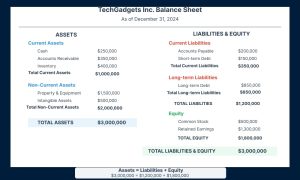
Account equity represents the current market value of all held securities minus the outstanding loan balance. Because the dollar amount of your loan remains fixed while the market value of your portfolio fluctuates daily, any decline in stock prices reduces your equity dollar-for-dollar. If you purchase $100,000 worth of stock using $50,000 of your own cash and $50,000 of borrowed broker funds, you start with 50 percent equity. If the portfolio drops 25 percent to $75,000, your loan remains fixed at $50,000, but your personal equity collapses from $50,000 to $25,000. Your equity percentage plunges from 50 percent to 33.3 percent in a single move.
The exact price at which an account triggers a margin deficit can be calculated with mathematical certainty. By dividing the borrowed capital by one minus the broker maintenance margin requirement percentage, an investor can pinpoint the exact portfolio liquidation threshold before ever placing an order. Failing to perform this calculation before initiating a levered position is why countless traders find themselves completely blindsided when routine market pullbacks turn into irreversible account liquidations.
Why Automated Liquidation Triggers Fast and Unforgiving Losses
Modern computerized trading has fundamentally accelerated how margin call mechanics punish overconcentrated holdings during sharp market contractions. Decades ago, an account executive might have dialed a client on the telephone, gently advising them that their collateral was insufficient and offering forty-eight hours to wire funds or mail a cashier check. That world has completely disappeared. Today, algorithmic risk engines monitor individual accounts tick-by-tick, calculating equity fluctuations against house requirements in fractions of a second.
When equity breaches the required maintenance threshold, a margin call officially occurs. This represents an urgent administrative demand to restore the account to compliance either by depositing cash, transferring fully paid marginable securities, or selling off assets to reduce the outstanding loan balance. However, the standard margin agreement that every retail investor signs grants the brokerage absolute authority to liquidate any position in the account, at any time, without prior warning or consent.

If market conditions deteriorate rapidly, an automated risk-management script will bypass notifications entirely. The algorithm will begin firing market sell orders into the order book to preserve the brokerage loan principal. Crucially, algorithms do not care about tax consequences, emotional attachments to long-held winners, or long-term intrinsic corporate valuations. The system sells whatever positions are most liquid, often dumping core investments at the absolute low of the trading session into an illiquid market, crystalizing massive capital losses permanently.
Making matters worse, brokers explicitly reserve the right to increase their house maintenance requirements overnight without prior notice. If a broad index or a volatile single stock exhibits erratic price swings, a risk committee can arbitrarily hike maintenance requirements from 30 percent to 60 percent. Even if your portfolio has not dropped a single dollar, an overnight regulatory or internal policy adjustment can instantly throw an otherwise stable portfolio into an immediate, non-negotiable margin deficit.
Four Proven Rules to Protect Your Capital from Forced Selling
Surviving over the long term requires transitioning from speculative greed to disciplined defensive engineering. When you respect margin call mechanics, you structure debt around worst-case volatility rather than average returns. Implementing structural safeguards shields your portfolio from sudden liquidation spirals.
Establish a Strict Cushion Far Above House Maintenance Requirements
Never manage your leverage against the broker stated maintenance margin percentage. If your brokerage demands a 30 percent maintenance threshold, hovering at 35 percent equity means a routine intra-day pullback will wipe out your solvency. Professional risk managers establish personal equity floors that sit dramatically higher than house minimums, treating an equity level of 60 to 70 percent as their personal red line.
By treating a 60 percent equity mark as a personal call to de-lever, you retain absolute autonomy over your trading decisions. You choose when to sell, which specific tax lots to trim, and how to execute rebalancing orders over multiple trading sessions using limit orders. Waiting for the broker automated liquidation engine to step in relinquishes your strategic control and subjects your capital to predatory bid-ask spreads during chaotic market selloffs.
Stress Test Every Position Against Worst-Case Historical Drawdowns
Before adding borrowed capital to your portfolio, you must model the mathematical impact of a severe drawdown. Calculate the exact portfolio valuation that would occur if your core holdings suffered a 30, 40, or 50 percent decline over a concentrated timeframe. If that historical worst-case scenario reduces your equity anywhere near your maintenance line, your loan size is dangerously excessive.
Many investors mistakenly assume their holdings are defensive enough to weather widespread liquidity crunches. Yet in severe market drawdowns, asset correlations across diverse sectors frequently converge toward one. High-quality dividend payers, blue-chip technology firms, and defensive utilities often get sold off simultaneously as institutions liquidate whatever they can to raise immediate cash. Stress testing ensures your loan balance is small enough to endure a systemic liquidity vacuum without triggering algorithmic liquidation.
Diversify Borrowing Collateral Away from High-Beta Assets
Collateral quality dictates your survivability. Truly mastering margin call mechanics requires an intimate knowledge of maintenance thresholds and collateral haircuts across different asset classes. Pledging high-beta, volatile growth stocks as primary collateral against margin debt exposes your portfolio to catastrophic structural vulnerability. A single negative earnings report or regulatory inquiry can shave 30 percent off an individual high-growth stock in after-hours trading, instantly vaporizing your equity base before the regular session even opens.
If you utilize margin, anchor your collateral foundation in broad-market index funds, highly liquid corporate debt, or diversified blue-chip assets that exhibit lower historical volatility. Furthermore, remember that brokerages routinely apply special maintenance requirements—often demanding 50 to 100 percent equity—on single stocks experiencing dramatic trading surges or elevated short interest. Keeping your borrowing collateral anchored in stable, deep markets prevents sudden collateral reclassifications from triggering unintended forced sales.
Implement Pre-Funded Liquidity Buffers in Cash Equivalents
The worst time to search for cash is during a panicked market contraction when capital markets freeze and lenders pull back liquidity. To eliminate the risk of forced liquidation, maintain a pre-funded liquidity reserve held in ultra-safe cash equivalents, such as short-term treasury bills or government money market funds, held outside of your active borrowing facility.
This dedicated liquidity buffer gives you the flexibility to inject cold, hard cash into your margin account within hours of receiving a preliminary warning notification. Rather than being forced to dump depressed stock holdings into a crashing market, you wire external capital to satisfy the deficit immediately. This simple operational firewall transforms a panicked emergency into a routine administrative transfer, allowing your underlying stock portfolio the temporal breathing room required to recover.
How Liquidity Cascades Compound Systemic Market Crashes
The true danger of leverage is not just how it impacts individual investors, but how it feeds systemic volatility across the broader financial ecosystem. Institutional traders spend decades dissecting margin call mechanics to model extreme liquidity cascades that trigger flash crashes and market dislocations. When thousands of levered market participants hit maintenance limits simultaneously, forced selling begets more forced selling in a self-reinforcing downward spiral.
Consider what occurs when a broader market selloff gathers momentum. As stock prices slide, automated margin calls trigger across thousands of retail and institutional accounts. Because brokers must unload equities immediately to preserve their capital, millions of shares hit exchange order books regardless of price. This immense supply overwhelms available buy orders, driving market prices down even further. That secondary price decline sweeps up an entirely new layer of accounts whose equity had previously been considered safe, forcing yet another wave of automated selling.
Financial panics rarely occur in a vacuum; they erupt when hidden frictions suddenly breach critical thresholds. Just as institutional friction and escalating stress can boil over publicly—echoing how Harry and Meghan trigger 4 major clashes across Britain over royal duties when competing priorities collide—a margin-fueled portfolio fractures the moment market liquidity withdraws. When leverage is high, an investor has zero margin for error, and small operational missteps quickly escalate into full-scale portfolio disasters.
Cultivating an Unshakeable Discipline for Long-Term Solvency
Leverage is an amplifier that magnifies human psychology as aggressively as it magnifies capital returns. In bull markets, complacency blinds traders to structural tail risk. They watch their account balance grow and convince themselves that risk has been tamed by modern monetary policy or corporate innovation. They take on incremental debt to chase performance, forgetting that markets spend long periods climbing a gentle wall of worry before sliding down an elevator shaft of panic.
True wealth creation is not determined by the maximum paper profits you generate at the absolute peak of an economic expansion. It is defined by what you retain when the cycle turns and volatility reasserts itself. Reviewing official regulatory resources, including FINRA margin disclosure rules and maintenance margin requirements, offers an invaluable reminder that leverage belongs exclusively to the broker, while the downside belongs entirely to you.
By internalizing margin call mechanics today, you build a fortress portfolio capable of withstanding any liquidity shock. Treat borrowing capacity not as a permanent financial crutch to boost returns, but as an occasional, highly metered tool to be handled with extreme surgical caution. Maintain generous cash buffers, demand massive equity safety cushions, and never surrender the sovereignty of your portfolio to an automated brokerage algorithm.