General Jackson Showboat Retires After 40 Years Facing 3 Major Maintenance Realities
Opry Entertainment Group has confirmed the permanent retirement of the General Jackson Showboat after four decades on Nashville’s Cumberland River. Here is an investigative look at the maintenance issues and mechanical realities behind the sudden shutdown.
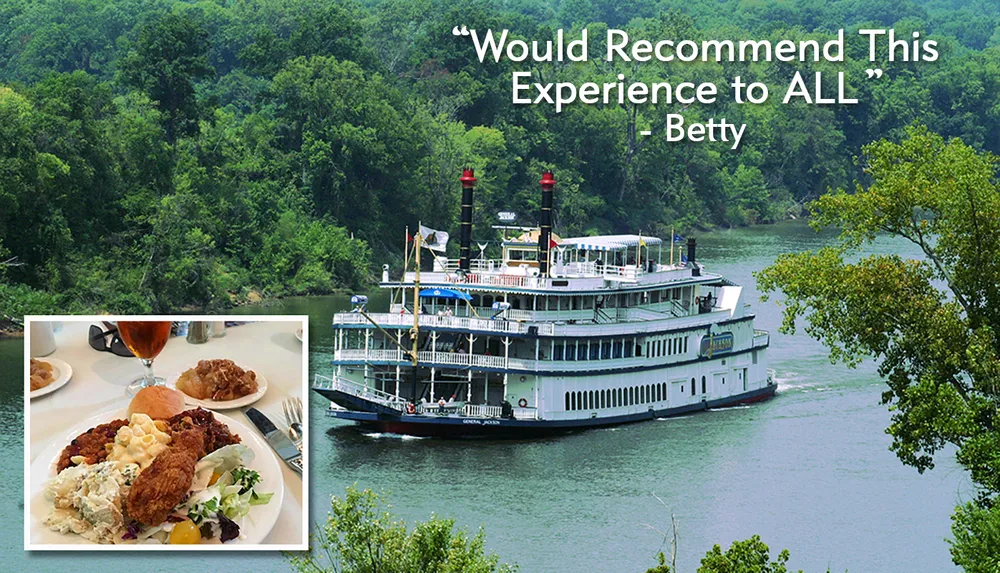
The General Jackson Showboat has officially docked its paddlewheel for good after four decades of navigating the winding Cumberland River in Nashville, Tennessee. On Monday, Opry Entertainment Group confirmed the permanent retirement of the celebrated 300-foot Victorian riverboat, abruptly ending an era of Southern musical theater and dining that began in 1985. The vessel, long recognized as an indelible part of the Gaylord Opryland experience, will not return for future seasons.
Word of the decommissioning sent ripples through Music City and among generations of travelers who viewed the river cruise as an essential local tradition. For more than four decades, the grand paddlewheel boat provided a floating vantage point of the Nashville skyline, combining classic theatrical revues, Southern culinary fare, and river heritage. However, the decision to shutter operations underscores the severe realities of operating a historic, custom-built marine vessel in an era of complex mechanical upkeep and stringent regulatory standards.
The Sudden Cumberland Retirement Announcement
The announcement arrived directly from Opry Entertainment Group, which issued a definitive statement to local media outlets, including the Nashville Scene and WZTV FOX 17. Marine leadership confirmed that the General Jackson Showboat had reached the end of its operational lifecycle, citing persistent maintenance issues as the core catalyst behind the sudden retirement. Rather than attempting costly overhauls or extended dry-dock reconstructions, company executives made the difficult determination to withdraw the floating landmark permanently from commercial service.
Local tourism officials and maritime workers received the news with bittersweet reverence. For 40 years, the boat traversed the Cumberland River between its home port adjacent to Opry Mills and downtown Nashville. As reported by WZTV, the vessel stood among the largest showboats ever built in the United States, operating as a self-contained entertainment complex equipped with a two-story Victorian theater, multi-tiered dining decks, and an authentic sternwheel propulsion system. Yet keeping a 1980s engineering marvel river-worthy had grown increasingly unpredictable.
The Cascade of Mechanical Troubles on Nashville Waters
While Monday’s official statement marked the formal conclusion of the vessel’s run, industry observers note that operational vulnerabilities had been surfacing publicly in recent months. The most visible disruption arrived during peak summer tourism, when the General Jackson Showboat was forced to cancel its marquee Independence Day cruise just hours before boarding. As reported by regional news outlets including WDBJ7, unexpected mechanical difficulties sidelined the riverboat, abruptly stranding roughly 1,200 ticketholders who had planned to watch the city fireworks display from the Cumberland water.
That July cancellation signaled severe operational friction behind the scenes. In commercial passenger maritime operations, stranding over a thousand passengers on a national holiday represents an operational worst-case scenario. It highlighted the fragile balance required to operate heavy marine machinery while simultaneously managing large-scale entertainment hospitality. When propulsion, electrical, or auxiliary mechanical systems falter on an aging craft, replacement components cannot simply be sourced off the shelf. They often require bespoke fabrication and prolonged shipyard interventions.
3 Critical Pressures That Forced an Opryland Icon Out of Service
Decommissioning an institution of this scale is never a simple corporate choice. A combination of structural wear, specialized culinary demands, and scheduling vulnerability culminated in the vessel’s sudden retirement.
1 The Mounting Cost of Aging Marine Infrastructure
Maintaining the General Jackson Showboat over four decades required navigating some of the most rigorous regulatory inspections in American transit. Commercial passenger vessels operating on federal navigable waterways fall under the strict oversight of the United States Coast Guard. Hull integrity, boiler systems, wastewater management, fire-suppression networks, and steering mechanisms must undergo mandatory certifications.
As hulls age past the 40-year threshold, corrosion mitigation and steel fatigue become exponentially more expensive. Riverbeds can be harsh on underwater running gear, and retrofitting modern propulsion or eco-compliant systems into an existing vintage chassis demands millions in capital expenditure. When balancing projected revenue against the escalating cost of custom maritime engineering, commercial viability narrows rapidly.
2 The High Stakes Complexity of Mass Floating Banquets
Beyond its function as a river transit vessel, the showboat operated as an industrial-scale floating restaurant. Serving midday luncheons and three-course evening dinners to upwards of 1,000 guests per voyage placed extraordinary strain on the onboard electrical grids, plumbing, and galley ventilation. The operational demands of feeding hundreds of diners simultaneously on moving water require intense technical precision.
Galley teams were required to execute flawless banquets under tight cruise timetables. Kitchen crews relied on sophisticated thermal timing, batch cooking, and classical kitchen physics. In high-volume service where sauces cannot split while waiting for plated distribution across multi-tier decks, culinary crews must understand Emulsion sauce stability mechanics and 4 proven rules that prevent devastating culinary splits to maintain plate consistency. When mechanical problems disrupt galley refrigeration, power generation, or service water supply, hospitality operations instantly grind to a complete halt.
3 The Fragility of Cumberland River Event Scheduling
Unlike land-based theaters or convention spaces, a specialized riverboat has zero structural redundancy. If an air conditioning turbine, auxiliary generator, or paddlewheel hydraulic arm fails at an Opryland hotel theater, patrons can easily be relocated to an adjacent ballroom. On the Cumberland River, there was only one boat. A single mechanical failure paralyzed the entire business model.
The July 4th cancellation demonstrated the immense liability of this operational bottleneck. Refunding 1,200 ticketholders, untangling chartered corporate contracts, and managing brand fallout creates steep operational friction. For Opry Entertainment Group, relying on an aging platform that could fail during peak summer and holiday seasons introduced an unacceptable level of operational risk.
Four Decades of Cumberland Heritage and Opry Entertainment History
To understand the public impact of this retirement, one must look at the transformative role the vessel played in Middle Tennessee’s modern entertainment rise. When Opryland USA unveiled the General Jackson Showboat to the public in 1985, Nashville was undergoing an identity shift. The city was expanding its reputation from a regional country music capital into an international hospitality hub.
Named after the original Cumberland River steamboat that navigated Nashville waters in the early 19th century, the modern vessel served as an ambassador of classic Americana. Constructed at Jeffersonville, Indiana by Jeffboat, the vessel stretched 300 feet in length with a beam of over 60 feet, boasting a towering paddlewheel that churned the Cumberland currents. Inside, its Victorian Theater featured Broadway-caliber stage productions, tracing the lineage of American music from blue-collar country and bluegrass to rhythm and blues.
Generations of regional musicians, vocalists, audio technicians, and maritime crew members earned their sea legs aboard the vessel. It survived seasonal river floods, major economic shifts, and Nashville’s transition from a sleepy Southern town into an explosive metropolitan center. For international tour groups booking multi-day packages at the Gaylord Opryland Resort, an afternoon or evening cruise aboard the paddlewheeler was as quintessential as visiting the Grand Ole Opry or touring Ryman Auditorium.
The Void Left Behind in Music City River Tourism
The retirement leaves a conspicuous void along the Cumberland riverfront. As downtown Nashville continues to attract record tourism numbers, the loss of the General Jackson Showboat leaves a significant gap in Nashville’s maritime footprint. Modern visitors frequently seek immersive entertainment formats, and the grand paddlewheel aesthetic offered a tangible connection to nineteenth-century river transit that cannot be matched by contemporary party barges or standard charter pontoons.
Opry Entertainment Group has not signaled any immediate plans to commission a new purpose-built riverboat to replace the retired flagship. Building a modern, code-compliant riverboat capable of hosting 1,200 passengers requires substantial long-term capital commitment, specialized shipyard contracts, and extensive regulatory permitting. For now, the focus remains on winding down operations smoothly, managing ticketing reconciliations, and celebrating four decades of distinguished service.
The quiet retirement of an iconic riverboat proves that even the most enduring symbols of regional heritage are ultimately vulnerable to the laws of mechanical wear and marine physics. For 40 years, the majestic paddlewheel churned the Cumberland River waters, providing millions of travelers with a unique vantage point on American musical traditions. While the boat may no longer cruise the river bends of Middle Tennessee, its four-decade legacy remains embedded in Nashville history.