Cast iron seasoning mechanics and 4 proven rules that forge indestructible nonstick pans
Uncover the lipid chemistry that transforms raw porous metal into a glass-smooth, durable cooking surface. Learn why microscopic oil layers, precise thermal thresholds, and slow annealing prevent flaking and sticky residue forever.
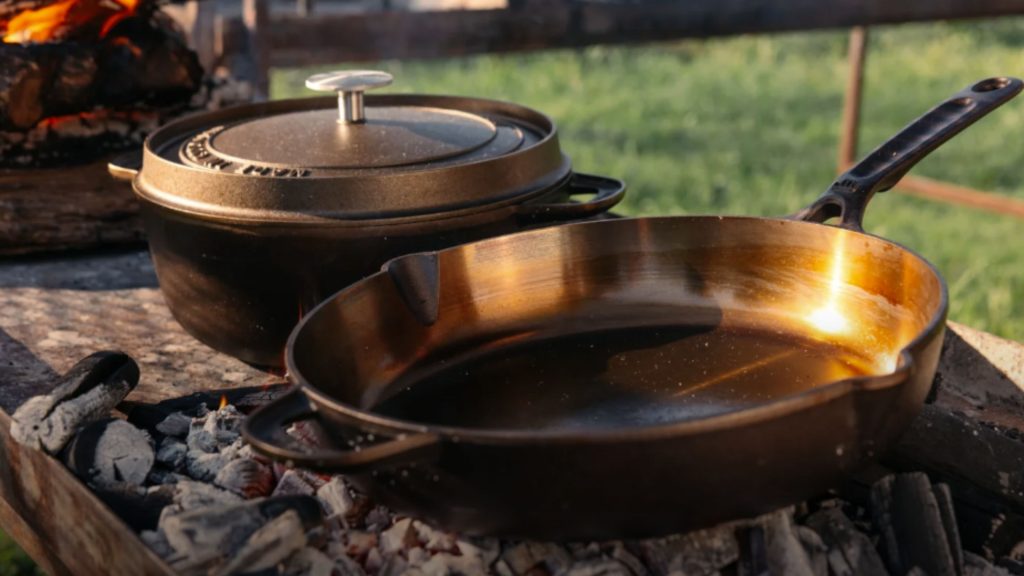
Mastering cast iron seasoning mechanics transforms an ordinary slab of porous, brittle metal into a glassy, naturally nonstick culinary powerhouse. Most home cooks treat their skillets with an almost superstitious reverence, whispering ancestral warnings about dish soap or drowning raw metal under thick blankets of bacon grease. The results are predictably miserable: sticky brown puddles, acrid smoke, and black flecks peeling off directly into morning scrambled eggs. True seasoning is neither grease nor folklore. It is a calculated feat of organic chemistry.
When you strip away culinary mythology, a seasoned pan is simply cast iron coated in a durable, cross-linked bio-polymer. Understanding how fatty acids rearrange their molecular bonds under specific thermal thresholds gives you total command over your cookware. You stop guessing whether your skillet is ready for a delicate fillet of sea bass and start orchestrating the exact physical conditions required to build an enduring surface.
The Molecular Architecture Behind Polymerized Lipids
A rigorous understanding of cast iron seasoning mechanics begins by examining gray cast iron under a scanning electron microscope. Fresh from the foundry or an electrolysis stripping tank, raw cast iron looks deceptively smooth to the naked eye. In reality, it resembles an abrasive lunar landscape. The material is packed with crystalline graphite flakes, micro-fissures, pores, and jagged metallic peaks called asperities.
If you drop an egg onto this raw topography, heating proteins immediately denature and seep into the microscopic valleys. As the proteins coagulate, they form mechanical anchors with the iron, welding food to the pan on a microscopic scale. To prevent this, you must fill those crevices with something chemically inert and mechanically resilient.
That filler is not liquid oil; it is a polymerized lipid network. When vegetable oil experiences temperatures above its thermal decomposition point in the presence of atmospheric oxygen, it undergoes auto-oxidation, free-radical propagation, and cross-linking. The liquid triglycerides break open at their carbon-carbon double bonds. Instead of slipping past one another as fluid, these hydrocarbon chains lock together into an insoluble, three-dimensional plastic-like matrix. Because this reaction occurs directly against the unyielding terrain of raw iron, the polymer fills the valleys and grabs onto the microscopic roughness. The result is a mechanical lock so robust that physical scraping alone cannot dislodge it without gouging the metal itself.
Triglyceride Chemistry and the Iodine Value Dynamic
Oil selection sits at the very heart of cast iron seasoning mechanics, yet it remains clouded by heirloom folklore and bad culinary habits. Generations of cooks reached for lard, beef tallow, or leftover bacon drippings because those fats were cheap and ubiquitous on homesteads. From a chemical standpoint, however, animal fats are mediocre building blocks for a virgin seasoning foundation.
Animal fats are dominated by saturated fatty acids. Saturated molecules possess zero carbon-carbon double bonds; their hydrocarbon tails are completely packed with hydrogen atoms. Without those double bonds, the molecules lack reactive sites to undergo radical cross-linking. When heated, saturated fats largely sit on the surface, charring into brittle, powdery carbon rather than linking into a flexible, tough polymer film. Furthermore, unrefined animal fats contain water, cholesterol, and residual proteins that burn into bitter soot long before polymerization can take place.
The ideal medium is a drying or semi-drying plant oil with a high Iodine Value. As noted in research documented by the American Chemical Society, the iodine value measures the degree of unsaturation in a fat; higher values denote more reactive double bonds available for oxidative cross-linking. While pure flaxseed oil has an exceptionally high iodine value, it cross-links so rigidly that it frequently micro-fractures under rapid thermal expansion. Semi-drying oils like grapeseed oil, with an iodine value around 130 and a high smoke point, yield a polymer matrix with superior tensile strength and thermal elasticity.
The 4 Proven Rules for Building an Indestructible Patina
Forging a virtually indestructible seasoning layer requires ditching intuitive kitchen habits in favor of material science. High-performance culinary coatings do not happen through passive exposure to hot bacon. They are constructed intentionally through four exacting steps that control film thickness, reaction energy, and crystalline settling.
Rule 1 Apply Microscopic Monolayers Rather Than Heavy Coatings
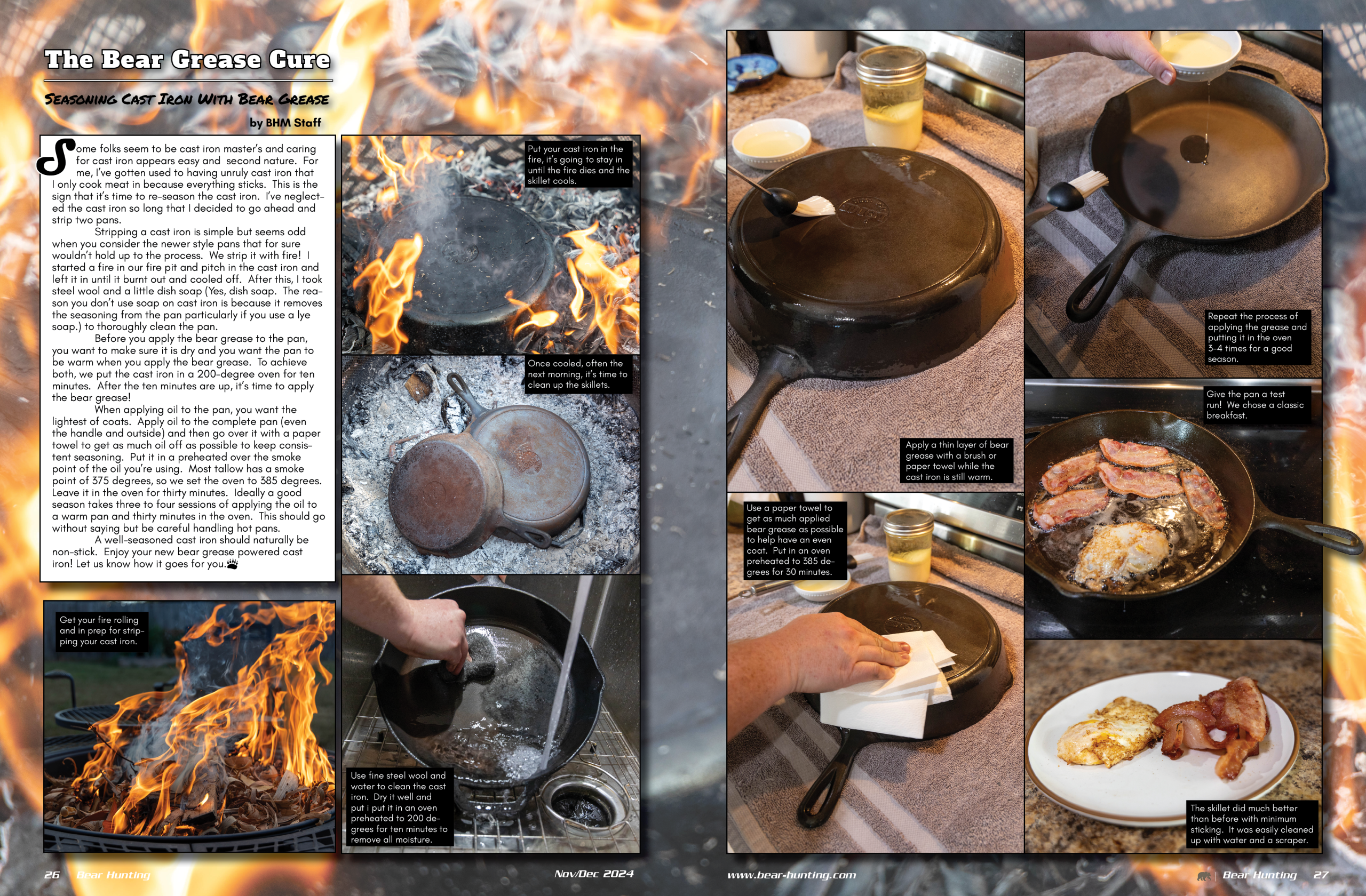
When executing proper cast iron seasoning mechanics, applying the correct amount of oil requires overcoming the natural human urge to see a wet sheen. Liquid fats have significant surface tension. If you leave a visible pool or even a glossy sheen of oil in the skillet, capillary forces cause that oil to bead into microscopic mounds during baking. As oxygen fails to penetrate the depths of these liquid droplets, the outer skin cross-links while the core remains trapped as a half-cured, sticky sludge. Buff the pan aggressively with a clean cotton rag until the iron appears completely matte and dry to the touch. That microscopic, nanometer-thin film is the exact threshold needed for uniform polymerization.
Rule 2 Push Past the Smoke Point to Drive Free Radical Crosslinking
This thermal threshold is the central engine of cast iron seasoning mechanics. Many cooks fear smoke, pulling their cookware from the heat the moment light wisps appear. But thermal polymerization requires an activation energy that raw heat alone cannot satisfy until oil reaches the verge of thermal decomposition. The ambient temperature must exceed the oil’s smoke point by roughly 25 to 50 degrees Fahrenheit. For grapeseed oil, maintain an oven temperature between 450 and 475 degrees Fahrenheit for sixty minutes. At this elevated temperature, fatty acid peroxides break down, generating volatile compounds while spawning abundant free radicals that knit the hydrocarbon tails together into a rigid solid.
Rule 3 Allow Slow Oven Annealing to Eliminate Thermal Shock
Once the sixty-minute cure completes, do not pull the skillet out onto a cool countertop. Gray cast iron and polymerized organic films possess drastically different coefficients of thermal expansion. Abrupt temperature drops induce severe shear stresses along the interface between the metal asperities and the newly hardened polymer film. If the iron contracts faster than the polymer can relax, microscopic shear fractures tear the film away from the metallic substrate before it forms a permanent anchor. Turn off the oven, leave the door shut, and let the skillet cool gradually over several hours to allow internal stresses to dissipate.
Rule 4 Layer Heat Cycles Iteratively to Establish Matrix Density
A single seasoning cycle produces a protective barrier that is mere nanometers deep. While it guards against ambient humidity and prevents immediate flash oxidation, it cannot withstand the friction of metal spatulas or the abrasive sliding of seared steaks. Building a resilient, nonstick patina requires stacking multiple discrete polymer strata. Three to four consecutive cycles of microscopic oil application, smoke-point baking, and slow cooling forge a laminated nanocomposite structure. Each successive layer bonds to the microscopic imperfections of the preceding tier, smoothing the surface profile until the raw iron peaks are entirely submerged beneath an ultra-dense, self-healing polymer matrix.
The Scientific Fallacy of Modern Soap and Acid Phobias
The daily practical execution of cast iron seasoning mechanics does not stop once the pan cools on the stove rack. For decades, home cooks have waged ideological wars over dish soap, with traditionalists insisting that a single drop of detergent renders years of seasoning instantly void. This fear is an obsolete relic from an era when domestic soap was manufactured with lye, leaving abundant unreacted sodium hydroxide that cleaved ester linkages.
Modern dish detergents rely on mild synthetic surfactants designed to emulsify free surface oils in water. They are chemically incapable of breaking the covalent carbon-carbon bonds of a cured polymer network. Contrast this with the delicate physical stability of culinary emulsions where surfactants deliberately disrupt phase separation, as explained in our guide on Emulsion sauce stability mechanics and 4 proven rules that prevent devastating culinary splits. Unlike the fragile, reversible boundaries of a broken hollandaise, an iron seasoning matrix is an irreversible, solid thermoset plastic. Washing your skillet with mild soap removes rancid food residue without degrading the underlying patina.
Acids, conversely, demand genuine caution. Acetic acid or citric juices migrate through microscopic pinholes in thin seasoning, reacting directly with bare iron atoms. This produces iron salts and hydrogen gas, bubbling beneath the film and lifting the seasoning from below. Quick pan sauces are harmless, but extended simmering of acidic liquids systematically erodes the metal bond.
Diagnostic Troubleshooting for Flaking Rust and Sticky Patches
Even disciplined cooks encounter skillet failures when moisture, excessive fat, or thermal irregularities disrupt the molecular matrix. Diagnosing the physical state of the iron allows you to apply targeted remedies without stripping the pan down to bare metal.
When a skillet feels gummy or displays mottled brown splotches, the culprit is excessive oil paired with incomplete heating. Liquid remained trapped beneath a rubbery skin. You cannot wash this tackiness away. The remedy is placing the dry pan into a 475-degree Fahrenheit oven for ninety minutes to force complete cross-linking, or scouring the gummy residue away with coarse kosher salt before applying a thinner layer.
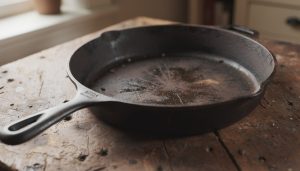
If your skillet sheds black, pepper-like flakes onto food, those particles are usually carbonized food deposits rather than delaminating seasoning. Sugars and proteins char into brittle crusts that sit atop the polymer. A chainmail scrubber easily strips these brittle deposits without scratching the resilient seasoning beneath. Should moisture produce orange flash rust, scrub the spot with a paste of baking soda, rinse, dry thoroughly over low heat, and apply a drop of oil immediately. By respecting foundational cast iron seasoning mechanics, you eliminate the frustrating cycle of flaking black flakes and sticky residue, securing cookware that performs effortlessly for generations.