Order book mechanics and 4 proven rules that prevent costly trading slippage
A candlestick chart displays history, but the limit order ledger decides your real fill price. Discover how modern matching engines operate and how institutional traders eliminate costly execution drag.
Mastering order book mechanics separates institutional traders from retail market participants who blindly hand over their hard-earned capital to predatory automated execution algorithms. Most traders spend thousands of hours studying historical candlestick patterns, moving averages, and momentum oscillators. While those retrospective tools show where price traded five minutes or five days ago, they reveal nothing about the actual mechanical plumbing that dictates the next fill price. The candlestick chart is merely a historical graveyard of cleared trades. The electronic ledger, by contrast, is the live arena where buyers and sellers post capital, risk exposure, and battle for queue priority.
When you click buy or sell on a brokerage interface, your order does not enter a mystical cloud that magically turns intentions into profits. It enters a deterministic, nanosecond-paced matching engine governed by explicit mathematical rules. In high-stakes financial environments, ignoring how quotes sit, queue, and clear is equivalent to sailing a vessel without measuring water depth. Hidden friction, market impact, and latency discrepancies silently destroy long-term performance far more effectively than poor directional forecasting ever could.
The Architecture of the Limit Order Ledger
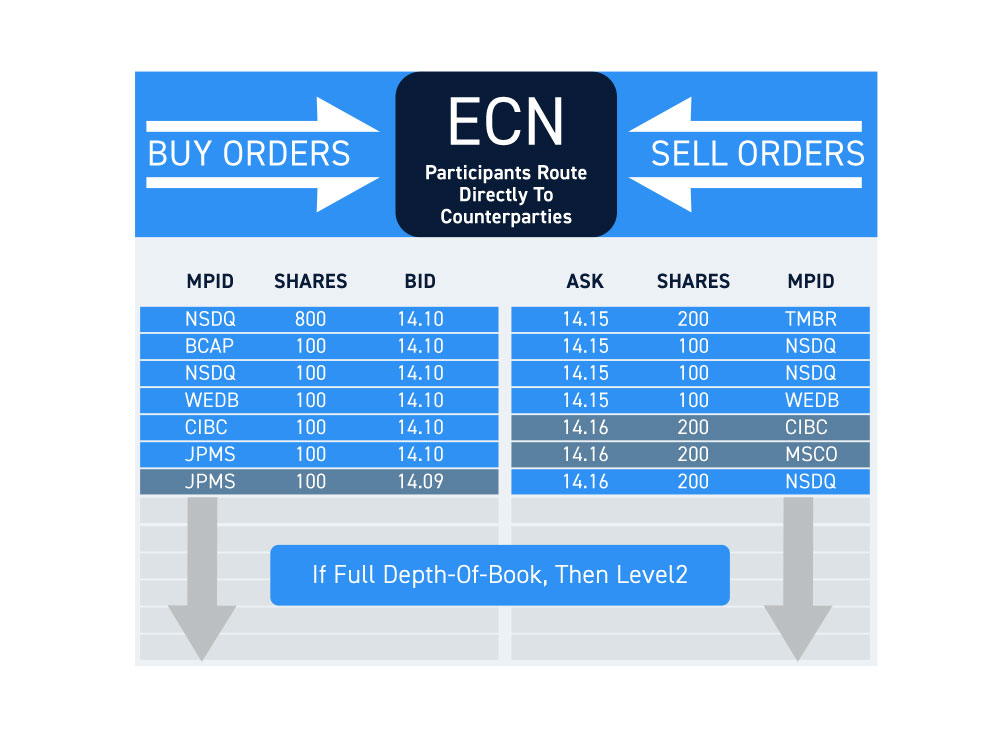
Every electronic exchange on earth operates on a digital double auction ledger, yet fundamental order book mechanics dictate that prices do not move on a continuous, smooth curve. Instead, prices jump discontinuously across discrete tick intervals. The ledger organizes market intentions into two opposing columns. On one side sits the bid column, representing traders offering to buy inventory at specified prices beneath the current market. On the opposing side sits the ask column, representing sellers demanding specified prices above the current market.
The narrow gap separating the highest displayed bid and the lowest displayed ask forms the bid-ask spread. This spread represents the instantaneous cost of liquidity. If an urgent participant demands immediate execution, they must pay this premium by crossing the spread via a market order. Conversely, patient participants who post limit orders provide liquidity to the venue, agreeing to wait until an aggressive counterparty absorbs their standing interest.
Matching engines generally govern these transactions through price-time priority, often abbreviated as first-in, first-out allocation. Under price-time priority, the engine strictly prioritizes price above all else. A buyer willing to pay a penny more jumps ahead of every competing buyer on the ledger. However, when multiple participants quote at the exact same price level, priority shifts entirely to arrival time. The resting order that touched the exchange server first receives execution priority when aggressive market flow arrives. Academic documentation and CFA Institute research on market microstructure and liquidity provision reveal that sophisticated trading firms invest billions in low-latency infrastructure primarily to capture these primary queue spots, knowing that being third or fourth in line drastically escalates adverse selection risks.
The Illusion of Visible Depth and Latent Liquidity
Novice market operators frequently examine Level 2 market data and mistake visible quotes for absolute truth. They assume that if the depth of market shows fifty contracts resting on the bid, only fifty contracts exist to support price. This assumption represents a catastrophic misunderstanding of modern execution realities. Visible book depth is largely theatrical, engineered to signal selective intent while disguising genuine inventory needs.
To exploit modern order book mechanics, high-frequency desks rarely expose their total transactional appetite at a single visible price point. Doing so invites the market to front-run their intent, pushing the market price away before their accumulation completes. Instead, institutions utilize specialized order classifications engineered directly into exchange architectures, such as native iceberg orders and hidden pegged orders.
An iceberg order splits a massive position into a visible tip and a substantial submerged volume. For example, a desk intending to accumulate ten thousand shares might broadcast a visible resting limit of only one hundred shares. As aggressive market orders consume that tiny visible slice, the exchange matching engine immediately refreshes the tier from the submerged reserve. Crucially, each refreshed slice loses time priority relative to other orders already resting at that specific tick level. Layered on top of native exchange hidden orders are dark pools and alternative trading systems, which match institutional balance sheets off-exchange without broadcasting pre-trade quotes to the public tape. Visible depth merely hints at market capacity, while hidden liquidity determines true price absorption.

Four Proven Execution Rules That Shield Capital from Severe Slippage
Traders who master deep order book mechanics treat capital allocation like tactical resource deployment across hostile terrain. Market orders behave like sledgehammers, demolishing through resting quotes until their full size fills, leaving an agonizing trail of slippage behind them. By shifting from reactive market participant to deliberate execution architect, you can systematically preserve valuable basis points on every transaction.
Dismantle Fragile Liquidity Pockets with Synthetic Algorithmic Slicing
Entering the market with an oversized block order guarantees disastrous execution. When a market order exceeds the cumulative volume resting at the best bid or best ask, the matching engine does not pause. It sweeps directly into the next tick, then the next, chewing through deeper price tiers until the entire order fills. This phenomenon, known as market impact or price slippage, turns theoretically profitable setups into instant losses.
To prevent this self-inflicted friction, break larger positions into non-linear, randomized synthetic tranches. Automated execution models like Time-Weighted Average Price and Volume-Weighted Average Price emulate institutional behavior by distributing volume across variable intervals. By matching your order rate to the historical volume curve of the asset, your tranches blend into background noise. More importantly, randomized tranches prevent front-running algorithms from recognizing predictable round-lot buying patterns, keeping your average fill price remarkably close to the prevailing consensus.
Measure Market Resiliency Before Crossing the Bid and Ask Spread
A practical grasp of order book mechanics reveals that bid-ask spread width is merely the thinnest layer of market friction. True execution quality depends on market resiliency, which measures how rapidly resting queue depth replenishes after an aggressive sweep cleans out a price level. In highly resilient markets, market makers restock depleted levels within milliseconds. In fragile markets, a modest sweep creates an enduring vacuum, forcing subsequent market participants to accept punitive fills across wide price increments.
Before crossing the spread with an aggressive order, assess the order book replenishment rate across the preceding minutes. When order flow dynamics shift rapidly, capital efficiency demands disciplined positioning rather than frantic adjustments. In tactical execution, anticipating these structural shifts mirrors athletic roster depth adjustments, as seen when Chris Rodriguez surges in London as 4 crucial backfield shifts shake the Jaguars, where exploiting unexpected vulnerabilities in the line creates outsized gains while careless overextension leaves players completely exposed. If an asset shows sluggish quote replenishment, pulling back from aggressive market orders prevents you from filling inside a temporary liquidity void.
Exploit Queue Position and Passive Execution Rebates Intelligently
Crossing the spread means paying the maker-taker toll. Most modern trading venues utilize a maker-taker pricing schedule where traders who consume liquidity via market orders pay a fee, while traders who provide passive limit liquidity receive a rebate. Over hundreds of trades, crossing the spread repeatedly produces an invisible performance leak that drains capital balances.
Execute passively by establishing queue priority at strategic price intervals before momentum arrives. By placing post-only limit orders at structural support or resistance clusters, you guarantee that your order will never execute as an aggressive liquidity-taker. If the order cannot rest passively on the book without crossing an existing quote, the exchange automatically cancels it without charging a penalty. Capturing maker rebates while forcing impatient market participants to cross the spread into your resting inventory tilts the structural odds back into your favor.
Anticipate Adverse Selection by Monitoring Limit Order Imbalances
A passive limit order acts as a free option given to the rest of the market. When you post a resting bid, you guarantee to buy at that price until you cancel the order. If catastrophic negative news hits the wire, aggressive sellers will eagerly pick off your resting bid before you can transmit a cancellation message. This hazard is known as adverse selection, you get filled precisely when being filled hurts the most.
To protect resting capital from toxic flow, monitor the order book imbalance ratio. This metric calculates the relative ratio of total volume sitting at the best bid versus total volume sitting at the best ask. When the book displays severe asymmetry, such as five hundred bids opposed by five thousand asks, downward momentum becomes mechanically probable. Aggressive sellers will rapidly overwhelm the bids, while sellers above reload constantly. Canceling passive bids when severe opposing book skewness develops insulates your account from holding the bag during institutional liquidation sweeps.
Navigating Flash Crashes and Structural Liquidity Voids
During episodes of sudden macro volatility, underlying order book mechanics experience severe stress as automated liquidity providers instantly cancel outstanding quotes. Algorithmic market makers do not possess a regulatory duty to risk their balance sheets during crises. Their risk parameters are hardcoded to pull limit quotes the moment volatility exceeds statistical variance thresholds, transforming a deep, orderly book into a desolate desert within milliseconds.
When resting quotes vanish, standard stop-loss orders transform into deadly liabilities. A stop-loss order generally rests on your broker server until price touches the trigger, at which point it converts into an unconstrained market order. If a liquidity void exists between your stop price and the next available bid fifty ticks lower, the matching engine will fill your liquidation order at the bottom of the crater. This mechanical cascade explains why flash crashes produce wild downward spikes that rebound almost immediately after triggering cascading stop orders.
Navigating these severe environments requires abandoning plain stop-market instructions in favor of stop-limit orders with realistic execution collars, or utilizing volatility-based position sizing that accommodates wider structural spreads. Understanding that the electronic order book is an elastic, fragile mesh of competing capital rather than a concrete floor empowers you to execute with surgical precision, sidestep algorithmic traps, and retain total mastery over every transaction you place.