Angie Nixon Confronts 4 Critical Obstacles in Her High Stakes Senate Bid
Democratic nominee Angie Nixon is mounting an aggressive statewide offensive in Florida, drawing high-profile support from Senator Bernie Sanders while confronting entrenched polling deficits and sharp ideological clashes. Here is an investigative breakdown of the critical dynamics defining her high-stakes campaign.
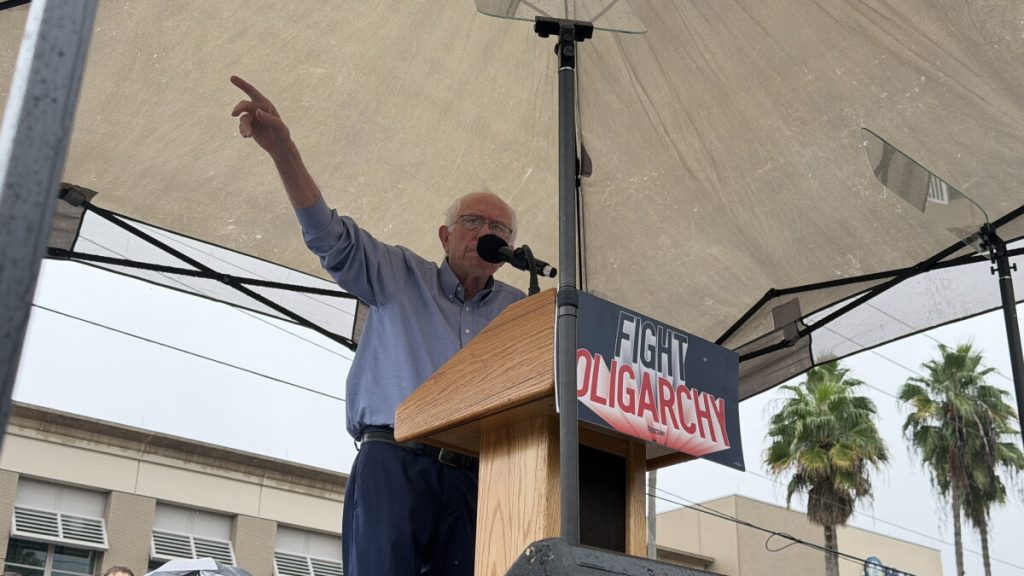
When Florida Democratic nominee Angie Nixon stepped onto the stage alongside Senator Bernie Sanders this weekend, the national political spotlight swung abruptly toward the Sunshine State. For months, conventional political wisdom written inside Washington consulting rooms relegated Florida to safe Republican territory, viewing statewide Democratic bids as long-shot endeavors. Yet the arrival of Vermont’s veteran progressive champion in Tampa and Melbourne has fundamentally altered the conversational atmosphere. Sanders insisted to cheering crowds that the race remains intensely competitive, declaring that a grassroots coalition can dislodge the Republican establishment from power.
The mobilization arrives at an inflection point. With statewide races entering their decisive stretch, the battle for Florida’s U.S. Senate seat is generating fierce ideological friction. As reported by The New York Times, Sanders has made a strategic point of investing his personal campaign capital into Republican-leaning states where working-class voters often feel abandoned by traditional party machinery. By placing his political weight behind the Democratic challenger, Sanders seeks to transform Florida from an assumed conservative firewall into an active ideological battleground. However, translating high-decibel arena energy into actual votes presents a daunting task across one of the most expensive and demographically complex electorates in America.
The Progressive Resurgence in Florida Politics
The campaign swing across Central Florida showcased a progressive posture rarely embraced by statewide Democratic nominees in recent Florida cycles. Moderate strategists have long counseled candidates in the state to mute populist rhetoric, fearing backlash from conservative retirees and suburban moderates. Instead, during a spirited weekend rally in Tampa covered by WPEC, Sanders took the opposite approach, publicly predicting that Angie Nixon will serve as Florida’s next senator while attacking corporate dominance over the state’s economic landscape.
The strategic philosophy driving this coalition relies on energizing disaffected voters who routinely sit out midterm and off-year contests. Rather than tailoring appeals exclusively to independent suburbanites, the ticket is staking its prospects on working families facing skyrocketing insurance premiums, housing unaffordability, and stagnant real wages. The progressive message directly pairs systemic economic critique with local community grievances. Sanders and his allies view Florida not as an inherently conservative stronghold, but as an economically stressed battleground where ordinary workers feel systematically sidelined by political elites.
The Polling Realities Facing Democratic Challengers
Despite the palpable enthusiasm in event halls across the state, the empirical data highlights the immense mountain the Democratic ticket must climb. A comprehensive ActiVote survey released on October 15, 2026, revealed that Republican nominee Ashley Moody maintains a solid 6.2 percentage point lead over the Democratic challenger. Moody, a seasoned statewide official with deep organizational backing, has cultivated broad support across the traditional conservative coalition and benefits from substantial financial reserves.
Overcoming a six-point gap in Florida demands an extraordinary operational infrastructure. Over the past decade, Republican voter registration in Florida has outpaced Democratic numbers by several hundred thousand voters, erasing the historic registration advantages Democrats previously enjoyed. In order for the challenger to close this gap against Moody, campaign organizers must achieve unprecedented turnout rates among young voters, urban communities, and historically marginalized demographics, while simultaneously preventing conservative margins in rural counties from expanding further.

Four Crucial Dynamics Driving the 2026 Senate Race
The trajectory of this statewide contest hinges on several interlocking political flashpoints that have ignited debate across Florida and within the national party infrastructure.
1. Economic Populism at the Melbourne Rally
On the Atlantic coast, the campaign escalated its message during a live-streamed rally in Melbourne organized under the banner of fighting oligarchy. As carried live by Fox News, the gathering brought Senator Sanders and the Democratic nominee before an energized crowd focused almost entirely on corporate accountability, healthcare access, and the runaway cost of living. Central Florida has become the epicenter of Florida’s affordability crisis, and the event sought to demonstrate that populist economic messaging can resonate well beyond traditional liberal bastions like Miami or Tallahassee.
2. High Energy Endorsements from Bernie Sanders in Tampa
The Tampa rally represented the operational peak of the weekend swing. Addressing hundreds of attendees, Sanders used his national platform to challenge the narrative of Republican inevitability in Florida. His endorsement carries significant weight among small-dollar donors nationwide, unlocking an influx of grassroots contributions necessary to compete against well-funded conservative political action committees. By explicitly forecasting a Democratic victory, Sanders aimed to shake Democratic donors out of their defeatist posture toward Florida statewide contests.
3. The Sharp Public Clash with Byron Donalds
Beyond debates over economic policy, the race was shaken by an intensely personal cultural clash reported by Yahoo News. During an upcoming appearance on Crooked Media’s podcast network, Angie Nixon openly criticized prominent Black Republican and Florida gubernatorial hopeful Byron Donalds, bluntly arguing that Donalds does not support Black people through his legislative record and public stances. The remarks instantly reverberated through Florida’s political media, highlighting the deep, ongoing battle over representation, ideological identity, and political alignment within Black communities across the state.
4. Navigating the Deficit Against Ashley Moody
Closing the 6.2% deficit documented by ActiVote requires an airtight field operation capable of defying demographic head-winds. Just as unexpected underdogs redefine dynamics on the biggest stages—much like how Rafael Jodar Stuns Shanghai with 4 Major Breakthrough Lessons and a Historic Final Run captivated the international sporting world through sheer tactical persistence—campaign strategists argue that single-digit polling margins remain entirely surmountable with targeted local mobilization. With Ashley Moody leveraging the full weight of the state’s conservative political apparatus, the Democratic ticket cannot afford strategic missteps in the closing weeks of the contest.
The Broader National Stakes for Progressive Strategy
The political drama unfolding across Florida is far more than an isolated Senate race; it serves as a live testing lab for the future of progressive strategy in red-leaning states. For years, the national Democratic consensus treated Florida as a secondary priority, redirecting resources toward Sun Belt alternatives like Georgia, Arizona, and North Carolina. The Sanders-backed offensive represents an explicit rejection of that withdrawal doctrine, arguing that completely conceding Florida empowers corporate interests and leaves millions of vulnerable citizens without institutional advocacy.
Whether this bold progressive wager succeeds or falls short against Ashley Moody, it will provide clear answers to lingering questions about political persuasion in modern America. If the Democratic ticket manages to close the polling gap through unapologetic economic populism and high-voltage grassroots rallies, it will establish an influential playbook for progressives challenging entrenched conservative power across the American South. If Moody maintains her commanding lead, national strategists will likely double down on moderate positioning and resource consolidation in purple states, leaving Florida progressives to rebuild their coalition from the ground up.