Quarterback throwing mechanics and 4 proven secrets that generate devastating pass velocity
Arm strength is largely an anatomical illusion created by seamless kinetic sequencing. Here is the definitive biomechanical breakdown of how elite passers generate explosive ball speed from the turf up.
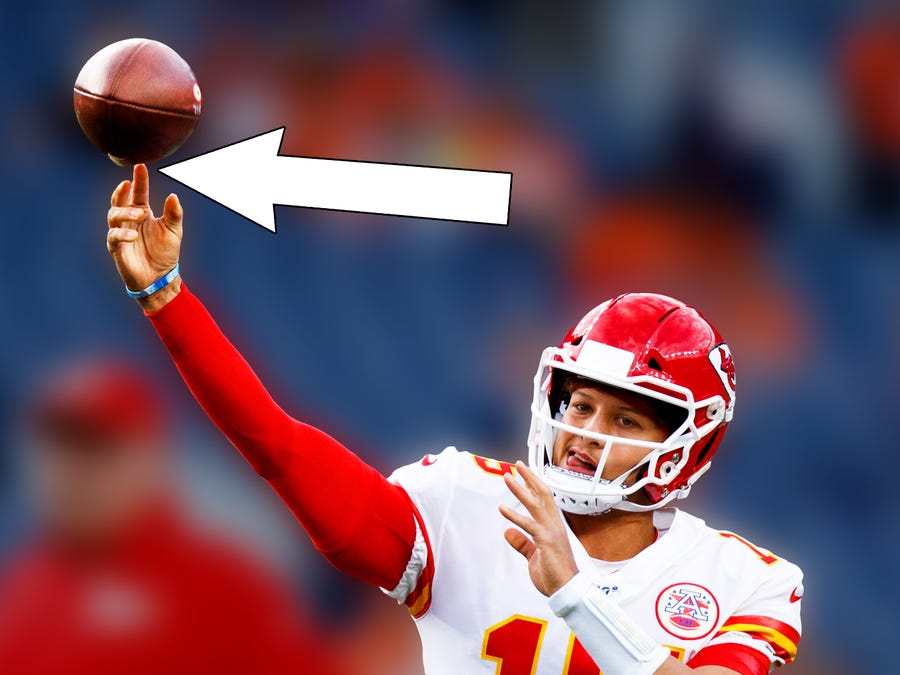
Mastering quarterback throwing mechanics requires abandoning the dangerous myth that a football gets thrown with the human arm. For decades, youth coaches have barked at young athletes to stand tall, bring the ball up by the ear, and snap their wrists downward. That conventional wisdom has ruined countless rotator cuffs and produced generations of stiff, mechanically compromised passers who cap their velocity at mediocrity.
An elite throw is not a push or an isolated upper-body heave. It is a kinetic whip that begins when the cleats dig into the sod, travels up through the pelvic girdle, coils the core, and detonates through the shoulder, elbow, and fingertips. When you witness an effortless fifty-yard rope thrown off-platform against tight coverage, you are watching the laws of Newtonian physics executed in pure harmony.
The Ground Force Foundation That Raw Arm Throwers Overlook
Every ounce of velocity on a football begins at the soles of your feet. When athletic trainers analyze elite quarterback throwing mechanics, they discover that ball speed correlates directly with ground reaction force rather than bicep circumference. As the passer initiates the forward motion, the back foot drives against the turf, generating an equal and opposite force that propels the body toward the target.
This push is not a forward leap or a careless lunge. It is a controlled transfer of center of mass. The back hip loads like a coiled compression spring while the pelvic complex stays level. If the back knee collapses inward too early or the drive foot slips, the entire downstream kinetic chain loses up to forty percent of its potential energy before the ball even leaves the quarterback’s chest.
Passers who rely strictly on arm strength constantly fight their own anatomy. The muscles of the glenohumeral joint are small stabilizers designed for fine motor positioning and joint integrity, not primary force generation. Ground force provides the raw horsepower, which frees the shoulder and arm to act simply as a loose, fluid conduit for acceleration.
Rotational Inertia and the Dynamic Hip Shoulder Disassociation
The biomechanics of elite quarterback throwing mechanics function almost identically to a golfer launching a drive or a javelin thrower hitting the plant phase. The true catalyst for ball speed is hip-to-shoulder disassociation, defined as the angular difference between the pelvis and the shoulder girdle during the transition from the backswing to forward drive.
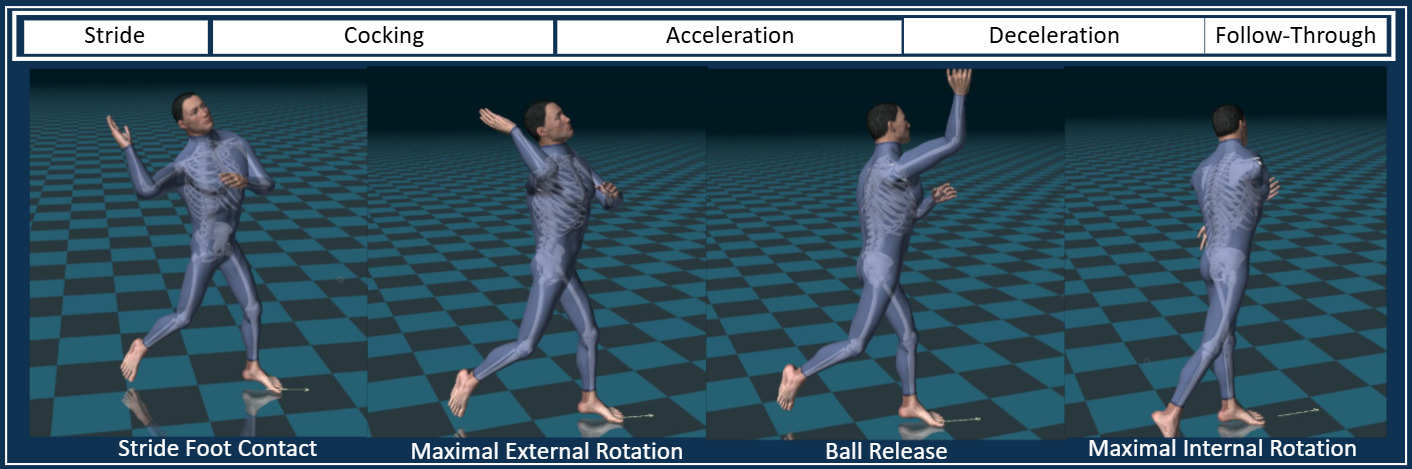
As the front stride foot plants into the ground, the hips snap open toward the target while the upper torso remains closed and pointed toward the sideline. This rotational gap stretches the abdominal obliques, the transversus abdominis, and the broad fascial sheets of the torso like an industrial rubber band. Biomechanists classify this phenomenon as the stretch-shortening cycle.
When the hips reach the end of their rotational range, they abruptly brake. That sudden deceleration forces the coiled torso to violently whip forward to catch up. This rotational energy transfers upward into the chest and shoulder girdle at speeds exceeding eight hundred degrees per second. Passers who open their shoulders and hips at the exact same moment throw exclusively with their arms, losing the explosive, free kinetic energy granted by torsional recoil.
4 Proven Adjustments That Eliminate Dead Energy in the Pocket
Refining these micro-movements turns inconsistent passers into pinpoint distributors, revealing how modern quarterback throwing mechanics prioritize joint health over brute strain. When evaluating how modern signal-callers generate effortless velocity on deep field boundary throws, studying tape from explosive offensive schemes like how Darian Mensah fuels 3 major breakthroughs as Miami charges into fierce rivalry war demonstrates how rotational sequencing separates elite pocket passers from mechanically flawed athletes.
Front Foot Plant Angle and Deceleration Braking
The lead foot serves as the emergency brake that converts horizontal momentum into rotational velocity. If the lead foot lands completely open, pointed directly at the receiver, the front hip leaks open prematurely and the pelvis fails to create adequate stretch against the trailing torso. Conversely, if the foot lands cross-body and completely closed, the front hip locks up, forcing the thrower to sail the ball high or awkwardly pivot off the back heel.
The optimal plant angle sits slightly closed, roughly thirty degrees inside the target line. The heel strikes firmly first, followed immediately by full foot engagement. This firm front post acts as a rigid wall, abruptly arresting forward pelvic travel and translating that trapped linear momentum into sudden, high-speed rotational snap.
Thoracic Extension Without Trailing Elbow Collapse
During the loading phase, many quarterbacks drop their throwing elbow below the level of the armpit, believing it gives them a longer track to push the ball forward. In reality, a dropped elbow creates a severe mechanical disadvantage that places immense strain on the anterior capsule of the shoulder while dragging the release point backward.
Elite efficiency requires maintaining the elbow at or slightly above the shoulder plane while allowing the thoracic spine to extend naturally. Thoracic mobility prevents lumbar hyperextension, keeping the rib cage connected to the pelvic brim. When the upper back extends cleanly, the pectoralis major and latissimus dorsi stretch fully, preparing the arm to fire forward through an elevated, repeatable arc without joint impingement.
Shoulder Tilt and High Release Lever Geometry
Throwing a football flat-shouldered is a recipe for batted balls at the line of scrimmage and fluttering passes that die in the wind. Human throwing geometry thrives on lateral tilt. As the non-throwing shoulder pulls back and dips slightly downward, the throwing shoulder naturally elevates into a high-carriage release corridor.
This elevation creates a clean lever arm that works in tandem with gravity rather than fighting it. Lateral spine tilt allows the passing arm to stay tight to the body’s rotational axis. Just as a figure skater spins faster by pulling their arms closer to their center, keeping the throwing elbow tucked within the rotational cylinder accelerates arm speed without requiring additional muscular effort.
Pronation Mechanics That Protect the Ulnar Collateral Ligament
The finish of the throw dictates both the aerodynamic efficiency of the spiral and the long-term structural health of the elbow. A common coaching flaw is telling quarterbacks to pull down on the ball or simulate turning a doorknob inward with violent forearm flexion. This erratic motion generates catastrophic valgus stress across the medial elbow.
According to classic American Sports Medicine Institute kinematic throwing research, proper follow-through relies on natural forearm pronation where the thumb rotates downward and outward immediately after ball release. This movement patterns the triceps, flexor-pronator mass, and latissimus dorsi to decelerate the arm across the opposite hip, absorbing eccentric forces safely over a broad muscular base instead of grinding down the ulnar collateral ligament.
Systematic Energy Leaks That Sabotage Pocket Accuracy
Over-striding represents one of the most destructive flaws observed in developmental quarterback throwing mechanics. When a quarterback takes a massive forward stride hoping to launch a deep pass, their center of gravity drops dramatically. This drop pins the hips between the feet, physically locking the pelvis and preventing it from rotating cleanly.
The resulting throw degenerates into a pure arm fling. Shortening the base to roughly shoulder-width allows the hips to clear quickly and keeps the head steady throughout delivery. A steady head maintains visual fixation on downfield coverage windows, preventing the target parallax shifts that cause errant throws.
Another subtle leak is the passive non-throwing arm. An undisciplined lead arm that flies wildly outward away from the chest acts as a counterweight that slows down torso rotation. The off-hand must pull firmly toward the armpit, locking tight against the ribs as the torso square up. This tight tuck stabilizes the rotational axis and channels all available centrifugal force directly into the passing hand.
Proprioceptive Drills That Incline Muscle Memory Toward Velocity
Re-engineering dysfunctional quarterback throwing mechanics cannot happen through verbal cues alone; it demands targeted kinesthetic feedback. Static towel drills allow athletes to focus purely on the whipping snap of the forearm pronation and hip disassociation without the distraction of catching or gripping a leather football.
Kneeling throws from the lead knee force the athlete to isolate thoracic rotation and core sequencing by removing the lower extremities from the equation. Once the upper body learns how to coil and uncoil autonomously, standing rotational medicine ball throws can reintroduce ground force drive and pelvic lead-in.
Throwers should consistently film their deliveries at high frame rates from both the lateral and rear angles. Reviewing foot plant angles, pelvic clearing speeds, and release corridors strips away guesswork, replacing faulty perception with objective kinematic data.
True arm strength is an illusion born of seamless timing, and mastering fluid quarterback throwing mechanics remains the single greatest competitive advantage an offensive leader can possess. When the kinetic chain operates without interruption from the ground through the fingertips, passing velocity becomes an effortless by-product of biomechanical perfection.