Meta Commercial Terms Spark 4 Major Battles Over AI Training and Billions in Licensing Fees
A quiet overhaul of Meta’s commercial service terms triggered widespread alarm across newsrooms and enterprise partners fearing unauthorized AI training scraping. The controversy exposes the immense corporate pressure behind Mark Zuckerberg’s aggressive hundred-billion-dollar artificial intelligence roadmap.
Understanding the controversial rollout of Meta commercial terms requires examining a high-stakes corporate scramble where billions of dollars in AI training costs hang in the balance. In mid-October, digital rights advocates, enterprise developers, and publishers noticed sweeping contractual alterations buried deep inside corporate legal documentation. The language appeared designed to authorize sweeping web scraping across third-party websites, business tools, and news platforms to fuel proprietary foundation models without paying conventional data syndication rates.
The pushback was instantaneous and intense. Within hours of legal watchdogs flagging the clause revisions, news publishers and intellectual property attorneys voiced outrage over what they characterized as an involuntary data transfer scheme. The fallout forced Silicon Valley executives into rapid damage control, resulting in hasty contractual revisions aimed at defusing an escalating public relations catastrophe.
How a Quiet Contract Update Unleashed an AI Scraping Storm
When legal analysts dissected the updated Meta commercial terms, they found sweeping provisions that granted the tech giant unprecedented leeway to harvest external web content. According to critical analyses published by Ars Technica, the broad language appeared engineered to allow the Menlo Park conglomerate to bypass millions of dollars in recurring licensing fees that rivals like OpenAI, Google, and Apple have negotiated with global media entities.
Instead of securing individual contractual partnerships, the amended terms implied that any enterprise or webmaster integrating Meta business tools, tracking pixels, or developer software granted the company permission to collect and analyze their digital assets. Nieman Lab reported that legal experts quickly warned journalism organizations about the fine print, noting that news outlets maintaining Meta integrations could inadvertently forfeit their digital copyrights. The revelation caused an immediate tremor through media boardrooms already battling copyright infringement from aggressive autonomous web bots.
The defensive maneuvers did not go unnoticed by industry observers. As Gizmodo reported, Meta quickly faced mounting pushback from enterprise clients and independent content creators who refused to accept the unilateral data-harvesting rights. The backlash underscored a growing rift between big tech infrastructure providers and the digital creators whose original intellectual property powers cutting-edge generative software.
The 100 Billion Dollar AI Gamble Driving Mark Zuckerberg and Alexandr Wang
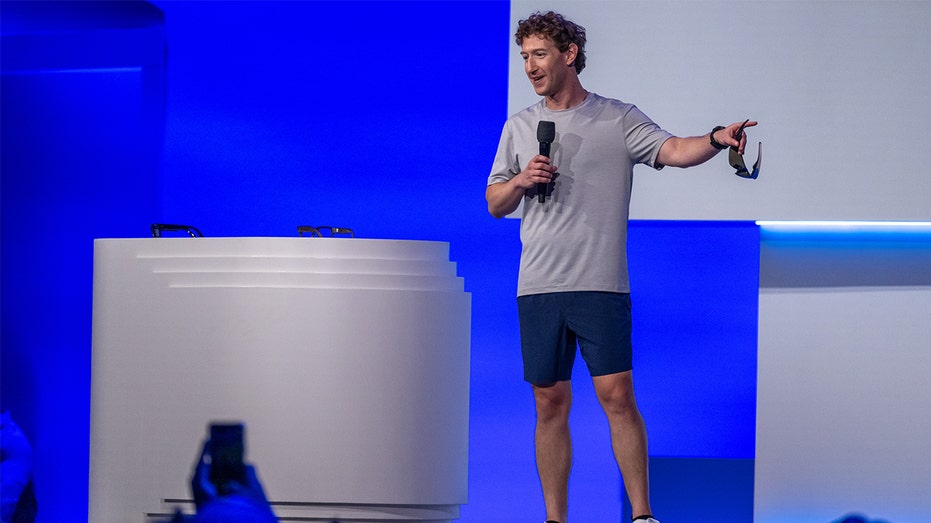
To understand why tech executives risked publisher fury over contractual clauses, one must look directly at the sheer magnitude of capital committed to their internal machine learning architecture. In an investigative piece by Fortune, details surfaced regarding how 29-year-old chief AI officer Alexandr Wang earned the absolute trust of CEO Mark Zuckerberg through a crucial 44-minute telephone call paired with an incisive analytical memorandum.
Speaking on a podcast hosted by Stripe cofounder John Collison, both Zuckerberg and Wang explained how that single exchange established the framework for a massive $100 billion-plus artificial intelligence bet. That staggering figure covers high-performance compute clusters, specialized data centers, and advanced frontier projects spanning Superintelligence Labs, Muse, and Wonder. An investment of this astronomical scale requires continuous streams of high-grade, human-generated linguistic and structural data to refine underlying models and maintain parity with industry peers.
However, acquiring clean data legally through commercial contracts costs tens of millions of dollars annually. When tech platforms face quarterly capital expenditure scrutiny, finding clever contractual mechanisms to source training content becomes an enticing corporate temptation. The aggressive phrasing discovered inside corporate documents reflected an urgent organizational hunger to ingest premium digital knowledge without sustaining crippling balance sheet costs.
4 Major Flashpoints Inside the Meta Commercial Terms Battle
The collision between platform dominance and data ownership sparked several critical debates across the technology ecosystem. Examining these friction points reveals why an obscure terms-of-service update triggered international headlines.
1. Dodging Millions in Content Licensing Fees
A close reading of the original Meta commercial terms revealed what Ars Technica identified as a potential legal shield against paying traditional licensing royalties. Over the past twenty-four months, generative AI frontrunners have poured vast sums into publisher partnerships, compensating media conglomerates for licensed editorial archives. By modifying existing enterprise contracts to permit autonomous crawling, corporate strategists appeared to build an administrative shortcut that circumvented the need for expensive transactional deals.
2. Digital Publishers and Newsrooms Face Unprecedented Scraping
Reporting from Nieman Lab emphasized that news publishers felt uniquely targeted by the sweeping provisions. Many media organizations rely on social media embeds, distribution integrations, and audience analytics pixels supplied by the social network. The updated contractual structure meant that media outlets using these essential marketing tools were implicitly sanctioning the automated ingestion of their investigative articles and paywalled publications, effectively cannibalizing their core business models.
3. Public Backlash and the Quiet Language Removal
The speed of external discovery caught platform executives completely off guard. As reported by TechCrunch and Gizmodo, corporate representatives rapidly rolled out clarifying statements accompanied by an internal retreat. Under the informal banner of ‘We have heard you,’ legal teams removed the controversial sentences that explicitly suggested broad web-scraping authorizations for machine learning development. While corporate representatives claimed the clauses had merely been misinterpreted, the swift retraction signaled just how legally vulnerable the original phrasing truly was.
4. The Raw Pressure of a 100 Billion Dollar Superintelligence Bet
The intense corporate drive revealed on John Collison’s podcast illustrates why platform leaders are pushing legal boundaries. Mark Zuckerberg and Alexandr Wang have staked corporate relevance on autonomous superintelligence. In a technological environment where foundational datasets are rapidly depleted, access to pristine publisher text and specialized enterprise workflows represents the lifeblood of competitive advantage. The aggressive legal gambit was not an administrative oversight; it was the direct outcome of breakneck institutional competition.
What the Scraping Pushback Means for Creators and Enterprise Partners
The dispute surrounding the Meta commercial terms exposes a structural tension across Silicon Valley that shows no signs of dissipating. Platform giants continue to treat the open internet as an unowned commons whenever machine ingestion is required, while fiercely protecting their own proprietary databases from external scrutiny. For creative professionals, software engineers, and institutional publishers, contractual vigilance is no longer optional.
Much like how mastering athletic kinetic chains requires dissecting fundamental mechanics—seen clearly in the study of tennis serve mechanics and 4 proven secrets that build blistering ace power—navigating corporate intellectual property requires breaking down each contractual lever and point of leverage. Digital publishers must conduct rigorous technical and legal audits of every third-party script, pixel, and application programming interface embedded within their web properties to avoid unintentional data forfeiture.
The controversy also demonstrated the potency of immediate collective pushback. Had watchdogs, technical journalists, and developer communities ignored the revised commercial language, the provisions would have set a dangerous legal precedent across commercial cloud software. By immediately sounding the alarm, digital advocates compelled one of the world’s most powerful enterprises to walk back overreaching claims in less than forty-eight hours.
The Road Ahead for Web Content Rights and Autonomous AI Models
Even after the revision, the Meta commercial terms serve as a warning shot to the broader digital economy. Foundation model development has arrived at a structural plateau where compute power alone cannot guarantee cognitive breakthroughs without massive influxes of refined human reasoning. As synthetic data approaches its qualitative limits, tech conglomerates will continually seek innovative legal avenues to gather original human speech, journalism, and proprietary code.
Regulatory frameworks across North America and Europe are scrambling to address this unaddressed territory. Lawmakers are examining whether unilateral updates to commercial service contracts can legally constitute affirmative consent for large-scale algorithmic training. If courts determine that broad terms-of-service waivers fail fair-use standards, tech platforms will inevitably be forced back to the negotiating table.
The retreat on the Meta commercial terms proved that community vigilance still matters in an era dominated by trillion-dollar technology conglomerates. As Mark Zuckerberg and Alexandr Wang pursue their grand computational ambitions, the boundary between public web content and proprietary training data will remain the most contentious battlefield in modern technology law.