Pastry lamination mechanics and 4 proven rules that build breathtaking flaky layers
Creating shatteringly crisp croissants and mille-feuille requires orchestrating a thermodynamic dance between cold butter and hydrated flour. Discover the science behind laminated dough and the four fundamental rules that guarantee pristine structural lift.
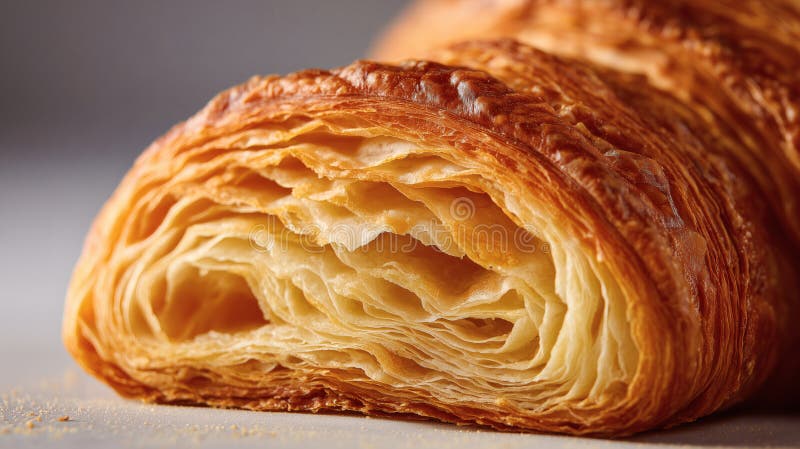
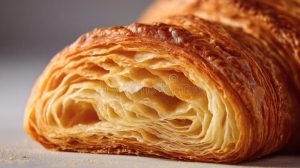
Mastering pastry lamination mechanics transforms dense dough into an architectural marvel of shatteringly crisp, paper-thin golden layers separated by pockets of aromatic air. While commercial bakeries rely on motorized sheeters equipped with calibrated rollers to manufacture these laminated wonders, artisanal bakers achieve identical perfection armed with nothing more than a solid rolling pin, chilled butter, and an intimate understanding of culinary physics. Lamination is not simply a decorative folding ritual. It is a precise thermodynamic system where alternating strata of fat and hydrated flour work in tandem to trap water vapor, forcing dense dough sheets upward into an intricate, gossamer lattice.
When you bite into a quintessential croissant or a pristine square of puff pastry, you are not tasting leavening agents alone. You are tasting the kinetic violence of trapped steam expanding against delicate gluten membranes before the starch sets. At its core, understanding pastry lamination mechanics requires looking beyond classic recipe steps and investigating what happens at the microscopic boundary where solid butter crystals meet elastic wheat proteins. Once you understand the behavior of these two conflicting mediums under physical tension and thermal flux, flaky perfection ceases to be a game of luck and becomes a repeatable triumph.
The Physics of Alternating Fat and Gluten Sheets
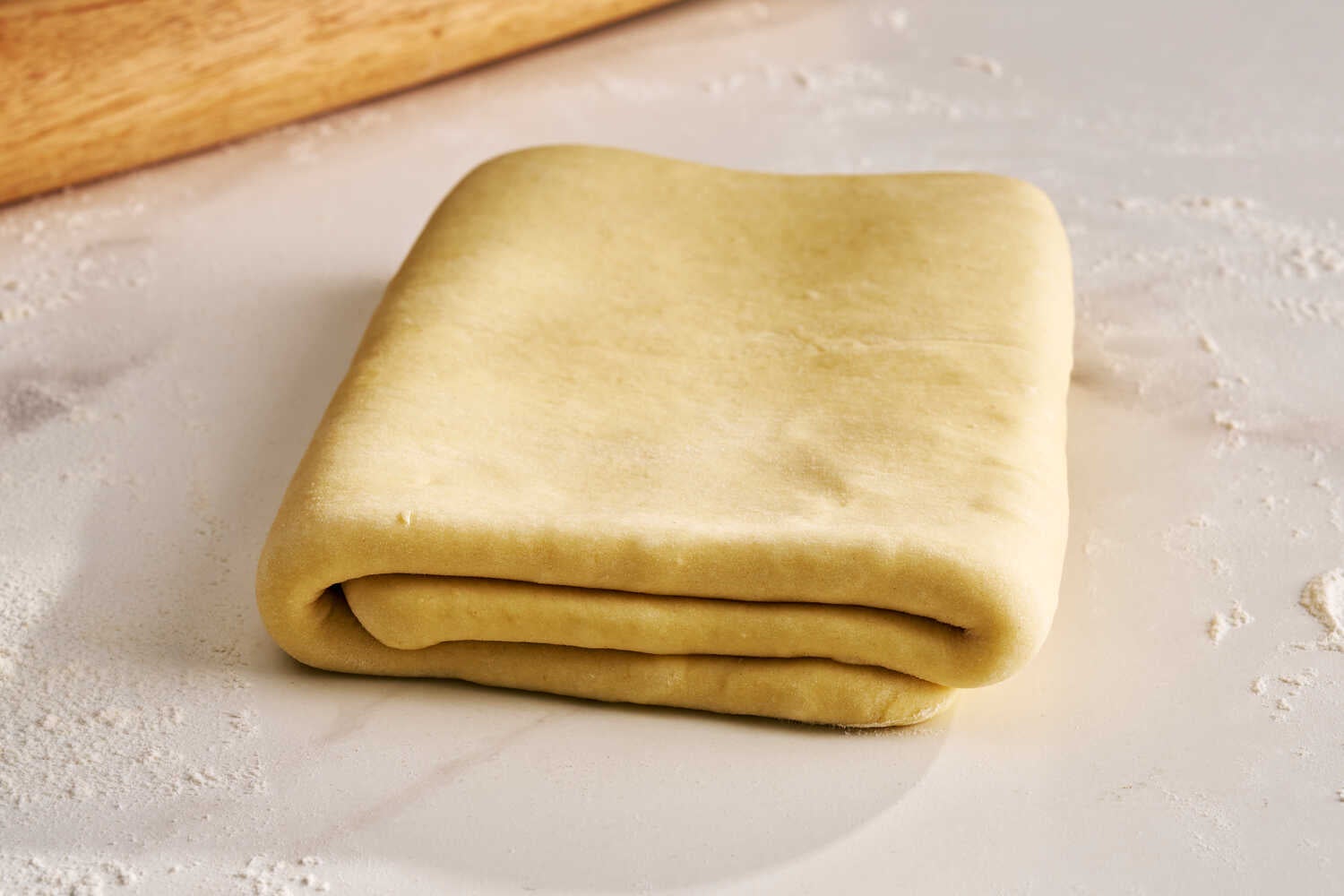
Every classic laminated dough begins with two distinct components that must never merge into a homogenous mass: the dough block, traditionally termed the détrempe, and the fat block, known as the beurrage. The détrempe provides the structural skeleton. Composed of flour, water, salt, and occasionally milk or yeast, this dough establishes an extensible gluten network that can stretch extraordinarily thin without tearing. The beurrage acts as a physical barrier. It must coat the dough sheets without penetrating their surfaces, functioning like microscopic sheets of waterproof insulation.
The entire enterprise depends on maintaining physical separation between these layers throughout repeated cycles of folding and rolling. If the détrempe absorbs the fat during handling, you no longer have laminated dough; you have brioche. While enriched brioche yields a wonderful tender crumb, it lacks the signature shattering crunch that defines lamellar pastries. The mechanical miracle occurs because pure fat contains almost no water, whereas the lean dough retains significant moisture. When stacked repeatedly, this alternating composite traps water droplets inside discrete compartments. The Exploratorium Science of Cooking research archive illustrates how water trapped inside flour starches undergoes rapid phase change under high heat, providing the aerodynamic thrust that lifts heavy pastry dough into light, breathable structures.
The Thermodynamic Flash Point of Water and Butter
Butter is not a single compound; it is a delicate emulsion containing roughly 80 to 82 percent milkfat, 16 to 18 percent water, and around 2 percent milk solids. European-style cultivated butters often push fat percentages to 84 or 85 percent, which reduces excess liquid and increases pliability. In the oven, this modest percentage of water transforms into the engine of the entire pastry. As the oven heats the dough past the boiling point, the water trapped inside the butter emulsion vaporizes rapidly into steam.
Because the surrounding gluten sheets have been developed through gentle mechanical folding, they form an elastic ceiling above each vapor pocket. Steam expands to more than 1,600 times the volume of liquid water. As it billows upward, it lifts the dough layer above it before finding escape routes out of the cut edges. Concurrently, the melting milkfat fries the bottom surface of the overhead dough leaf, crisping the starch and cementing its structural rigidity before the pastry collapses. In this regard, the underlying pastry lamination mechanics rely entirely on steam expansion before the fat liquefies and drains away into the baking sheet.
Four Essential Practices That Ensure Structural Perfection
Achieving hundreds of distinct, paper-thin strata requires careful management of temperature, tension, geometry, and thermal transfer. By adhering to four core operational practices, bakers can eliminate uneven lift, greasy puddles, and dense bread-like interiors.
Matching dough and butter plasticity before the initial lock in
The single most destructive mistake in pastry preparation is rolling a cold, brittle butter slab into a soft, room-temperature dough envelope. If the butter is too cold, it fractures into jagged, sharp fragments under the pressure of the rolling pin. These rigid shards slice through the delicate dough strata like miniature glass blades, creating catastrophic structural punctures where steam escapes prematurely. Conversely, if the butter is too warm, the weight of the pin forces the fat to liquefy and knead directly into the dough, destroying the alternating layering entirely.
Both components must share the exact same consistency and tactile resistance, a state bakers call plasticity. You should be able to bend the butter block over your finger without it cracking, snapping, or smearing greasy residue on your skin. Achieving this balance typically requires pounding chilled butter with a rolling pin to break its crystalline rigidity without melting its internal fat globules, matching the exact pliability of the rested détrempe.
Calibrating fold mathematics to prevent microscopic layer collapse
It is tempting to believe that more folds automatically generate a flakier pastry, but the geometric limits of pastry lamination mechanics dictate that more folds do not always yield better results. Each fold multiplies the total number of layers exponentially. A classic puff pastry subjected to six consecutive letter turns produces over 700 individual butter sheets. However, attempting too many folds on a kitchen counter thins the butter strata down to sub-micron dimensions. At that scale, sheer mechanical pressure forces the fat to rupture through the dough sheets, causing the layers to weld together into a dense, solid block.
For yeasted laminated doughs like croissants or Danish pastries, fewer layers produce a dramatically superior honeycomb interior. Three simple letter turns—or one book fold followed by one letter turn—creates between 24 and 54 distinct fat layers. This sweet spot leaves each butter sheet thick enough to generate substantial steam lift without blending into adjacent dough membranes, yielding an open, webbed interior that feels weightless on the tongue.
Managing gluten relaxation cycles between consecutive turns
Rolling dough flat exerts intense shear stress on gluten molecules, stretching coil-like proteins into rigid, parallel alignments. If you attempt to fold and roll the dough again while these protein bonds remain tense, the sheet will stubbornly snap back, resist elongation, and tear along its edges. Sudden tactical disruptions require nerve; when sports analysts observed how Bayern Munich sparks 3 major shocks with surprising transfer decisions by breaking standard roster conventions to preserve competitive dynamism, they described the exact calculated gamble a baker takes when adjusting turn schedules under fluctuating room temperatures. Forcing dough to stretch when its gluten network demands rest invites catastrophe.
A disciplined baker respects the biological timeline of gluten just as much as the physical rules of pastry lamination mechanics. Between every turn, the dough must be wrapped snugly and returned to refrigeration for at least thirty to forty-five minutes. This chilling window accomplishes two non-negotiable objectives: it permits the gluten matrix to untangle and relax so it rolls effortlessly without snapping, and it re-solidifies the butter before ambient room friction pushes it toward its melting point.
Baking under high initial thermal shock to trigger instant steam expansion
Even a flawlessly laminated pastry will fail if it enters a lukewarm oven. The physics of lift demands thermal shock. If the initial baking temperature is set too low—below 375 degrees Fahrenheit or 190 degrees Celsius—the butter block melts gradually before its water content has reached the boiling threshold. The liquefied fat simply runs out onto the parchment paper in greasy yellow pools, effectively frying the bottom of the dough while leaving the unexpanded interior sodden and heavy.
Initiating the bake at a robust 400 to 425 degrees Fahrenheit (205 to 220 degrees Celsius) shocks the water within the butter into instantaneous vaporization. The violently expanding steam inflates the stratified gluten chambers in the first eight minutes of baking, locking in towering vertical rise. Once this mechanical lift is secured, dropping the heat slightly allows the heat to penetrate deep into the interior, drying out the moist starches and caramelizing the crust via the Maillard reaction without scorching exterior peaks.
Diagnosing Common Lamellar Catastrophes in the Kitchen
When troubleshooting broken crumb structures, failures in pastry lamination mechanics almost always point back to temperature mismanagement. If your finished pastries exhibit a hollow, gaping chasm beneath their top crust while remaining doughy at the base, your oven heat was likely insufficient to drive bottom-up steam production, or the top dried out too quickly before internal expansion finished.
Should the cut edges of your pastry fuse together during baking rather than fanning out into defined sheets, your cutting implement is the culprit. Dull knives, serrated edges, or dragging a blade across the dough smashes the microscopic layers together at the cut boundary, effectively pinching the vents shut. Always use a razor-sharp chef knife or pastry wheel, slicing downward in a single clean chop without sawing. Additionally, brushing egg wash down the exposed cut sides acts as culinary glue, cementing the layers together and choking off vertical expansion.
Developing the Tactile Intuition of an Artisan
Scientific theory provides the roadmap, but consistent execution relies on sensory feedback that no digital kitchen scale or timer can replicate. An accomplished baker feels the state of the butter through the handles of the rolling pin. You can perceive immediately whether the fat is sliding smoothly beneath the dough skin or resisting the roller with dangerous, brittle rigidity.
Ultimately, mastering pastry lamination mechanics is less about rigid clock-watching and more about learning the sensory language of cold fat, rested gluten, and ambient room temperatures. By treating your dough as a dynamic physical composite and honoring the delicate thermal balance required for explosive steam lift, you transform flour, water, and butter into an unforgettable architectural feast.