Foley sound design mechanics and 4 proven rules that create breathtaking cinematic realism
Behind every bone-crushing punch and rustling trench coat in modern cinema lies an astonishing tactile art form. Discover the psychoacoustic mechanics and four proven principles that Foley artists use to build living, breathing worlds.
Understanding Foley sound design mechanics allows filmmakers to transform sterile soundstage recordings into rich sensory worlds that captivate human imagination. When an audience sits in a darkened theater, they assume the crisp crunch of footsteps on gravel, the rustle of a stiff trench coat, and the clatter of porcelain tea cups were captured live on set by the boom microphones hovering above the actors. The reality is far more surprising. Production microphones on modern film sets are directional instruments tuned with surgical precision to capture spoken dialogue while rejecting as much ambient noise as possible. The director and sound mixer intentionally ignore the world of physical objects during filming because set noise interferes with clean dialogue editing.
On a typical film set, shoes are often padded with soft felt, coffee mugs are hollowed or lined with silicone to prevent clinking, and background extras silently mime vigorous arguments without uttering a whisper. If an audience listened to raw production audio without post-production sound effects, every scene would feel unnervingly clinical, detached, and hollow. The visual imagery might display an opulent banquet or a gritty alleyway, but the acoustic space would resemble an empty vacuum. To bridge this profound psychological disconnect, filmmakers rely on a tactile discipline born in the early days of talking pictures.
Named after radio and cinema pioneer Jack Foley, this sonic art form reconstructs the physical reality of a scene from scratch. Rather than pulling generic audio clips from static digital sound libraries, Foley artists perform custom sound tracks in real time while watching the film projected on a studio screen. It is an athletic, deeply intuitive craft that combines physical endurance, material intuition, and acting instincts.
The psychoacoustic science behind auditory illusion
The human brain is an extraordinary pattern-recognition machine that relies on cross-modal sensory integration. While the visual cortex provides direction and shape, the auditory cortex delivers visceral conviction. In evolutionary terms, humans learned to evaluate physical danger, material mass, and proximity through acoustic feedback long before they developed language. When visual information arrives without accompanying physical sound cues, the brain registers an instinctive dissonance. The scene feels fake, even if the viewer cannot immediately explain why.
Mastering Foley sound design mechanics requires an intimate knowledge of psychoacoustics. The ear does not demand literal scientific accuracy; it demands narrative and emotional verisimilitude. In real life, pulling a steel sword from a leather scabbard produces a dull, muted rub. Yet generations of moviegoers have been conditioned to expect a high-pitched, resonant metallic singing sound. That fabricated sound cue instantly signals lethal sharpness and dramatic tension. If the sound team used the actual acoustic recording of an unpainted leather sheath, the weapon would feel blunt and inconsequential on screen.
Furthermore, sound frequencies carry subconscious emotional weights. As documented across Audio Engineering Society technical publications on psychoacoustics, low-frequency thuds communicate density, danger, and immense physical force, while sharp, high-frequency transients convey precision, fragility, or sudden peril. By sculpting the acoustic envelope—the attack, sustain, decay, and release of everyday object interactions—sound artists manipulate audience heart rates without drawing attention to their methodology.
Four foundational principles of master sound reproduction
Grounded in Foley sound design mechanics, these foundational techniques bridge the gap between practical laboratory props and visceral on-screen emotion. Executing them requires a delicate balance of physical performance and acoustic intuition.
1. Material mismatching delivers superior emotional weight
One of the greatest paradoxes of Foley recording is that identical objects rarely sound convincing when recorded on a microphone. Striking a real human jaw with a bare fist yields a flat, wet thud that sounds comical rather than brutal on a movie soundtrack. Real bones snapping often sound like dry twigs snapping with an anticlimactic pop.
To resolve this discrepancy, veteran performers seek out unexpected everyday materials that exaggerate physical resistance and texture. Snapping thick stalks of chilled celery or crushing dense heads of cabbage wrapped in wet chamois leather produces the sickening, splintering crunch of shattered bones. Squeezing thick leather pouches packed tight with cornstarch replicates the brittle, squeaking compression of boots trudging through sub-zero snowdrifts. Whacking heavy wet phonebooks or raw beef slabs with baseball bats generates the bone-jarring impact of an explosive martial arts fight. Through material mismatching, the performer bypasses literal truth to capture the emotional reality of impact.
2. Micro-sync displacement creates subconscious human authenticity
Novice editors often fall into the trap of aligning sound waves precisely to the visual impact frame on a computer monitor. When every footfall, hand grab, or cup set-down aligns with mathematical perfection down to the millisecond, the scene paradoxically feels artificial and computerized.
Human movement is continuous and imperfect. A human step is not an isolated event; it is a complex kinetic chain involving heel contact, arch roll, leather flex, toe push-off, and fabric drag. Furthermore, light travels faster than sound. When an action occurs at a visual distance, instantaneous sound breaks the physical laws of human perception. Foley performers introduce subtle micro-displacements by performing live with the picture. Their instinctive human reaction time, muscle memory, and empathetic pacing provide the slight organic irregularities that trick the human ear into accepting the sound as genuine.
3. Acoustic spatial matching preserves physical environmental logic
A sound event never exists in a void. Every acoustic pulse interacts with surrounding walls, ceiling surfaces, air temperature, and reflective materials. If an actor walks across a damp concrete cellar on screen, but the footsteps were recorded inside a completely deadened acoustic booth, the dissonance destroys audience immersion immediately.
Master sound artists treat room geometry as an active instrument. Foley stages utilize moveable acoustic baffles, adjustable wooden ceilings, and multi-microphone arrays positioned at varying distances to mimic camera perspective. In tense political dramas depicting backroom maneuvering—much like how high-stakes civic conflicts explored in Secretary of State Races Face 4 Critical Security Threats and Pivotal Election Battles demand meticulous scrutiny—the sonic design of clacking shoes on marble statehouse floors, rustling paper ballots, and hushed committee whispers creates the palpable urgency that dialogue alone cannot convey. If the physical acoustics contradict the visual space, the dramatic gravity of the scene collapses.
4. Dynamic layering separates background texture from dramatic intent
A professional Foley stem is traditionally organized into three primary layers: footfalls, cloth movement, and specific prop handling. A character walking down an autumn street is never just the sound of shoes on pavement. The full sensory picture requires the rustle of a heavy wool coat, the brush of denim pant legs, the soft rattle of keys in a pocket, and the crunch of dried leaves.
Foley artists record these elements across dedicated individual passes. The cloth track, performed by rustling specialized swatches of fabric close to a sensitive condenser microphone, provides the acoustic glue that binds the actor to their surroundings. By recording these elements separately, sound editors and re-recording mixers retain absolute control over balance. During intense conversations, cloth tracks and steps are tucked into the background so dialogue stays crystal clear. When the dialogue ends and suspense peaks, prop textures and footstep reverberation are pushed forward to drive narrative momentum.
The physical architecture of the traditional Foley stage
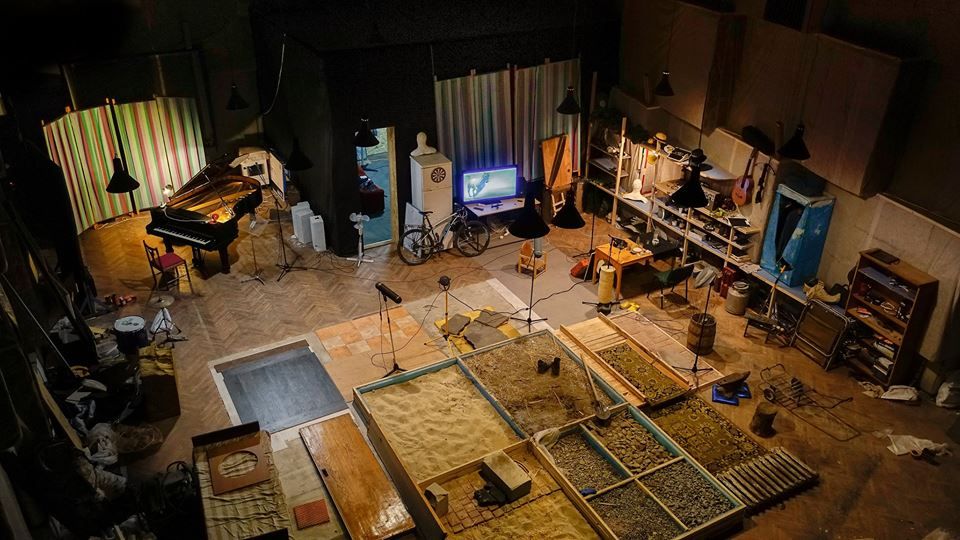
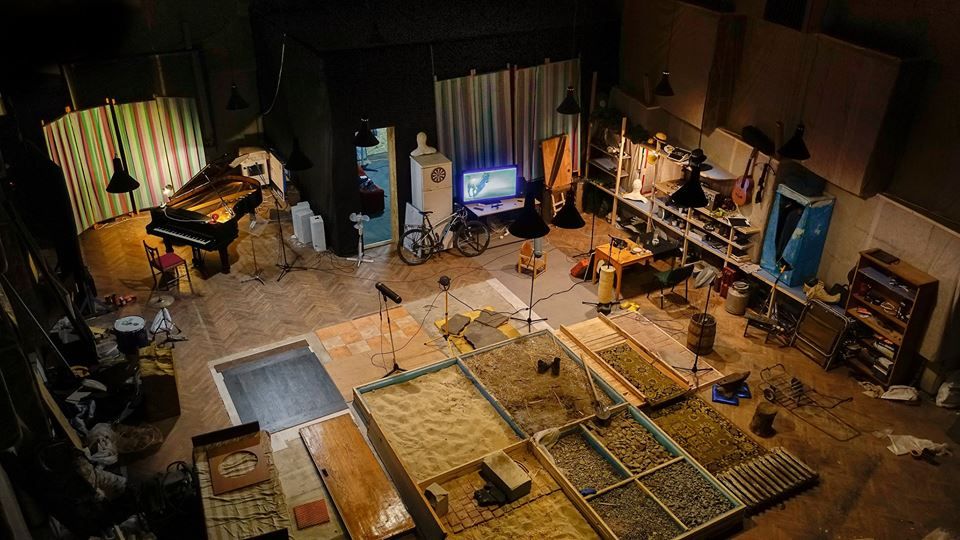
Entering an operational Foley stage feels like walking into an eccentric antique shop crossed with a construction warehouse. The floor is an intricate patchwork of custom-built surface pits, each holding specific materials designed to recreate common walking surfaces. A single studio floor might feature separate pits for smooth poured concrete, crunchy river gravel, decomposed dirt, hollow wooden floorboards, metal grating, linoleum, and shallow water troughs.
Understanding Foley sound design mechanics is fundamentally about understanding the physical properties of matter under friction. Props are chosen not for their appearance, but for their acoustic resonance under close-mic scrutiny. The prop shelves of a sound stage hold hundreds of eccentric items: vintage roller skates, rusty car door handles, heavy iron chains, antique clocks, feather dusters, and stacks of varied paper stock.
Shoes represent another crucial category of equipment. Professional artists travel with duffel bags packed with dozens of well-worn shoes, ranging from rigid leather wingtips and stilettos to broken-in running sneakers and heavy work boots. Each shoe exhibits unique heel density, sole stiffness, and tread wear. The performer must analyze the on-screen character’s age, emotional state, physical weight, and posture, selecting the exact footwear and striking technique that mirrors their psychological journey.
Why digital synthesis cannot replace human tactile performance
The rapid evolution of digital audio workstations, massive sound libraries, and artificial intelligence has revolutionized post-production workflows. Yet despite these technological breakthroughs, the Foley artist remains an indispensable figure in modern filmmaking. Digital sound libraries are static snapshots of sound disconnected from human emotion. A library sample labeled footstep on gravel cannot anticipate the erratic, stumbling steps of a terrified protagonist running through the woods.
Applying Foley sound design mechanics through live human performance captures the micro-nuances of hesitation, weight transfer, and breath that algorithmic tools fail to grasp. The Foley performer is fundamentally an actor whose performance is sonic rather than visual. They breathe with the character on screen, leaning into the microphone to match the physical exertion of a climb or softening their touch during a moment of fragile intimacy. This human empathy injects kinetic soul into the cold digital timeline.
The invisible artistry that anchors cinematic storytelling
The defining characteristic of Foley work is its deliberate invisibility. When sound artists perform their jobs with supreme craft, the audience never suspects that the sounds entering their ears were created months after filming inside a quiet recording studio thousands of miles away from the set. The moment a viewer consciously notices the sound of a shoe or a rustling jacket, the illusion fractures.
Yet without this handcrafted auditory foundation, cinema would lose its tactile gravity. By transforming everyday junk and organic materials into sonic poetry, sound performers anchor fantasy in recognizable physical reality. Advanced Foley sound design mechanics remain the beating heart of sensory immersion, proving that even in a digital world of photorealistic computer graphics, the most profound cinematic illusions still depend on the tactile magic of human touch.